
Topic Edition
49 articles
How Long Should You Wait Between Tattoo Removal Sessions?
Understanding the optimal waiting time between tattoo removal sessions is essential for safe and effective outcomes. This article...
Read more
Can Laser Tattoo Removal Leave a Scar?
Laser tattoo removal is a widely used method to fade unwanted tattoos by breaking down ink pigments with laser technology. While g...
Read more
Laser vs Chemical Permanent Makeup Removal: Key Differences
Permanent makeup removal involves two primary methods: laser and chemical treatments, each with unique mechanisms, benefits, and r...
Read more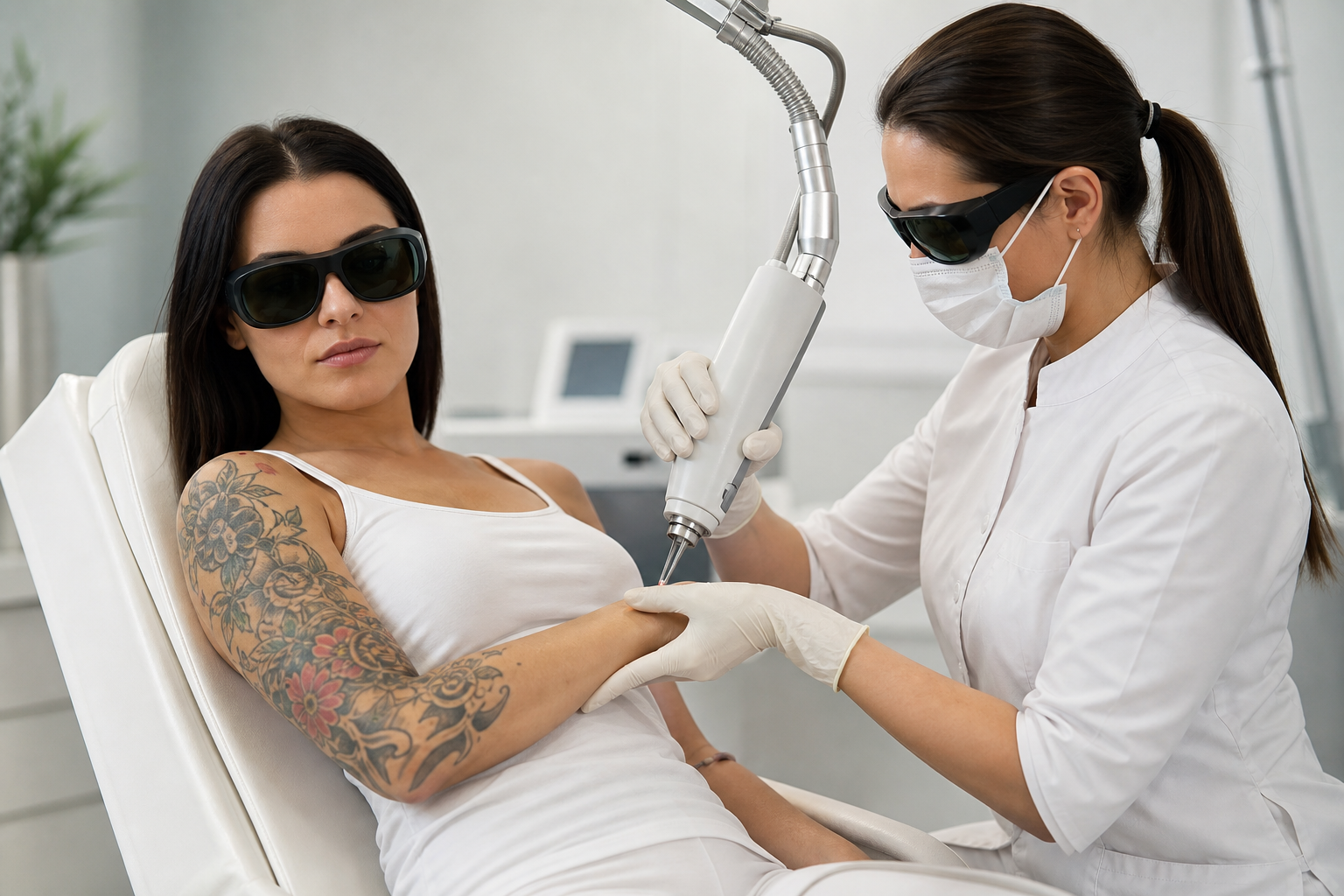
When Do the First Tattoo Removal Results Become Visible?
The visibility of initial tattoo removal results varies widely due to factors like ink color, tattoo size, and individual skin res...
Read more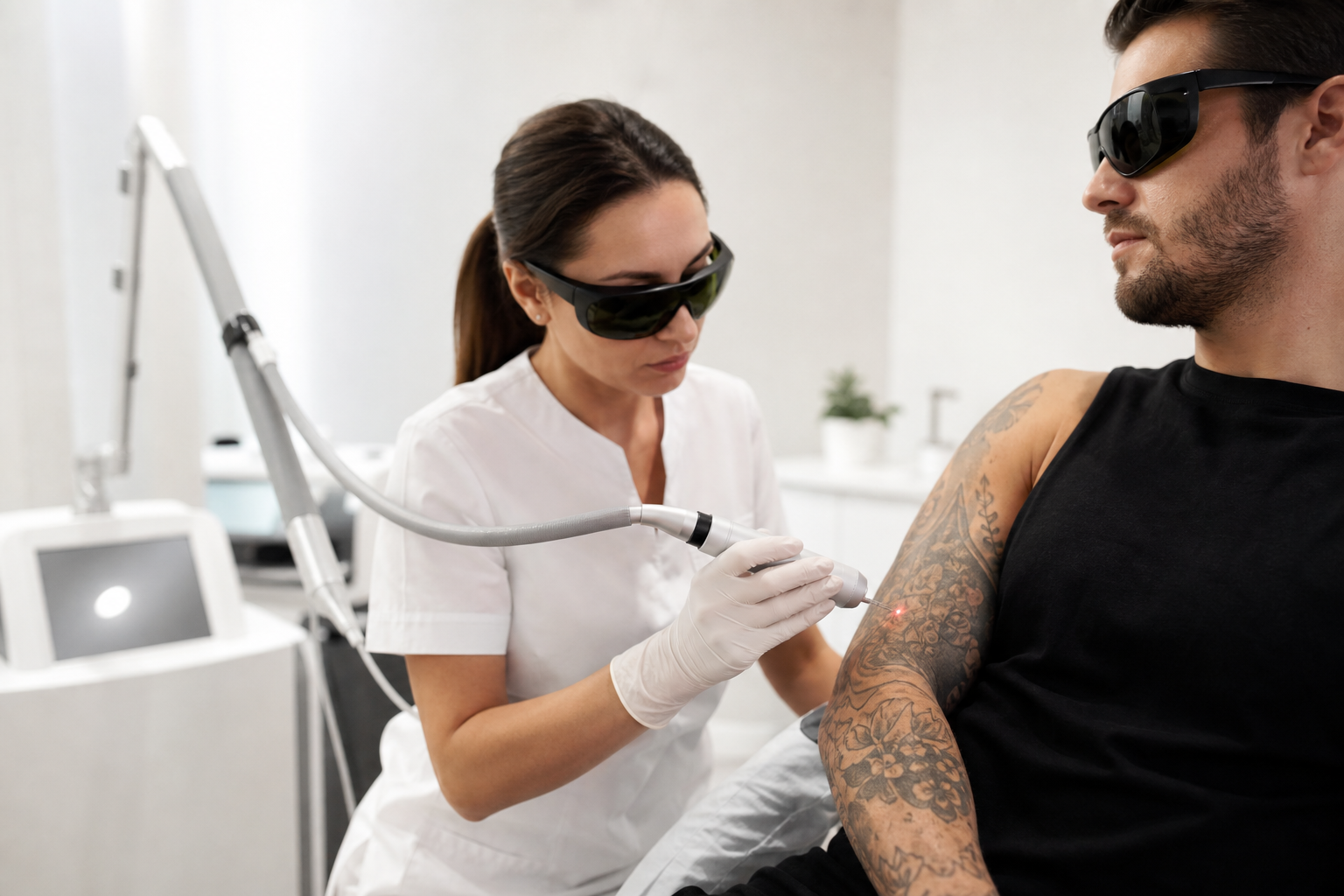
How Can You Distinguish a Medical Laser From a Questionable Device?
Distinguishing certified medical lasers from questionable devices is crucial for safe and effective tattoo removal. This article o...
Read more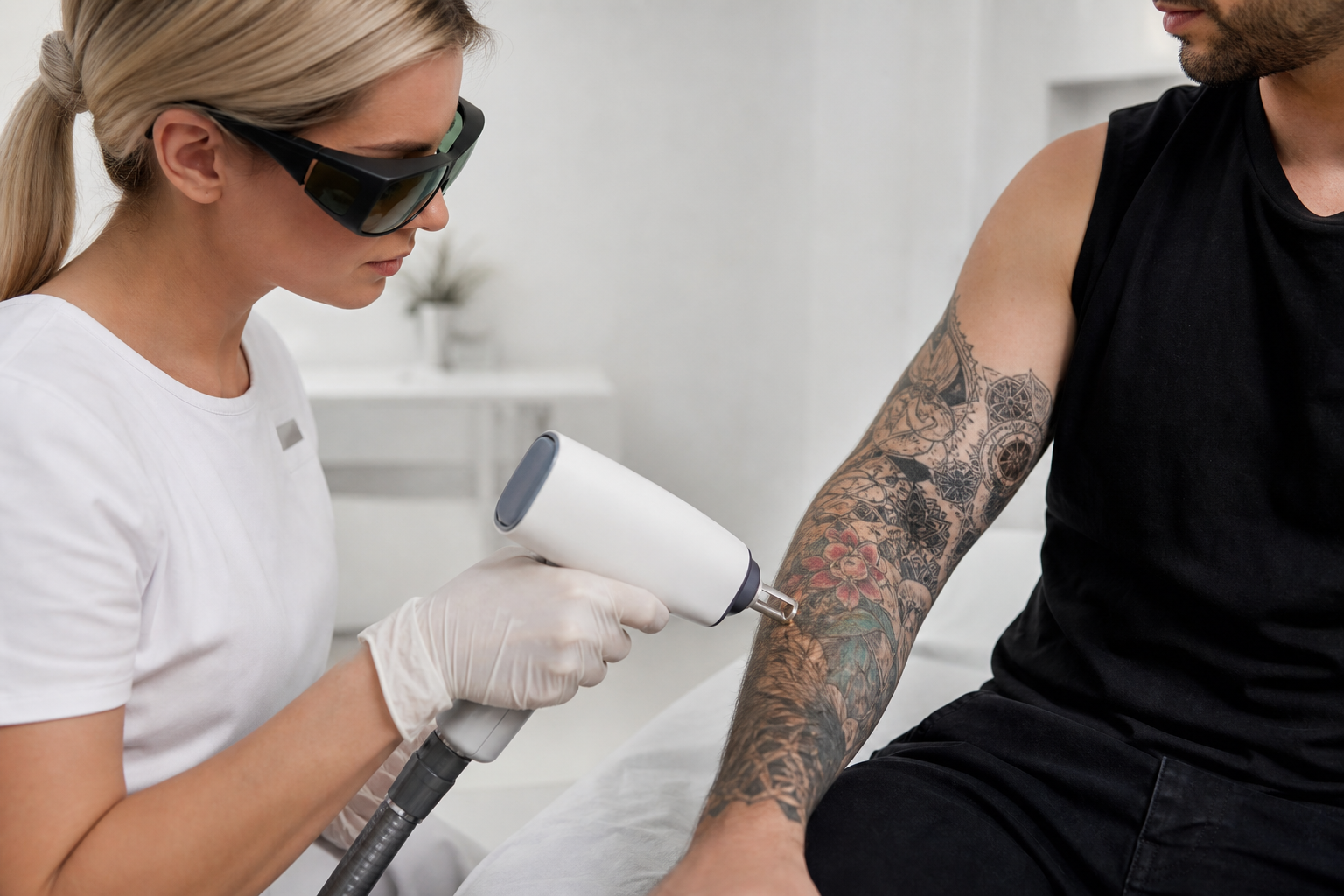
Professional vs Amateur Tattoos: Which Are Easier to Remove?
Tattoo removal varies greatly between professional and amateur tattoos due to differences in ink quality, depth, and color. This a...
Read more
Laser Removal of Red and Orange Eyebrow Pigments
Laser removal of red and orange eyebrow pigments is a specialized cosmetic procedure addressing the unique challenges these warm-t...
Read more
Partial Tattoo Removal for a New Cover-Up Design
Partial tattoo removal selectively fades specific tattoo areas to prepare for new cover-up designs, balancing effective pigment re...
Read more
How Does Cosmetic Pigment Composition Affect Results?
Cosmetic pigment composition critically influences permanent makeup results, affecting color accuracy, longevity, and safety. Unde...
Read more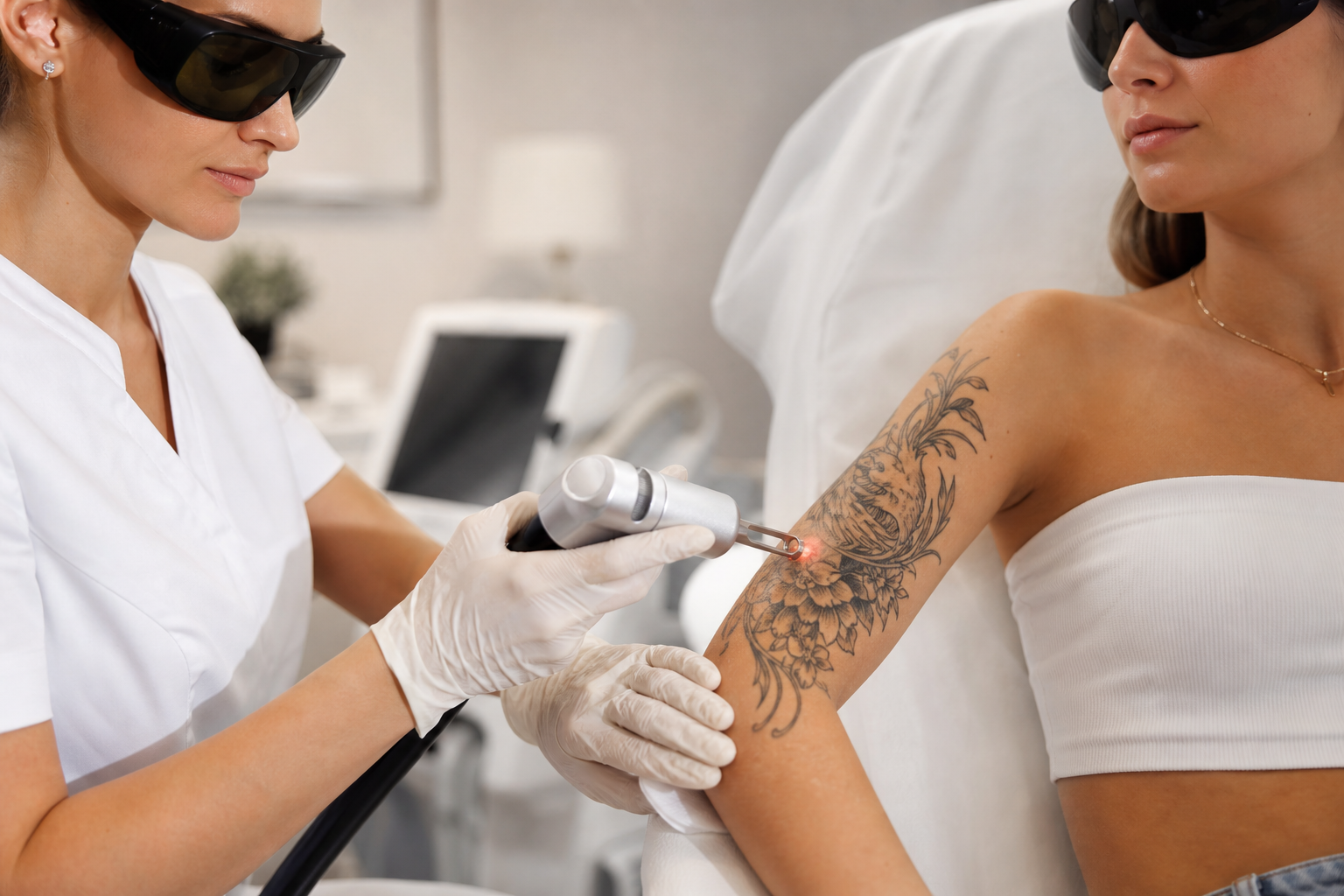
Picosecond Laser for Tattoo Removal
Picosecond lasers offer advanced technology for tattoo removal by delivering ultrashort light pulses that fragment ink pigments mo...
Read more
When Does a Skin Change Require Medical Assessment?
Skin changes following laser tattoo removal can range from normal reactions to signs of serious complications, especially in darke...
Read more
Why Can't the Tattoo Removal Process Be Safely Accelerated?
Tattoo removal safety hinges on respecting biological healing rhythms and immune responses that govern pigment elimination. Accele...
Read more
Paradoxical Darkening of Cosmetic Pigments
Paradoxical darkening occurs when cosmetic pigments deepen in color after treatments intended to lighten them, posing challenges i...
Read more
When Is the Next Treatment Session Scheduled?
Scheduling your next treatment session, whether for permanent makeup or laser tattoo removal, is a personalized process guided by...
Read more
Why Can't One Laser Treat Every Colour Equally Well?
Laser tattoo removal effectiveness varies because each tattoo pigment color absorbs laser light at different wavelengths. No singl...
Read more
Why Should You Never Pick or Remove Healing Skin Changes Yourself?
Healing skin changes like moles and warts should never be picked or self-removed due to serious risks such as infection, scarring,...
Read more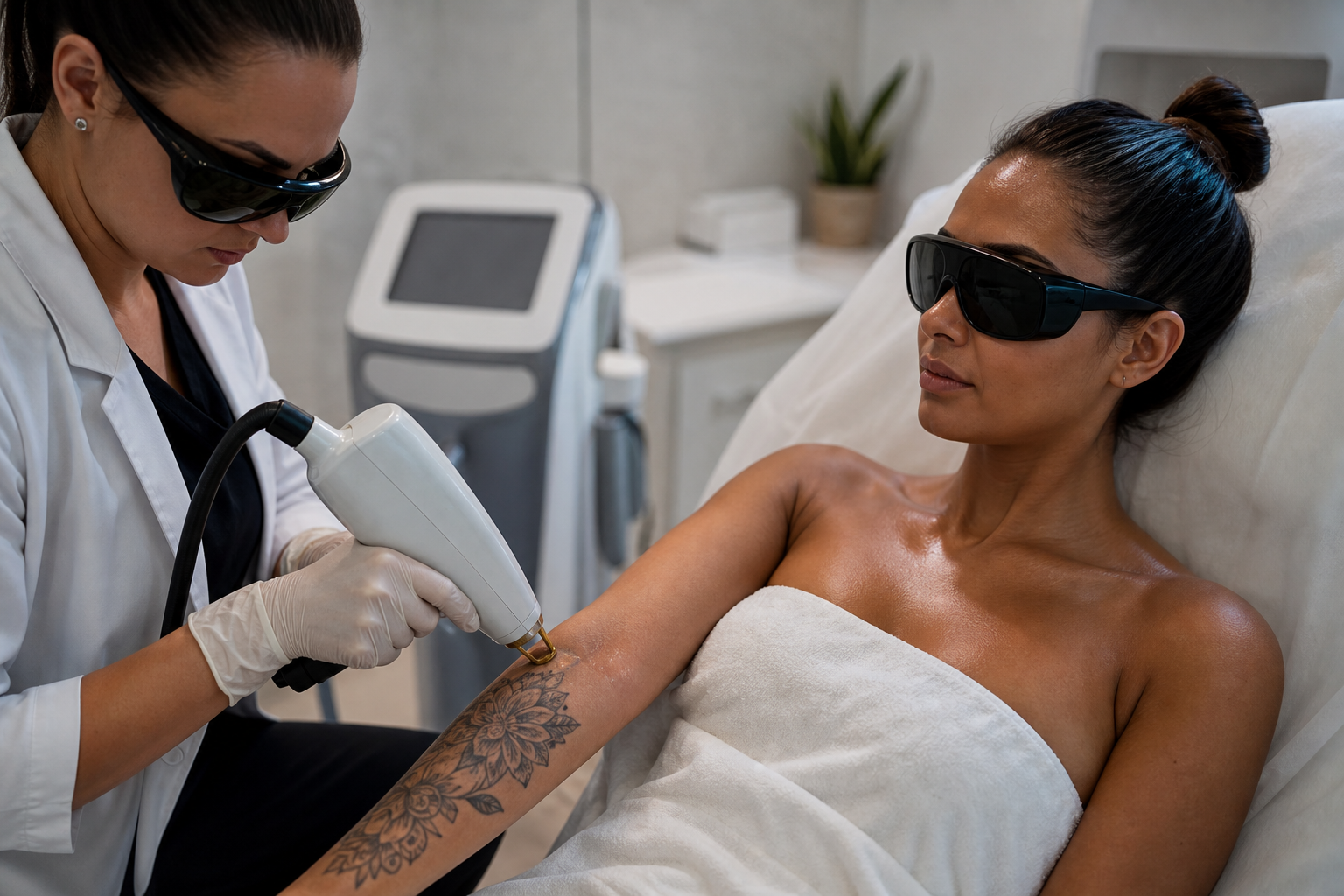
Risks of Treating Tanned Skin
Treating tanned skin with laser procedures requires special caution due to increased melanin levels that can lead to pigmentary ch...
Read more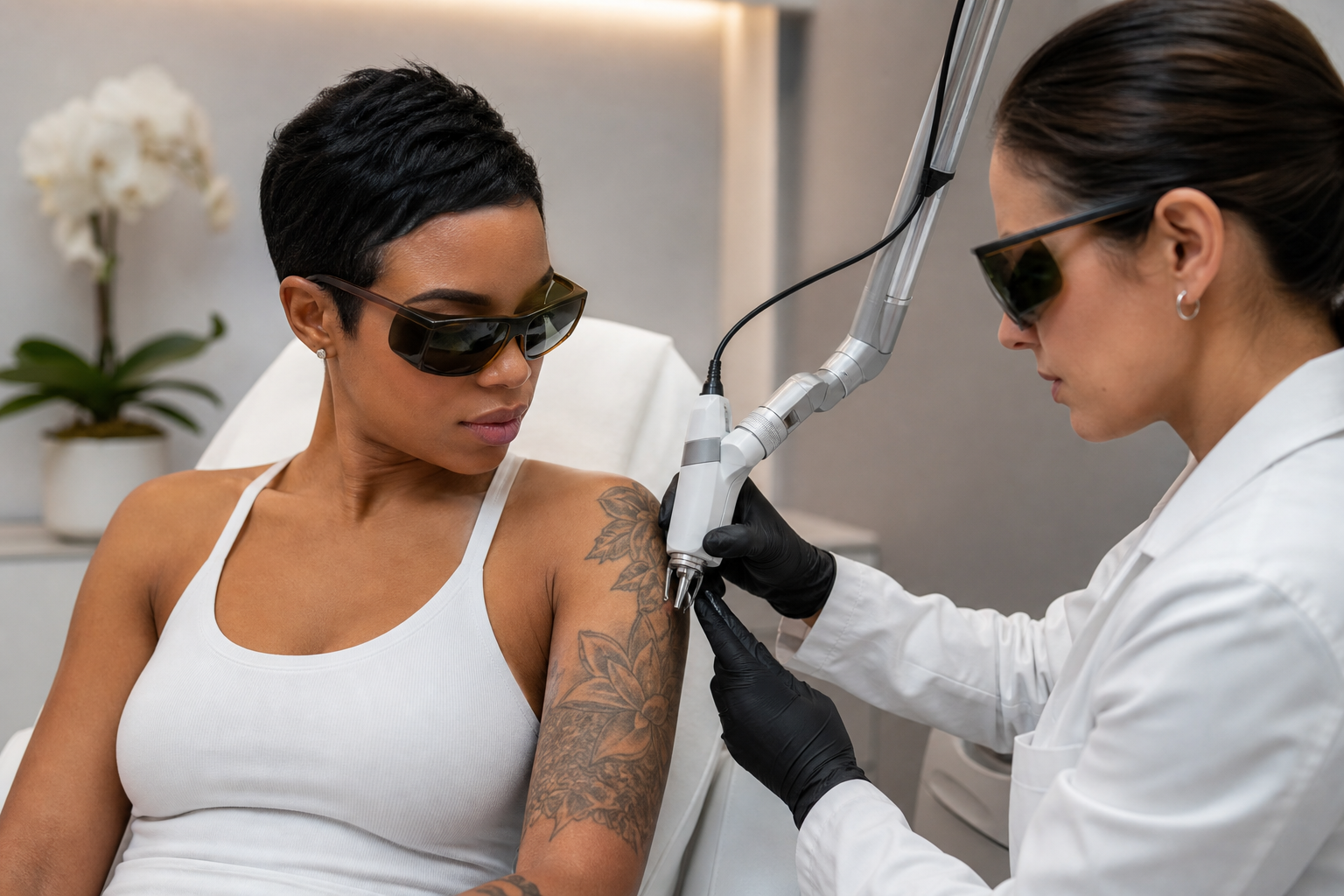
Why Can Melanin React to Laser Energy?
Melanin's absorption of laser energy is central to dermatological procedures like tattoo removal and pigment correction. Understan...
Read more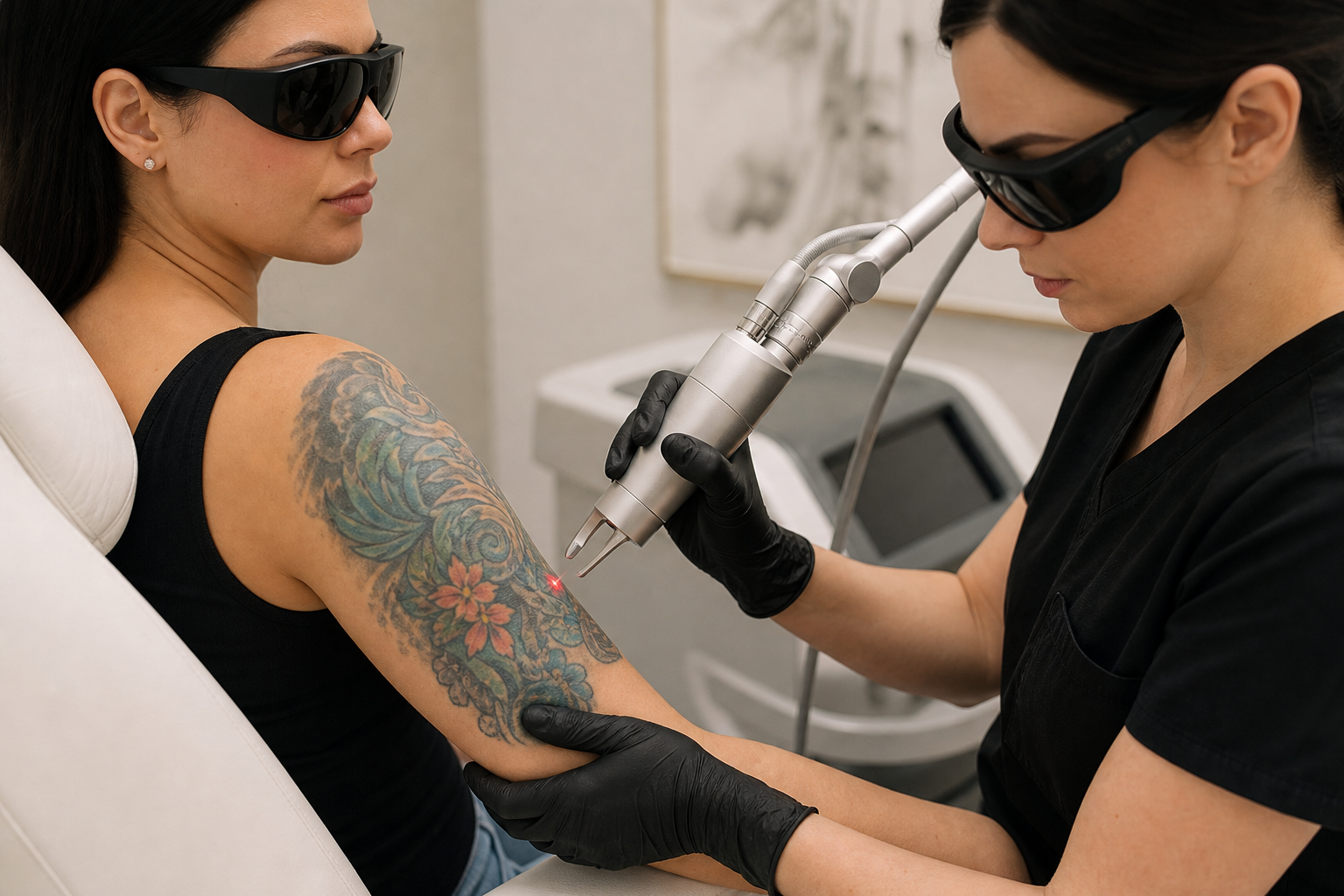
Alexandrite Laser for Green and Blue Pigments
The alexandrite laser, operating at a 755 nm wavelength, is uniquely effective for removing green and blue tattoo pigments that re...
Read more
Why Are Test Spots Used for Certain Tattoo Colours?
Test spots are a crucial safety measure in laser tattoo removal, enabling practitioners to assess skin and pigment responses befor...
Read more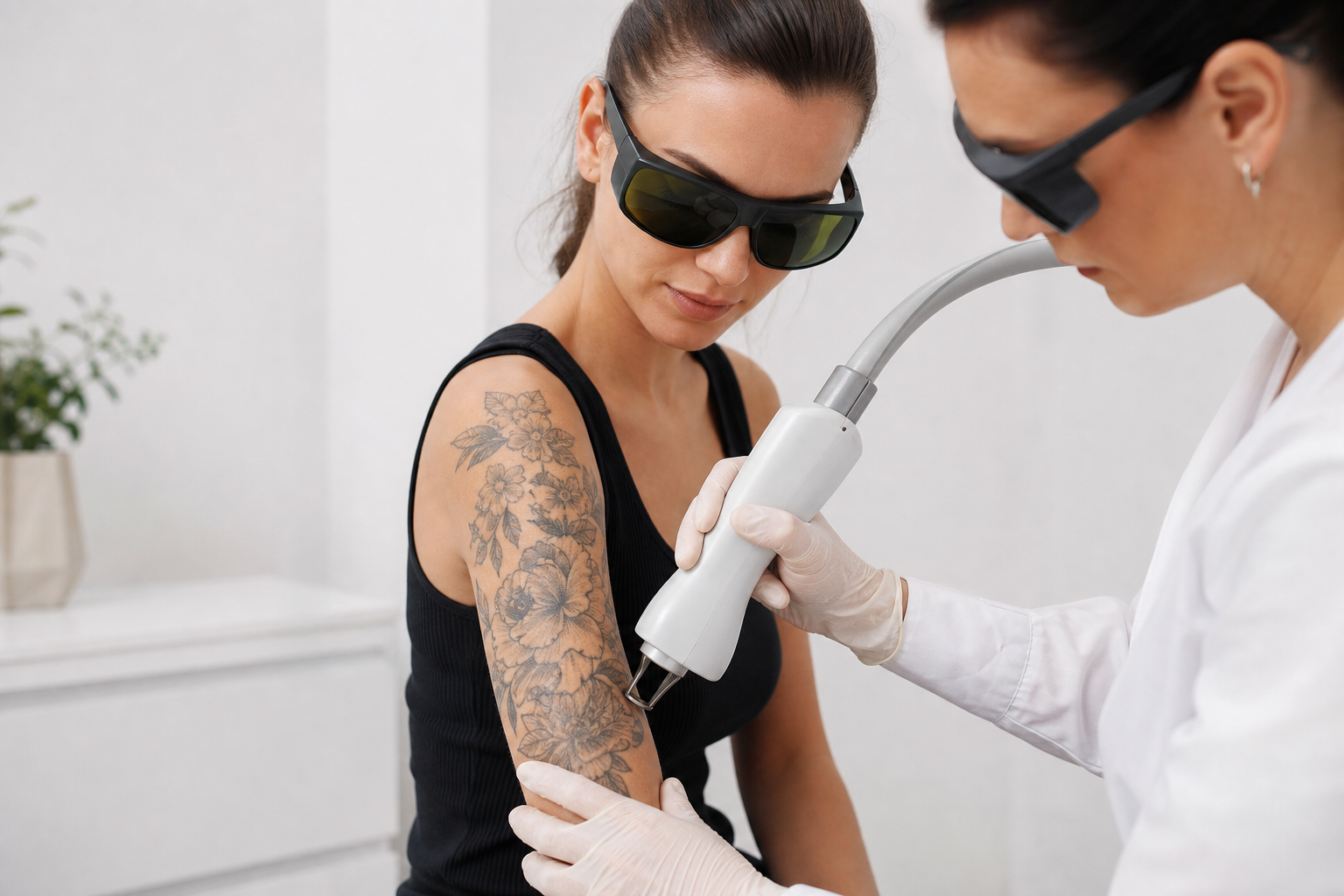
Common Skin Reactions After Tattoo Removal
Laser tattoo removal commonly leads to skin reactions such as redness, swelling, itching, and pigment changes. Understanding these...
Read more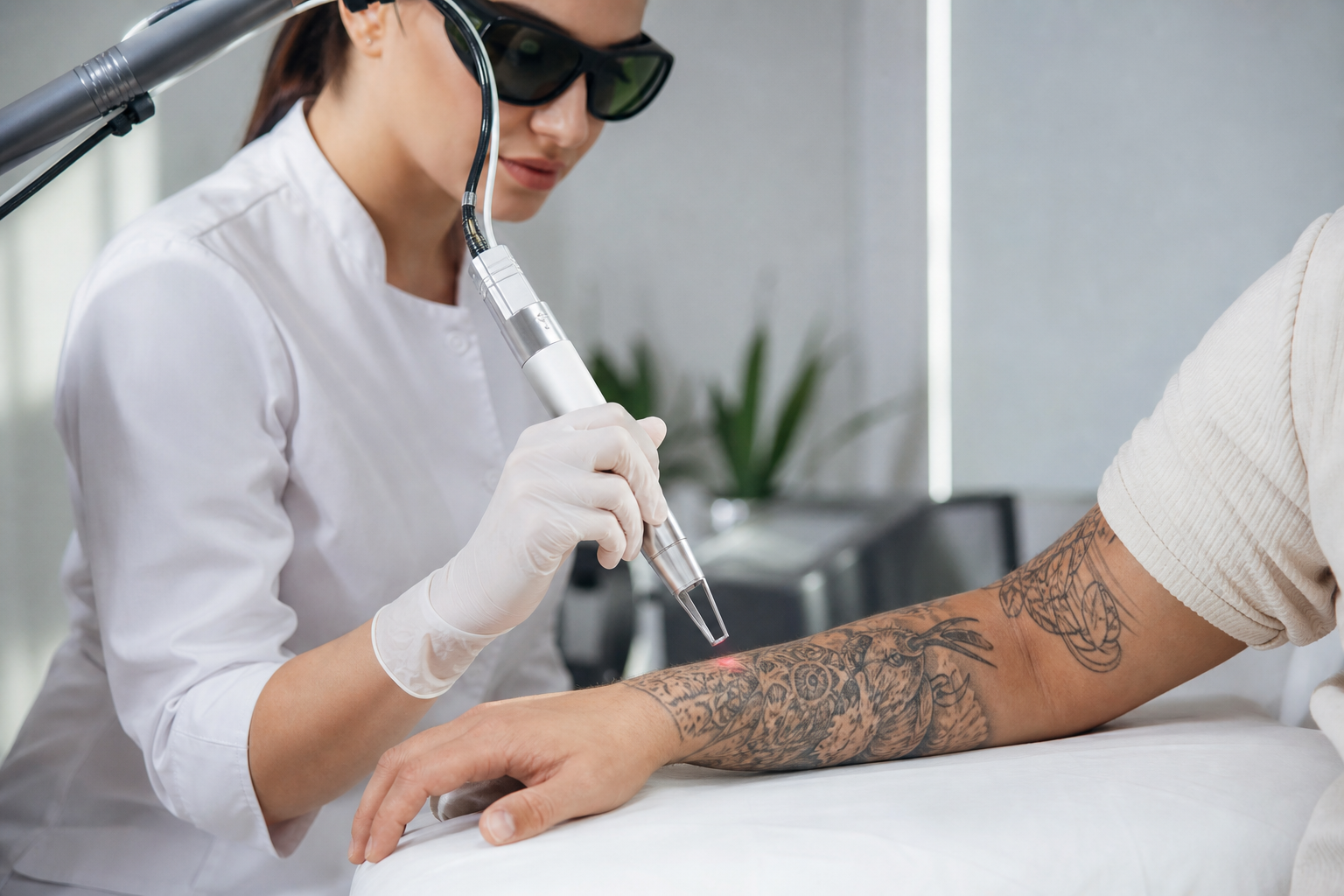
What Determines the Speed of Tattoo Removal?
The speed of tattoo removal depends on a complex interplay of factors including ink color, pigment composition, skin type, immune...
Read more
Why Isn't Tattoo Size the Only Important Factor?
Tattoo removal involves more than just size; factors like ink color, placement, pigment depth, and laser technology play pivotal r...
Read more
What Is the Fitzpatrick Skin Type and Why Does It Matter?
The Fitzpatrick Skin Type classification categorizes skin based on its response to UV exposure, crucial for tailoring laser tattoo...
Read more
What Happens During the Consultation Before the First Treatment?
The consultation before laser treatments like tattoo or permanent makeup removal is a critical step for personalized, safe, and ef...
Read more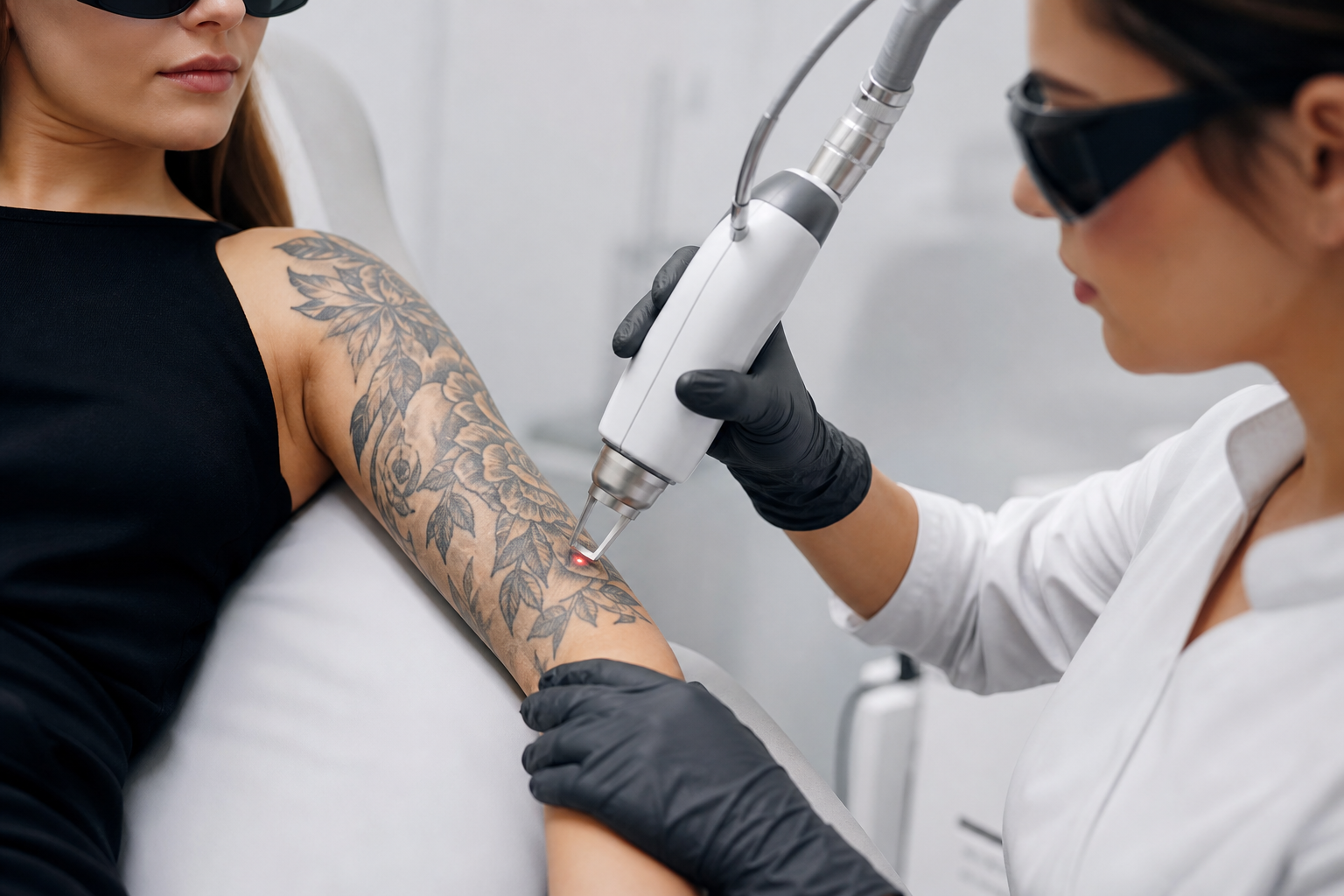
How Does Laser Energy Affect Tattoo Pigment?
Laser tattoo removal works by selectively targeting and fragmenting pigment particles in the skin using specific laser wavelengths...
Read more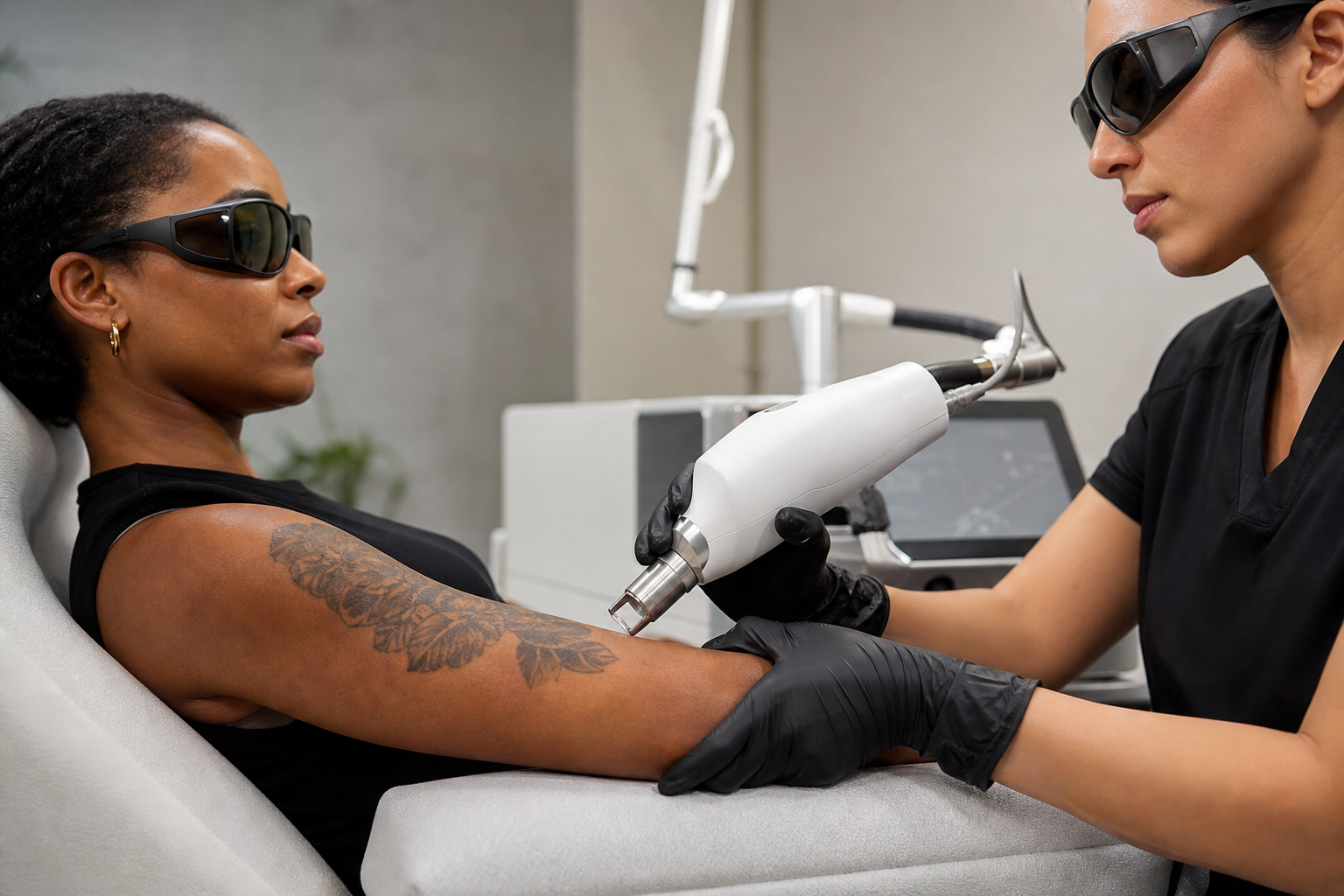
Tattoo Removal in Darker Skin
Tattoo removal in darker skin requires specialized laser techniques to minimize risks like pigment changes. Understanding melanin'...
Read more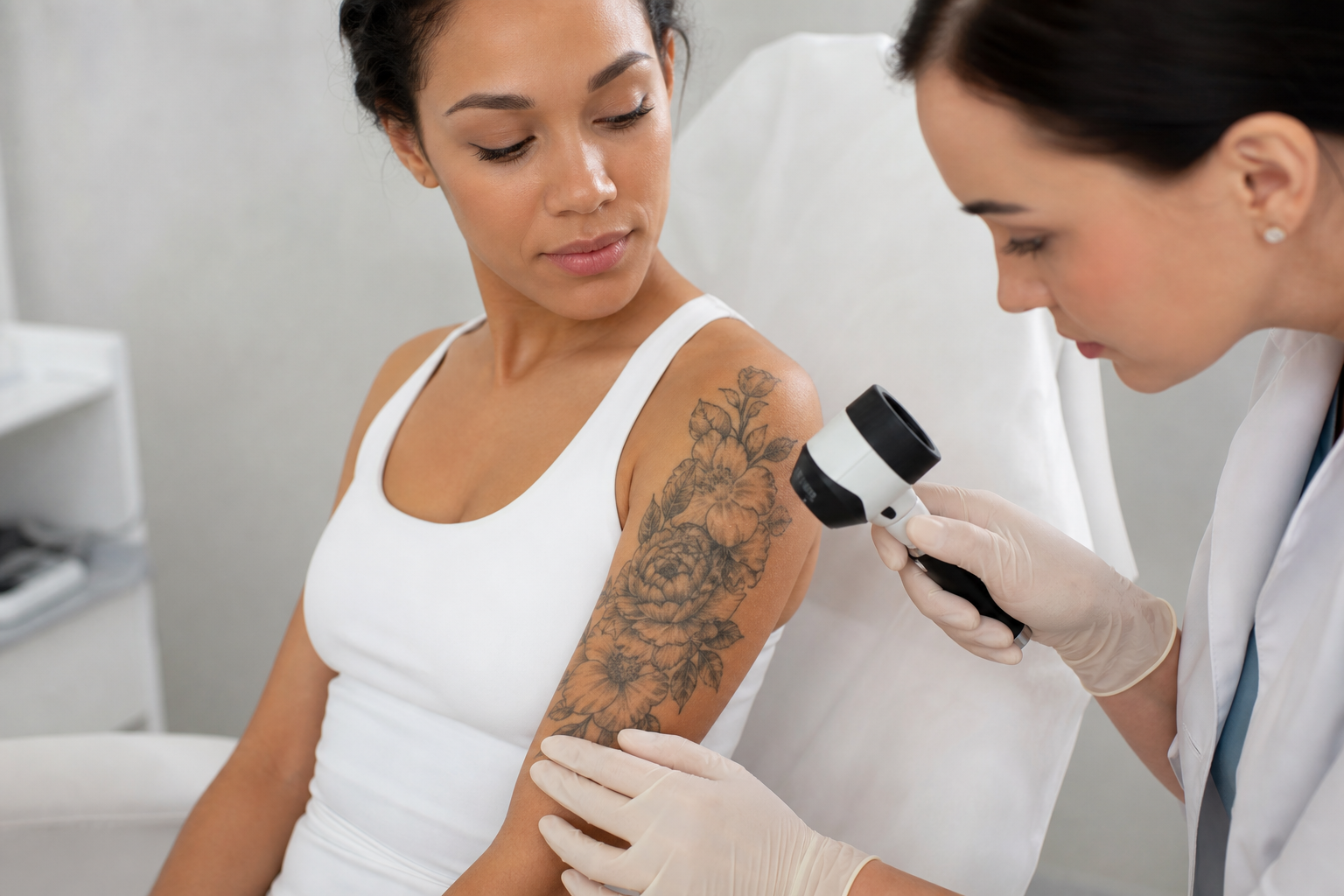
Pigment Changes After Tattoo Removal
Laser tattoo removal can cause changes in skin pigmentation, particularly hyperpigmentation and hypopigmentation, due to laser int...
Read more
What Information Should You Give the Practitioner Before Treatment?
Before undergoing pigment removal treatments like laser tattoo or permanent makeup removal, providing thorough medical, lifestyle,...
Read more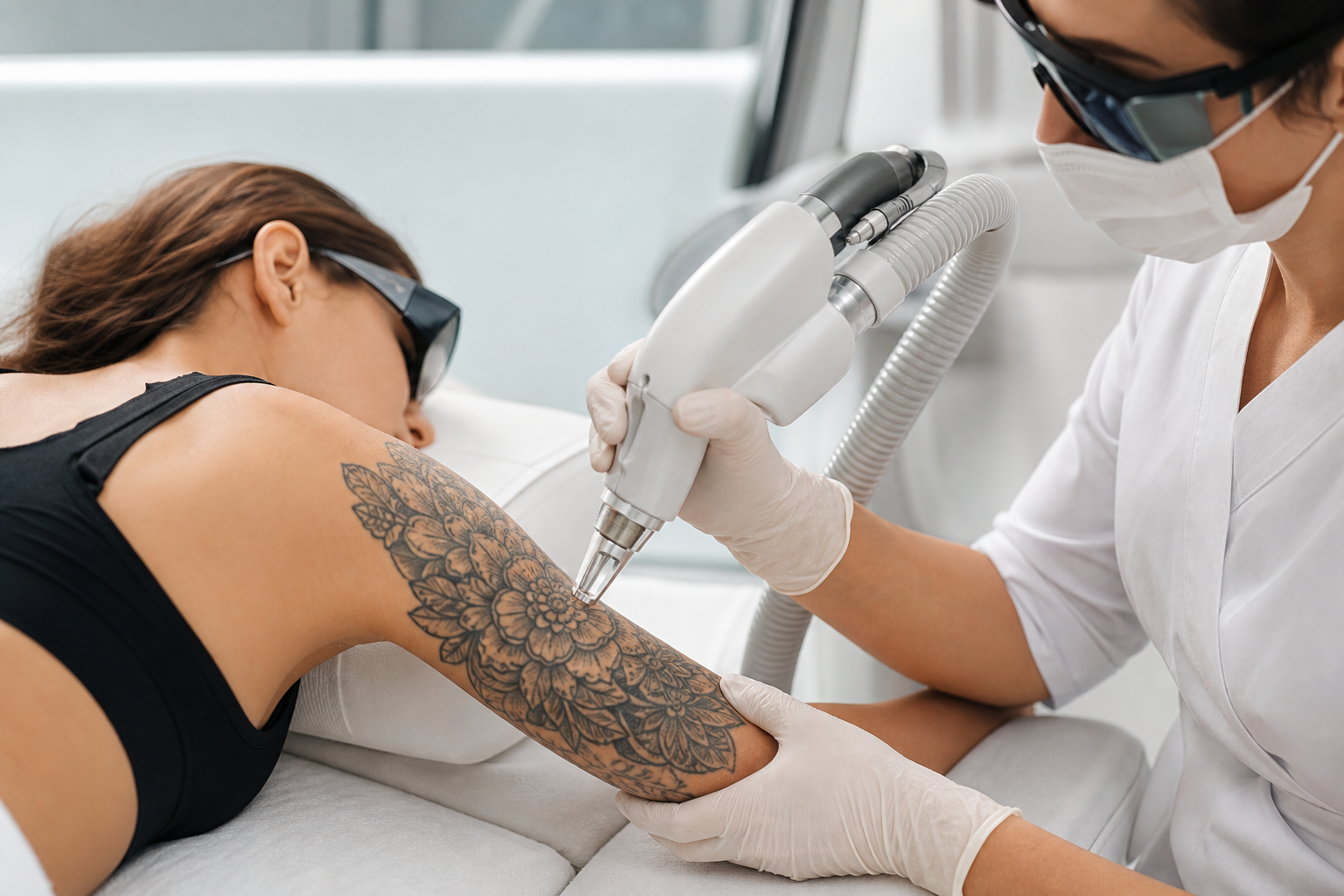
Can a Tattoo Be Removed Completely?
Laser tattoo removal offers a safe and effective method to significantly fade or eliminate tattoos, but complete, scar-free remova...
Read more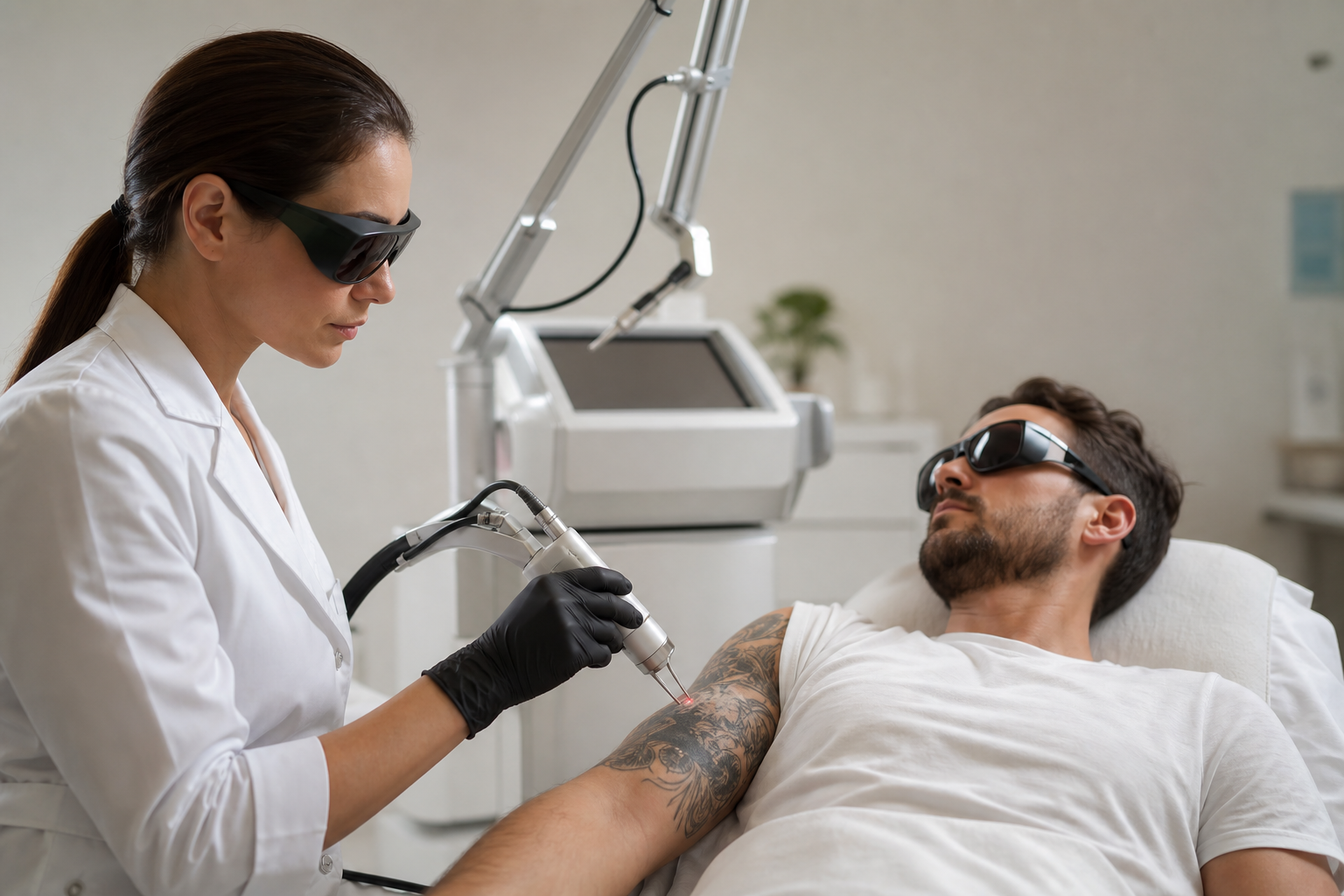
Why Are Multiple Treatment Sessions Needed?
Laser tattoo removal requires multiple sessions because tattoo ink is deeply embedded and must be fragmented and cleared by the bo...
Read more
Why Does a Tattoo Fade Gradually After Each Treatment?
Laser tattoo removal results in gradual fading because each treatment breaks down pigment molecules into smaller fragments which t...
Read more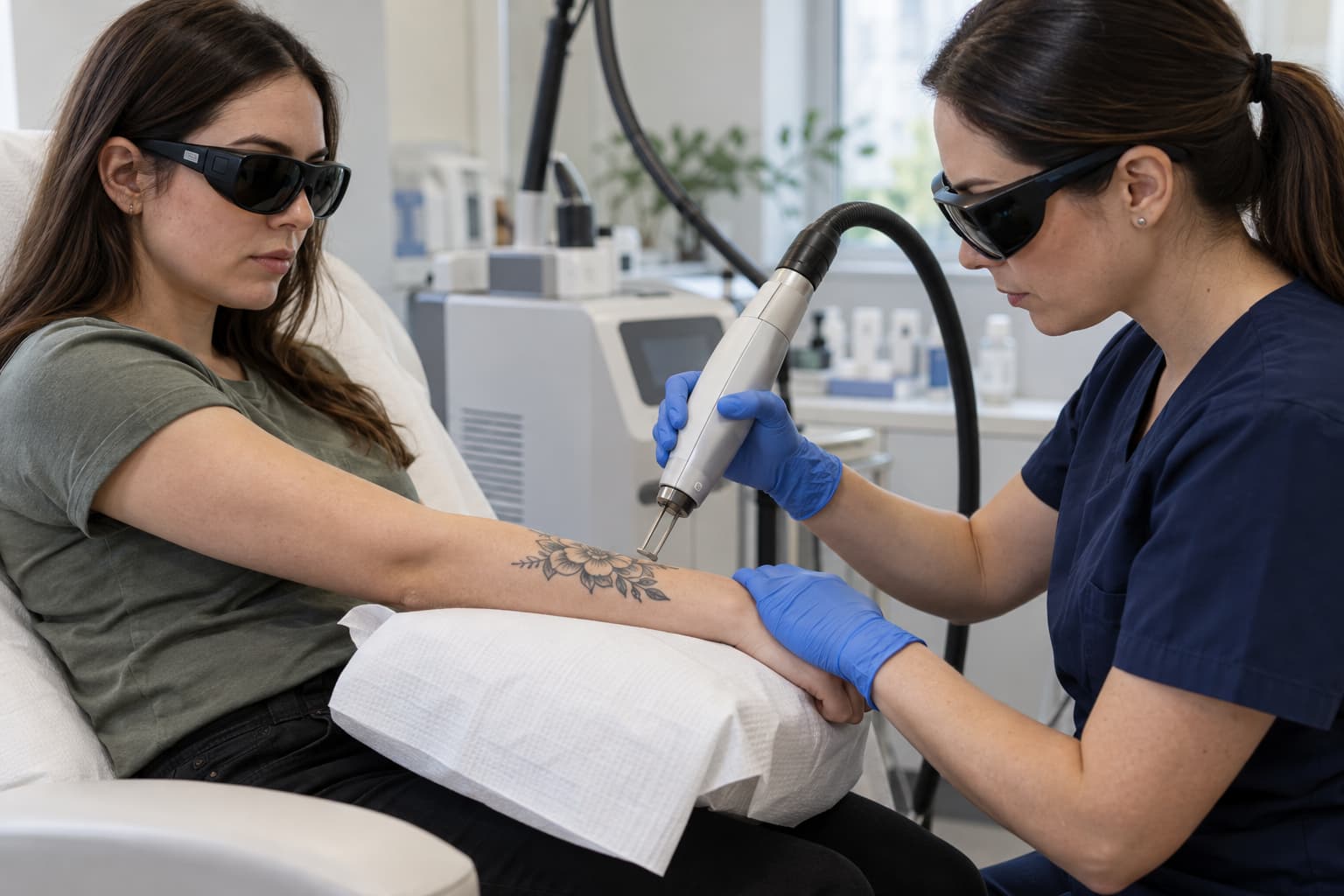
Is Laser Tattoo Removal Safe?
Laser tattoo removal is a sophisticated procedure requiring individualized assessment to balance effectiveness with safety. Unders...
Read more
What Determines the Number of Laser Treatment Sessions?
The number of laser treatment sessions varies widely depending on factors such as pigment type, skin characteristics, lesion depth...
Read more
Which Lasers Are Used for Tattoo Removal?
Laser tattoo removal employs advanced technologies like Q-switched and picosecond lasers to target and break down ink pigments. Un...
Read more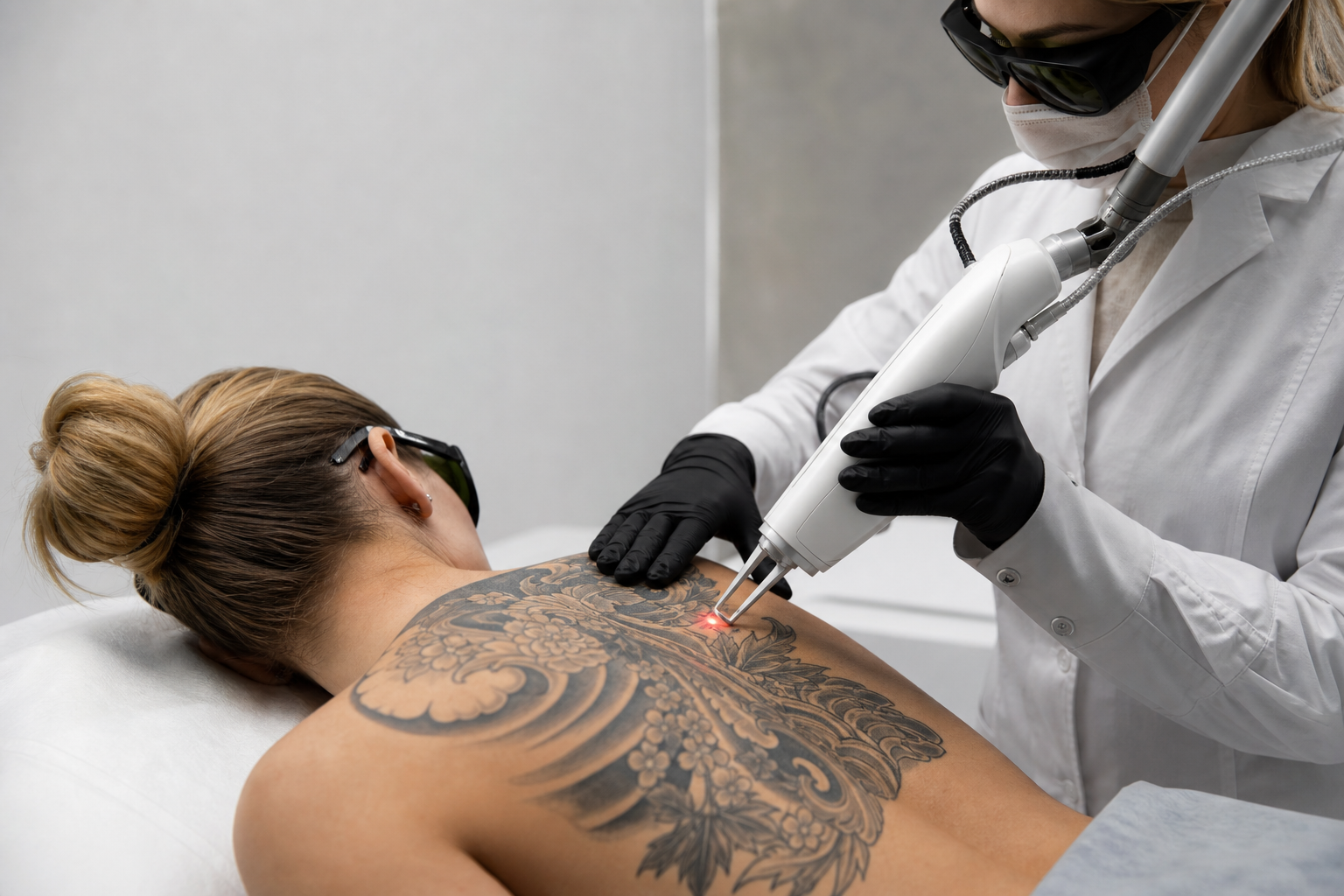
Picosecond vs Q-Switched Lasers: What Are the Differences?
This article thoroughly compares picosecond and Q-switched lasers for tattoo removal, highlighting their mechanisms, advantages, a...
Read more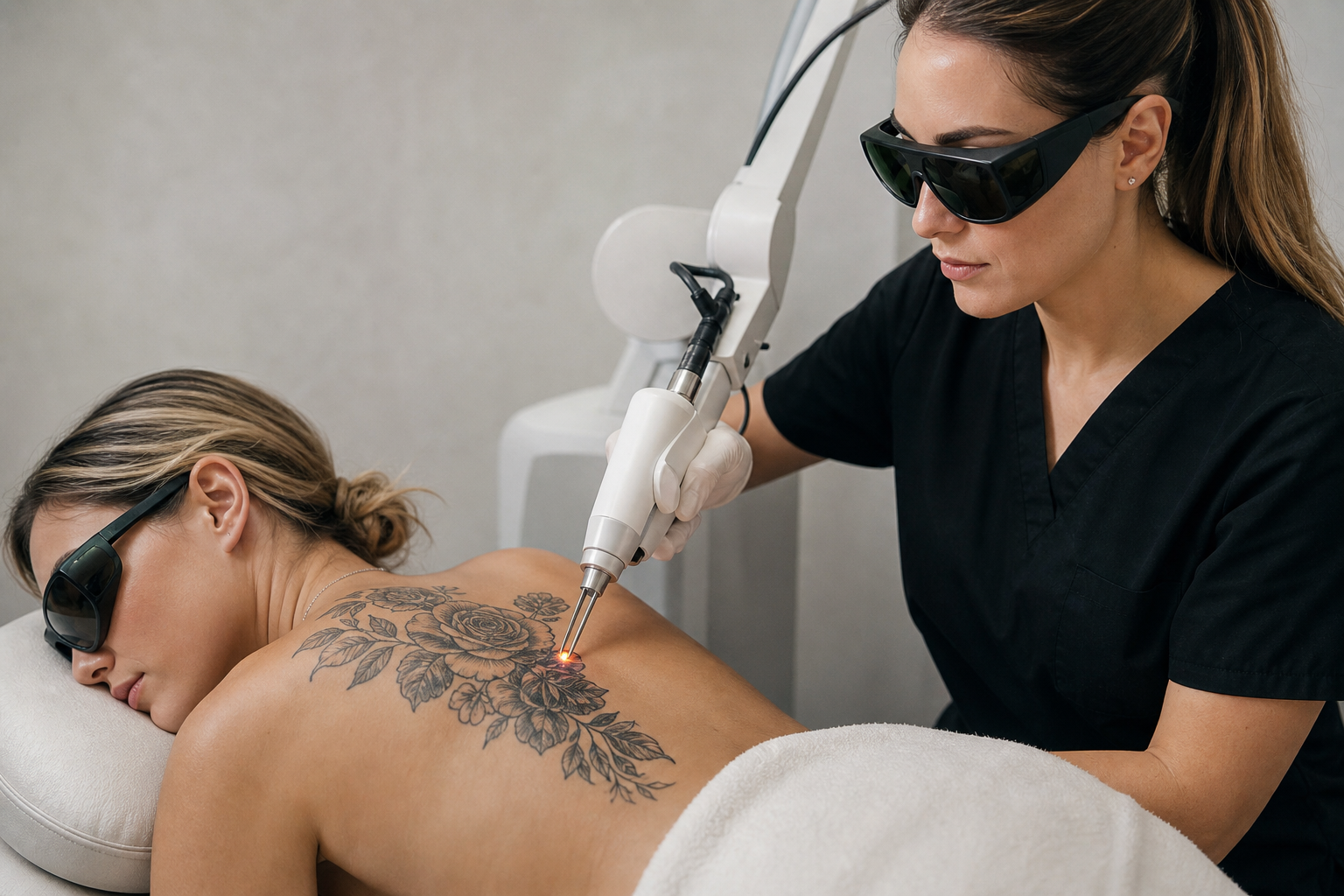
What Happens to Tattoo Ink After Laser Treatment?
Laser tattoo removal breaks down ink particles using light energy, allowing the body’s immune system to gradually clear the fragme...
Read more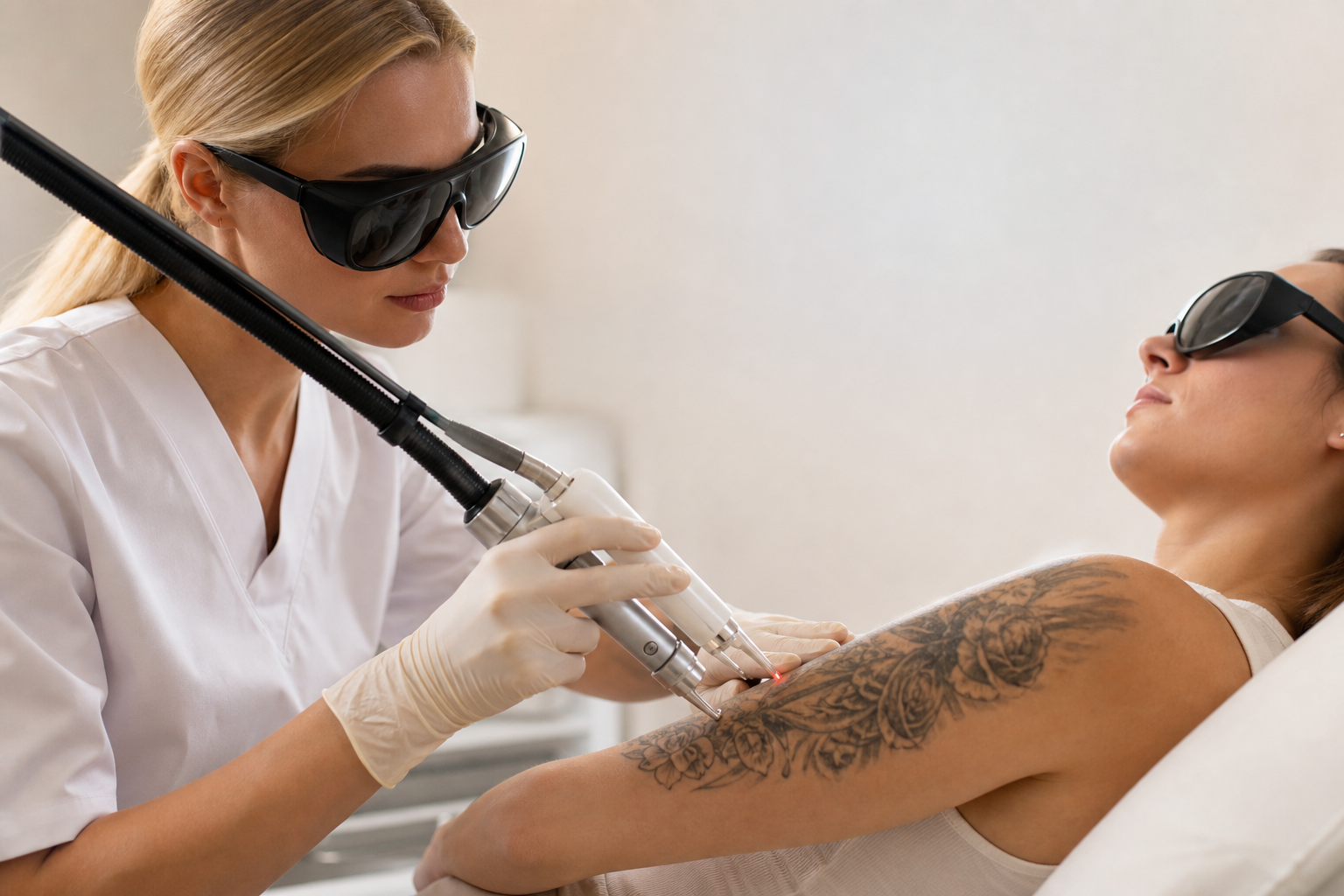
Q-Switched Lasers: How Are They Used for Tattoos?
Q-switched lasers are a leading technology for tattoo removal, offering precise targeting of ink pigments with minimal skin damage...
Read more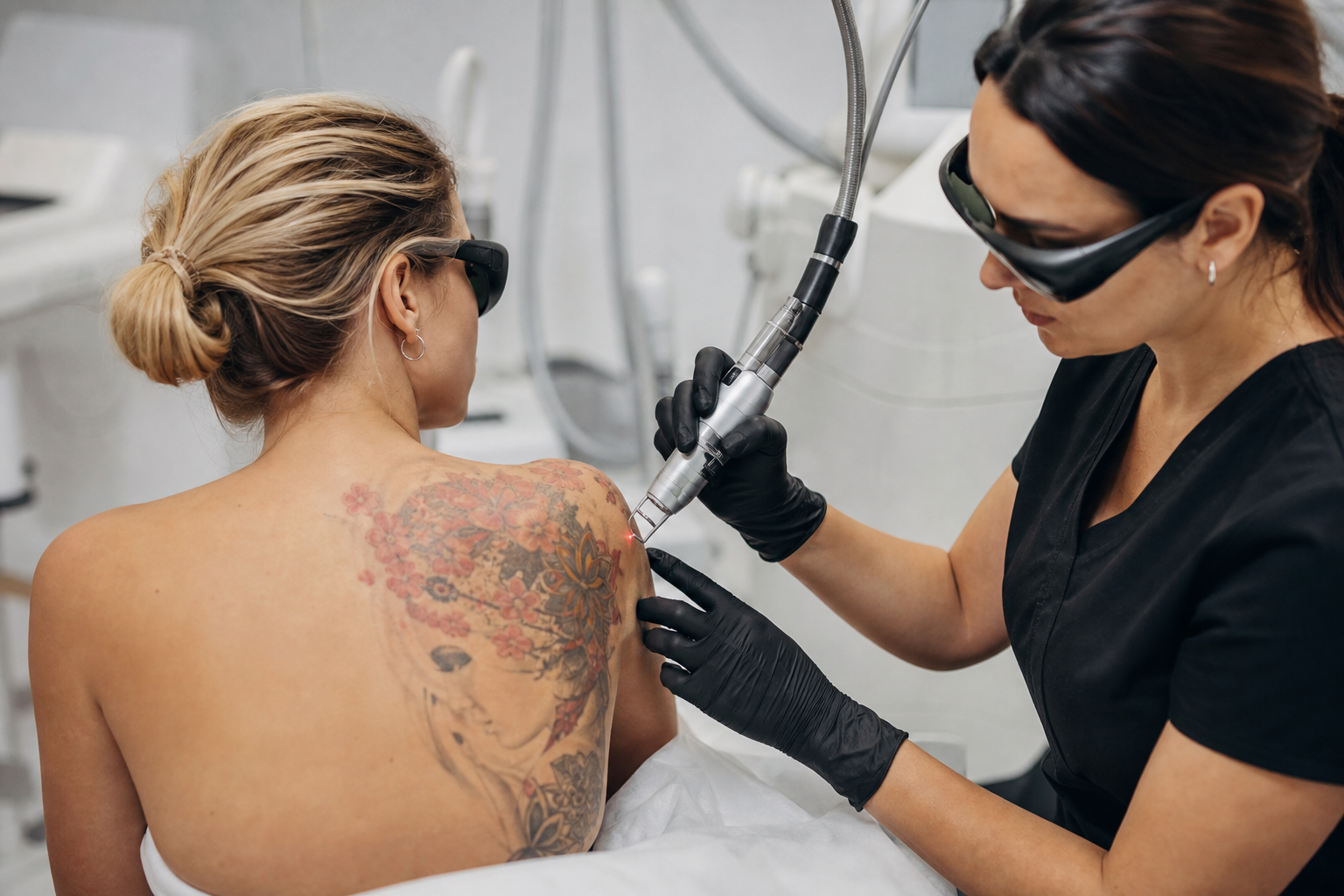
Laser Removal of Red Tattoos
Laser removal of red tattoos involves unique challenges due to the complex chemistry of red pigments and their varied response to...
Read more
Why Are Black Tattoos Usually the Easiest to Remove?
Black tattoos are typically the easiest to remove because their carbon-based pigments absorb laser wavelengths more effectively, a...
Read more
Laser Removal of Permanent Eyebrows
Laser removal of permanent eyebrows offers a precise and medically responsible approach to fade or eliminate unwanted micropigment...
Read more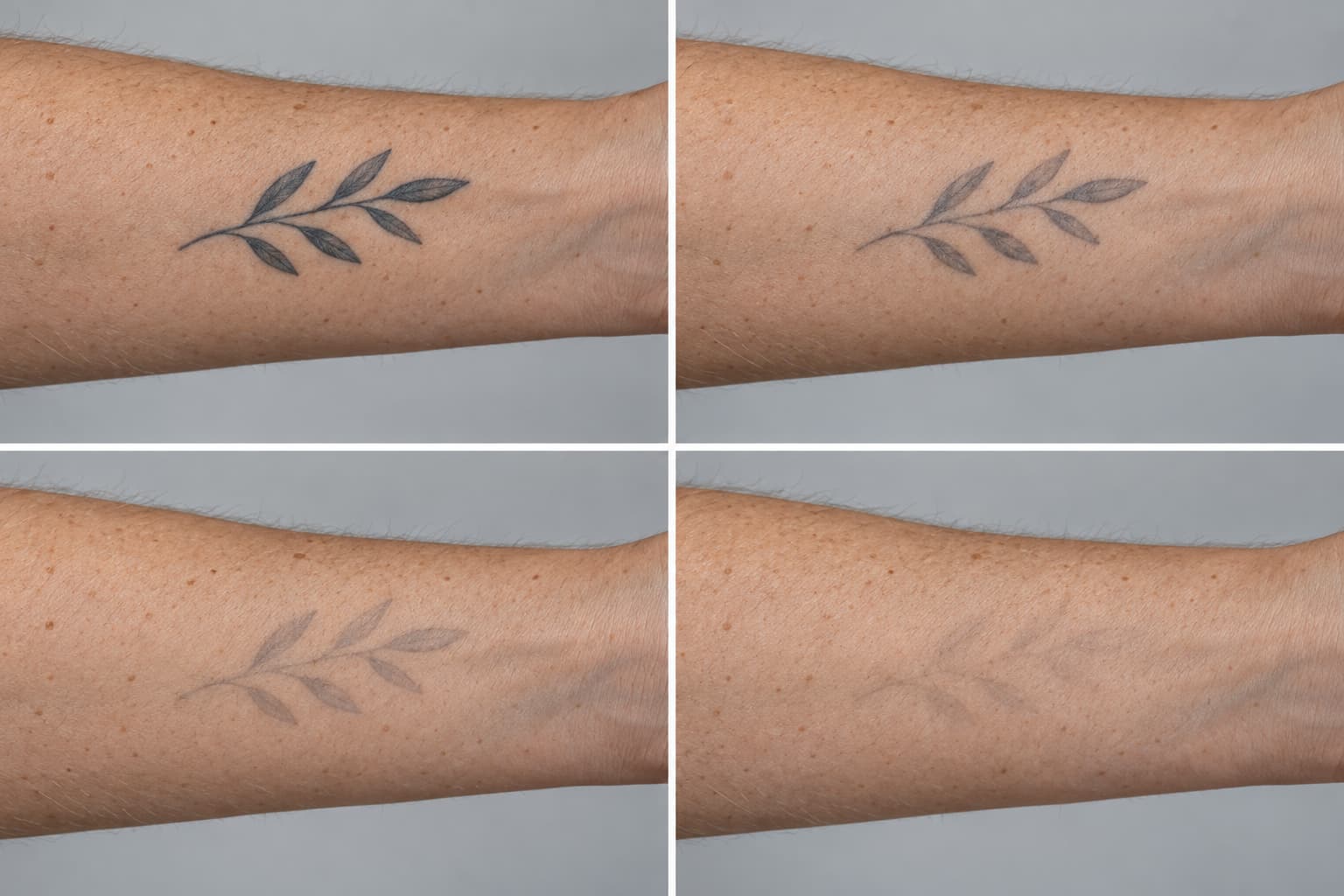
How Many Sessions Are Needed for Tattoo Removal?
Laser tattoo removal sessions vary widely depending on tattoo color, depth, size, and individual skin factors. Understanding these...
Read more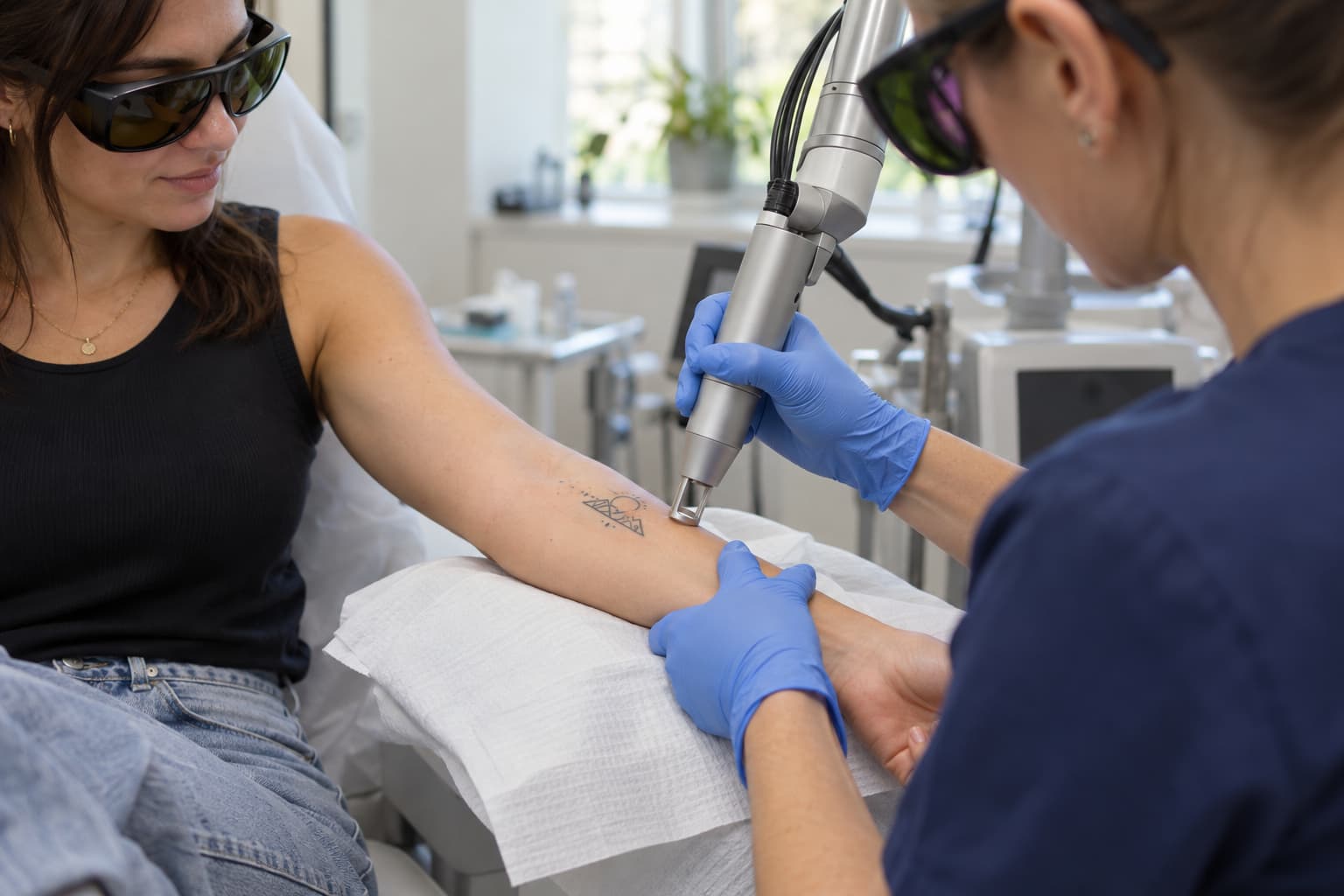
How Does Laser Tattoo Removal Work?
Laser tattoo removal employs targeted laser pulses to break down tattoo pigments, which the body gradually clears. Success depends...
Read more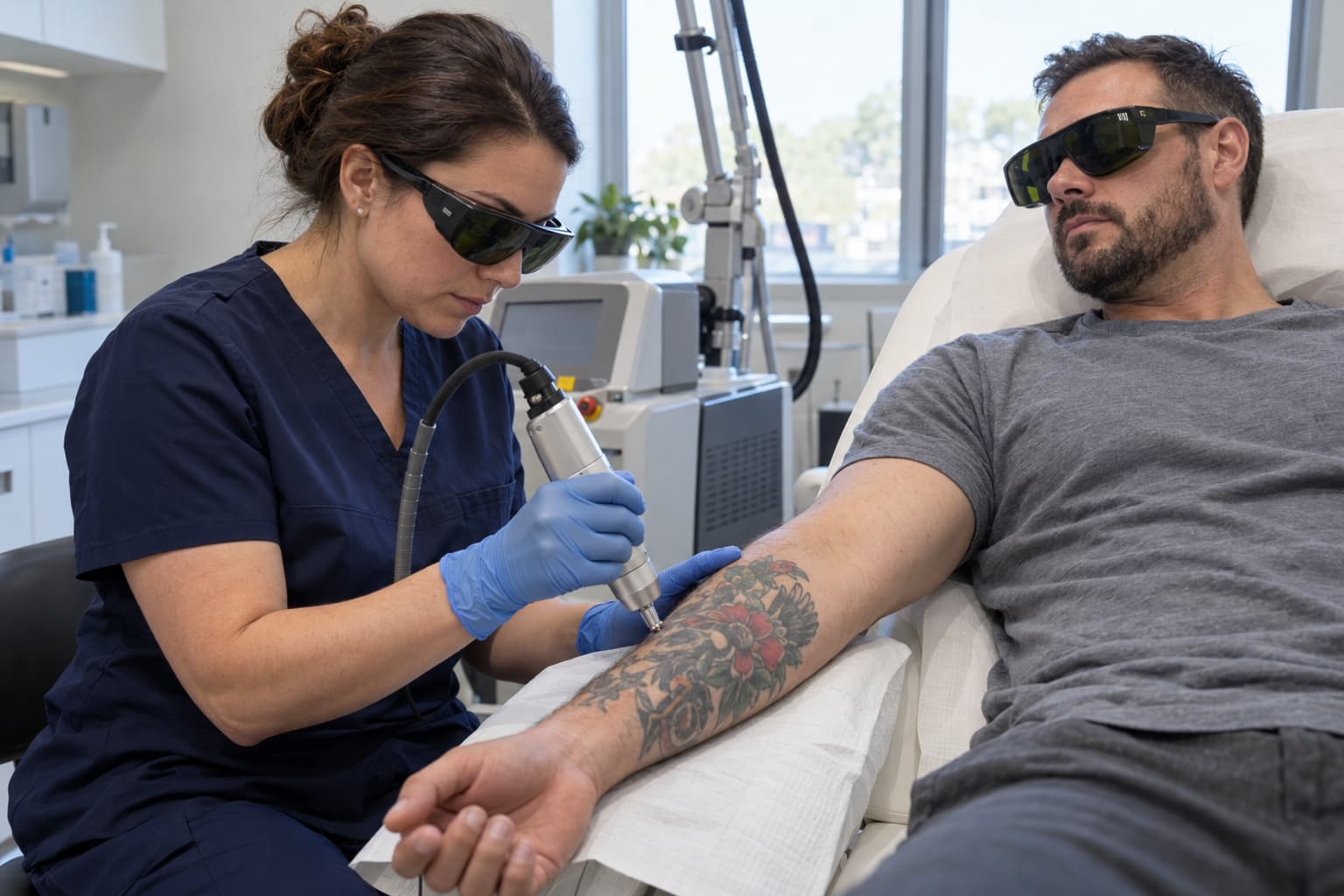
Which Tattoo Colours Are Easiest and Hardest to Remove?
Tattoo ink colour significantly affects the ease and effectiveness of laser removal. Dark inks like black and dark blue absorb las...
Read more
Laser Removal of Permanent Makeup
Laser removal of permanent makeup is a medically advanced technique aimed at safely fading or correcting embedded pigments. This a...
Read more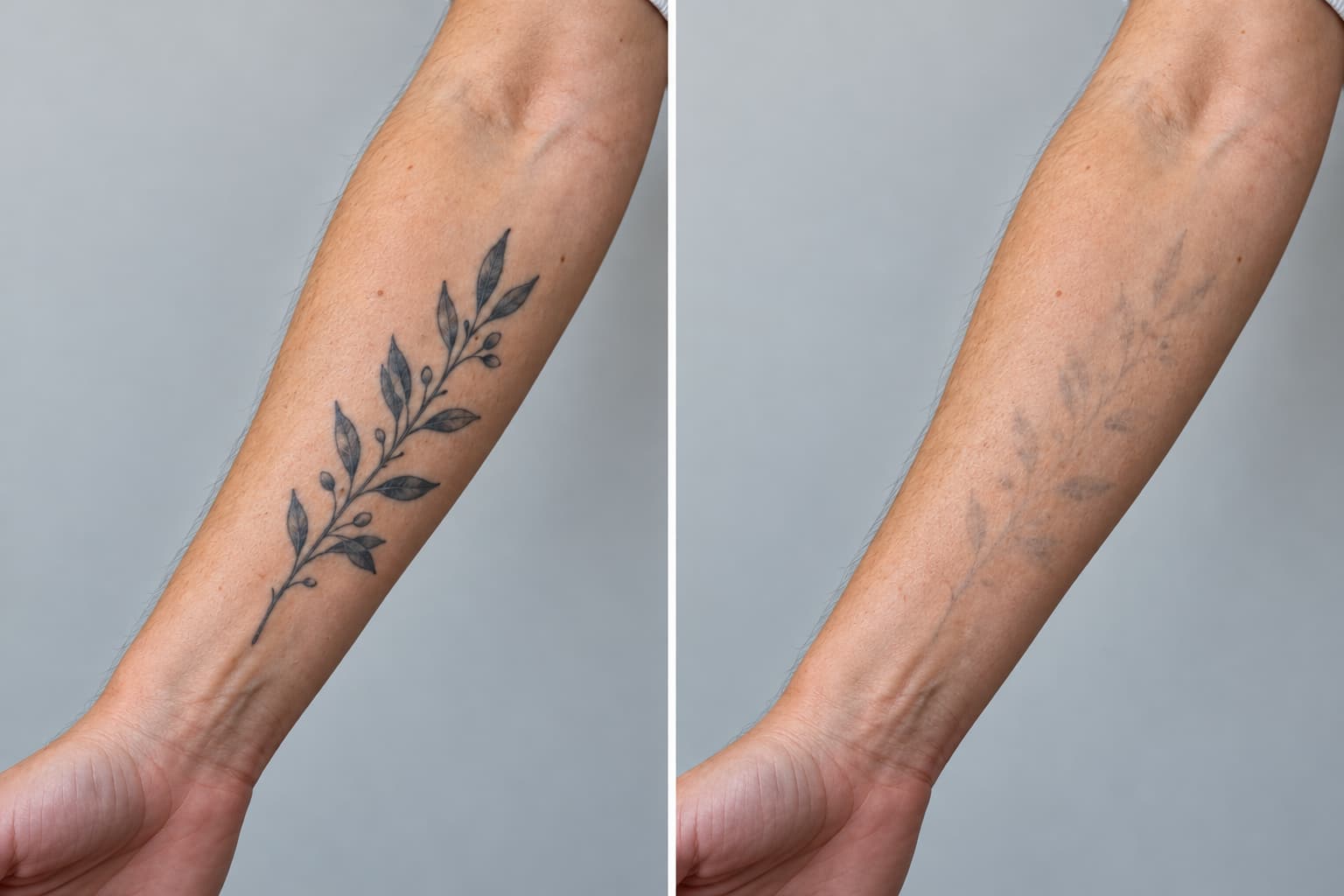
Before and After Laser Tattoo Removal
Laser tattoo removal is a careful medical process designed to fade or erase unwanted tattoos through multiple specialized sessions...
Read more
Microblading and Laser Removal: What You Need to Know
Microblading and laser removal are key procedures in permanent makeup, each with distinct processes, risks, and recovery considera...
Read more
Laser Tattoo Removal Across Different Skin Types
Laser tattoo removal effectiveness and safety vary significantly across different skin types due to melanin's role and skin photot...
Read more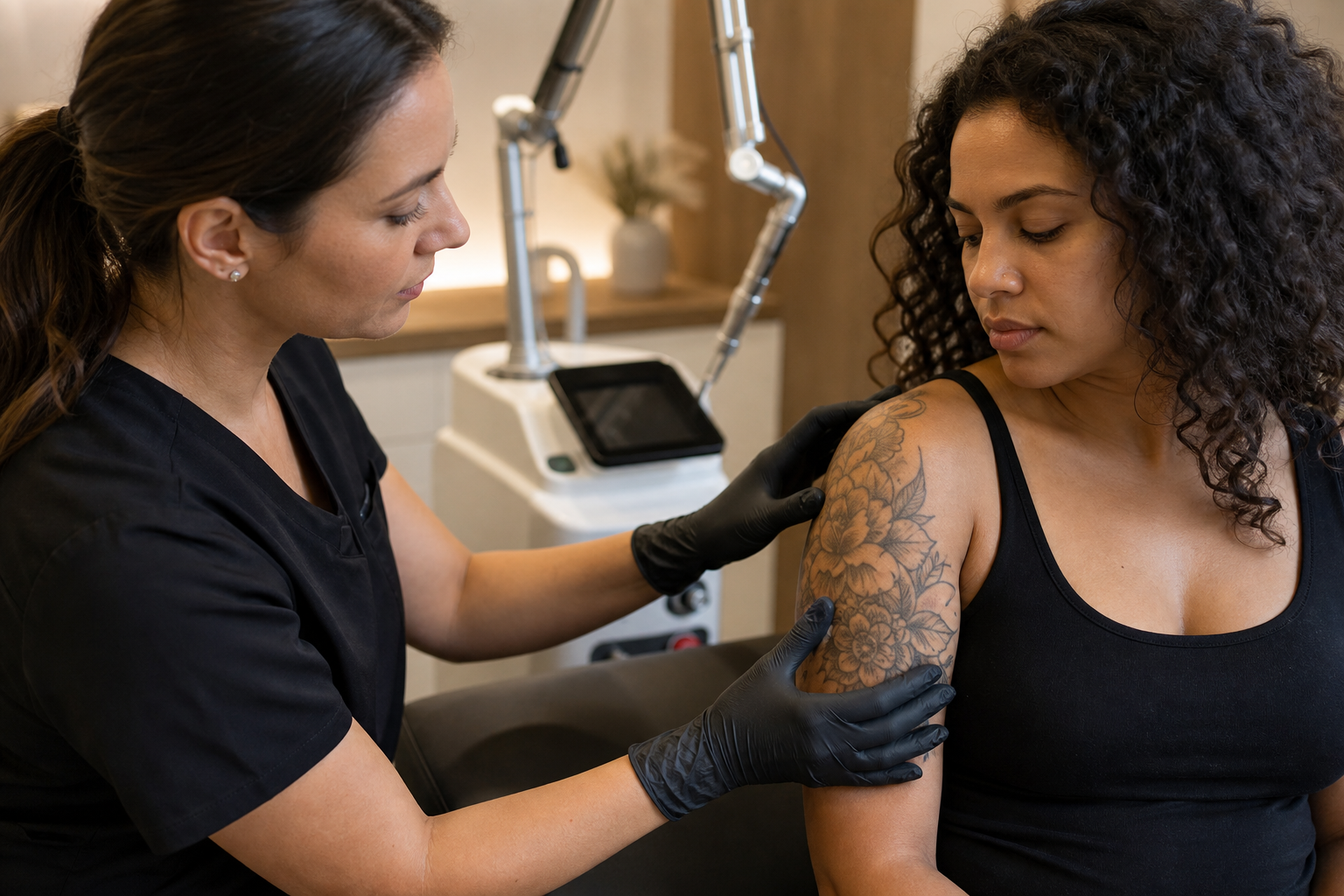
Laser Tattoo Removal: A Complete Guide to Lasers, Treatments, Results and Risks
Laser tattoo removal uses specialized Q-switched and picosecond lasers to fragment ink pigments, enabling natural clearance from t...
Read more