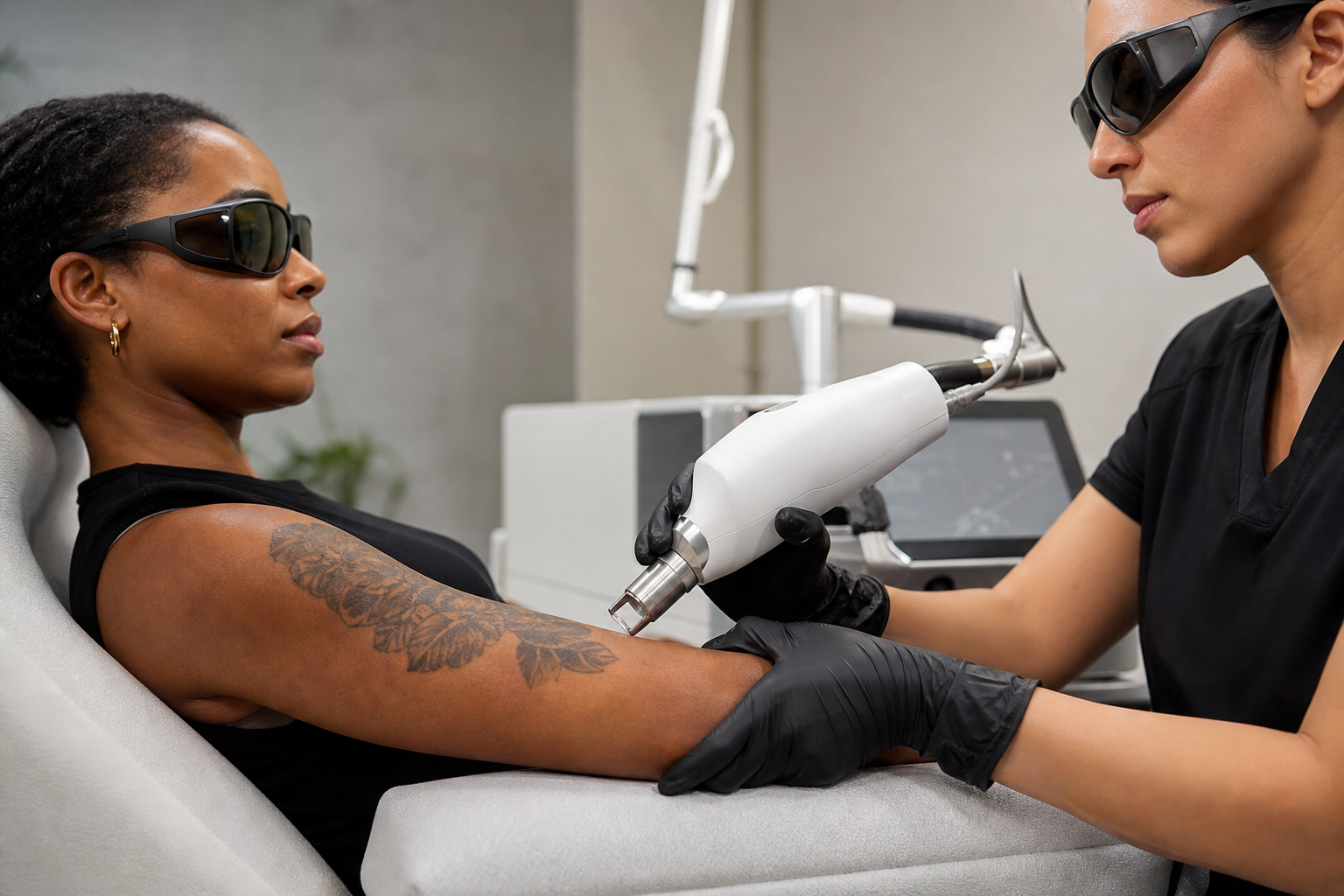
Tattoo removal in darker skin tones represents a specialized and often challenging aspect of dermatological and aesthetic practice. Unlike lighter skin, darker skin contains higher levels of melanin, a pigment that not only influences skin color but also interacts differently with laser energy used in tattoo removal procedures. The presence of abundant melanin in the epidermal layer necessitates a careful, tailored approach to safely break down tattoo ink without causing undesired side effects such as hypo- or hyperpigmentation. This article is intended for individuals with darker skin considering tattoo removal and for clinicians who seek to understand best practices for treating diverse skin tones effectively and safely.
Understanding the dynamics at play between laser technology and skin pigmentation is critical because improper treatment settings or unsuitable equipment can lead to irreversible skin damage or disappointing cosmetic results. The demand for tattoo removal is growing steadily among people with darker skin tones due to changing personal preferences or professional requirements. However, the risks and technical considerations involved require specialized knowledge not only about laser physics but also about skin biology. This comprehensive exploration sheds light on key components such as Fitzpatrick skin typing, melanin's interaction with laser wavelengths, risk mitigation strategies, expected reactions, and post-treatment care protocols essential to achieve optimal outcomes.
By delving into these topics, readers will become informed about the nuances that distinguish tattoo removal for darker skin and why this necessitates a more cautious and customized approach. With current advancements in laser technologies and enhanced clinical protocols, the process can be performed with increasing success rates, yet awareness of risks and realistic expectations remain paramount.
What Are the Unique Challenges of Tattoo Removal in Darker Skin?
Unlike lighter skin types, where the epidermis contains modest melanin concentrations, darker skin types (classified typically as Fitzpatrick phototypes IV to VI) carry higher melanin levels that absorb laser energy alongside the tattoo pigment. This shared chromophore characteristic substantially complicates selective targeting during laser treatments. The fundamental challenge is to disrupt tattoo ink particles lodged in the dermis without inducing collateral melanin damage in the epidermis.
During laser tattoo removal, high-intensity pulses of light are emitted to fragment ink particles, which are then gradually cleared by the body's immune cells. However, if the laser energy indiscriminately affects melanin, this can lead to pigmentary disturbances such as post-inflammatory hyperpigmentation (PIH) or hypopigmentation. For patients with darker pigmentation, these risks translate into longer-lasting or permanent changes in skin tone and texture if the procedure is not expertly managed.
Additional obstacles include the diverse types of tattoo ink colors and depths, variations in skin thickness, and individual immune responses. Furthermore, the skin's response to photothermal effects differs based on melanin content, requiring careful calibration of laser parameters like wavelength, fluence, pulse duration, and spot size. Hence, a one-size-fits-all protocol is inadequate for patients with darker skin, underlining the necessity for customized treatment plans devised by trained specialists.
How Does Melanin Affect Laser Tattoo Removal Outcomes?
Melanin serves as a natural absorber of certain wavelengths of light, playing a critical protective role against ultraviolet radiation. When it comes to laser tattoo removal, melanin's light-absorbing properties are a double-edged sword. Melanin competes with tattoo pigments for laser energy absorption, potentially diminishing the efficiency of ink fragmentation while simultaneously increasing the risk of epidermal damage.
Lasers emit light at specific wavelengths tuned to target different ink colors; however, melanin's absorption spectrum partially overlaps these wavelengths, especially in shorter bands. For example, lasers emitting wavelengths in the 532 nm range are effective for red and orange pigments but can be problematic for darker skin as melanin absorbs strongly in this band, raising the chance of burns or pigment shifts. Conversely, longer wavelengths such as 1064 nm are generally safer for darker skin because melanin absorption is relatively lower, enabling deeper penetration with reduced epidermal injury.
Understanding the interaction between melanin and laser energy is the foundation for selecting optimal laser systems like Q-switched Nd:YAG or picosecond lasers to treat patients with higher Fitzpatrick types. These technologies deliver short, intense pulses that maximize ink shattering and minimize heat diffusion, thereby protecting melanocytes and surrounding tissue. Clinical discretion involves adjusting fluence (energy density), pulse duration, and intervals between treatments to accommodate individual skin responses and minimize adverse effects.
Why Is the Fitzpatrick Skin Type Important for Laser Tattoo Removal?
The Fitzpatrick skin type classification is a clinically validated method for categorizing skin based on its response to ultraviolet radiation, sun exposure, and pigmentation tendencies. It ranges from Type I (very light, burns easily) to Type VI (very dark, rarely burns). This system informs the laser practitioner about the inherent risks of pigmentary alterations and guides the customization of laser parameters accordingly.
For those with darker skin tones (Types IV-VI), the treatment protocol inherently requires lower fluence settings and longer intervals between sessions to allow epidermal recovery and pigment clearance, thus minimizing complications. Comprehensive skin assessment prior to treatment includes determining melanin density, existing skin conditions, and tattoo characteristics, enabling an informed risk-benefit analysis with patients.
Moreover, Fitzpatrick typing assists with prediction of treatment responsiveness and expected healing trajectories. This systemic approach ensures that patients with increased melanin are not subjected to aggressively high laser intensities that may be tolerable in lighter skin types but harmful in darker ones. It creates a safer therapeutic environment where the goals are both efficacy and preservation of skin integrity.
What Are the Common Reactions and Risks of Laser Tattoo Removal in Darker Skin?
Patients with darker skin undergoing laser tattoo removal commonly experience immediate post-treatment effects such as erythema (redness), edema (swelling), and mild tenderness or discomfort at the treated site. Microscopic crusting or blistering may also occur temporarily as part of the skin's repair process. These acute reactions are generally self-limited and resolve within days to a week.
A significant concern unique to darker skin is the elevated incidence of pigmentary disturbances. Post-inflammatory hyperpigmentation (PIH) manifests as darkened patches where melanin production increases as a reactive process. Conversely, hypopigmentation results from melanocyte damage leading to lighter areas on the skin. Both conditions may persist for months and in some cases, become permanent.
Other rare but serious risks include scarring, textural changes, and infection, often related to improper aftercare or excessively aggressive laser settings. Persistent pigment alterations can lead to patient distress. Therefore, strict adherence to clinical guidelines and patient education on sun avoidance, moisturizing, and protecting the skin during healing is essential.
How Can Complications Be Prevented During Tattoo Removal on Darker Skin?
Prevention of complications begins with comprehensive patient evaluation and meticulous laser parameter selection. Using longer wavelengths—such as 1064 nm Nd:YAG lasers—helps reduce epidermal melanin absorption, diminishing the likelihood of adverse pigmentary effects. Additionally, employing technologies like picosecond lasers that emit ultra-short pulses may enhance ink fragmentation efficiency with less thermal damage.
Treatment intervals should be sufficiently spaced, often 6 to 8 weeks or more, to permit complete skin recovery and pigment clearance. Lower fluence settings are recommended initially, with gradual adjustments based on skin tolerance and response. Patch testing on a small area may also be prudent to anticipate skin reactions.
Post-treatment care is equally critical. Patients must avoid sun exposure rigorously, employ broad-spectrum sunscreens, and use gentle skin care products. Avoiding irritants or mechanical trauma to the treated area accelerates healing and mitigates pigmentary changes. Open communication about expectations and signs of complications fosters prompt intervention if needed.
What Should Patients Expect During and After the Laser Tattoo Removal Process?
Laser tattoo removal for darker skin tones should be approached with patience and realistic expectations, as complete removal is often gradual and requires multiple sessions. During treatment, patients may feel brief sensations akin to snapping rubber bands or mild heat. Each session targets incremental ink fragmentation without overwhelming the skin's repair mechanisms.
Immediately post-treatment, mild redness and swelling are common, subsiding over several days. Patients need to follow aftercare instructions strictly and monitor the treated area for persistent or unusual changes. Multiple treatment sessions spaced appropriately enhance the likelihood of successful ink clearance while minimizing side effects.
It is crucial to avoid unverified at-home remedies or aggressive skincare during the healing phase, as these can exacerbate pigmentation issues. Regular follow-ups with the clinician help track progress and address concerns promptly. While tattoo removal on darker skin requires more caution, many patients achieve satisfactory aesthetic results when properly managed.
Who Should Consider Professional Laser Tattoo Removal on Darker Skin?
Individuals with darker skin tones seeking tattoo removal should consult licensed dermatologists or experienced laser specialists familiar with phototypes IV to VI skin. Professional assessment ensures appropriate laser selection, tailored treatment protocols, and comprehensive risk counseling. Those with a history of keloids, active skin infections, or uncontrolled skin conditions should disclose this information as it may influence eligibility or necessitate special precautions.
Patients considering removal should weigh the benefits against potential risks and commit to the requisite treatment schedule and post-care regimen. Avoiding do-it-yourself approaches is paramount, given the complexity inherent in darker skin types and the potential for long-term harm through improper techniques.
How Is the Safety of Laser Tattoo Removal Assured for Darker Skin Types?
Safety hinges on multiple factors: proficiency of the practitioner, advanced laser technology tailored to pigment depth and color, cautious adjustment of parameters, and patient compliance with aftercare. Continuous advancements in laser design have improved selectivity, enabling safer treatments for darker skin. Rigorous clinical protocols prioritize tissue preservation while delivering effective tattoo removal.
Clinics specializing in multi-ethnic patient care often incorporate diagnostic tools to assess skin and tattoo integrity and employ customized protocols. Pre-treatment photography and documentation assist in monitoring progress and detecting early deviations. Patient education on warnings signs such as persistent redness, blistering, or pigment changes facilitates timely intervention and mitigates adverse outcomes.
When Should Tattoo Removal Be Postponed or Modified in Patients with Darker Skin?
Tattoo removal should be deferred in cases of active tanning, whether from intentional sun exposure or artificial sources, as increased melanin can raise laser absorption unpredictably. Postponement allows pigment normalization, reducing side effects. Similarly, recent skin infections, dermatitis flare-ups, or scarring at the site warrant delay until resolution.
Adjustments to treatment frequency and energy parameters may be needed for extensive tattoos, heavily inked or colored areas, and certain anatomical locations prone to pigmentation changes. An open dialogue about potential limitations and realistic outcomes helps align expectations and minimizes frustration.


