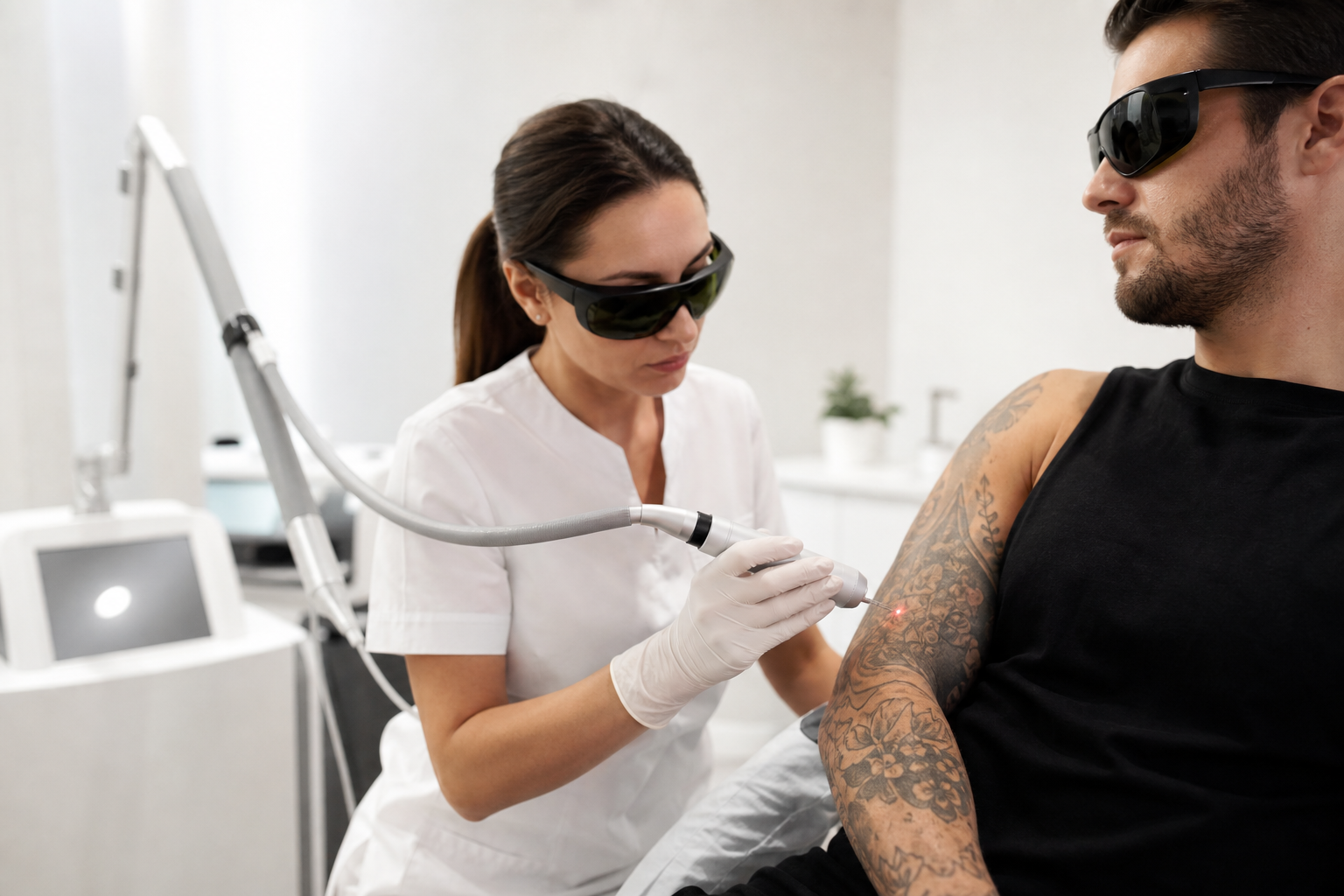
In the landscape of modern aesthetic and medical treatments, laser technology stands out as a significant advancement, especially in the realm of tattoo removal. However, as the popularity of laser procedures grows, so does the appearance of devices of questionable origin and dubious quality in the market. Discerning a legitimate medical laser from unreliable or unsafe devices becomes an essential concern for anyone considering tattoo removal or professionals seeking to offer safe and effective treatments.
This detailed editorial is crafted for individuals contemplating tattoo removal, as well as medical and cosmetic professionals who aim to deepen their understanding of trusted laser technologies. Understanding the distinctions between high-quality medical lasers and inferior alternatives is critical not only for treatment success but also for patient safety. Moreover, realistic expectations about what laser tattoo removal can achieve, along with its limitations, are crucial to making informed decisions in an increasingly crowded marketplace.
Below, we explore how medical lasers function specifically in tattoo removal, the definitive characteristics differentiating them from questionable devices, and what patients and practitioners should consider when choosing laser treatment options. This guide offers a comprehensive overview to support safe, effective, and evidence-based decision-making.
What Defines a Medical Laser in the Context of Tattoo Removal?
A medical laser used for tattoo removal is a sophisticated instrument designed to emit highly controlled pulses of light at specific wavelengths and energies tailored to target tattoo pigments. Unlike simplistic or uncertified devices, these lasers operate on the principle of selective photothermolysis, which means they precisely deliver energy that fragments the ink particles embedded in the skin without damaging surrounding tissues.
These fragmented pigment particles then become small enough for the body's lymphatic system to gradually remove them over weeks or months. Medical lasers often utilize advanced technologies, such as Q-switched or picosecond pulse durations, which provide intense but extremely brief bursts of energy. This characteristic allows for effective pigment breakage while minimizing thermal injury to the skin.
The efficiency and safety of such lasers hinge on their ability to adjust parameters like energy fluence, pulse width, and repetition rate according to the specific tattoo color, depth, and skin type. High-quality medical devices are equipped with precise focusing systems and cooling mechanisms that protect the epidermis during treatment, enhancing patient comfort and reducing risks.
Which Key Features Distinguish Medical Lasers from Questionable Devices?
When selecting a laser device for tattoo removal, several technical and regulatory aspects serve as reliable indicators of its legitimacy and quality. Foremost among these is certification by recognized health authorities or regulatory bodies. Medical lasers carry approvals verifying their compliance with stringent safety and efficacy standards, whereas devices of dubious quality often lack such credentials or provenance.
Another distinguishing factor is the capability to finely control treatment parameters. Genuine medical lasers enable clinicians to customize settings according to the unique requirements of each tattoo and patient. This adaptability is critical for effectively treating a broad spectrum of pigment colors and skin types, and for minimizing the risk of adverse effects such as burns or scarring. In contrast, inferior devices tend to have fixed or limited settings, making precise treatment impossible and increasing chances of harm.
The hardware technology itself also provides clues. High-grade medical lasers generally incorporate Q-switched or picosecond technologies, producing short, potent pulses at wavelengths strategically chosen for their absorption by specific ink colors. Questionable devices may use unsophisticated or poorly calibrated light sources, with continuous-wave emissions or inconsistent pulse durations that yield suboptimal pigment breakage and greater complications.
Lastly, comprehensive customer support, availability of maintenance and replacement parts, and professional operator training are hallmarks of reputable medical laser manufacturers. Devices of uncertain origin often suffer from inadequate after-sales services and lack of formal training resources, further jeopardizing treatment safety and outcomes.
Why Is Selecting a Certified Medical Laser Crucial for Safety and Treatment Success?
Laser tattoo removal involves targeted disruption of pigment particles within the skin, a process inherently carrying potential risks if performed improperly. Utilizing a certified medical laser significantly mitigates these dangers. Such devices ensure precise energy delivery, protecting adjacent tissues from unintended damage and reducing complications like hypopigmentation, hyperpigmentation, or scarring.
Moreover, medical lasers capable of emitting multiple wavelengths or adjustable pulse parameters can address a wider gamut of tattoo colors and complexities—from simple black ink to multicolored, layered tattoos. Inferior equipment with limited spectral capabilities might fail to treat certain pigments effectively, necessitating prolonged treatment courses or resulting in incomplete clearance.
Patient comfort is also enhanced by features unique to recognized medical lasers, such as integrated skin cooling systems. These components diminish thermal discomfort during sessions and help maintain skin integrity. Devices lacking these safeguards may cause pain, prolonged healing times, or skin injuries.
How Can Patients and Practitioners Identify Authentic Medical Lasers Before Treatment?
Several practical steps and considerations can help in identifying legitimate medical laser equipment. Patients should confirm that tattoo removal is conducted within licensed medical or dermatological facilities that maintain transparent documentation concerning their devices. Requesting information on device certifications, manufacturer details, and technical specifications is a reasonable expectation.
Understanding which type of laser will be employed is important because specific lasers, like Q-switched Nd:YAG or picosecond lasers, have proven effectiveness against particular ink colors and skin types. Clinics using these lasers typically provide educational material about treatment protocols and expected outcomes. Conversely, vague, marketing-heavy claims without technical substance may signal a questionable offering.
Additionally, well-established clinics ensure that their operators are adequately trained in laser safety and operation, which significantly enhances treatment quality and reduces adverse events. Enquiring about operator credentials and experience is advisable.
What Realistic Outcomes and Limitations Should One Expect from Laser Tattoo Removal?
Laser tattoo removal is not an instant solution; rather, it is a gradual process requiring multiple treatment sessions spaced over weeks or months. The number of sessions varies depending on tattoo size, pigments used, depth, and the individual's skin properties. Dark inks like black and dark blue typically respond most favorably, while lighter or fluorescent colors may present greater challenges.
Patients should be prepared for temporary skin reactions like redness, swelling, and mild discomfort following treatment. Serious complications are uncommon when using certified medical lasers in skilled hands but can occur with substandard devices or poor technique.
Emerging technologies such as picosecond lasers have enhanced removal efficacy and reduced treatment times for some tattoo types, although no laser can guarantee complete or immediate disappearance of all tattoo pigments. A realistic expectation acknowledges the incremental nature of pigment clearance and the possibility that some residual discoloration may remain.


