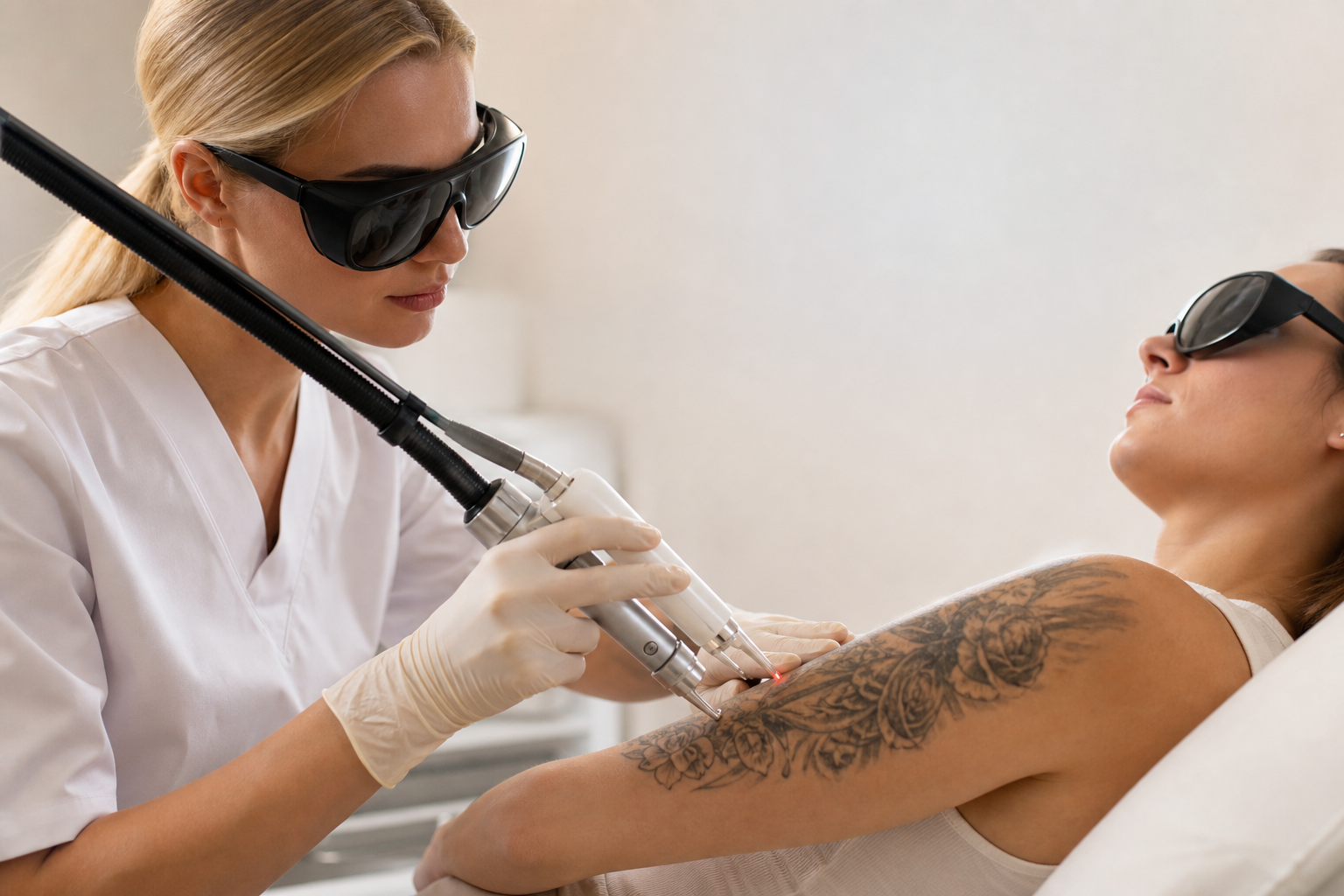
Q-switched lasers represent a significant advancement in the field of tattoo removal, a treatment sought by many individuals for diverse reasons—from changes in personal aesthetics to professional requirements. Understanding how these specialized lasers operate—and their applications—is vital for anyone considering laser tattoo removal. This knowledge not only sets realistic expectations but also clarifies the advantages and limitations of this technology.
The process of tattoo removal involves the breakdown of ink pigments that have been embedded in the skin. Q-switched lasers, due to their specific properties, have become the preferred technology worldwide for effectively and safely fading or erasing tattoos. They are particularly renowned for their precision and minimal collateral skin damage. This article will explore the science behind Q-switched lasers, the types of candidates who may benefit, treatment benefits, procedural insights, and what one can realistically expect during and after sessions.
By delving into these details, this editorial aims to provide a comprehensive understanding that benefits both prospective patients and practitioners in the field of dermatology and aesthetic medicine. The insights here arise from established clinical knowledge and the nuanced mechanisms that make Q-switched lasers effective for tattoo removal.
What Is a Q-Switched Laser and How Does It Remove Tattoos?
The term "Q-switched" refers to a specific mode of laser operation characterized by the emission of extremely short and intense pulses of light, typically in the nanosecond range. This rapid pulsing enables a photomechanical effect—wherein the pigment particles in the tattoo absorb the laser energy and shatter into tiny fragments. These fragments are then naturally cleared away by the body's lymphatic system and immune cells like macrophages.
Unlike continuous wave or longer pulse lasers that can heavily heat tissues, Q-switched lasers deliver energy in such brief bursts that the surrounding skin experiences minimal thermal damage. This distinction greatly reduces side effects such as scarring or pigmentary alterations, which are significant concerns in laser tattoo removal.
The energy output of Q-switched lasers is selective, targeting specific chromophores—in this case, tattoo pigments—based on the laser’s wavelength. Different ink colors absorb different wavelengths of light. Hence, Q-switched lasers are available in various wavelengths to target black, blue, green, red, and other tattoo pigment colors effectively. For instance, the Nd:YAG laser operating at 1064 nm is often preferred for black and dark blue inks, whereas shorter wavelengths like 532 nm target red pigments.
Who Are Suitable Candidates for Q-Switched Laser Tattoo Removal?
Not everyone with a tattoo is an immediately ideal candidate for Q-switched laser removal. The best candidates are generally healthy individuals who wish to diminish or remove tattoos they no longer desire. The treatment is appropriate for a wide spectrum of skin types, but candidates with lighter skin tones often experience more straightforward outcomes, given the lower presence of melanin, which reduces the risk of pigmentary changes.
Those with darker skin tones require specialized assessment and treatment parameters to minimize risks such as hyperpigmentation or hypopigmentation. Additionally, individuals with certain skin conditions, active infections, or a history of keloid scarring may be advised against laser tattoo removal or require extra precautions.
It’s also important for prospective patients to disclose medications and overall health status, especially if they have photosensitive conditions or treatments that could interfere with healing. Pregnant or breastfeeding women are generally advised to defer laser tattoo removal until postpartum.
What Are the Advantages of Q-Switched Lasers Compared to Other Tattoo Removal Methods?
Laser treatment with Q-switched devices presents multiple advantages over other tattoo removal options such as surgical excision or dermabrasion. The key benefits revolve around precision, safety, and recovery time.
Unlike surgical excision, which involves cutting out the tattooed skin and can result in significant scarring and prolonged recovery, Q-switched lasers specifically target the tattoo ink particles without removing skin layers. This precision drastically reduces tissue trauma and associated downtime.
Compared to dermabrasion, which mechanically abrades the skin surface, laser treatment is less invasive and offers better control over the depth and intensity of treatment.
Furthermore, the ability to select specific laser wavelengths means that Q-switched lasers can address a variety of ink colors effectively, whereas other methods rarely distinguish pigment types.
Patients typically experience minimal discomfort during laser sessions when proper cooling and, if necessary, anesthesia are used. Recovery is generally swift, with transient redness or swelling subsiding within days—a stark contrast to more invasive techniques.
How Is a Q-Switched Laser Tattoo Removal Treatment Conducted?
The treatment pathway begins with a thorough consultation where the clinician evaluates the tattoo’s color, size, age, and location, as well as the patient’s skin type and medical history. This assessment guides the choice of laser wavelength and treatment parameters.
On treatment day, protective measures like eye shields are applied to both patient and practitioner. Depending on the patient’s comfort level, topical anesthetics or cooling techniques may be employed. The laser is then administered in pulses over the tattooed area. The sensation is often described as snapping or mild stinging.
After each session, localized swelling, redness, or slight blistering may occur but usually resolve within several days. Since the laser fragments the tattoo ink, the body requires time—typically several weeks—to clear away debris, indicating the necessity for multiple sessions spaced appropriately.
The number of sessions can vary widely, usually ranging from 4 to 10 or more, depending on color complexity, ink depth, and patient response. Patience and adherence to post-care instructions are critical components of successful outcomes.
What Can Patients Realistically Expect from Q-Switched Laser Tattoo Removal?
Q-switched laser tattoo removal is often highly effective, yet it is important to approach the treatment with realistic goals. While many tattoos can be significantly faded or completely removed, some residual pigmentation or faint scar tissue may remain, especially with very old, deeply embedded, or multi-colored tattoos.
Certain ink colors—such as green, yellow, and some shades of blue—present more challenges and may require specialized lasers like Alexandrite or Ruby lasers either alone or in combination with Q-switched devices. This sometimes extends the number of sessions and influences overall timeframes and costs.
Individuals with darker skin tones may need extra care to avoid pigmentary changes. Although rare, side effects such as hypo- or hyperpigmentation, blistering, or allergic reactions to tattoo pigment can occur, emphasizing the importance of skilled medical supervision.
Ultimately, successful tattoo removal hinges on a collaborative process between patient and practitioner, involving thorough evaluation, personalized treatment planning, and meticulous aftercare.
Why Is It Crucial to Choose a Qualified Expert and a Proper Clinic for Laser Tattoo Removal?
Executing Q-switched laser tattoo removal requires more than just access to the correct equipment. Expertise in laser physics, skin biology, and clinical management profoundly impacts treatment safety and efficacy.
An experienced dermatologist or certified medical aesthetician understands how to calibrate laser settings tailored to individual skin types and tattoo characteristics. This expertise mitigates risks such as burns, scarring, or unexpected pigmentary alterations.
Clinics specializing in laser procedures typically maintain rigorous hygiene, offer appropriate patient education, and follow evidence-based treatment protocols. They also provide comprehensive pre- and post-treatment guidance, including sun protection and skin care strategies that support optimal healing.
Choosing reputable providers fosters trust and confidence, ensuring that the tattoo removal journey is safe and aligns with the patient's expectations.


