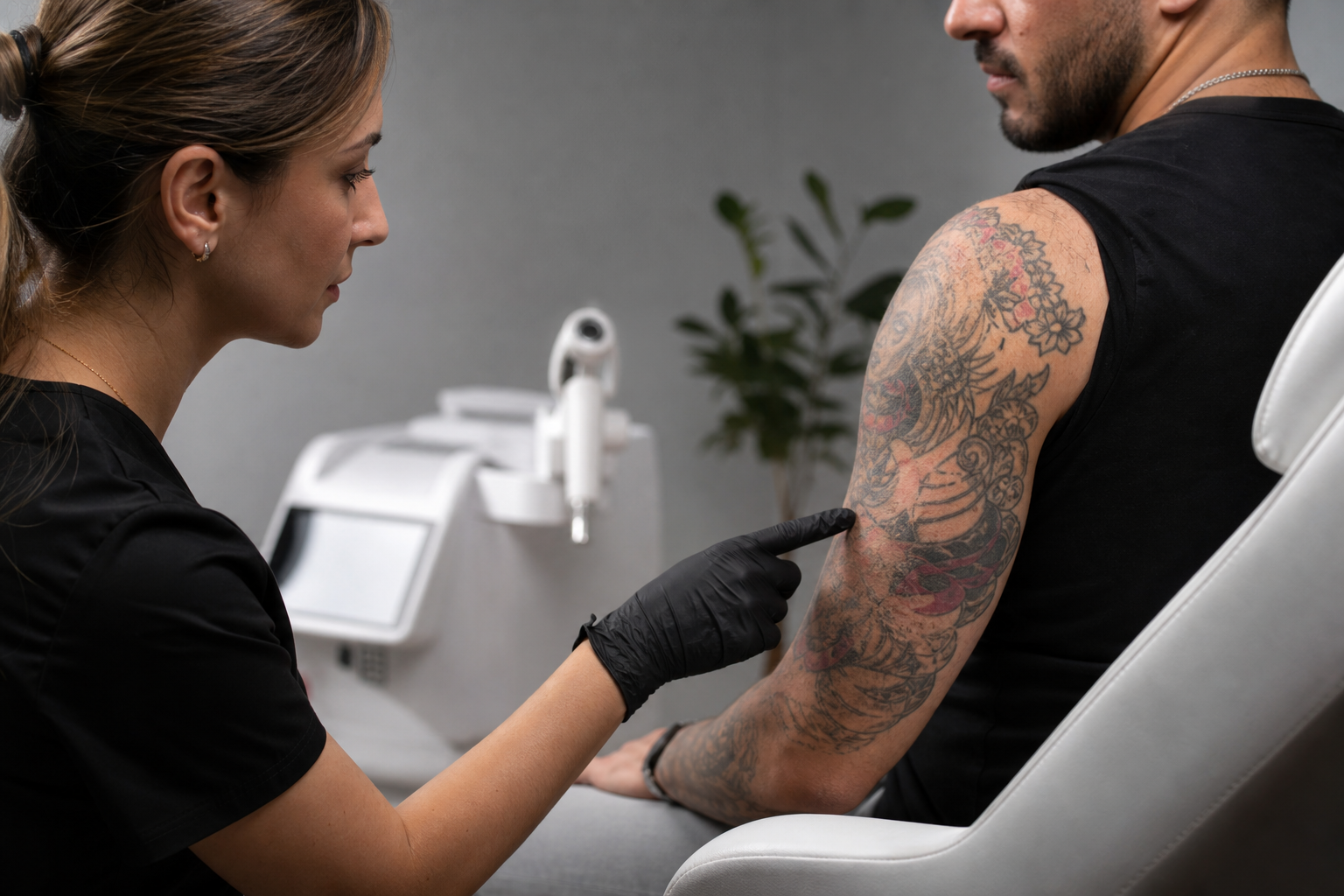
Partial tattoo removal for a new cover-up design represents a nuanced and increasingly sought-after aesthetic solution within the realm of body art modification. Unlike complete tattoo removal, which aims to erase a tattoo in its entirety, partial removal focuses on selectively fading or eliminating specific areas of ink to create a suitable canvas for a fresh design overlay. This process appeals predominantly to individuals who desire to revitalize or transform an existing tattoo without subjecting their skin to the more invasive and costly procedure of full removal.
It matters because tattoos are enduring expressions of personal identity, art, and memory, but tastes and circumstances evolve over time. Many find themselves looking to renew their tattoos—whether to alter their symbolism, update the style, or correct unwanted elements—while minimizing trauma, downtime, and expense. Partial tattoo removal offers a pathway for such changes through a controlled, laser-based intervention that carefully balances pigment fading with skin preservation.
Understanding this procedure thoroughly—including how it works, whom it is best suited for, its benefits, limitations, safety considerations, and timing relative to new tattoo application—is essential for anyone contemplating this option. This article presents a comprehensive exploration of partial tattoo removal aimed at aiding informed decision-making and setting realistic expectations.
What Is Partial Tattoo Removal and Who Can Benefit From It?
Partial tattoo removal is a laser treatment technique targeting select portions of an existing tattoo’s ink, intentionally fading or erasing certain pigment clusters rather than treating the entire artwork. This method is employed specifically to prepare the skin for a cover-up tattoo, where a new design overlays or incorporates the modified sections, thereby enhancing the overall aesthetic or shifting the tattoo’s meaning.
The clientele for partial removal primarily includes tattoo bearers seeking artistic modification rather than eradication. Motivations commonly include dissatisfaction with components of the original design, desire for modernization, the wish to obscure outdated or poorly executed elements, or practical considerations like preparing for new ink in problematic areas. It is especially suitable for those reluctant to commit to the expense, duration, and skin impact associated with comprehensive laser removal.
Moreover, partial removal offers a balance between intervention and conservation. It enables significant visual transformation while maintaining the integrity of skin unaffected by the laser, thus minimizing recovery time and the risk of scarring or pigment irregularities. Those with skin sensitivity concerns, limited availability for multiple sessions, or budget constraints often find partial removal an especially attractive alternative.
How Does Laser Technology Facilitate Targeted Ink Reduction?
The core technology underpinning partial tattoo removal is advanced laser treatment, which emits specific wavelengths of light tailored to the colors and chemical composition of tattoo pigments. The laser’s photothermal energy selectively disrupts ink particles located within the dermis, fragmenting them into smaller pieces that the body's immune system can more readily process and clear over time.
In partial removal scenarios, the laser is applied skillfully and precisely to the areas requiring fading or eradication, avoiding unnecessary exposure of surrounding skin and pigment. This selective targeting is achieved through controlled scanning patterns, calibrated energy levels, and the operator’s expertise. By sparing parts of the tattoo, the risk of over-treatment—a factor that can lead to increased discomfort and skin damage—is minimized.
This method contrasts with full tattoo removal, which typically involves comprehensive treatment of the entire tattooed area, often requiring more sessions and greater cumulative laser exposure. Partial removal thus embodies a refined, conservative approach centered on artistic renovation rather than elimination.
What Factors Influence the Success of Partial Tattoo Removal?
Several critical factors determine how visibly and efficiently a tattoo’s ink can be partially removed. Among the most influential is the color and composition of the ink itself. Darker pigments such as black and dark blue generally respond best to laser treatment due to their ability to absorb laser wavelengths effectively. Conversely, lighter colors — such as yellow, green, red, and certain fluorescent tones — present substantial challenges because they reflect the laser light or require different wavelengths to break down.
Another considerable variable is the age and depth of the tattoo. Older tattoos often fade naturally over time, rendering some ink particles easier to disrupt and clear. The depth at which ink is injected into the dermis also influences removal efficiency; deeper pigments may necessitate higher laser energy or prolonged treatment courses.
The tattoo’s origin—professional or amateur—can also impact removal outcomes. Professional tattoos typically exhibit more uniform ink placement and depth, which can facilitate more predictable laser response. In contrast, amateur tattoos may have inconsistent pigment distribution, requiring adaptive treatment strategies.
Additionally, the location on the body matters. Areas with superior blood circulation, such as the chest or upper arms, are generally more conducive to laser removal than extremities with reduced vascularization, like hands or feet, where pigment clearance tends to be slower.
Finally, individual skin characteristics—including tone, texture, and healing capacity—play vital roles in both the fading results and the risk of side effects during partial removal.
How Many Sessions Are Typically Required for Partial Tattoo Removal?
The number of laser sessions necessary for achieving desired fading in partial tattoo removal varies widely according to the aforementioned factors, as well as the client’s aesthetic goals. A spectrum ranging from three to six or more treatments spaced out over several weeks or months is common.
This gradual approach is intentional, allowing the skin adequate time to recover between sessions and the immune system to process fragmented ink particles. Sessions are customarily scheduled at intervals of at least four to eight weeks, balancing treatment efficacy with safety.
Partial removal frequently demands fewer sessions than full tattoo removal; however, it should not be mistaken for a rapid solution. Patience and adherence to professional guidance are indispensable to avoid complications such as scarring or hypopigmentation, which can hinder subsequent tattooing.
For a more detailed understanding of session quantity in laser tattoo removal, interested readers may consult resources such as How Many Sessions Are Needed for Tattoo Removal? and What Determines the Number of Laser Treatment Sessions?, which address these topics comprehensively in broader contexts.
What Is a Safe and Recommended Timeline Between Partial Removal and the New Cover-Up?
Timing is critical when transitioning from partial tattoo removal to applying a new cover-up tattoo. The skin must be fully healed to host fresh ink reliably. Dermatologists and tattoo professionals generally advocate for waiting at least eight to ten weeks after the final laser session to commence cover-up tattooing.
This interval accommodates inflammation resolution, tissue regeneration, and the elimination of residual fragmented pigment. Immediate tattooing on skin still compromised by laser-induced trauma can precipitate suboptimal ink retention, uneven coloring, or heightened risk of infection.
While the precise waiting period may vary case-by-case, hastening this timeline is inadvisable and may jeopardize overall outcomes. Prospective clients should establish clear communication lines with both laser specialists and tattoo artists to coordinate scheduling optimally.
Additional insights on recovery intervals can be found in publications like How Long Should You Wait Between Tattoo Removal Sessions?, which explore timing considerations thoroughly.
What Realistic Outcomes Should Clients Expect From Partial Tattoo Removal?
Prospective clients need an informed perspective on the realistic possibilities and limitations inherent in partial tattoo removal to avoid dissatisfaction or misconceptions.
Firstly, complete erasure of the targeted ink areas is uncommon within the expedited session count typical for partial removal. Instead, the aim is moderated fading sufficient to permit new pigment overlay without overwhelming the new design's clarity or vibrancy.
Secondly, some residual ink may persist even after multiple treatments, but this residual often contributes to the depth and nuance in a quality cover-up tattoo. Notably, the extent of fading achieved must be balanced against preserving skin health and minimizing adverse effects.
Clients should also anticipate some degree of variability depending on the color complexity and individual healing response. Open dialogue with the laser technician and tattoo artist about achievable results is indispensable to tailor expectations and design strategies accordingly.
For those researching tattoo modification advances, supplemental readings like Laser Tattoo Removal: A Complete Guide to Lasers, Treatments, Results and Risks offer valuable context.
How Can Risks Be Minimized During Partial Tattoo Removal?
Though generally considered safe, partial tattoo removal via laser is not without risks. Potential complications include temporary redness, swelling, blistering, pigmentary changes (either hypopigmentation or hyperpigmentation), and, rarely, scarring.
Mitigating these risks involves several best practices: choosing a reputable facility with experienced laser specialists, employing lasers with appropriate wavelengths suited to the tattoo colors, adhering to recommended intervals between treatments, and following pre- and post-procedure skin care instructions meticulously.
Any history of skin sensitivity, scarring tendencies, or underlying conditions should be disclosed during consultations. Periodic monitoring and open communication about any unexpected reactions during the removal process further enhance safety.
In the interest of minimizing adverse effects, professional oversight cannot be overstated, particularly given the intricacies of managing selective ink removal while preserving the surrounding dermis.


