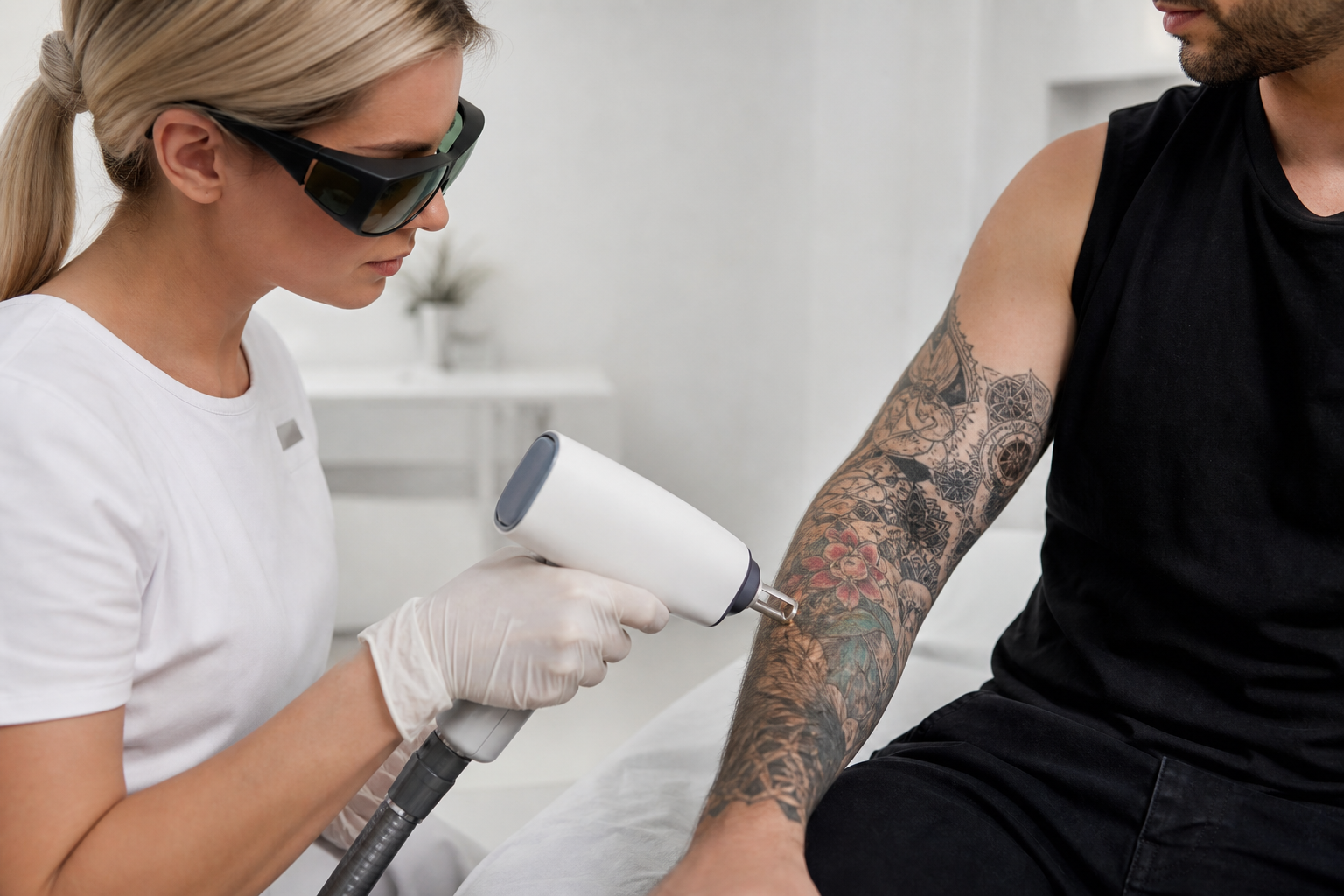
Tattoo removal has become an increasingly common consideration for both individuals who initially embraced body art and those who now wish to alter or erase their inked expressions. A critical question often arises in this context: are professional tattoos easier to remove than amateur ones? This inquiry is not merely academic; the quality, color, and depth of the tattoo ink directly influence how effectively laser treatments—a leading method for safe and effective tattoo removal—can break down pigment particles in the skin.
This article is designed for anyone contemplating tattoo removal, whether for a precisely inked professional design or a motif applied without professional training. Understanding the distinctions between professional and amateur tattoos, along with the key factors influencing removal outcomes, is essential for setting realistic expectations, planning the number of treatment sessions, and adhering to safe timelines throughout the removal process.
It is important to emphasize that there is no universal rule guaranteeing that one type of tattoo is inherently easier to remove than the other based solely on its professional or amateur origin. Instead, a complex interplay of characteristics determines the efficiency and safety of removal. This article also avoids endorsing do-it-yourself techniques, instead focusing on medically sound, professional approaches.
What Distinguishes Professional Tattoos From Amateur Tattoos?
Before delving into the nuances of removal, a clear understanding of the fundamental differences between professional and amateur tattoos is necessary. Professional tattoos are created using high-grade equipment, sterile needles, quality pigments, and by artists who possess deep knowledge of skin anatomy and pigment application techniques. This results in ink deposits that are deeper, pigments that are evenly distributed, lines that are sharp, and colors that maintain longevity.
Conversely, amateur tattoos often emerge from uncontrolled environments, employing substandard tools, low-quality inks, and with limited or no adherence to hygienic protocols. The ink application tends to be shallower and uneven, colors may lack durability, and the lines are often irregular or blurred. Such discrepancies influence both the visual identity of the tattoo and how the pigment reacts during laser removal treatments.
The depth of ink placement and pigment quality significantly affect how laser energy interacts with the tattoo. Professional tattoos usually have pigment embedded in more consistent layers of the dermis, while amateurs' ink tends to be inconsistently deposited, often more superficially. This variability is crucial in understanding how the skin responds to removal treatments.
Which Factors Are Key to Successful Tattoo Removal?
Irrespective of whether a tattoo is professional or amateur, the success and the number of laser removal sessions depend on several important parameters:
Ink Colors: Different colors respond variably to laser treatments. Black pigment tends to absorb laser energy more readily, making it generally easier to remove. Meanwhile, colors like green, blue, and yellow are notoriously more challenging to eliminate, regardless of tattoo origin, because their pigments do not absorb laser wavelengths as efficiently.
Ink Depth: Professional tattoos, due to skilled application, may have deeper ink deposits, necessitating the laser to penetrate more deeply to fragment those pigments effectively. Amateurs’ ink often sits more superficially, which can sometimes facilitate the removal process.
Tattoo Size: Larger tattoos cover more skin surface, requiring a higher number of treatment sessions. Whether professional or amateur, the overall surface area influences how extensive the removal campaign must be.
Skin Type and Color: The skin's natural tone plays a vital role in laser absorption and healing. Melanin, the pigment responsible for skin color, also absorbs laser energy and therefore requires treatment parameters to be safely adjusted to reduce risk. Light and dark skin react differently to laser exposure and recovery.
Patient’s Health: Underlying health conditions, medications, and immune response significantly affect how the skin heals and processes broken-down pigments. These factors must be considered when planning treatment schedules and setting expectations for removal progress.
Because each tattoo and individual is unique, no precise formula exists for the number of treatments or the timeframe, making individualized consultation crucial.
Why Is Laser Tattoo Removal Considered the Most Effective and Safe Method?
Laser tattoo removal leverages highly focused pulses of light to penetrate the skin and shatter ink particles into fragments small enough for the body’s immune system to gradually clear away. This precision targeting minimizes damage to the surrounding skin, reducing risks compared to other removal methods, such as surgical excision or chemical peels.
One of the key advantages of laser treatment is the ability to tailor laser wavelengths and energies to match specific colors and ink depths. This adaptability allows treatment of diverse tattoo types, encompassing both professional and amateur applications.
Another crucial aspect of laser removal is the spacing between treatment sessions, commonly ranging from six to eight weeks. These intervals allow the skin to heal and enable the body to process the fragmented pigment effectively, optimizing outcomes and mitigating side effects.
Safety considerations govern every step of the removal journey to avoid complications such as scarring, hyperpigmentation, or skin burns. Thus, the protocol mandates skilled assessments and professionally administered procedures in accredited clinics.
Is Professional Ink Truly Harder to Remove Than Amateur Ink?
The comparison between professional and amateur tattoo removability is enveloped in misconceptions. While it is true that professional tattoos often require more sessions, this is not solely due to their professional craftsmanship. The depth of ink placement, pigment density, and the vibrant, layered color schemes common to professionally applied tattoos often account for their somewhat increased removal complexity.
Amateur tattoos, while sometimes appearing more rudimentary, are frequently applied more superficially, which can translate to easier laser penetration and pigment breakdown. Yet, the poor pigment quality and inconsistent ink formulations used in unprofessional settings can also cause unpredictable responses to laser treatment, complicating removal.
Thus, neither category holds a definitive advantage universally; each case is contingent upon the tattoo’s inherent characteristics and the client’s physiological factors.
What Is the Average Number of Treatments Needed for Removal?
The typical range of laser sessions required to remove a tattoo varies widely, most commonly between six and ten treatments, but sometimes exceeding fifteen. Professional tattoos tend to lie on the higher end of this spectrum owing to pigment sophistication and size.
The number is influenced by a constellation of criteria, including pigment color and density, tattoo age and size, and the client’s skin response. Smaller, amateur tattoos with muted colors may need fewer sessions, particularly if the pigment is shallow.
Clinical protocols emphasize controlled treatment intervals to maximize pigment fragmentation and avoid skin damage. The patient’s adherence to scheduled sessions and post-treatment care is vital for optimized removal progress.
What Are Realistic Expectations During and After Treatment?
Understanding the tattoo removal process is fundamental to managing expectations. While many individuals achieve significant fading and even near-complete removal, the possibility of residual shadows or faint scarring remains. This outcome depends on the previously discussed factors as well as individual healing tendencies.
Professional removal teams conduct comprehensive evaluations, explaining the probable course, expected results, and potential risks. Their goal is to achieve the most substantial fade achievable within safety parameters, avoiding overly aggressive treatments that could injure the skin.
Clients should anticipate multiple sessions spread over months, observe skin changes carefully, and communicate openly with practitioners regarding any concerns or unexpected reactions.
Why Are DIY Tattoo Removal Methods Risky, and Why Respecting Treatment Timelines Matters?
Internet sources abound with home remedies including chemical peels, abrasive techniques, or unregulated devices that claim to remove tattoos. These approaches carry substantial risks such as infections, permanent scarring, pigmentation disorders, and even systemic toxicity from harsh chemicals.
Respecting professional guidelines for timing between laser sessions is equally crucial. Premature treatments can exacerbate skin damage, while excessive delays might allow pigment particles to become more challenging to remove effectively. Timely adherence to recommended intervals ensures balanced skin recovery and treatment potency.
In summary, safely erasing a tattoo requires expertise, precise technology, and patience—qualities absent in most DIY attempts.
How Does Tattoo Location and Size Influence Removal Success?
Tattoo placement significantly affects removal efficacy. Areas of the body with robust blood circulation, such as the upper arms and shoulders, typically respond more favorably to laser treatments. Conversely, tattoos on extremities like ankles, feet, or shoulder blades often exhibit slower pigment clearance and may demand more sessions.
Similarly, the tattoo’s size impacts the logistical scope of removal. Large-scale designs require longer cumulative treatment times due to the sheer surface area. This applies to both professional masterpieces and amateur tattoos, underscoring the integral role of size in planning a removal strategy.
Such considerations underline the need for personalized assessments to tailor treatment plans effectively.


