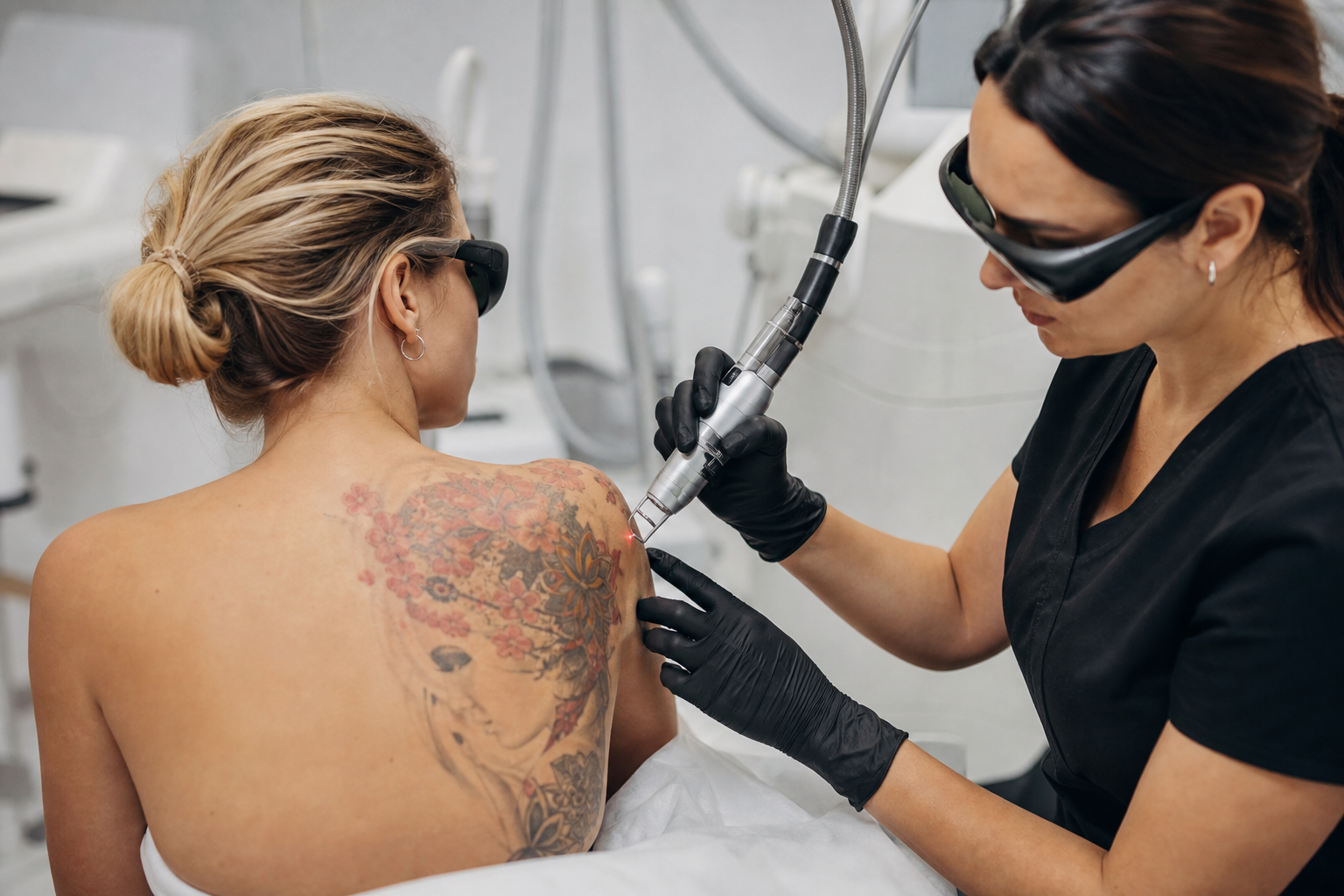
Laser removal of red tattoos presents a specialized challenge within the field of laser dermatology. Unlike the more commonly addressed black tattoo removal, which benefits from well-established methods and predictable outcomes, red pigments pose unique technical and biological hurdles. These challenges arise from the chemical makeup of red tattoo inks, their varied responses to different laser wavelengths, and patient-specific factors that influence treatment success.
This detailed editorial is aimed at individuals considering red tattoo removal, whether for personal or professional reasons, as well as dermatology professionals seeking a deeper understanding of the complexities involved. Understanding how laser treatments work on red pigments, setting realistic expectations for outcomes, anticipating the necessary number of sessions, and observing safe intervals between treatments are all critical for achieving optimal results without compromising skin integrity.
Red tattoo removal matters more now than ever due to the increasing prevalence of tattoos worldwide and the evolving trends in personal aesthetics and professional acceptability. Many who once embraced red ink may later wish to alter or remove their tattoos, making knowledge of the nuances in treatment essential—not just for patients but also for clinicians and laser specialists.
What Makes Red Tattoo Ink Different and Why Removal Is More Complex
The red color in tattoo inks is not a single uniform substance but a spectrum of pigments, typically including iron oxide-based compounds, organic dyes, and azo pigments. This diversity in chemical composition leads to significant variability in how these pigments interact with laser energy. Unlike black tattoo ink, which largely consists of carbon-based pigments absorbing a broad range of laser wavelengths effectively, red inks require specific wavelengths that efficiently target those pigment molecules without damaging surrounding skin.
Standard Q-switched lasers, commonly used for black tattoo removal, often operate at wavelengths that partly mismatch the absorption peaks of red pigments. This discrepancy results in inconsistent fading and often necessitates specialized lasers or combined approaches tailored for red hues. Furthermore, red pigments can sometimes undergo chemical changes when subjected to laser pulses, sometimes darkening or becoming resistant, complicating complete removal.
From a clinical perspective, this chemical complexity also translates into a heightened risk profile. Red pigments may predispose treated skin to burns, hyperpigmentation, or hypopigmentation after laser sessions, especially if the treatment is not meticulously adjusted to the individual's skin type and ink characteristics. Hence, removal demands not only specialized equipment but also an expert understanding of pigment chemistry and laser-tissue interactions.
Which Laser Systems Are Most Effective for Red Tattoo Removal?
The effectiveness of laser tattoo removal is closely tied to the laser's emission wavelength, which must match the absorption spectrum of the targeted pigment. For red tattoo inks, lasers emitting light around the 532 nanometer (nm) wavelength are most effective because red pigments absorb green light strongly, facilitating targeted destruction of ink particles.
Commonly, Q-switched Nd:YAG lasers operating in their 532 nm mode and potassium titanyl phosphate (KTP) lasers are employed for treating red tattoos. These lasers deliver short, high-energy pulses that fragment pigment molecules into smaller particles for immune system clearance. Advances in pico-second laser technology, which operate with ultra-short pulse durations, have further improved the fragmentation process, potentially enhancing clearance efficiency while reducing thermal damage to the skin.
It is important to recognize that no single laser or protocol suits all red inks. Variations in pigment type, density, and depth under the skin dictate customized treatment settings. Clinics specializing in tattoo removal often combine laser types or adjust pulse durations and fluence levels to optimize results. This personalized approach minimizes adverse effects and improves pigment clearance rates while accommodating different patient skin types.
How Many Treatments Are Typically Required to Remove Red Tattoos Successfully?
The number of laser sessions needed for satisfactory removal of red tattoos varies widely due to multiple factors. These include the tattoo’s tattoo age, ink type and concentration, tattoo placement and depth, skin tone, and individual healing responses.
Generally, red tattoo pigments are more resistant to laser removal than black or blue inks, with patients often requiring upwards of 8 to 12 sessions or more for significant fading. Initial noticeable improvements may appear after 3 to 5 treatments, but achieving near-complete clearance can extend over several months or even years.
It is critical to balance treatment frequency; too frequent sessions may increase risks of scarring and pigmentation changes, while prolonged intervals can slow the overall process. Each treatment incrementally breaks down pigment particles, with the body needing adequate time to clear these fragments before subsequent sessions. Because of these dynamics, many practitioners emphasize patience and realistic goals, cautioning patients that complete removal without residual discoloration or scarring is not guaranteed.
Why Are Safe Time Intervals Between Sessions Crucial?
Safe spacing between laser sessions, generally recommended at 6 to 8 weeks, is essential for both skin healing and optimal pigment clearance. This interval allows the body’s lymphatic and immune systems to process and remove fragmented ink particles resulting from the previous treatment.
Rushing into consecutive laser sessions without adequate healing time increases the risk of adverse effects, including blistering, scarring, and pigmentary alterations. This risk is amplified with red tattoo removal due to the inherent sensitivity of the pigments and the skin’s response.
Conversely, excessively long intervals may extend the overall treatment timeline unnecessarily and could result in partial pigment reaggregation, though this is rare. Adhering to professional recommendations and monitoring skin response post-treatment enable practitioners to customize intervals for safety and efficacy.
What Factors Influence the Success of Red Tattoo Removal?
Successful laser removal of red tattoos hinges on a confluence of factors encompassing pigment chemistry, technical parameters, and patient-specific characteristics. The ink's chemical composition is paramount, as inorganic versus organic pigment bases respond differently to laser light. For example, azo pigments found in some red inks may degrade into darker compounds under laser exposure, complicating removal.
The chosen laser’s wavelength, pulse duration, and energy settings must be finely tuned to maximize pigment fragmentation while minimizing collateral tissue damage. Additionally, the skill and experience of the clinician play critical roles in selecting appropriate protocols and adjusting treatment plans based on interim responses.
Individual factors such as skin phototype, metabolic rate, tattoo placement, and the immune system's efficiency also impact outcomes. Tattoos located in areas with higher blood flow and thinner skin may clear more readily, whereas dense, older tattoos on low-metabolism sites often require more extensive treatment.
Why Realistic Expectations Are Essential When Pursuing Red Tattoo Removal
Setting informed and reasonable expectations before commencing red tattoo removal is vital to patient satisfaction. Despite advances in laser technology and treatment techniques, complete and flawless removal of red tattoos remains a challenge. Residual pigmentation, subtle scarring, or incomplete fading can occur even after multiple sessions.
Patients should understand that laser removal is a gradual process without instant results. The appearance of color changes, temporary skin texture alterations, or mild discomfort during treatments are normal parts of the healing trajectory. Unrealistic hopes of quick, guaranteed, or DIY removal methods often lead to disappointment or harmful skin damage.
Engaging with a qualified, experienced laser specialist for consultations provides clarity on achievable results, potential risks, and individualized treatment planning, fostering a collaborative and transparent care relationship.
What Are the Risks Associated with Laser Removal of Red Tattoos and How Can They Be Minimized?
The risks of laser removal for red tattoos, while generally low under expert care, should not be underestimated. Common complications include erythema (redness), blistering, burns, infection, and changes in skin pigmentation, which can manifest as either hyperpigmentation (darkening) or hypopigmentation (lightening).
Red tattoos are particularly prone to such issues due to pigment reactivity and skin sensitivity. To minimize these risks, treatments must be conducted by certified professionals equipped with up-to-date laser systems and tailored treatment protocols.
Comprehensive pre-treatment assessments ensure patient suitability, while adhering to recommended intervals and post-care instructions supports optimal healing. Open communication about adverse effects and prompt management are also critical to preventing long-lasting complications.
How Does Personalized Treatment Enhance Red Tattoo Removal Outcomes?
Each red tattoo removal case demands a personalized treatment plan factoring in the tattoo’s unique characteristics and patient-specific variables. Precision diagnostics, including dermoscopic analysis and sometimes spectroscopic assessment, help identify ink composition and density.
Based on this information, clinicians select the laser type and fine-tune settings—such as fluence, pulse duration, and spot size—that best target the pigment while preserving surrounding tissue. Personalized approaches may also integrate adjunct therapies like topical agents or mechanical debridement where appropriate.
Furthermore, practitioners monitor the patient’s response throughout the course of treatments, adjusting protocols to enhance efficacy and safety continuously. This adaptivity significantly improves the likelihood of achieving cleaner skin with minimal complications compared to standardized blanket approaches.
What Should You Know Before Considering Laser Removal of a Red Tattoo?
Embarking on laser removal of red tattoos requires informed decision-making balanced between awareness of technological possibilities and practical limitations. Understanding that red tattoo removal is more complex and often protracted compared to other colors helps frame expectations around time, cost, and outcomes.
Selecting a reputable clinic with specialized expertise in red pigment laser removal is paramount. Prospective patients should seek thorough consultations, inquire about the types of lasers available, request references or before-and-after evidence, and confirm the safety protocols implemented.
Most importantly, patience is essential. Laser removal is a stepwise, sometimes multi-session journey where the skin’s natural healing processes play a vital role. By embracing a realistic outlook and partnering with expert practitioners, individuals can navigate the complexities of red tattoo removal more confidently and safely.


