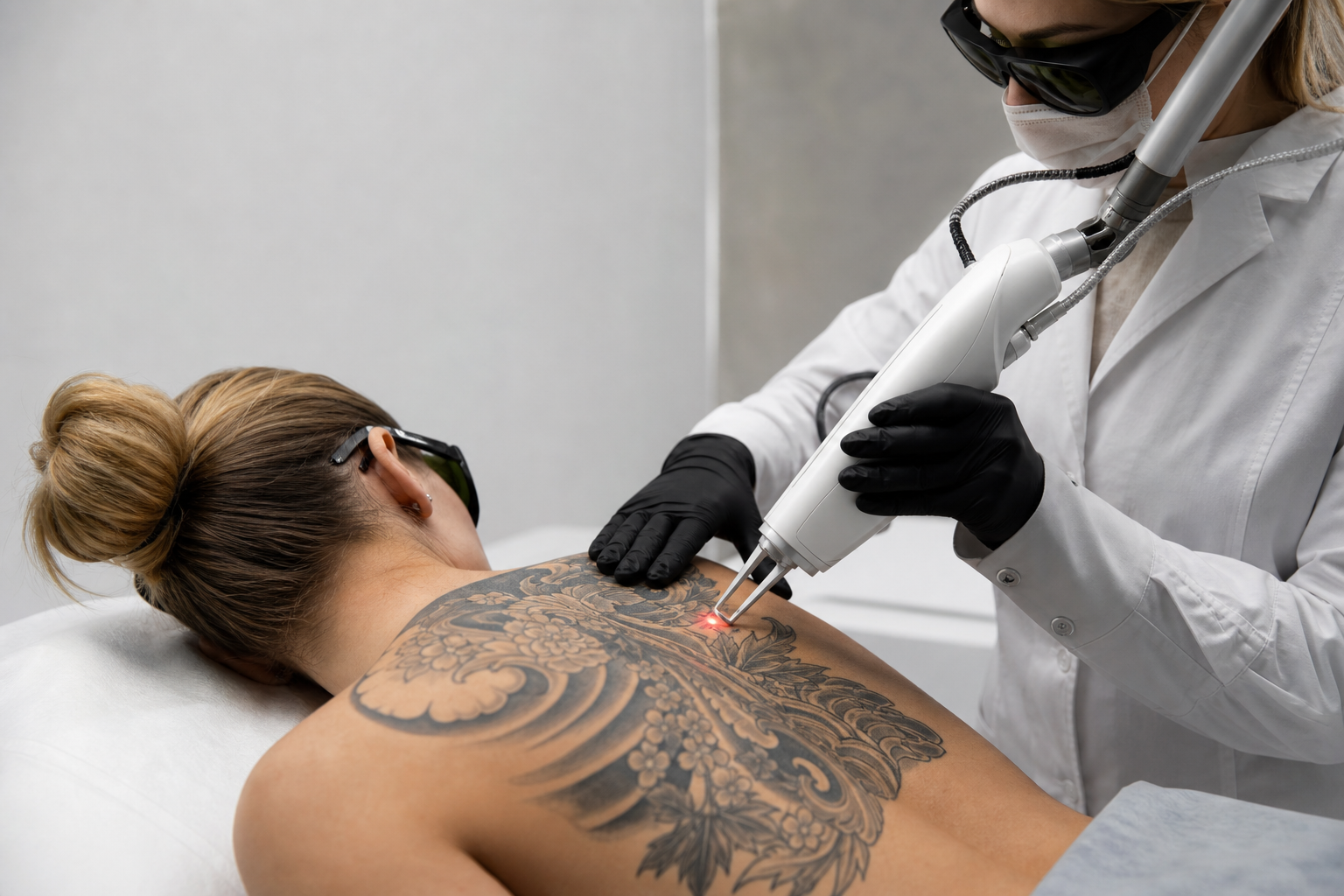
Lasers have revolutionized the field of tattoo removal, offering a non-invasive and effective method to erase unwanted body art. Among the various laser technologies employed, picosecond and Q-switched lasers stand out as the most prominent and recognized. Each utilizes unique mechanisms to fragment tattoo pigments in the skin, yet they differ significantly in their pulse durations, wavelengths, and therapeutic outcomes. Understanding these differences is crucial for individuals considering laser tattoo removal and the clinicians who administer these treatments.
This article delves deeply into the distinctions between picosecond and Q-switched lasers. It is crafted for those intrigued by the science behind laser tattoo removal, patients seeking realistic expectations, and medical professionals aiming to optimize treatment strategies. By exploring the operational principles, clinical efficacies, potential limitations, and suitable patient profiles for each laser type, readers will acquire comprehensive insight to inform decision-making about tattoo removal options.
Laser tattoo removal is more than just dissipating pigments with bursts of light; it involves precision, safety considerations, and an awareness of how different pigment colors and skin types respond to laser energy. As tattoos have become increasingly popular, so too has the demand for effective removal techniques. However, without clarity on how each laser technology functions and their respective pros and cons, patients may face frustration due to suboptimal results or extended treatment courses. This guide aims to clarify these technology-driven nuances and help set a foundation for informed treatment choices.
How Do Laser Tattoo Removal Treatments Work?
At the core of laser tattoo removal is the principle of selective photothermolysis—a technique whereby laser energy targets and destroys specific chromophores, in this case, tattoo pigments, without harming surrounding tissues. Tattoo pigments reside primarily within the dermis, a deeper layer of the skin, where they are too deep for conventional scrubbing or topical treatments to reach.
Laser systems emit high-intensity light pulses at specific wavelengths chosen to correspond to the absorption spectrum of the tattoo ink colors. When these pulses strike the pigment particles, they absorb the energy and rapidly heat up, causing fragmentation into smaller particles. These smaller fragments are then gradually removed by the body’s lymphatic system.
Critical parameters for successful laser treatment include pulse duration, wavelength, fluence (energy density), and spot size. Pulse duration must be sufficiently brief to disrupt pigment particles before heat dissipates to adjacent tissues, thereby reducing collateral damage. This consideration underlies the development of both Q-switched and picosecond lasers, which differ mainly in the length of their laser pulses and their mechanisms of pigment destruction.
What Is a Q-Switched Laser and Its Role in Tattoo Removal?
The Q-switched laser technology has been the gold standard in tattoo removal since its introduction in the 1980s. The term “Q-switched” refers to a method by which the laser cavity stores energy and releases it in an intense pulse typically in the nanosecond range (one billionth of a second). This short pulse duration is considerably effective for breaking apart tattoo pigments due to the rapid thermal expansion within the ink particles.
Q-switched lasers come in several wavelengths to target different pigment colors. Common types include Nd:YAG lasers operating at 1064 nm for dark and black inks and 532 nm for red pigments; alexandrite lasers at 755 nm for green and blue inks; and ruby lasers at 694 nm for similar applications. This versatility allows tailored treatment for a variety of tattoo shades.
Clinicians extensively use Q-switched lasers because they provide a proven and relatively safe way to fragment tattoo pigments while minimizing damage to surrounding skin. They are particularly effective on darker inks such as black, dark blue, and green, although multiple sessions are often required for complete clearance. While highly valuable, their nanosecond pulses can sometimes generate more heat, increasing the risk for skin irritation or hypopigmentation, especially in patients with darker skin tones.
What Are the Characteristics and Advantages of Picosecond Lasers in Tattoo Removal?
Picosecond lasers represent a more recent innovation that improves upon the foundation laid by Q-switched systems. The hallmark of picosecond lasers is their ultra-short pulse durations measured in picoseconds (one trillionth of a second), which means these pulses are approximately 1000 times shorter than those from Q-switched lasers.
This drastically shortened pulse duration shifts the primary pigment disruption mechanism from photothermal (heat) to photomechanical (pressure wave) effects. The intense and ultra-fast pulse creates a shockwave that more efficiently shatters pigment particles into finer fragments, making them easier for the body's immune system to clear.
The benefits include faster clearance of tattoos, often with fewer treatment sessions. Moreover, because less heat is generated, picosecond lasers reduce the risk of collateral skin damage such as burns, scarring, or pigmentary changes. This advantage makes them particularly suited for treating delicate skin areas and patients with darker complexions.
Picosecond lasers are effective across a broad range of pigment colors—including stubborn shades that respond less robustly to Q-switched lasers—such as some blues and greens, as well as previously resistant or scarred tattoos. Their ability to fragment pigment more completely often results in a more thorough fading and can shorten the overall course of tattoo removal.
What Are the Key Differences Between Picosecond and Q-Switched Lasers?
The most prominent distinction lies in the pulse duration: picosecond lasers emit pulses about 1000 times shorter than nanosecond pulses delivered by Q-switched lasers. This difference translates directly to how laser energy interacts with tattoo pigments.
Picosecond lasers rely predominantly on a photomechanical effect, creating acoustic shockwaves that break pigment particles apart more thoroughly and with less heat-induced injury to surrounding tissue. In contrast, Q-switched lasers use a photothermal mechanism, where localized heating causes pigment breakup, which can sometimes produce more inflammation and thermal damage.
Consequently, picosecond lasers generally produce faster and more efficient pigment clearance, potentially reducing the number of treatment sessions. They also tend to carry a lower risk of side effects such as hyperpigmentation or scarring, making them a safer choice for darker skin types.
On the other hand, Q-switched lasers have a longer history of use, broad accessibility, and proven efficacy, especially for black and dark blue inks. While treatments may be longer and side effects slightly more common, Q-switched lasers remain a cost-effective and reliable option for many patients.
What Are Realistic Expectations and Limitations of Both Laser Types?
Neither picosecond nor Q-switched lasers guarantee instant or complete tattoo removal. The effectiveness depends on numerous patient- and tattoo-specific factors including ink composition, ink depth, color, tattoo age, location, and individual skin healing response.
Some pigments are inherently resistant to laser energy—yellow, white, and certain fluorescent inks are notoriously difficult to remove due to their chemical makeup and lower light absorption. Multiple sessions spread over months are typically necessary to achieve significant fading.
Additionally, older tattoos tend to fade more easily than recent ones due to pigment degradation over time. Larger or layered tattoos may require more intensive treatment protocols.
Patients should also remain aware that laser tattoo removal is a gradual process. After each session, fragmented pigment is cleared by the immune system, which can take weeks to months. Patience and adherence to post-treatment care recommendations are essential to optimize results and minimize complications.
When Should One Opt for Picosecond Versus Q-Switched Laser Treatment?
Choosing between picosecond and Q-switched laser treatment requires a nuanced evaluation of the tattoo’s features and patient’s characteristics. Picosecond lasers are often preferred when the goal is faster results for multicolored, difficult-to-remove tattoos or when avoiding skin irritation is paramount, such as in individuals with sensitive or darker skin.
In contrast, Q-switched lasers remain the standard of care for treating dark black tattoos and simpler, monochromatic designs, especially where access to picosecond technology may be limited. They are suitable for patients comfortable with a longer treatment course who prioritize cost-effectiveness.
Ultimately, the decision is best made in consultation with an experienced dermatologist or laser specialist who can assess skin type, tattoo composition, and patient expectations to recommend the most appropriate laser technology and treatment plan.
What Should Patients Expect During and After Laser Tattoo Removal?
Laser tattoo removal treatments are conducted in multiple sessions spaced several weeks apart to allow skin recovery and pigment clearance. Each session involves focusing the laser on the tattooed area, which can cause sensations varying from mild discomfort to a snapping feeling on the skin, often described as akin to a rubber band snap.
Immediately following treatment, redness, swelling, and mild blistering may occur but generally resolve within days. Patients must strictly avoid sun exposure, apply recommended topical agents, and observe hygiene precautions to prevent infection and hyperpigmentation.
Clinical improvement should gradually become noticeable after several sessions, with fading becoming significant by the halfway point of a typical treatment course. However, some persistent pigment or shadowing may remain, reflecting the complexity of complete tattoo removal.
By setting realistic timelines and expectations upfront, and adhering to post-treatment care instructions, patients can maximize the safety and success of their laser tattoo removal journey.
Frequently Asked Questions About Picosecond and Q-Switched Lasers
Does laser tattoo removal hurt more with one laser type compared to the other? Discomfort levels vary individually, but many find picosecond laser sessions to be better tolerated due to shorter pulse durations and less thermal buildup, which can translate to less pain during treatment.
Can all tattoo colors be removed equally well with these lasers? While both laser types are effective on many colors, certain inks like yellow, white, and some pastels are notably difficult to remove. Picosecond lasers offer improved results on some resistant colors compared to Q-switched lasers but may still require multiple sessions or alternative approaches.
Is one laser safer for darker skin tones? Picosecond lasers generally present a lower risk of causing pigmentary changes in darker skin due to reduced heat absorption and collateral damage. However, proper patient evaluation and test spots remain essential.
How many treatments are usually needed with each laser type? Q-switched lasers often require between 5 to 15 sessions, depending on tattoo complexity, while picosecond lasers may reduce this number moderately, sometimes requiring fewer than 10 sessions for comparable results.


