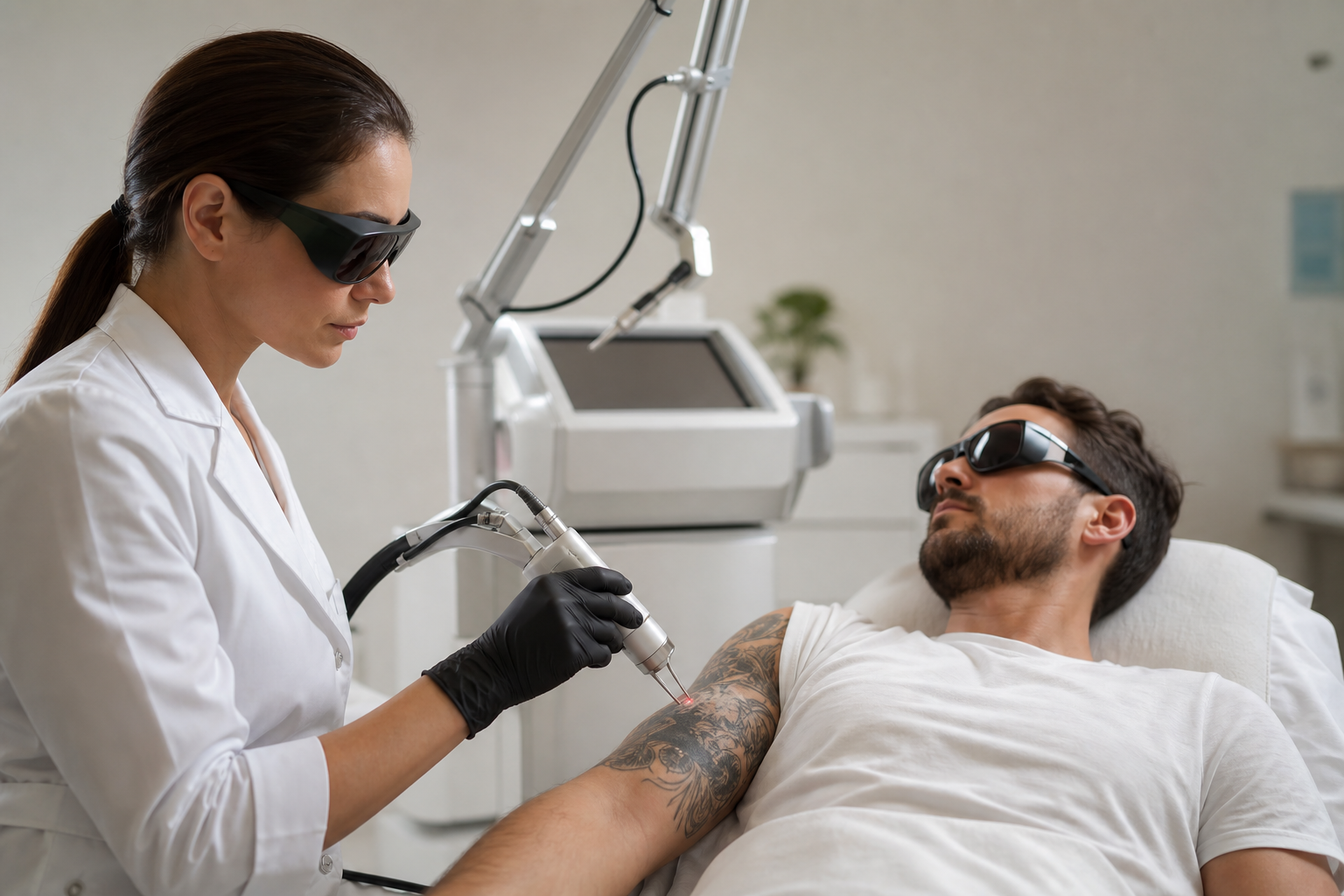
Laser tattoo removal has revolutionized the way unwanted tattoos are addressed, offering a modern, safe, and effective medical solution. Yet, one aspect of the process often mystifies many: the need for multiple treatment sessions to achieve significant fading or complete removal. Understanding why more than one laser session is necessary is vital for anyone considering tattoo removal, whether they are prospective patients, dermatologists, or aesthetic practitioners. An informed perspective sets realistic expectations and helps guide decision-making throughout this intricate process.
At its core, multiple treatments arise from the complex interaction between laser technology and the intricate nature of tattoo pigments embedded within the skin. Unlike surface blemishes, tattoos involve ink particles residing deep within the dermis, which the body's systems find challenging to eliminate quickly. The gradual fading witnessed over successive sessions is not arbitrary but deeply rooted in biological mechanisms and technical limitations. This article aims to elucidate why repeated laser sessions are indispensable, dissecting the scientific principles, biological responses, and external factors influencing the tattoo removal journey.
Whether you are contemplating the removal of a professional or amateur tattoo, interested in learning about laser technology, or seeking to align your expectations with medical realities, comprehending the rationale behind multiple treatments is critical to navigating this process safely and effectively.
How Does Laser Technology Interact with Tattoo Pigments?
Laser tattoo removal leverages the emission of highly concentrated, pulsating light beams that penetrate the skin to target tattoo pigments specifically. These laser pulses emit energy absorbed preferentially by the ink particles, which vary in color, size, and chemical composition. Rather than evaporating the ink outright, the laser works by fragmenting the pigment molecules into smaller pieces.
This fragmentation is essential because intact tattoo pigments are too large for the body's immune cells to clear efficiently. By breaking these particles down into finer fragments, the laser enables macrophages—specialized immune cells—to engulf and transport the ink debris away via the lymphatic system gradually.
Importantly, this process demands precision: the laser parameters must be carefully calibrated to affect the ink while minimizing incidental damage to surrounding skin tissue. Different wavelengths are selected to target specific ink colors effectively, as the absorption spectrum varies with pigment color. For instance, black ink absorbs a wide range of wavelengths, allowing for more versatile laser options, whereas lighter hues might require specialized approaches. This specificity underscores why multiple sessions and tailored protocols are often necessary for comprehensive treatment.
Why Can't a Single Treatment Completely Remove a Tattoo?
The notion that one laser session can erase a tattoo instantaneously does not align with the realities of tattoo composition and skin physiology. Several critical factors contribute to the necessity of multiple treatment sessions.
Firstly, the depth at which tattoo ink is embedded varies. During tattooing, the ink is deposited across different layers of the dermis, and the laser’s effectiveness depends on its ability to reach these variable depths. While the surface layers absorb certain laser wavelengths, deeper pigments may require more sessions for adequate fragmentation.
Secondly, the diversity in ink composition impacts removal efficacy. Organic and inorganic pigments, as well as mixtures used by tattoo artists, react differently to laser exposure. Darker pigments such as black and dark blue respond well to standard lasers because their higher absorption of laser energy leads to more effective particle disruption. Conversely, pigments like red, green, yellow, or white tend to be more resistant, necessitating a more cautious, phased approach to prevent undue skin damage.
Moreover, the body's physiological response to pigment clearance is inherently gradual. After laser-induced fragmentation, the immune system requires time to mobilize macrophages to the affected area, engulf pigment fragments, and transport them out of the tissue. Rushing treatments before this clearance could overload the immune capacity, reduce efficacy, and increase risks of adverse skin reactions.
Additionally, skin healing is a paramount concern. Each laser session causes microscopic injury to the skin, activating repair mechanisms. Scheduling multiple treatments too close together may impair normal wound healing, leading to cumulative skin stress, scarring, or pigmentation abnormalities. Thus, appropriate spacing between treatments supports optimal recovery and sustained treatment efficacy.
How Does the Tattoo Fade Gradually Between Treatments?
Following each laser session, the faded appearance of the tattoo does not represent immediate removal of all ink particles but the beginning stages of a biological clearing process. The broken-down pigment fragments are taken up by macrophages, cells responsible for consuming foreign matter, which then migrate through the lymphatic pathways to be excreted by the body. This emigration of pigment debris reduces the concentration of visible ink within the dermis.
The timeline for this clearance is variable among individuals but typically spans several weeks, during which the tattoo may appear lighter, more diffused, or less defined. This gradual fading underscores the importance of patience and adherence to medically advised intervals between sessions to allow this endogenous clearance to proceed unhindered.
Notably, the quality and extent of fading also depend on factors such as immune function efficiency, lifestyle, and tattoo characteristics, all influencing how quickly the transformed pigment can be dispersed.
What Factors Determine the Number of Treatments Needed?
The number of laser treatments required to remove a tattoo is not uniform and depends on a constellation of interrelated elements:
1. Tattoo Size and Density: Larger and denser tattoos involve more ink material and usually require a greater number of treatments for comprehensive clearance. Heavily saturated tattoos present more pigment to break down, lengthening the process.
2. Ink Color and Pigment Composition: Black and dark-colored inks absorb laser light more readily, often yielding quicker removal results. By contrast, lighter or more vibrant colors such as red, orange, yellow, and green have pigments that are less responsive to conventional laser wavelengths, sometimes necessitating additional or specialized sessions.
3. Skin Type and Sensitivity: Different skin phototypes respond distinctly to laser energy. Darker skin, for example, contains higher melanin levels, which can absorb laser light and increase the risk of pigmentation changes. Careful planning and longer intervals between sessions may be required, potentially extending the overall treatment timeline.
4. Tattoo Age and Quality: Professional tattoos usually contain more stable and deeply embedded inks compared to amateur tattoos, which can influence the number of sessions needed. Furthermore, older tattoos may have faded naturally over time, sometimes simplifying removal.
5. Immune System Efficiency: The body's capacity to clear pigment fragments varies. Individuals with more robust immune responses may experience faster fading, reducing the necessary number of sessions.
Why Are Treatment Intervals Crucial for Safety and Effectiveness?
Interval timing between laser tattoo removal sessions is as critical as the treatment itself. These gaps allow the skin to recover from the micro-injury induced by laser pulses. Adequate healing prevents unintended damage such as infection, scarring, or pigmentation changes. Additionally, it ensures that the body's immune system has sufficient opportunity to process and remove fragmented ink particles.
Clinicians often recommend spacing sessions approximately six to eight weeks apart. This interval can be adjusted based on individual skin response and treatment progress. Premature retreatment risks exacerbating skin irritation and decreases overall treatment effectiveness due to incomplete pigment clearance from the previous session.
Can Tattoos Always Be Completely Removed?
While laser tattoo removal represents the gold standard for fading and often fully erasing tattoos, it is important to recognize that complete removal is not always achievable. Several tattoos may only respond partially to treatment due to factors like pigment stubbornness, scarring, or skin type limitations.
Moreover, some residual ink may become permanently embedded, particularly when resistant pigments or deep-set ink layers are involved. In such scenarios, options like surgical excision or cover-up tattoos may be pursued as alternatives.
Patients and practitioners must approach tattoo removal with realistic expectations, understanding that the goal is often significant fading rather than absolute erasure. Collaborative assessment and individualized treatment planning enhance satisfaction and safety outcomes.
What Can Patients Expect During the Multi-Session Journey?
Embarking on laser tattoo removal involves a commitment over several months, sometimes extending beyond a year for larger or more complex tattoos. Throughout this period, patients can anticipate a gradual lightening of the tattoo, accompanied by temporary skin changes such as redness, swelling, or mild blistering shortly after treatments.
Proper post-treatment care—avoiding sun exposure, applying recommended topical agents, and monitoring skin reactions—is imperative for safeguarding results and reducing complications. Open communication with the treating professional about progress and any concerns encourages an adaptive and responsive treatment course.
Patients should also be prepared for financial and emotional investment, as multiple sessions incur cumulative costs and patience is essential for observing noticeable improvements.


