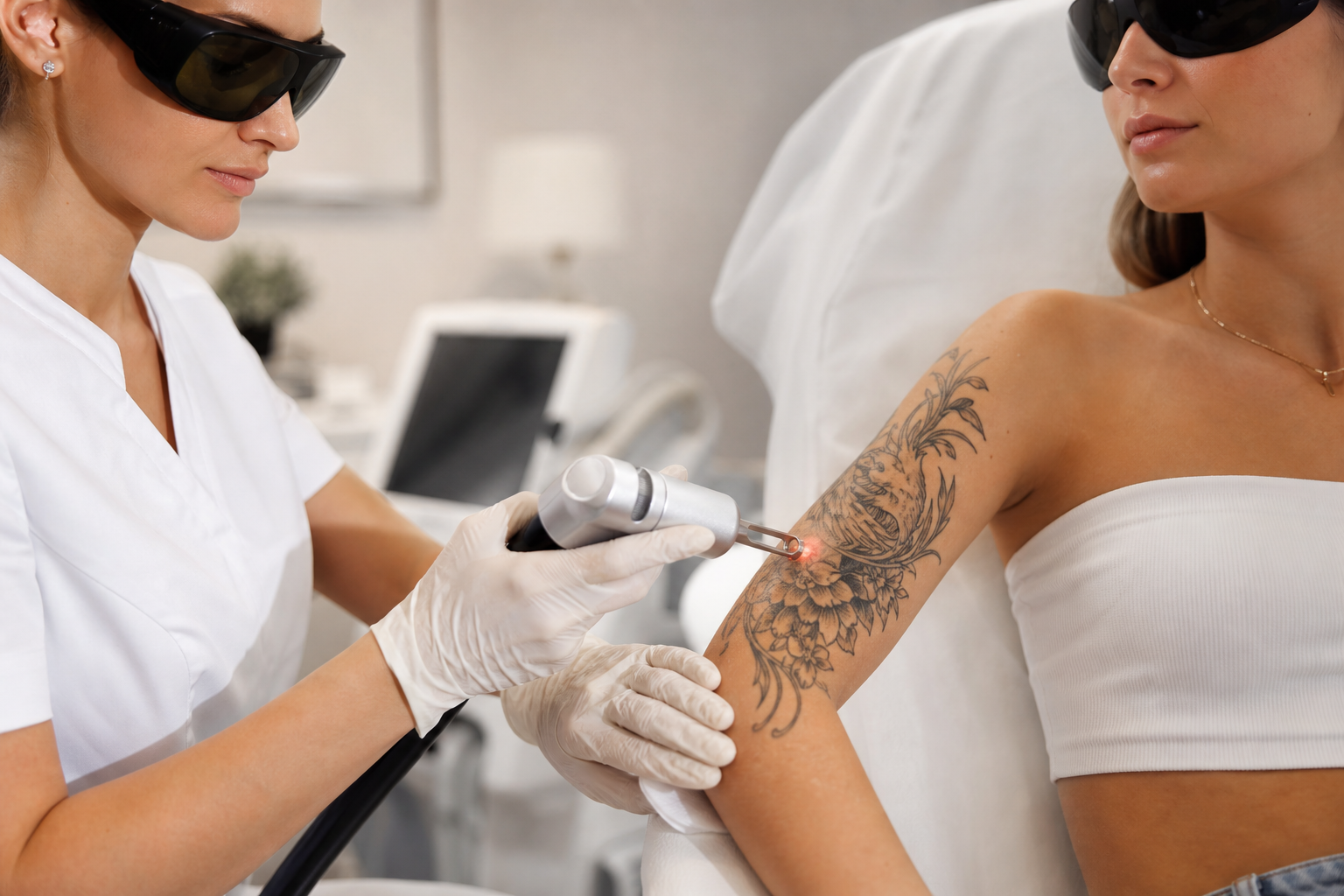
Tattoo removal has become an increasingly significant subject in esthetic and dermatologic medicine, reflecting evolving trends and personal choices over time. As preferences shift and individuals reconsider previous decisions about permanent body art, technologies enabling safe and effective tattoo removal have advanced notably. Among these innovations, picosecond laser systems stand out as one of the most modern and efficient solutions currently available for erasing unwanted tattoos. This article delves into the mechanisms behind picosecond laser tattoo removal, clarifies who can benefit most from this treatment, outlines realistic expectations, and identifies limitations inherent to the technology.
Picosecond lasers utilize ultrashort pulses of light measured in picoseconds — trillionths of a second — to break down tattoo pigments with exceptional precision. This capability distinguishes them from older laser types such as Q-switched lasers, enabling treatment of more stubborn pigmentation and a wider spectrum of colors with fewer side effects. Potential candidates for this procedure range from people with professional multicolored tattoos to those with semi-permanent or amateur ink seeking efficient removal. Moreover, understanding the technology’s operational principles helps users make informed decisions and maintain reasonable hopes regarding outcomes.
Given this context, we will explore precisely how picosecond laser technology works for tattoo removal, compare it with other laser modalities, discuss ideal patient profiles, describe procedural details, and touch on safety considerations. Addressing common questions surrounding recovery, effectiveness, and risks ensures a comprehensive and nuanced perspective on this sophisticated treatment.
What Makes Picosecond Lasers Distinctive in Tattoo Removal?
A picosecond laser emits laser pulses so brief — in the trillionths of a second range — that it delivers significantly higher peak power compared to lasers emitting pulses in nanoseconds. This ultrafast delivery results in a powerful photomechanical effect, whereby tattoo pigment particles shatter into extremely fine fragments. These microscopic particles can then be cleared more effectively by the body's immune system, distinguishing picosecond lasers from older Q-switched laser devices that fragment pigments less efficiently.
The fundamental mechanism at play involves targeting pigment molecules with high-energy light pulses that produce shockwaves strong enough to break the ink apart mechanically, rather than relying solely on photothermal effects which risk damaging surrounding skin tissue. This rapid, focused energy helps minimize collateral thermal injury to the epidermis and dermis, reducing complications and improving overall safety.
Technologically, picosecond lasers support multiple wavelengths, allowing treatment tailored to specific ink colors such as black, blue, green, red, and even less responsive shades like yellow and orange. This versatility enables practitioners to design individualized protocols based on tattoo characteristics, skin type, and treatment goals.
Who Is Best Suited for Picosecond Laser Tattoo Removal?
Individuals seeking removal or significant fading of unwanted tattoos stand as the primary beneficiaries of picosecond laser technology. This includes those who have professional, multicolored tattoos that have proven resistant to older laser methods, as well as people with amateur or semi-permanent tattoos desiring smoother, faster clearance.
The picosecond laser is particularly advantageous for patients with darker or more complex color palettes. Since conventional methods struggle to break down certain pigments—especially vibrant greens, blues, and reds—the picosecond laser's high precision pulse allows more comprehensive coverage and enhanced efficacy. Additionally, it suits a broad range of skin tones, although practitioners must perform individualized assessments to determine safe treatment parameters and avoid pigmentation irregularities.
Those who previously underwent laser tattoo removal without satisfactory results may also consider picosecond laser as an alternative superior technique, potentially reducing total treatment sessions and associated discomfort. However, candidates must be free from contraindications such as active skin infections, certain photosensitive conditions, or immune system anomalies. Comprehensive consultation remains essential to evaluate individual suitability.
How Does the Picosecond Laser Procedure Work Step by Step?
Before any treatment, a thorough examination is conducted by a qualified dermatologist or laser specialist to assess tattoo size, depth, color composition, and skin condition. This evaluation guides the selection of appropriate laser wavelengths and pulse parameters tailored for maximal pigment disruption with minimal inflammation.
During the session, patients wear protective eyewear to shield their eyes from intense laser light. The laser handpiece is positioned precisely above the tattooed area, delivering short bursts of laser energy. Though sensations differ per individual, the treatment is commonly described as quick, stinging pricks or a rubber-band snap on the skin. Cooling methods, like cold air or contact cooling devices, are often applied to enhance comfort.
After treatment, transient side effects such as redness, swelling, or mild blistering may develop but typically resolve within several days. To avoid complications, patients must adhere to post-procedure instructions which usually include avoiding sun exposure, applying soothing topical agents, and keeping the area clean.
Sessions generally recur every 6 to 8 weeks to allow the immune system time to remove fragmented pigments and permit tissue recovery. The total number of treatments required to achieve desired fading or removal depends on tattoo characteristics, but picosecond lasers often shorten this course relative to older technologies.
What Advantages Does the Picosecond Laser Offer Over Conventional Tattoo Removal Methods?
Picosecond laser technology presents a spectrum of benefits when compared to prior tattoo removal techniques, especially Q-switched lasers. One key advantage lies in its superior efficiency: ultrashort pulses produce smaller pigment particles, which the body can clear more rapidly and thoroughly.
This efficiency translates into fewer treatment sessions in many cases, which not only reduces cumulative discomfort but may also lower total costs and expedite completion of the removal process. Moreover, picosecond lasers exhibit enhanced effectiveness on difficult-to-treat colors such as light greens, blues, and reds, which historically responded poorly to nanosecond pulses.
The treatment also poses a decreased risk of adverse effects including textural skin changes, scarring, and pigmentary disturbances. The precision afforded by picosecond lasers limits thermal damage to the surrounding tissue, resulting in improved healing profiles and better preservation of skin integrity.
Finally, patients often report increased comfort during sessions due to the brief pulse durations and reduced heat generation, supporting greater procedural tolerability.
What Are the Realistic Expectations and Limitations of Picosecond Laser Tattoo Removal?
While picosecond lasers significantly advance tattoo removal capabilities, it is vital to maintain pragmatic expectations regarding outcomes. Complete eradication of tattoo ink is frequently achievable but not guaranteed, especially with longstanding or deeply embedded pigments. Certain pigment colors may fade less predictably despite technological improvements.
Multiple sessions remain necessary in most cases, particularly for large or professional-grade tattoos composed of high-density or multi-hued pigments. The immune system’s capacity to clear debris fundamentally limits the pace of pigment elimination, making some degree of patience essential.
Moreover, certain skin types and medical histories may predispose patients to side effects such as pigmentation changes or scarring. While minimized, these risks warrant careful pre-treatment evaluation and post-care vigilance.
It is equally important that treatment is administered by experienced professionals using calibrated devices. Improper technique or inadequate patient selection can compromise results and safety.
How Does the Picosecond Laser Compare to Other Common Lasers Used for Tattoo Removal?
Picosecond lasers complement a family of laser devices utilized in tattoo removal, including Q-switched Nd:YAG, alexandrite, and ruby lasers. Each laser offers particular wavelength ranges suitable for targeting specific pigment colors, as well as distinct pulse durations influencing pigment fragmentation mechanisms.
Q-switched lasers, emitting pulses in nanoseconds, were long the gold standard. Nd:YAG lasers target black and dark blue inks effectively, alexandrite lasers suit green and blue pigments, and ruby lasers address certain red and purple shades. However, as explained in related reference materials such as "Which Lasers Are Used for Tattoo Removal?" and "Picosecond vs Q-Switched Lasers: What Are the Differences?", picosecond lasers deliver shorter pulses and higher peak energy, improving fragmentation efficiency.
In practice, picosecond lasers can be used alone or alongside other laser types to tailor treatment to complex tattoos. This integrated strategy maximizes clearance while mitigating risks, especially for difficult color combinations or varying skin phototypes.
What Post-Treatment Outcomes Can Patients Expect From Picosecond Laser Tattoo Removal?
Upon completion of the recommended treatment sessions, most patients observe marked fading or near-complete removal of the tattoo pigment. The gradual nature of pigment clearance — facilitated by the body’s immune response to fragmented particles — means the full effect unfolds over weeks to months following the last session.
Patients may notice temporary mild redness, swelling, or changes in skin coloration during healing. These typically resolve without lasting issues when proper aftercare is followed. Some individuals might experience slight residual hypopigmentation, hyperpigmentation, or textural alteration, but these are usually transient.
To maintain and enhance results, protection from ultraviolet radiation is strongly advised, as sun exposure can induce pigmentation irregularities during skin recovery. Regular follow-up supports monitoring for any late effects and planning touch-up treatments if necessary.
Frequently Asked Questions About Picosecond Laser Tattoo Removal
Is the treatment painful? Sensations during picosecond laser sessions vary but are commonly described as brief, sharp pricks or snaps akin to a rubber band against the skin. Many patients tolerate treatment well, particularly with adjunctive cooling or topical numbing agents.
How long is the entire removal process? Depending on factors such as tattoo size, color complexity, pigment depth, and individual immune response, treatment can span several months to over a year, with multiple sessions spaced typically 6 to 8 weeks apart.
What aftercare is necessary? Post-treatment care involves gentle skin cleansing, application of soothing creams, sun avoidance, and adherence to any specific instructions provided by the clinician to minimize complications and foster optimal healing.
Can complete tattoo removal always be achieved? While picosecond lasers improve results significantly, some tattoos—particularly those with deep, dense pigment or certain colors—may not be completely removable. However, substantial fading is generally attainable.


