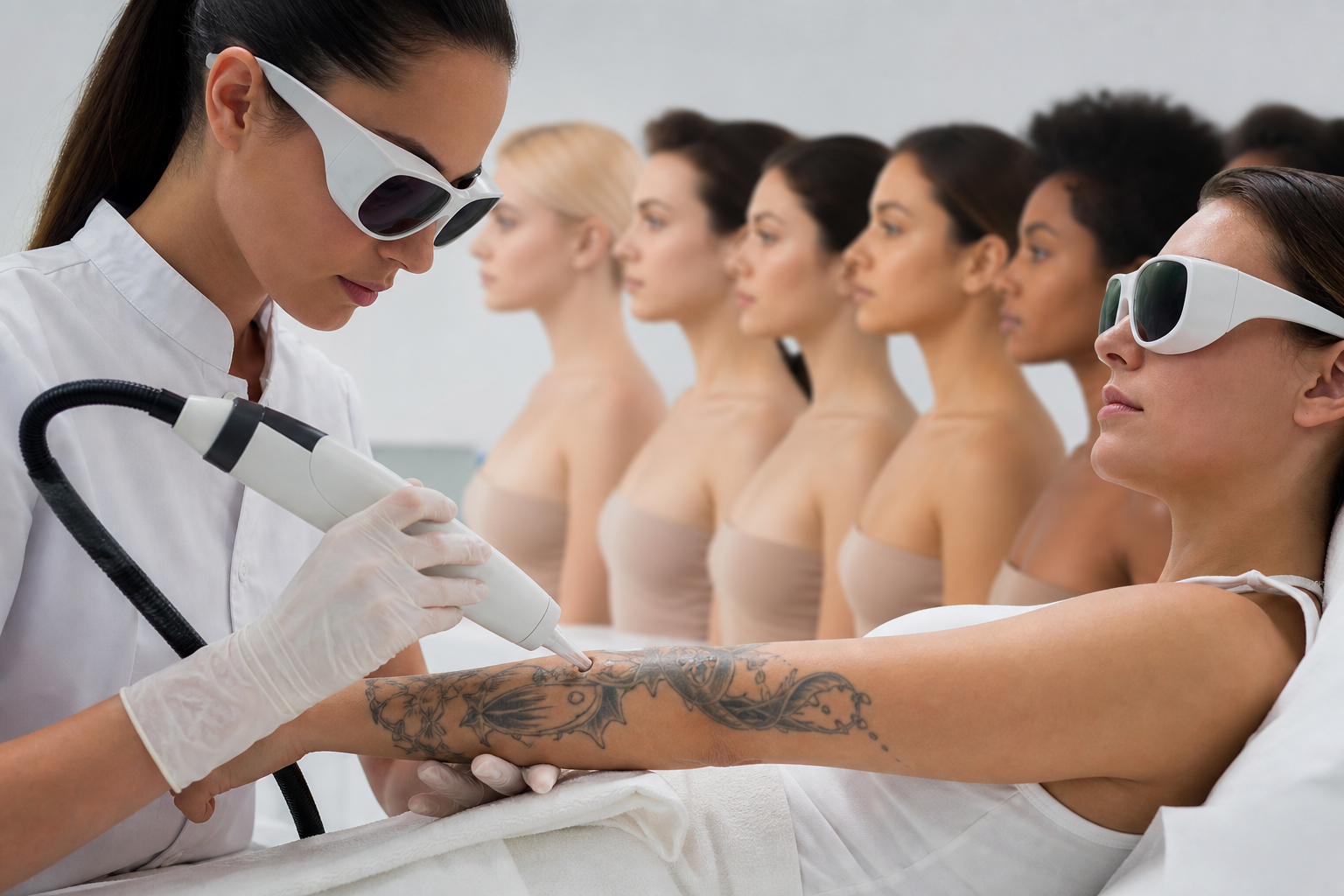
The Fitzpatrick Skin Type classification is a widely recognized system in dermatology and aesthetic medicine that categorizes human skin based on its response to ultraviolet (UV) radiation exposure. Originating in the 1970s, this classification allows professionals to assess skin sensitivity, predict reactions to sun exposure, and tailor treatments accordingly. This becomes indispensable when considering procedures such as laser tattoo removal, where skin pigmentation and type significantly influence treatment safety and efficacy.
This editorial article delves into the essentials of the Fitzpatrick Skin Type classification, exploring who benefits from understanding this system and why it is a cornerstone in dermatological treatments, especially laser interventions. If you are contemplating laser tattoo removal or are a clinician engaged in laser-based therapies, appreciating the nuances of Fitzpatrick skin types is vital. The insights provided herein help in anticipating possible skin reactions, mitigating risks, and ensuring that treatments are customized to the patient’s skin characteristics.
Through this comprehensive guide, readers will gain an enhanced understanding of how skin types vary in their interaction with laser energy, the implications for laser tattoo removal, and strategies to prevent complications. Particular attention is given to darker and tanned skin types, where caution is paramount due to higher melanin levels and associated challenges. The article also underscores the inadvisability of unsupervised or DIY treatment approaches, emphasizing the need for expert evaluation and personalized care protocols.
What Is the Fitzpatrick Skin Type and How Is It Classified?
The Fitzpatrick Skin Type system was developed by Thomas B. Fitzpatrick in 1975 as a practical method to assess skin's reaction to UV light. This scale ranges from Type I to Type VI, categorizing skin from very fair to very dark based on pigmentation, natural tanning tendency, and likelihood of burning. Each category aggregates several defining features including skin color, eye color, hair color, and the skin's typical behavior under sun exposure.
Specifically, the six Fitzpatrick skin types are:
Type I: Very light or pale skin, often with freckles, blue or green eyes, light hair; this skin always burns and never tans.
Type II: Fair skin, blue, green or hazel eyes, light hair; burns easily and tans minimally.
Type III: Medium skin tone, fair to beige, with any eye or hair color; sometimes burns but tans gradually.
Type IV: Olive or light brown skin, typically tans easily and burns rarely.
Type V: Brown skin, tans profusely and rarely burns.
Type VI: Dark brown or black skin, almost always deeply pigmented and never burns.
This classification serves as a guide to anticipate a patient’s skin response, which is crucial when planning laser-based procedures that interact with melanin. The sensitivity of the skin and the risk of adverse effects such as burns or pigment alterations correlate strongly with these skin types.
Who Benefits from Understanding Fitzpatrick Skin Types in Laser Treatments?
Knowing one’s Fitzpatrick skin type is especially important for various stakeholders in health and cosmetic domains. For patients considering laser procedures like tattoo removal, this knowledge informs realistic expectations about outcomes and risks. It also aids in selecting qualified professionals who factor skin type into treatment planning.
Medical and aesthetic practitioners—dermatologists, cosmetic surgeons, laser technicians, and estheticians—all rely on this classification to optimize laser parameters and ensure patient safety. Different skin types necessitate different laser technologies, energy settings, and treatment intervals to minimize complications.
Moreover, research and training programs incorporate Fitzpatrick skin typing to advance techniques that cater to diverse populations. The importance is amplified in multicultural societies where skin type variability is vast, making personalized approaches the standard of care rather than a luxury.
Why Does Fitzpatrick Skin Type Matter in Laser Tattoo Removal?
Laser tattoo removal targets pigment particles embedded in the dermis by delivering specific wavelengths of light energy which fragment the ink into particles small enough for the body's immune system to eliminate. However, skin pigmentation, primarily melanin concentration, absorbs laser energy as well, which can cause unwanted thermal damage.
The Fitzpatrick skin type directly informs the choice of laser type, energy fluence, pulse duration, and treatment frequency. For lighter skin types (I to III), risks such as hypopigmentation or burns are usually lower, allowing for more aggressive settings and often fewer sessions.
Conversely, in darker skin types (IV to VI), the abundance of melanin increases absorption of laser energy by the skin, raising the chance of side effects like hyperpigmentation (dark spots) or hypopigmentation (light spots), along with burns or scarring. Therefore, these treatments require more cautious protocols, including the use of lasers with longer wavelengths such as Nd:YAG 1064 nm that penetrate deeper and are less absorbed by melanin, coupled with lower fluence and longer intervals between sessions.
Additionally, recent tanning or sun exposure elevates melanin, further complicating laser targeting and increasing side effect risks for all skin types but especially for darker and tanned skin. Consequently, Fitzpatrick typing goes hand-in-hand with an assessment of current skin condition to guide the safest treatment schedule.
What Are the Expected Skin Reactions and Risks Across Different Fitzpatrick Skin Types?
The anticipated skin responses and possible adverse effects from laser tattoo removal vary significantly with the Fitzpatrick skin type and are critical considerations prior to initiating treatment.
For lighter skin types (I-III), typical post-laser effects may include mild erythema (redness), edema (swelling), and transient hypopigmentation. These side effects generally resolve quickly with minimal intervention. Due to lower melanin content, the risk of burns or pigmentary changes is comparatively minimal.
For darker skin types (IV-VI), the risk profile shifts considerably. Hyperpigmentation is a common transient or sometimes persistent reaction, owing to melanin overproduction in response to inflammation or thermal injury. Hypopigmentation—sometimes permanent loss of pigment—is a more serious concern due to melanocyte destruction. More severe risks include burns and scarring from excessive laser energy or improper technique. These complications not only affect cosmetic outcomes but also have psychosocial impacts, given the increased visibility of pigmentary changes on darker skin.
Moreover, factors such as underlying skin conditions, previous treatments, or inadequate post-care enhance vulnerability to adverse events. These realities reflect the crucial need for tailored protocols and vigilant monitoring.
How Can Patients and Clinicians Prepare for Laser Tattoo Removal According to Fitzpatrick Skin Type?
Preparation for laser tattoo removal is a collaboration between patient and provider, grounded in understanding the patient's Fitzpatrick skin type and current skin status. A thorough skin assessment by a qualified professional is imperative before therapy planning.
Key preparatory steps include:
Avoiding sun exposure and tanning for a minimum of 4-6 weeks prior to treatment, as recent UV exposure increases melanin and risk of injury.
Discontinuing photosensitizing medications or topical agents under medical supervision to reduce sensitivity.
Pre-treatment skin conditioning for some skin types may involve the use of specific creams to mitigate inflammation and promote skin healing but strictly under professional guidance.
Setting realistic expectations based on skin type, tattoo characteristics, and risks associated with pigmentary changes or scarring.
Planning the treatment schedule with adequate intervals to allow skin recovery, especially for darker skin types.
Education concerning the importance of follow-up care and signs of possible complications empowers patients to seek timely assistance, preventing escalation of side effects. Providers must communicate clearly about the potential for pigmentary reactions and emphasize that no do-it-yourself protocols should replace professional evaluation and treatment.
Which Laser Technologies and Treatment Protocols Are Best Suited for Each Fitzpatrick Skin Type?
Modern laser technologies offer an array of devices that can be expertly selected and calibrated based on Fitzpatrick skin types to optimize safety and results. The principal laser types used in tattoo removal include Q-switched lasers and picosecond lasers, each with specific wavelengths targeting tattoo pigments but varying in precision and safety profiles.
In light skin types (I-III), lasers with shorter wavelengths such as Q-switched Ruby (694 nm) or Alexandrite (755 nm) may be effectively utilized, as the risk of melanin absorption and skin damage is lower. Treatment parameters can be moderately aggressive to expedite pigment breakdown.
For darker skin types (IV-VI), Nd:YAG lasers operating at 1064 nm are preferred. Their longer wavelength allows deeper penetration with less melanin absorption, reducing heat buildup in the epidermis and minimizing pigmentary side effects. Protocols are adjusted to use lower fluences (energy densities) and are spaced with longer intervals to allow recovery and monitor skin response.
Advanced approaches also integrate skin cooling, contact cooling, or cooling sprays during treatment to protect epidermal skin layers. Additionally, some clinics may employ adjunctive therapies or pre/post-treatment regimens tailored to Fitzpatrick types.
What Does Post-Treatment Care Entail and How Can Complications Be Identified Early?
Proper aftercare is indispensable for reducing adverse effects and promoting healing regardless of skin type. Patients must avoid sun exposure rigorously, applying broad-spectrum sunscreens with SPF 50+ as recommended. Hydrating and soothing topical agents prescribed by clinicians aid in skin barrier repair.
Patients should monitor for warning signs including:
Prolonged or worsening redness and swelling beyond typical timelines;
Formation of blisters, crusts, or unusual scabbing;
Rapid color changes such as sudden darkening or lightening of treated areas;
Persistent pain or tenderness not alleviated by standard measures;
Development of raised scar tissue or nodules.
Early recognition of these signs and prompt consultation can avert chronic issues. Importantly, patients are cautioned against attempting home remedies or unverified treatments, as these may exacerbate problems.
How Do Fitzpatrick Skin Types Influence the Number and Timing of Laser Tattoo Removal Sessions?
The Fitzpatrick classification affects not only treatment parameters but also the overall therapeutic timeline. Light-skinned individuals typically require fewer sessions—commonly between 4 to 8—with intervals of 6 to 8 weeks. The skin’s quicker recovery and lower risk profile allow more frequent treatments in most cases.
Darker skin types often necessitate longer intervals between procedures, sometimes up to 10-12 weeks or more, to monitor healing and avoid pigment alterations. Additionally, lower energy settings and laser adjustments may require increased session counts to achieve equivalent clearance of tattoo pigments.
Practitioner experience and patient adherence to care protocols influence outcomes significantly. Patience and careful scheduling aligned with skin physiology ensure safer and more effective tattoo removal, minimizing compromises to skin health.
Why Should Laser Tattoo Removal Be Postponed on Tanned or Recently Sun-Exposed Skin?
Recent tanning signifies increased melanin synthesis in response to UV exposure, rendering the epidermis darker and more reactive. Laser targeting of tattoo ink in such skin risks non-specific absorption by excess melanin, heightening the chance of thermal injury, pigmentation abnormalities, and prolonged healing times.
As a result, clinicians recommend deferring laser tattoo removal for at least 4-6 weeks after sun or artificial tanning exposure until the skin’s pigmentation normalizes. This delay reduces melanin content and lowers complication risks, allowing the laser to selectively target tattoo pigments effectively and safely.
Patients should seek professional assessment before proceeding to ensure skin readiness. Self-assessment or premature treatment can lead to unintended consequences, particularly in individuals with Fitzpatrick skin types IV to VI, where altered pigmentation after laser injury is often more prominent and distressing.
What Special Considerations Apply When Removing Tattoos from Darker Skin Tones?
Removing tattoos from darker skin tones necessitates heightened clinical vigilance. The interplay between dense melanin content and tattoo pigments complicates selective laser targeting. Therefore, a heightened emphasis on precise laser choice, calibrated settings, and extended treatment intervals is mandatory.
Clinicians recommend using Q-switched or picosecond Nd:YAG lasers at 1064 nm due to their deeper penetration and reduced melanin interaction. During treatment, conservative energy settings and careful observation for adverse reactions guard against hypopigmentation, hyperpigmentation, or scarring.
Pre- and post-treatment care protocols emphasize aggressive sun protection, anti-inflammatory measures, and possibly adjunctive therapies to support skin integrity. Patient education is crucial, particularly about recognizing early signs of complications and adhering strictly to follow-up schedules.
Only experienced laser specialists should perform these procedures on darker skin to ensure an optimal balance between efficacy and the preservation of skin health.


