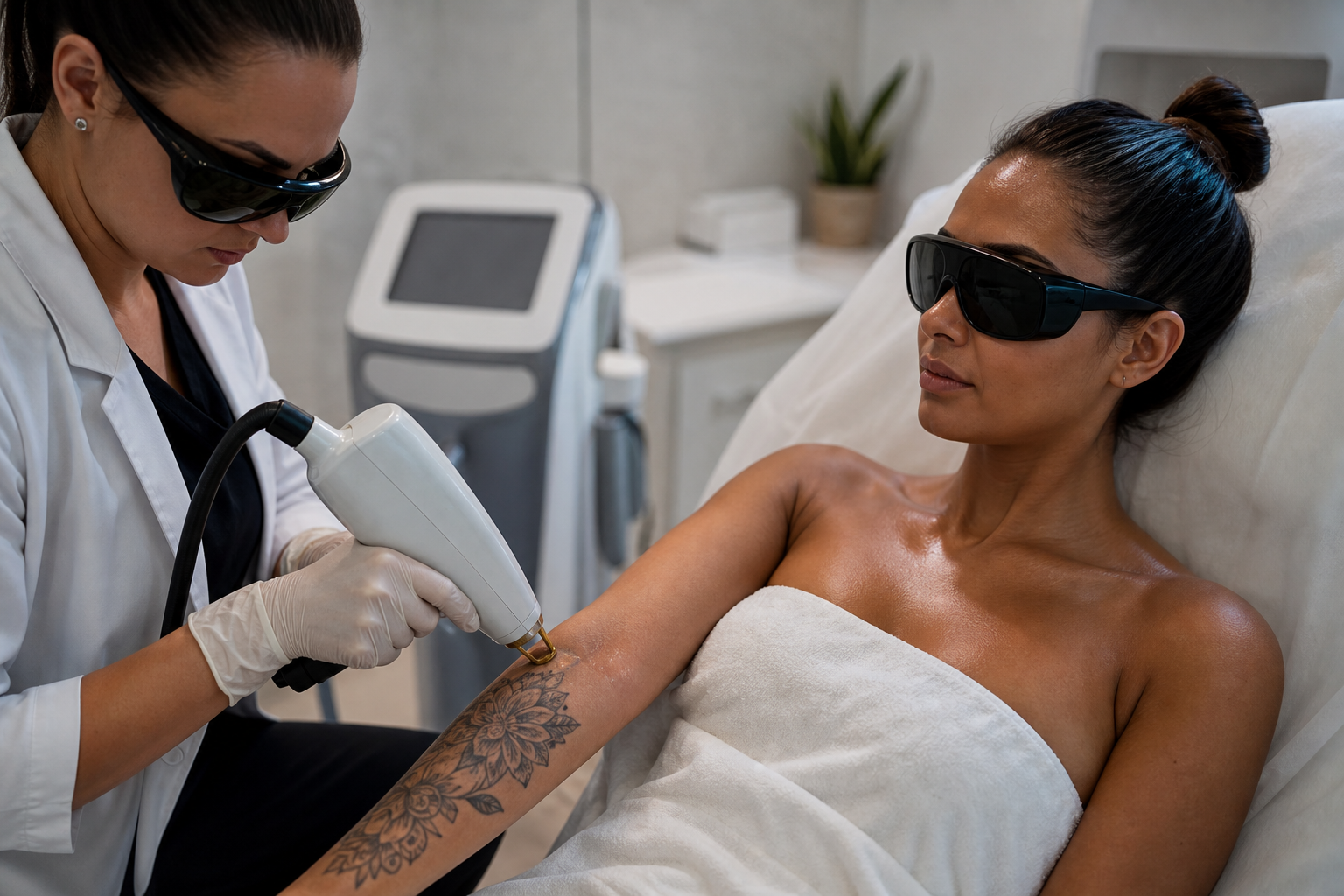
Treating tanned skin in dermatological and aesthetic procedures, particularly with laser technologies, presents unique challenges and risks that demand careful consideration. This topic is critical for individuals seeking skin treatments such as laser tattoo removal, pigmentation correction, or skin rejuvenation after sun exposure or artificial tanning. The inherent characteristics of tanned skin, largely resulting from increased melanin levels due to ultraviolet (UV) exposure, influence the skin’s response to laser therapies and can affect both the safety and efficacy of these interventions.
Understanding the risks associated with treating tanned skin is vital not only for healthcare practitioners specializing in laser procedures but also for patients aiming to make informed decisions regarding their skin care. This comprehensive article delves into the specific reactions and complications that may arise when lasers interact with tanned or darker skin types, presenting insights into prevention strategies and highlighting when professional assessment is imperative.
By addressing the complexity of skin types, the nuances of laser-skin interaction, and the critical importance of individualized treatment planning, this editorial serves as a foundational resource for anyone considering laser treatments on tanned skin. It emphasizes the heightened caution required when managing darker skin tones or recently sun-exposed skin, moving beyond the surface concerns to underscore the biological mechanisms and practical safety considerations at play.
What Does Treating Tanned Skin Entail and Why Is It Particularly Challenging?
Treated tanned skin refers to dermatological or aesthetic interventions performed on skin that has recently been exposed to UV radiation, whether through natural sunlight or tanning beds. This recent exposure leads to an increase in melanin production, the pigment responsible for giving skin its color and offering moderate protection against UV damage. While melanin serves as a protective mechanism, its presence complicates laser treatments because lasers depend on targeting specific pigments in the skin selectively.
Laser technology operates on the principle of selective photothermolysis, delivering concentrated light energy to a particular chromophore—such as tattoo ink or melanin-containing lesions—while sparing surrounding tissues. However, in tanned skin, the elevated melanin levels in the epidermis can absorb more laser energy inadvertently, increasing the risk of unwanted effects such as burns, pigmentary changes, and scarring. This absorption diminishes the contrast between the target and the surrounding tissue, which affects both the precision and outcome of the treatment.
Consequently, practitioners often advise delaying laser procedures until the skin returns to its baseline tone, reducing melanin concentration. The unpredictable response of tanned skin not only challenges the effectiveness but can also jeopardize patient safety. This understanding underscores the importance of timing and preparation, which are crucial to minimizing adverse outcomes and achieving desirable results.
How Does Skin Phototype Influence the Risks of Treating Tanned Skin?
Skin phototype classification offers a systematic way to evaluate how a person’s skin reacts to UV radiation based on genetic factors affecting melanin content and skin response. The Fitzpatrick scale, ranging from I (very fair skin, burns easily) to VI (deeply pigmented skin, rarely burns), serves as a fundamental guide in aesthetic medicine and laser therapies.
Individuals with lighter phototypes (I and II) often face higher risks of acute sunburn and inflammation post-treatment; however, their lower baseline melanin can result in less intense interactions during laser procedures compared to those with higher phototypes. In contrast, darker skin phototypes (IV to VI), characterized by greater melanin quantities, are paradoxically at increased risk for pigmentary complications such as hyperpigmentation or hypopigmentation following laser treatment, particularly if the skin is actively tanned.
For example, in darker and tanned skin, the melanin-rich epidermis may absorb excessive laser energy, leading to inflammation that stimulates melanocytes to produce more pigment (hyperpigmentation) or, conversely, results in melanocyte damage and pigment loss (hypopigmentation). These pigmentary shifts can be long-lasting and cosmetically concerning for patients. Hence, practitioners must thoroughly assess an individual's phototype and tanning history to tailor laser parameters appropriately, balancing safety and effectiveness.
What Are the Most Common Skin Reactions After Laser Treatment on Tanned Skin?
Following laser procedures on tanned or darker skin, patients commonly experience a range of skin reactions reflecting the tissue's response to laser-induced injury. Initial responses often include erythema (redness), edema (swelling), and a transient sensation of warmth or mild burning in the treated area. These signs usually reflect an expected inflammatory phase within the skin's natural healing process.
However, in tanned skin, the intensity and duration of these reactions can be amplified. More specifically, pigmentary irregularities frequently manifest, with hyperpigmentation appearing as darker patches due to increased melanin production and accumulation at the site of laser exposure. Conversely, hypopigmentation may emerge when melanocytes are irreversibly damaged, leading to lighter spots. Both can pose aesthetic concerns and may require extended periods or additional treatment modalities to resolve.
In severe cases, improper laser settings or treatment techniques on tanned skin may result in blistering, crusting, and in rare instances, permanent scarring. These complications highlight the crucial importance of laser parameter customization and vigilant post-procedure care to mitigate adverse outcomes.
Which Prevention Measures and Preparation Steps Reduce Risks in Treating Tanned Skin?
Risk mitigation in laser procedures involving tanned skin hinges on meticulous preparation and adherence to clinical best practices. Foremost, a comprehensive patient history and skin assessment are critical to determine the extent of tanning and underlying skin characteristics, enabling appropriate treatment planning.
Patients are generally advised to avoid sun exposure and artificial tanning for several weeks prior to laser therapy, since allowing the skin to return to its baseline pigmentation minimizes the likelihood of complications. Dermatologists often recommend a waiting period of at least two to four weeks post-UV exposure before initiating treatments.
Adjunctive skin care using high-SPF broad-spectrum sunscreens and topical agents that support skin barrier integrity may be prescribed to enhance preparedness and expedite recovery. Post-procedure, continuing diligent sun protection is equally paramount to prevent exacerbation of pigmentary abnormalities and aid in skin healing.
From a procedural standpoint, employing lasers with wavelengths and pulse durations suited for higher phototypes, along with conservative energy settings, can significantly reduce tissue damage. Expertise in adjusting treatment parameters according to skin response and employing gradual multiple sessions rather than aggressive single treatments further enhances safety and outcomes for tanned skin.
Why Are DIY Laser Treatments Particularly Risky for Tanned or Darker Skin?
The rising popularity of home-use laser devices and do-it-yourself (DIY) skincare protocols poses significant dangers, especially for individuals with tanned or darker skin who require more nuanced approaches. Unlike treatments performed by trained specialists, DIY procedures often lack precise calibration, adequate safety controls, and professional monitoring, all of which are critical for managing the delicate balance necessary with pigmented skin.
Incorrect device settings or improper techniques can inflict burns, cause unpredictable pigmentary changes, and predispose to infection due to skin barrier disruption. Without the ability to identify early warning signs of complications or adjust treatment dynamically, DIY laser users inadvertently increase their risk of long-term skin damage and unsatisfactory cosmetic results.
Therefore, it is strongly advocated that laser treatments, particularly on tanned or darker skin types, be conducted exclusively by certified professionals in regulated clinical environments. This approach ensures proper patient evaluation, tailored treatment protocols, real-time assessment of skin reactions, and appropriate post-treatment care—essential components for safeguarding efficacy and patient wellbeing.
When Should a Dermatologist Be Consulted Before Undergoing Laser Procedures on Tanned Skin?
Seeking a dermatologist’s expertise prior to embarking on laser treatments is a prudent measure, notably for those with recent tanning or darker skin phototypes. A professional evaluation allows for a thorough skin examination to identify any underlying dermatological conditions, atypical pigmentations, or risk factors that could influence treatment safety and success.
In addition to assessing skin tone and tanning status, dermatologists can perform diagnostic procedures if suspicious lesions or pigments are present, ensuring that laser interventions do not inadvertently exacerbate pathological conditions. They are also uniquely qualified to determine if adjunctive therapies or skin priming are necessary to optimize outcomes.
The guidance provided by dermatology specialists extends to personalized counseling on sun avoidance, skin care regimens, and expectations for recovery and results, thereby empowering patients to make informed decisions and adhere to best practices in skin management before and after laser procedures.
What Are the Expected Outcomes and Realistic Expectations When Treating Tanned Skin With Lasers?
Patients embarking on laser treatments targeting tanned or darker skin should maintain realistic expectations grounded in the complexities of pigmentation biology and procedural limitations. While significant improvements in pigmentary lesions, unwanted tattoos, or skin texture can be achieved, the process may necessitate a series of conservative treatments spaced over time to minimize risks.
The rate of response may also differ compared to lighter or untanned skin, with some cases requiring adjunctive therapies or modified laser techniques to address treatment-resistant pigmentation effectively. Importantly, transient pigmentary changes post-treatment do not automatically equate to permanent damage; many patients experience gradual resolution with proper care.
Continued adherence to sun protection and skin maintenance, coupled with routine follow-up, sustains treatment benefits and safeguards against recurrence. Open communication with treating specialists regarding outcomes and concerns ensures adjustments can be made to optimize both safety and results.
How Does Practitioner Experience Influence the Safety of Laser Treatments on Tanned Skin?
The experience and specialized knowledge of the practitioner performing laser procedures are critical determinants of safety and efficacy, especially when working with tanned or darker skin types. Skilled clinicians possess a thorough understanding of laser physics, skin phototypes, and potential complications, enabling them to customize treatment parameters precisely and respond adeptly to patient feedback and skin reactions.
Experienced practitioners employ advanced diagnostic tools and follow evidence-based protocols that minimize risks such as pigmentary alterations, burns, and scarring. Their ability to recognize subtle changes in skin response empowers them to modify treatment in real time, reducing adverse events. Thus, their role extends beyond technical execution to encompass patient education, risk assessment, and comprehensive care management.
Consequently, patients seeking treatments on tanned skin are encouraged to select practitioners with demonstrated expertise in advanced laser technologies and a track record of safe outcomes in diverse skin types. This decision substantially contributes to the overall treatment satisfaction and skin health preservation.
What Are the Key Signs Post-Treatment That Require Prompt Medical Assessment?
Post-laser treatment surveillance is essential to identify and address complications at the earliest stages. Patients should be vigilant for signs such as persistent redness or swelling extending beyond the expected timeframe, blistering, excessive pain, discharge indicative of infection, or abrupt pigmentary changes that worsen or spread. These symptoms may signal underlying issues requiring immediate professional attention.
Additionally, the appearance of scarring, ulcerations, or abnormal texture changes necessitates dermatological evaluation to initiate appropriate interventions and prevent permanent damage. Early consultation facilitates tailored management strategies, potentially including topical therapies, procedural adjustments, or systemic medications to optimize healing.
Patient education before treatment about these warning signs reinforces proactive care and underscores the partnership between patient and provider in ensuring safe and effective laser therapy outcomes.


