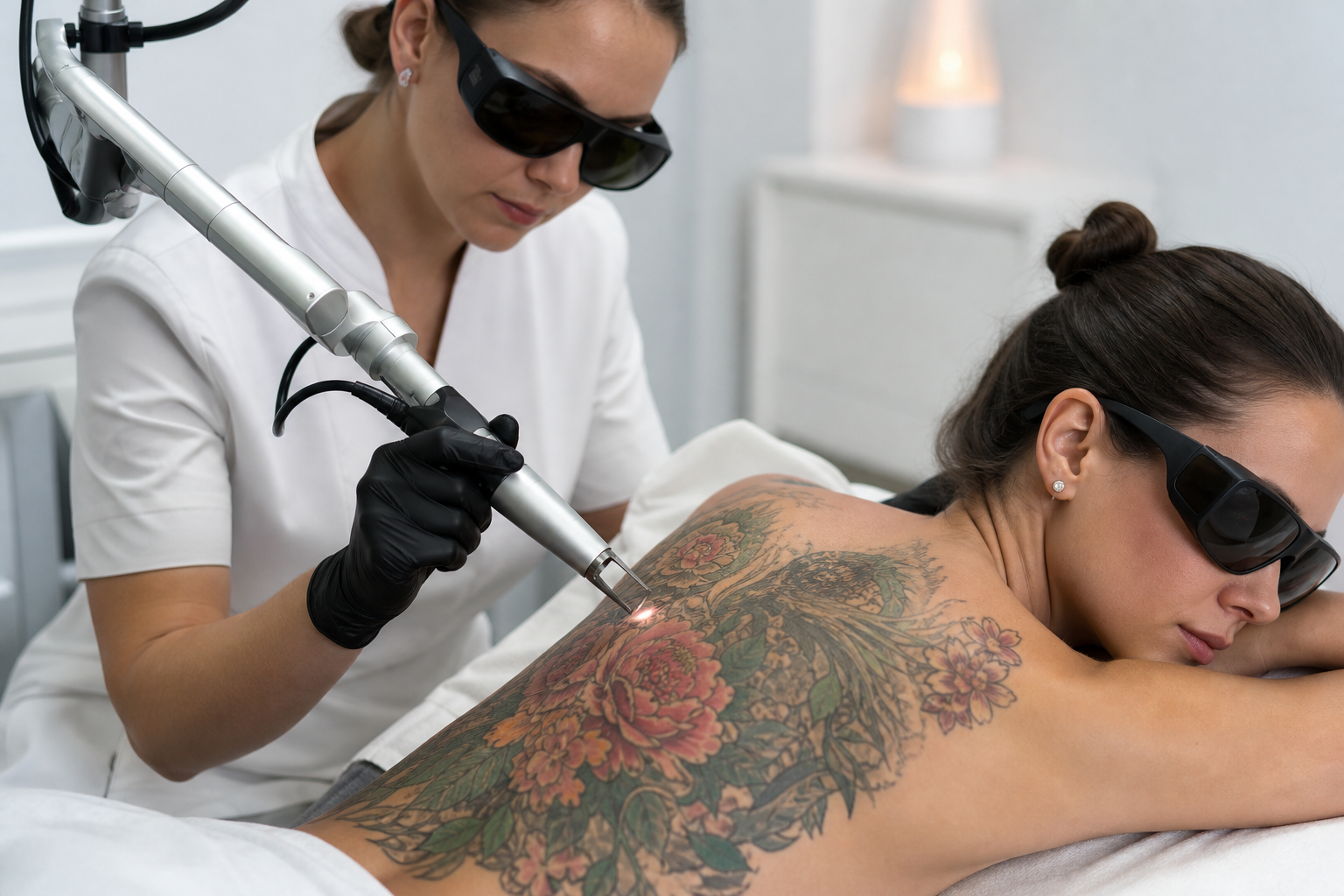
Laser tattoo removal has become a cornerstone of modern dermatology and aesthetic medicine, offering an option to those who seek to erase unwanted markings from their skin. Yet, a persistent question remains: why can't a single laser treat every tattoo color equally well? This question is crucial, as understanding the scientific and technological reasons behind it directly influences how effectively different tattoos can be removed, managing patient expectations, and selecting the appropriate treatment protocol.
This article explores the fundamental principles of laser tattoo removal with a particular focus on how laser light interacts with various tattoo pigments. It explains why one laser wavelength cannot universally address all colors, clarifies the physical and biological constraints involved, and details how contemporary laser systems adapt to the differing demands of tattoo colors on the skin. Additionally, it offers practical insights for patients considering laser removal, highlighting realistic outcomes and essential limitations based on current clinical knowledge.
Whether you are contemplating the removal of your tattoo, a practitioner wanting a deeper grasp of laser technologies, or simply curious about how different colors respond to laser treatment, this article aims to provide a comprehensive and reliable resource. By understanding why one laser cannot treat every color equally well, you can make informed decisions and set realistic expectations to ensure the safest and most effective approach to tattoo removal.
What Determines Laser Effectiveness Against Different Tattoo Colors?
At its core, laser tattoo removal hinges on the interaction between laser light and pigment molecules embedded in the skin. Each pigment color has a unique spectral profile—it absorbs specific wavelengths of light better than others. This selective absorption is what allows lasers to target tattoo ink specifically, with minimal collateral damage to surrounding tissue.
The effectiveness of laser treatment is tightly linked to the concept of selective photothermolysis, where laser light is absorbed preferentially by the tattoo pigment, generating heat or mechanical disruption that fractures the pigment particles. These fragments are then cleared away naturally by the body's immune system. Crucially, the laser wavelength must align closely with the absorption peak of the pigment color to maximize energy uptake and treatment efficacy.
For example, darker pigments like black absorb a broad range of wavelengths efficiently, enabling lasers emitting near-infrared spectra (such as 1064 nm Nd:YAG lasers) to treat them effectively. Conversely, lighter or brightly colored pigments—like greens, blues, reds, and yellows—have absorption peaks at different specific wavelengths. When the laser wavelength does not match the pigment’s optimal absorption range, the treatment can be ineffective or even cause unwanted damage due to poor energy absorption and dispersion.
Which Lasers Are Used to Target Different Tattoo Colors and Why?
Because tattoo inks vary widely in color and chemical composition, successful removal often requires lasers designed to emit specific wavelengths matched to those colors. In clinical practice, several types of lasers have become standard tools for addressing the color spectrum found in tattoos.
The Nd:YAG laser is one of the most versatile, offering a wavelength of 1064 nm effective against black and dark blue inks due to its deep tissue penetration and broad absorption by dark pigments. It can also be frequency-doubled to 532 nm, which is suited for brighter reds and some orange pigments.
For green and blue pigments, which absorb light differently, the Alexandrite laser operating at 755 nm is more effective. This wavelength corresponds better with the absorption peaks of these pigments, making the Alexandrite laser the preferred choice for treating these colors. However, care must be taken with darker skin types, as Alexandrite's absorption in melanin can increase the risk of side effects.
The Ruby laser, emitting at 694 nm, also finds use in targeting red and orange inks but with more limited depth penetration. It is less commonly employed than the Nd:YAG or Alexandrite lasers but remains an option for certain pigment profiles.
More recently, picosecond lasers, which generate ultra-short pulses, have gained prominence. Their shorter pulse durations allow for more efficient pigment fragmentation, especially for resistant ink colors and complex multicolored tattoos. These lasers often come with adjustable wavelengths or can be combined with other laser types to broaden their treatment scope.
How Do Laser Wavelengths Influence Tattoo Pigment Interaction?
Understanding the physics of light absorption by tattoo pigments provides insight into why different wavelengths yield varied results. When a laser pulse penetrates the skin, its photons interact with tattoo ink particles. Pigments absorb photons most efficiently at wavelengths corresponding to their color's complementary spectrum.
This absorption leads to rapid heating or mechanical stress applied to the pigment particles, causing them to shatter into smaller pieces. For instance, black pigment absorbs across the spectrum, allowing 1064 nm lasers to induce thermal breakdown effectively. Conversely, green pigments absorb light more strongly around 755 nm, making Alexandrite lasers optimal.
Laser treatments that use inappropriate wavelengths—those not aligned with the pigment’s absorption characteristics—fail to fragment the ink effectively. This can result in therapeutic failure, prolonged treatment courses, or adverse effects such as burns or scarring due to excessive heat affecting surrounding tissues. This explains the necessity for multiple lasers or tunable wavelength systems in modern tattoo removal practice.
Why Can't a Single Laser Address All Tattoo Colors Equally Well?
The crux of the matter lies in the physical limitations imposed by the selective absorption properties of tattoo pigments. Each laser emits light at a specific wavelength or a narrow range of wavelengths, tailored for particular pigment colors. No single wavelength can efficiently absorb the entire visible spectrum of tattoo inks.
Moreover, tattoo pigments differ not only in color but also in chemical composition, particle size, and depth within the dermis. These factors affect how lasers interact with the ink. For example, organic inks may absorb light differently from inorganic or metallic-based pigments. Additionally, the skin tone of the patient influences laser-tissue interaction, as melanin competes for absorption in overlapping wavelengths, further complicating laser selection.
Because of these multi-dimensional complexities, a single laser device—even if highly advanced—cannot universally and equally remove all tattoo colors. Instead, treatment strategies often combine lasers with different wavelengths or employ multi-wavelength devices to achieve comprehensive results across a spectrum of colors.
What Biological and Physical Limitations Affect Laser Tattoo Removal?
Biologically, the body’s capacity to clear fragmented pigment particles is a limiting factor for how quickly and completely a tattoo can be removed. Even after successful laser fragmentation, macrophages in the skin gradually digest and transport ink particles away. This natural clearance process takes time, thus multiple treatment sessions spaced over weeks or months are typically necessary.
Physically, the depth at which tattoo pigments reside—in the papillary and reticular layers of the dermis—varies substantially. Lasers must deliver sufficient energy to these depths without damaging overlying epidermal tissue, balancing efficacy with safety.
Furthermore, factors such as pigment concentration, particle size, and the tattoo’s age influence laser effectiveness. Older tattoos with faded ink may respond better, while newer, heavily pigmented tattoos could require more intensive treatment. Light-colored inks often have larger or more complex molecules that are harder to break down, adding to the challenge.
How Can Patients Manage Expectations Regarding Tattoo Color Removal?
For individuals considering laser tattoo removal, understanding the influence of pigment color on treatment outcomes is critical. Darker colors like black generally respond well to laser treatment, often requiring fewer sessions. However, lighter shades—yellows, whites, oranges—and certain greens and blues may be more resilient or sometimes resistant to removal.
Realistic expectations require recognizing that multiple treatment sessions are typically needed, spaced several weeks apart to allow the body to clear pigment fragments, and that complete removal is not guaranteed for all colors. Consulting with a qualified dermatologist or laser specialist before treatment ensures the patient receives a thorough assessment of their tattoo's color composition, size, and placement, helping to set achievable goals.
It is also important for patients to understand that trying to accelerate treatment or using inappropriate lasers, including DIY approaches, may increase risks of scarring or discoloration.
Why Are Professional Consultations and Specialist Centers Essential for Effective Tattoo Removal?
Given the technical complexity and variable nature of tattoo inks and skin types, professional consultations form the backbone of safe and effective laser tattoo removal. Experienced practitioners assess the tattoo's color spectrum, age, depth, and patient skin type to tailor laser choices and pulse settings accordingly.
Specialized treatment centers equipped with multiple laser platforms, such as combinations of Nd:YAG, Alexandrite, Ruby, and picosecond lasers, offer a customized approach that improves success rates and reduces adverse effects. The expertise and technology available in these settings cannot be replicated in unsupervised or cosmetic spa environments.
Reliance on certified dermatologists or licensed laser technicians with established track records ensures transparent communication about the procedure’s potential, limitations, cost, and timeline, empowering patients to make informed decisions.
What Can Patients Expect During and After Laser Tattoo Removal Sessions?
Laser tattoo removal generally involves a course of treatments rather than a single session. Each appointment delivers controlled pulses of laser light targeting the tattoo pigment. Patients can expect sensations ranging from a mild stinging or snapping feeling during the procedure to transient redness or swelling afterward.
Following treatment, the body begins the gradual extraction of fragmented pigment particles, which often manifests as fading of the tattoo over time. The speed and extent of clearing depend heavily on the tattoo’s colors. Darker hues tend to lighten more rapidly, whereas brighter colors fade more slowly and may require extra sessions.
Post-treatment care includes protecting the skin from sun exposure, avoiding irritants, and following any wound care instructions given by the practitioner to promote healing and prevent complications.
While many patients see significant improvement, it is important to understand that complete removal may not occur for all colors or tattoos, and some level of residual pigment or scarring is possible.


