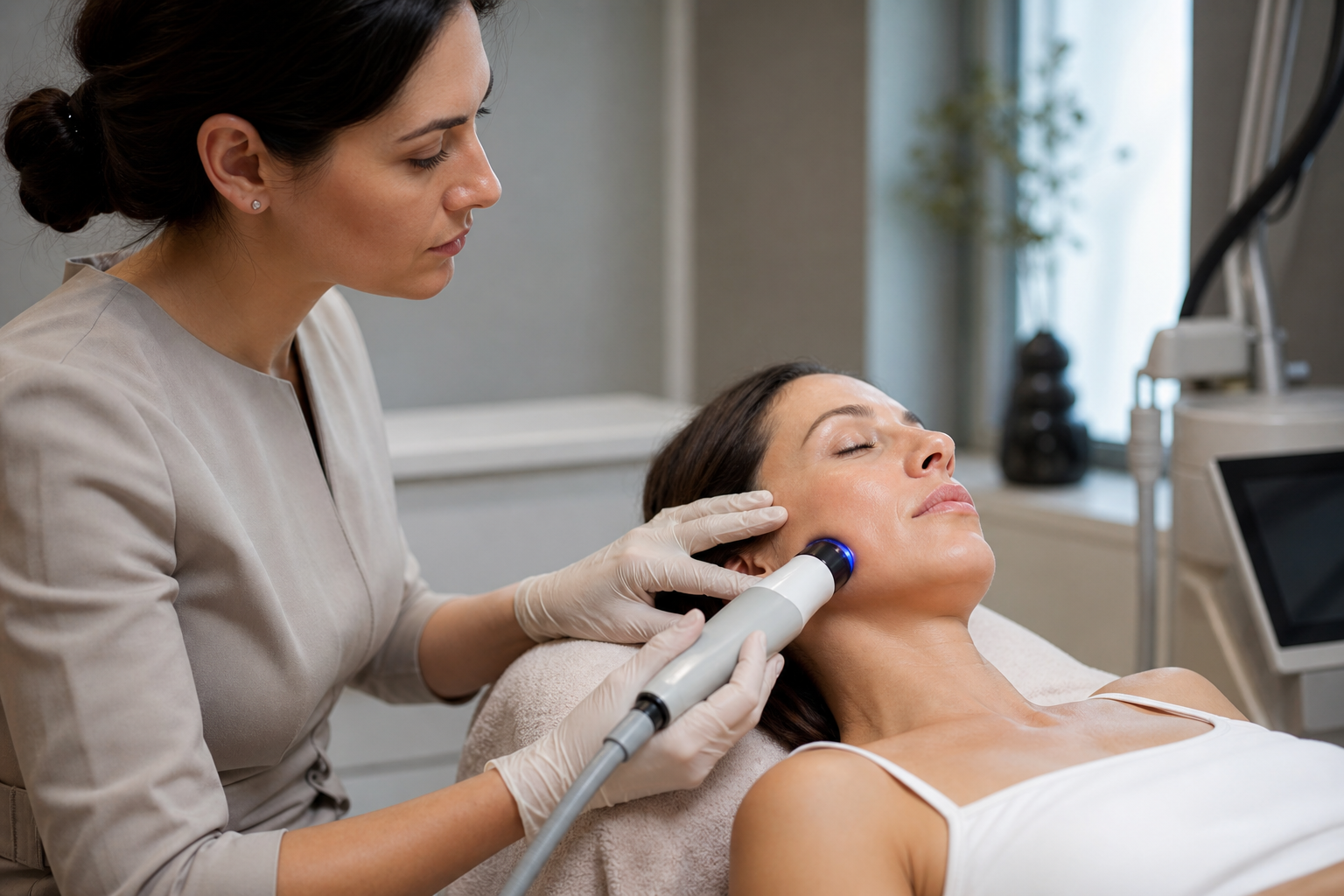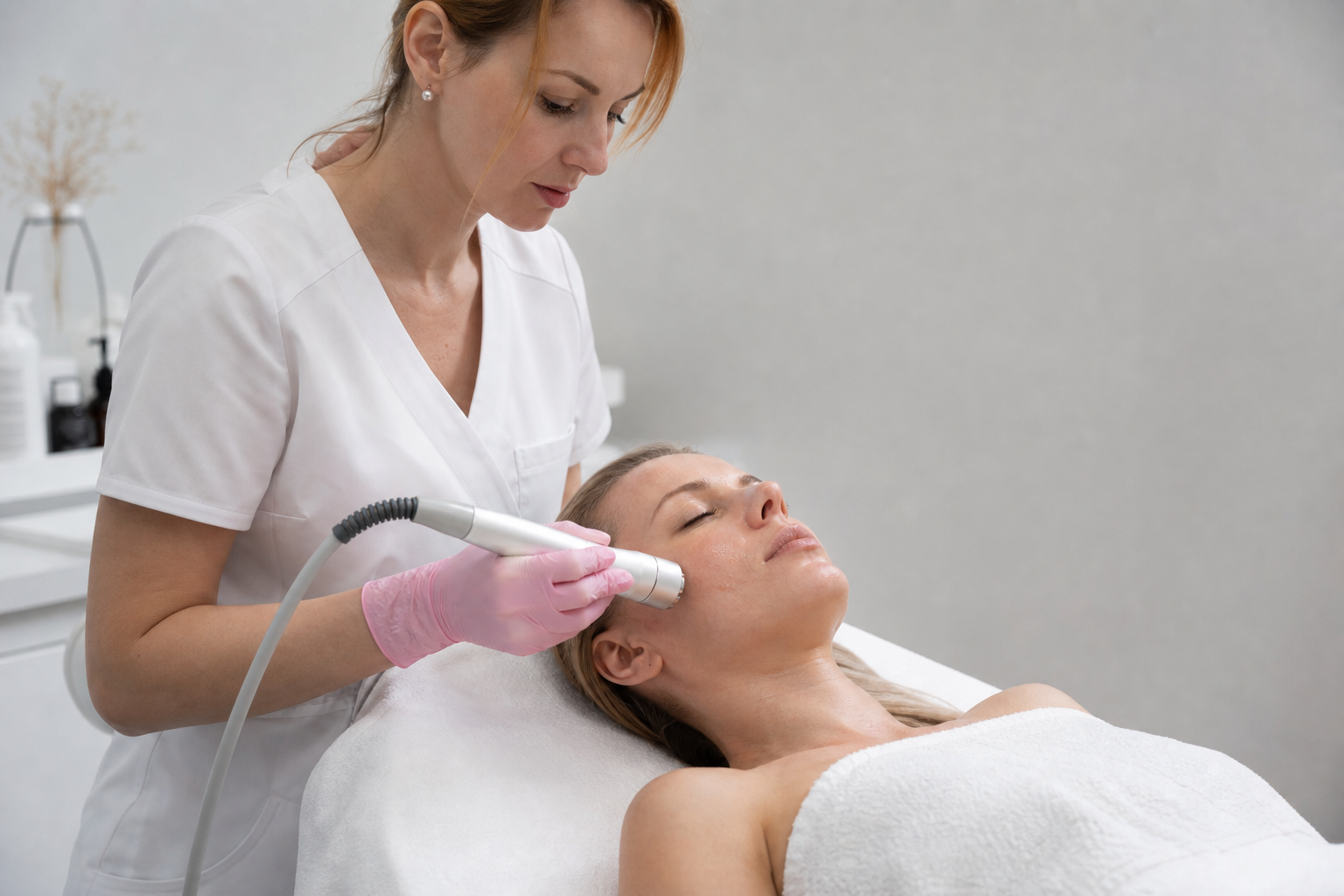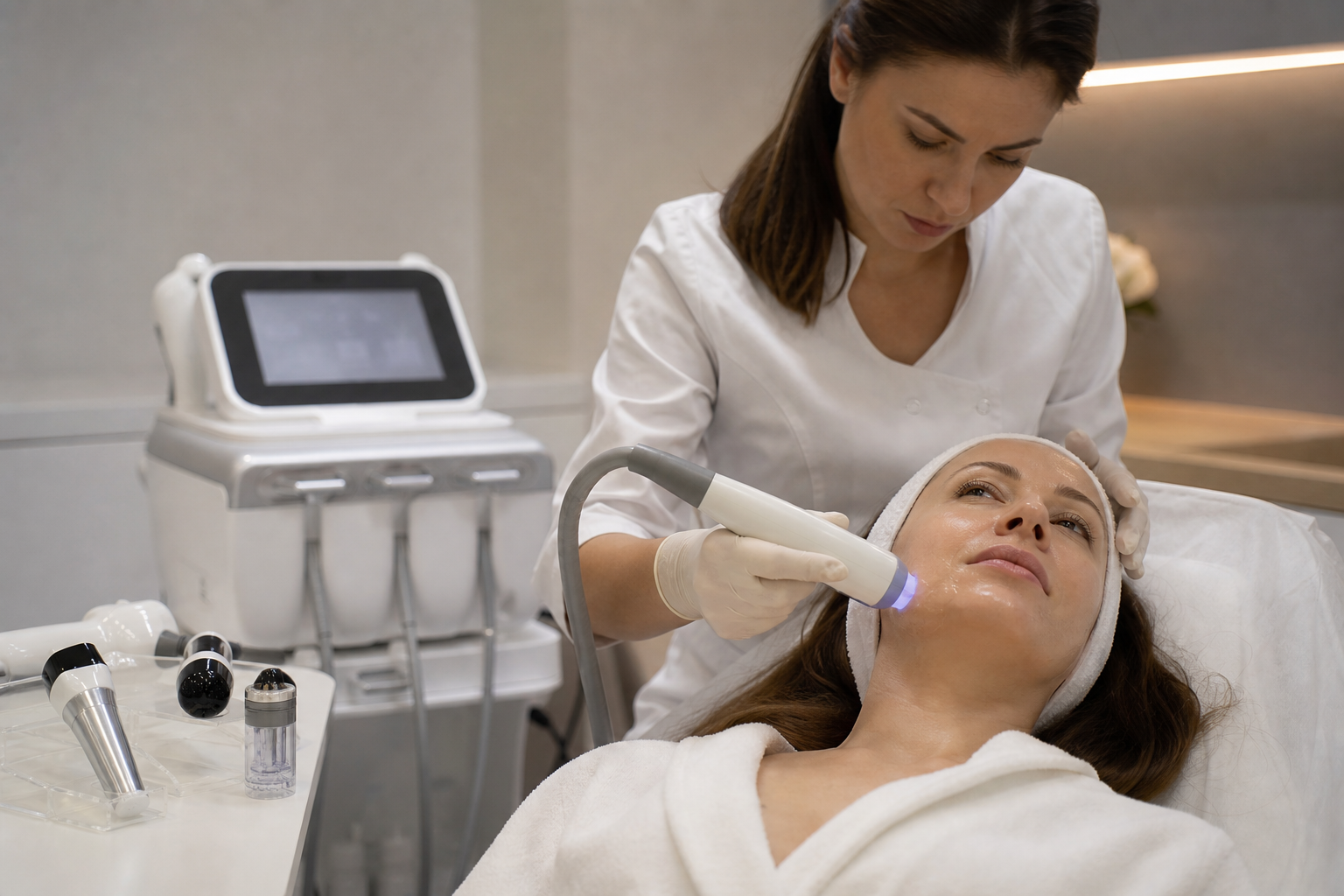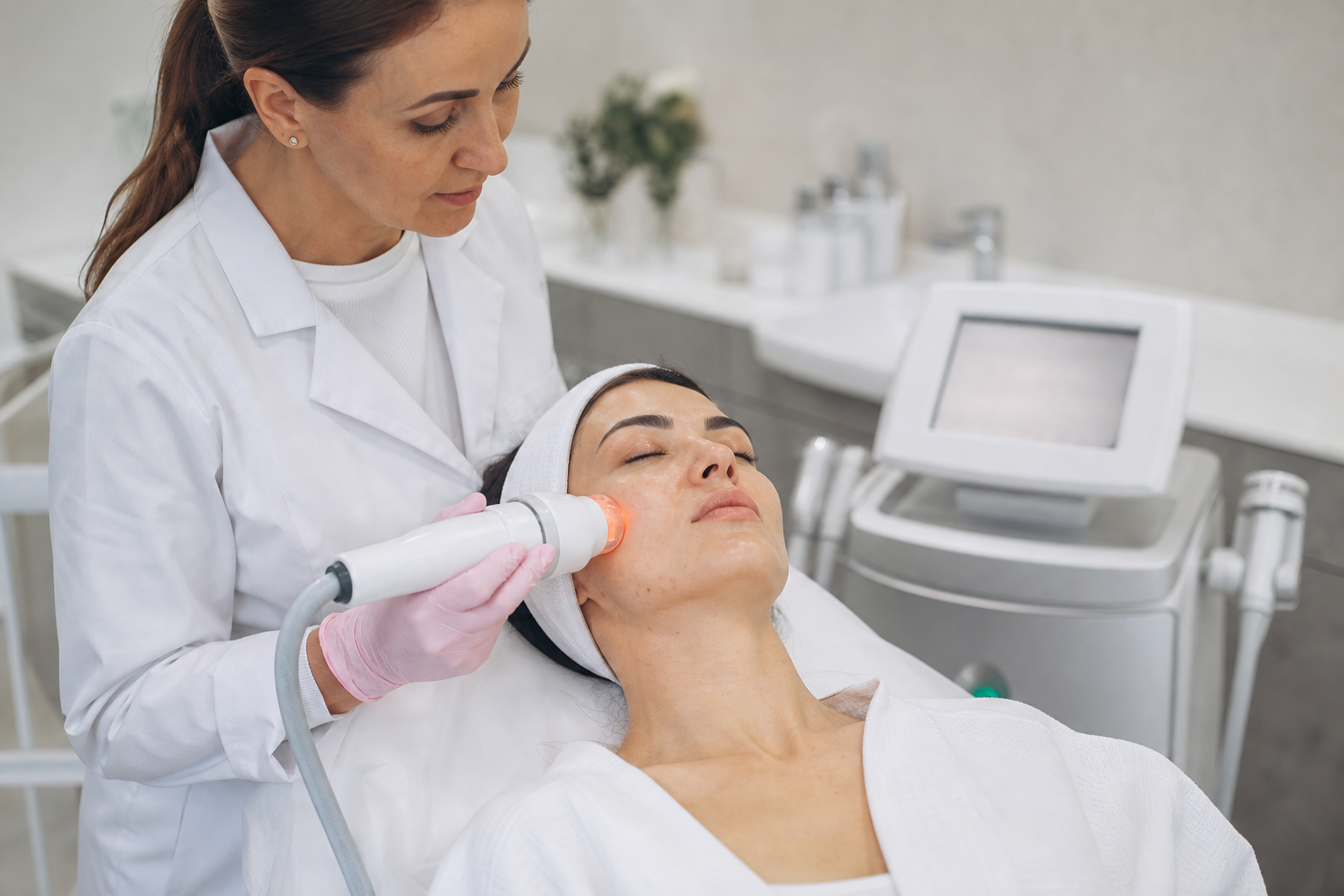
Radiofrequency facial tightening, commonly known as RF skin tightening, is a non-surgical aesthetic treatment that uses controlled thermal energy to stimulate collagen production and improve skin firmness. It is commonly chosen by people who want to address early signs of ageing without surgery, injections or a lengthy recovery period.
The treatment is most suitable for mild to moderate skin laxity, reduced elasticity, fine lines and a less defined jawline. It can be performed on the face, neck and décolletage, either as a standalone procedure or as part of a wider skin rejuvenation plan.
RF treatment should not be considered a substitute for a surgical facelift. Its effects are more subtle and develop gradually. For suitable candidates, however, it can produce firmer, smoother and healthier-looking skin while preserving natural facial features.
How Does Radiofrequency Skin Tightening Work?
Radiofrequency devices generate electromagnetic energy that is converted into heat within the tissue. Unlike lasers, RF treatments do not use light energy and do not depend primarily on the absorption of light by skin pigment.
During treatment, selected layers of the skin are heated while the surface is protected through temperature monitoring, continuous movement of the applicator or an integrated cooling system.
This controlled heating produces two important responses.
The first is the temporary contraction of existing collagen fibres. This can create an initial tightening effect immediately after treatment, although it should not be mistaken for the final result.
The second and more important response develops over time. Thermal stimulation activates fibroblasts—the cells responsible for producing collagen, elastin and other components of the skin’s supporting structure. During the following weeks and months, collagen renewal and remodelling may improve skin firmness, elasticity and density.
The depth of treatment depends on the type of RF technology, the design of the applicator, the energy level and the duration of energy delivery. Results therefore depend not only on the device itself but also on the treatment protocol and the practitioner’s experience.
Different Types of RF Facial Treatments
Radiofrequency treatments vary considerably in strength, depth and purpose. A gentle cosmetic RF facial and an advanced microneedling RF procedure should not be presented as if they were the same treatment.
Monopolar radiofrequency delivers energy between an active treatment electrode and a return electrode positioned elsewhere on the body. It can reach deeper tissue and treat a relatively broad area. This type of system is often used when the primary objective is deeper heating and skin tightening.
Bipolar radiofrequency delivers energy between two electrodes located on the same applicator. Its action is generally more controlled and superficial than that of monopolar systems. It may be suitable for improving mild laxity, texture and overall skin tone.
Multipolar radiofrequency uses several electrodes to distribute energy across a selected area and depth. It is frequently found in cosmetic treatments for the face and body, although its effectiveness depends on the individual device and the amount of controlled energy it can deliver.
Fractional radiofrequency creates multiple microscopic zones of thermal stimulation while leaving surrounding tissue relatively unaffected. It may improve fine lines, visible pores, uneven texture and mild skin laxity.
Radiofrequency microneedling combines fine needles with RF energy. The needles enter the skin at a controlled depth before delivering heat directly into the targeted tissue. This method can be used to improve laxity, enlarged pores, uneven texture and certain types of acne scarring.
RF microneedling is more intensive than a standard surface treatment. It requires sterile single-use needle cartridges, carefully selected depths and strict hygiene protocols. It should be performed by a practitioner who is appropriately trained and qualified to use the specific device.
What Can RF Facial Tightening Treat?
RF facial tightening is commonly used on the lower face, where reduced elasticity may contribute to early jowling and a less defined jawline. It can also be performed on the cheeks, neck and décolletage.
Depending on the technology used, treatment may help improve:
mild to moderate skin laxity
reduced definition along the jawline
fine lines and early wrinkles
uneven or crepey skin texture
reduced elasticity
enlarged pores
mildly loose skin on the neck
the overall quality and appearance of the skin
RF microneedling may also be considered for some acne scars. However, acne scars vary in depth and structure. Narrow ice-pick scars, rolling scars and sharply defined boxcar scars may require different treatment strategies or a combination of procedures.
Radiofrequency cannot remove a substantial amount of excess skin. It also cannot replace lost facial volume or reposition significantly descended facial tissues. If laxity is advanced, the improvement achieved with a non-surgical procedure is likely to be limited.
Practitioners must also consider the distribution of facial fat. Excessive or poorly controlled heating of deeper tissue may potentially affect the subcutaneous fat layer. Although fat reduction may be desirable during certain body treatments, unwanted loss of facial volume can make the face look hollow or older.
For this reason, RF energy and treatment depth must be adjusted carefully according to the anatomy of each facial area.
Who Is a Suitable Candidate?
RF skin tightening is generally most appropriate for people with mild to moderate loss of firmness who want gradual improvement without surgery and extensive downtime.
A suitable candidate should understand that the treatment is designed to improve skin quality and produce a subtle tightening effect. It is not intended to create an immediate or dramatic change in facial structure.
RF treatment may be considered when a person notices:
early sagging around the cheeks or jawline
reduced elasticity
fine lines
mildly crepey skin
enlarged pores
uneven texture
early laxity of the neck
Age alone does not determine suitability. Genetics, sun exposure, smoking, hormonal changes, skincare habits and changes in body weight all influence the condition of the skin.
Radiofrequency treatment may not be appropriate for everyone. Additional assessment is particularly important for people with:
a pacemaker or another implanted electronic device
metal implants near the treatment area
active skin infections or open wounds
inflammatory skin conditions
impaired wound healing
reduced sensitivity to heat
certain autoimmune or neurological conditions
uncontrolled medical conditions
a history of problematic scarring
Treatment is generally postponed during pregnancy. Suitability during breastfeeding should be assessed individually.
All medicines, supplements, implanted devices, previous aesthetic procedures and relevant medical conditions should be disclosed during the consultation. Dental implants, crowns or other metal dental work do not automatically prevent treatment, but the practitioner must be informed.
What Happens During an RF Treatment?
A professional RF treatment should begin with a consultation and skin assessment. The practitioner should evaluate the degree of laxity, skin thickness, facial volume, texture and any existing skin conditions.
The consultation should also include questions about medical history, medication, implanted devices, previous aesthetic treatments and the results the client hopes to achieve.
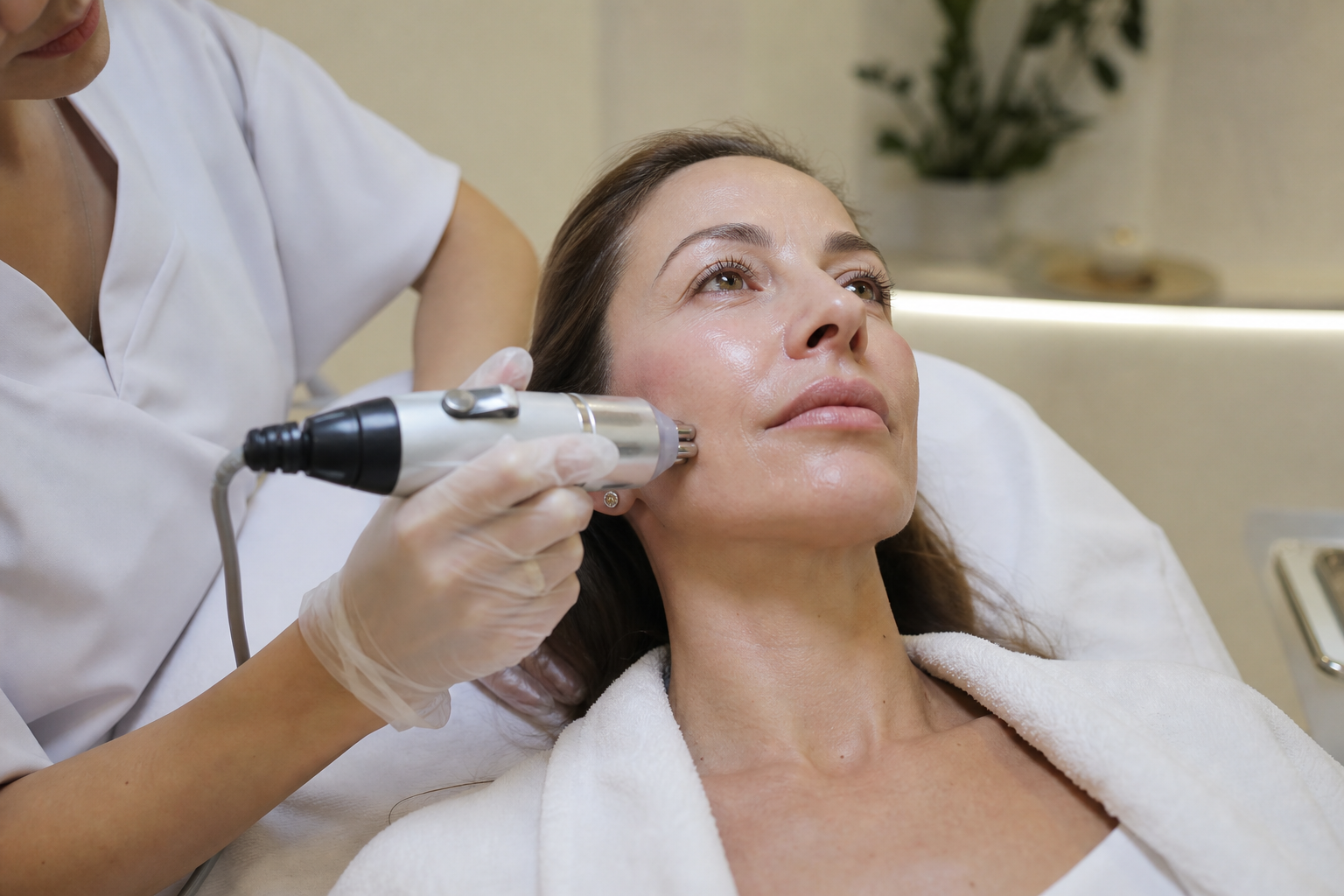
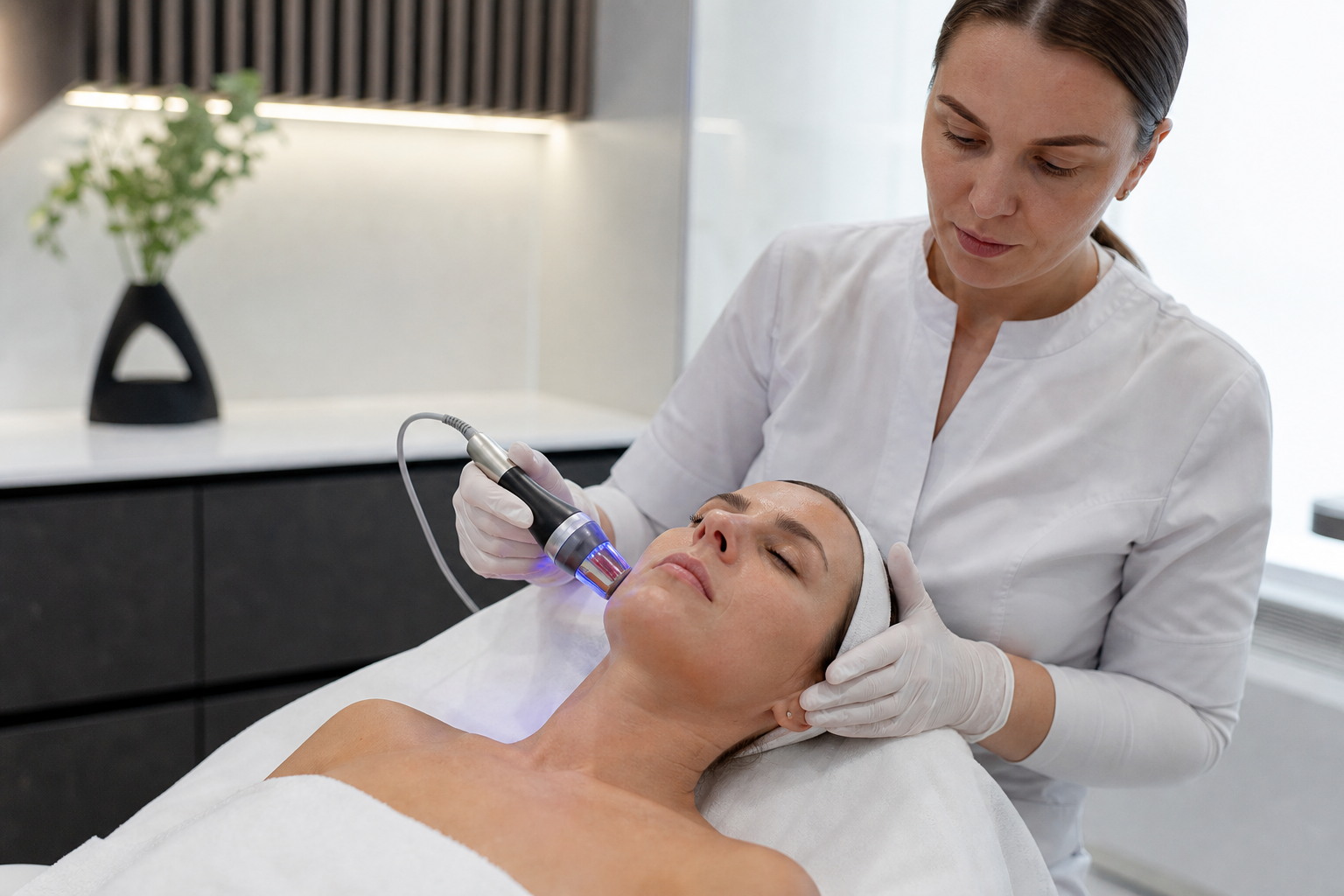
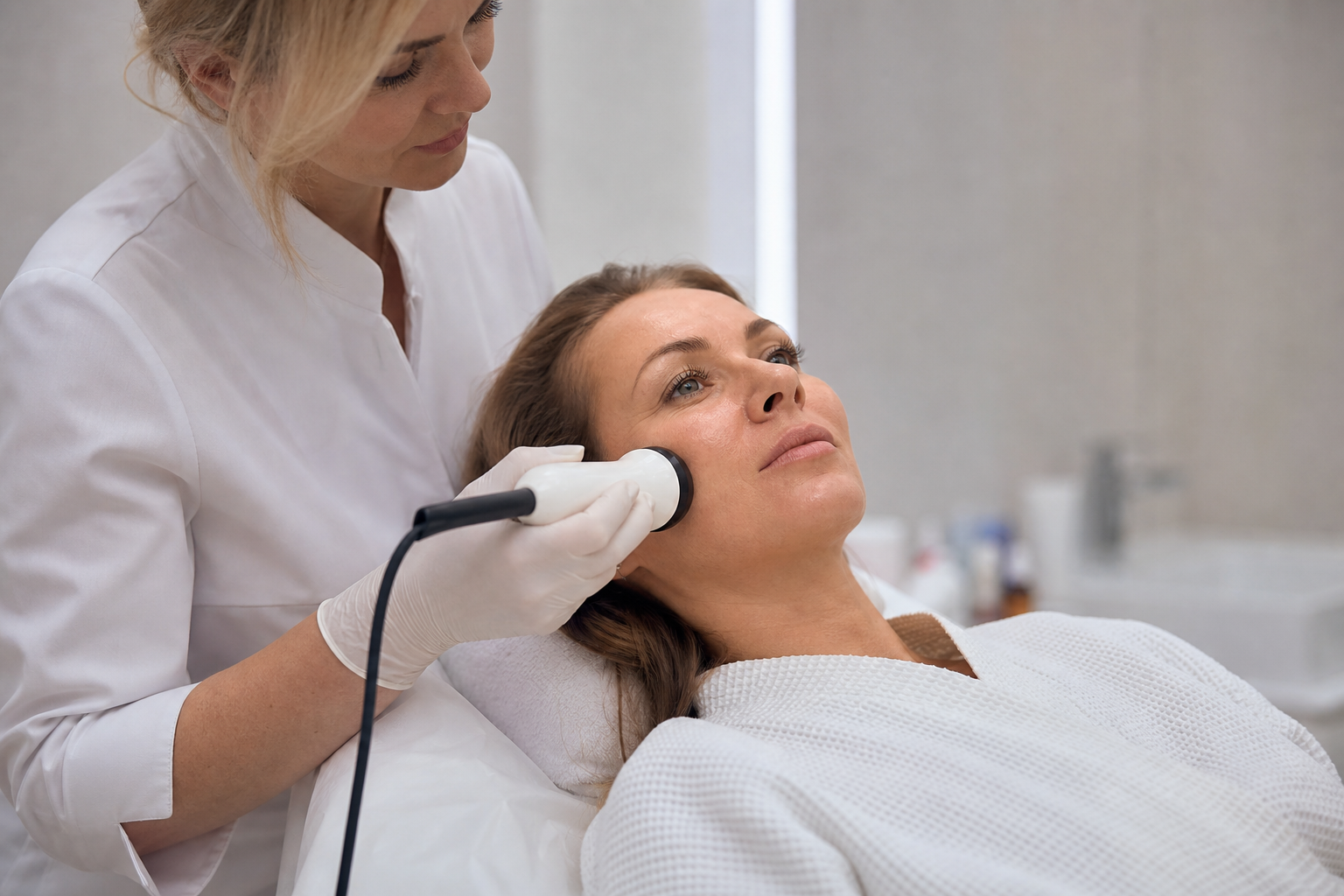
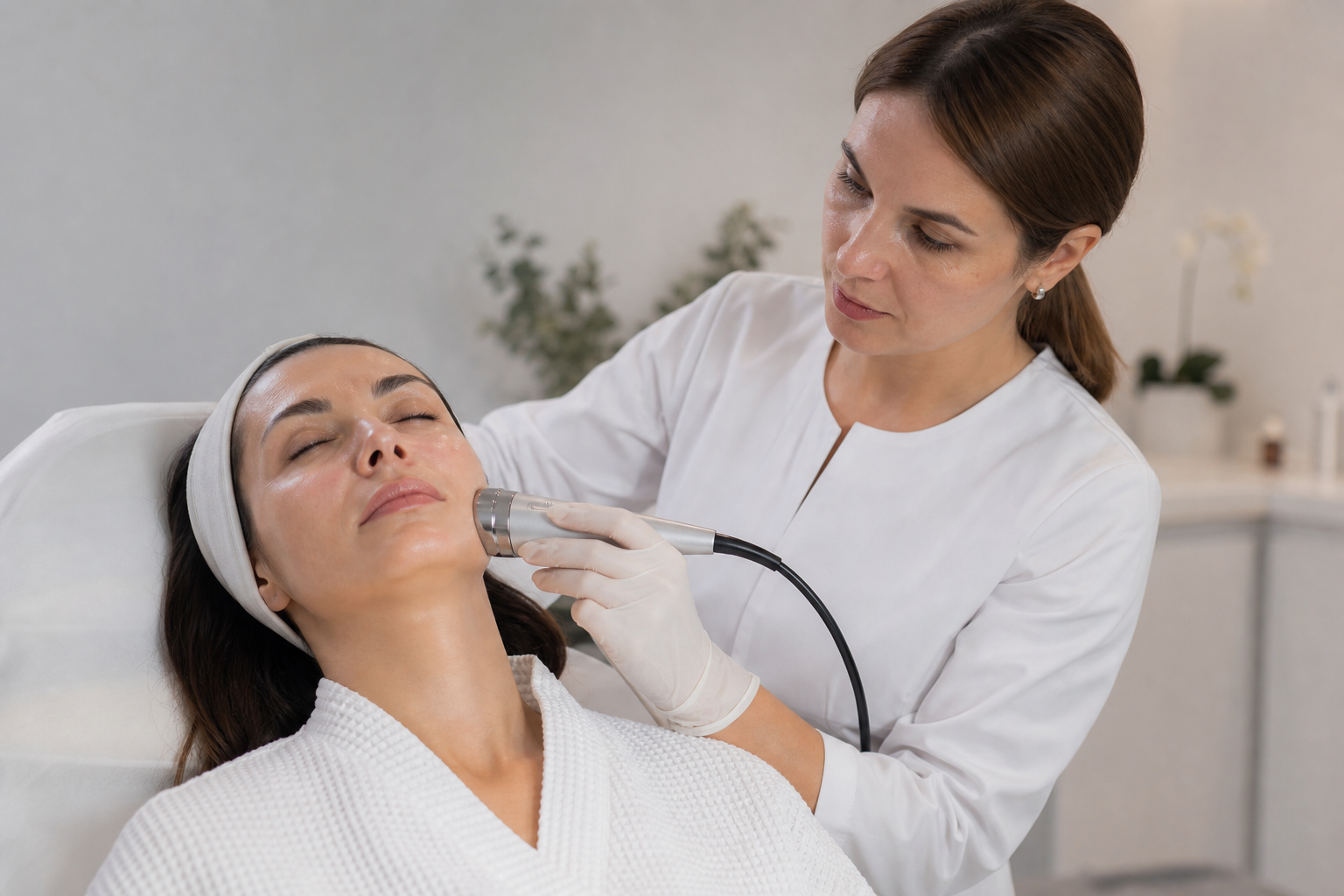
For a standard non-invasive RF facial, the skin is cleansed and a conductive gel may be applied. The practitioner moves the applicator across the treatment area while energy is gradually delivered into the tissue.
The client normally feels warmth that becomes more noticeable as the tissue reaches the intended temperature. Treatment should not cause sharp pain or uncontrolled burning. Modern devices may include real-time temperature monitoring, cooling or other safety mechanisms.
Before RF microneedling, a topical anaesthetic is normally applied. Once the skin is numb, an applicator containing fine needles is placed against the skin. The needles enter at a predetermined depth and deliver energy into the targeted layer.
Needle depth and energy level should be adjusted for different parts of the face. The forehead, cheeks, area around the mouth, jawline and neck do not have the same skin thickness or underlying anatomy.
Treatment time depends on the size of the area and the technology being used. Treating the face alone generally takes less time than treating the face, neck and décolletage together.
After a non-invasive RF facial, the skin may appear slightly red and feel warm, but most people can return to their normal activities quickly. RF microneedling may cause more noticeable redness, swelling, sensitivity and small pinpoint crusts.
How Many Sessions Are Needed and When Will Results Appear?
The number of sessions required depends on the device, treatment intensity, condition of the skin and individual goals. There is no single protocol that is suitable for every client.
Gentler RF treatments are usually performed as a course of several sessions. More powerful monopolar treatments may require fewer appointments, while RF microneedling is commonly performed as a short course with longer intervals between procedures.
Some temporary tightening may be visible immediately after treatment. This early change can be caused by collagen contraction and mild swelling, so it should not be treated as the final result.
Collagen renewal takes time. More meaningful improvements usually begin to appear during the following weeks and can continue developing for several months.
Possible results include:
firmer and more resilient-looking skin
improved definition of the lower face
a smoother skin surface
softer fine lines
reduced visibility of enlarged pores
an overall fresher and healthier appearance
Results vary according to age, skin quality, genetics, lifestyle and the technology used. A person with early laxity may notice a more visible improvement than someone with advanced sagging or a significant amount of excess skin.
Radiofrequency does not stop the ageing process. Maintenance sessions may be recommended after the initial course, but their frequency should be based on the condition of the skin rather than a standard timetable applied to every client.
Results are best assessed using standardised before-and-after photographs taken with the same lighting, camera angle, facial expression and head position. Changes in lighting or posture can create a misleading impression of lifting.
Recovery, Aftercare and Possible Side Effects
Recovery depends on the type and intensity of the procedure. Standard non-invasive radiofrequency usually involves little downtime. Mild redness and warmth often settle within several hours.
After RF microneedling, the skin may remain red, swollen, dry or sensitive for several days. Small pinpoint marks and crusts can develop and should be allowed to heal naturally.
General aftercare may include gentle cleansing, suitable hydration and consistent use of broad-spectrum sun protection. Clients should follow the specific instructions provided by their practitioner.
During the recovery period, it may be necessary to avoid:
direct sun exposure and sunbeds
saunas and steam rooms
very hot showers
strenuous exercise immediately after treatment
swimming until the skin has settled
retinoids and exfoliating acids
facial scrubs and cleansing brushes
irritating or strongly fragranced products
picking, scratching or removing small crusts
make-up immediately after a more intensive procedure
Clients should not independently apply antibiotics, corticosteroids or strong active skincare ingredients unless advised to do so by an appropriately qualified professional.
Expected temporary reactions may include redness, warmth, mild swelling, tightness and tenderness. RF microneedling can also cause pinpoint bleeding, bruising and temporary roughness.
More serious complications are uncommon, but they can occur. Potential risks include:
burns and blistering
prolonged redness
infection
temporary or persistent pigmentation changes
scarring
uneven results
unwanted loss of facial volume
temporary changes in sensation
worsening of an existing skin condition
The risk increases when unsuitable settings are used, the temperature is not adequately controlled or treatment is performed by an inexperienced practitioner.
Severe pain, increasing swelling, blistering, discharge, spreading redness or any reaction that continues to worsen should be reported promptly to the treatment provider or an appropriate medical professional.
RF Tightening, Laser Treatment or Ultrasound?
Radiofrequency, laser and focused ultrasound treatments may all be promoted as non-surgical skin-tightening procedures, but they use different types of energy and target the tissue in different ways.
Radiofrequency uses electromagnetic energy to generate heat within the tissue. Depending on the technology, it can act superficially, reach deeper layers or be delivered through microneedles.
Laser treatments use specific wavelengths of light. Some lasers are designed to heat deeper tissue, while others resurface the skin or target pigmentation, blood vessels and textural irregularities.
Focused ultrasound uses sound waves to deliver energy to predetermined depths beneath the surface of the skin. It is generally selected when the treatment objective involves deeper supporting structures rather than surface texture.
The most appropriate treatment depends on the main concern. RF microneedling may be more suitable for someone with mild laxity, enlarged pores and uneven texture. A laser procedure may be preferred when sun damage, pigmentation or surface irregularities are more prominent.
Focused ultrasound may be considered when deeper tissue contraction is the primary objective. However, it does not provide the same surface-renewal benefits as a resurfacing laser or RF microneedling treatment.
Combination treatment can sometimes be beneficial, but procedures must be planned and spaced appropriately. Using several heat-based technologies within a short period does not automatically produce a better result and may unnecessarily increase inflammation or the risk of complications.
How Much Does RF Facial Tightening Cost?
The cost of RF facial tightening varies considerably according to location, device type, treatment area, practitioner qualifications and the number of sessions required.
Gentle, non-invasive RF facials are generally less expensive per session, although a course of treatments is usually recommended. Advanced monopolar systems often cost more per procedure but may require fewer appointments.
RF microneedling is typically more expensive than a standard RF facial because it involves advanced equipment, sterile single-use cartridges, topical anaesthesia and a more complex treatment protocol.
When comparing prices, clients should establish:
which RF technology and device are being used
whether the price covers one area or the entire face
whether the neck and décolletage are included
whether sterile single-use cartridges are included
how many sessions are recommended
whether the consultation and follow-up appointment are included
The lowest-priced treatment may not offer good value if it uses low-powered equipment, unsuitable parameters or the same standard protocol for every client. At the same time, a high price does not guarantee an excellent result.
The provider’s qualifications, quality of the consultation, suitability of the technology and treatment safety should carry more weight than price alone.
How to Choose a Qualified RF Treatment Provider
The name or appearance of the machine is not enough to determine treatment quality. Results depend heavily on the practitioner’s understanding of facial anatomy, skin biology, temperature control and appropriate energy settings.
During the consultation, the provider should clearly explain:
which form of radiofrequency will be used
whether the treatment is non-invasive or uses microneedles
why it is suitable for the client’s concerns
how deeply the energy will be delivered
how many treatments may be needed
what improvement can realistically be expected
how much downtime is involved
which reactions are normal
what happens if a complication develops
For RF microneedling, the treatment cartridge must be sterile and intended for single use. Appropriate skin preparation, infection-control procedures and safe disposal of used cartridges are essential.
The practitioner should also understand that different areas of the face require different treatment depths and settings. Applying the same intensity across the entire face may increase risk and produce an unbalanced result.
Be cautious of providers promising the equivalent of a surgical facelift, complete wrinkle removal or a dramatic transformation after one gentle RF session. Responsible practitioners explain both the possibilities and the limitations of treatment.
Regulations and permitted scopes of practice differ between countries. Clients should therefore check that the practitioner is appropriately trained, insured and legally permitted to perform the specific type of RF treatment being offered.