In the rapidly evolving field of aesthetic medicine, radiofrequency (RF) treatments have emerged as a prominent non-invasive option for skin tightening and rejuvenation. These procedures utilize radiofrequency energy to stimulate the production of collagen, a fundamental protein responsible for maintaining skin elasticity and firmness. As a result, RF treatments hold significant appeal for those seeking to address the natural signs of aging—such as sagging skin, fine lines, and loss of elasticity—without undergoing surgery or enduring substantial downtime.
This comprehensive editorial explores the question: does RF treatment stimulate collagen production? It is crafted for individuals curious about non-surgical facial lifting methods, patients considering RF therapies, and professionals within dermatology and aesthetic medicine who aim to understand the nuanced effects of radiofrequency energy on skin structure and physiology. Understanding the mechanism behind RF treatments and their impact on collagen synthesis is crucial for setting realistic expectations and making informed decisions about skin rejuvenation options.
By examining how radiofrequency energy interacts with the skin, analyzing the clinical outcomes of various RF modalities, and discussing candidacy and treatment protocols, this article provides an authoritative overview for anyone intrigued by the modern science of skin tightening technologies.
What Is Facial RF Lifting and How Does Radiofrequency Affect the Skin?
Facial RF lifting, often referred to as radiofrequency skin tightening, is a procedure that passes controlled RF energy into the deeper layers of the skin, primarily the dermis, where collagen fibers reside. The device emits radio waves that generate heat through resistance in the tissue, selectively raising the temperature within target layers without damaging the surface epidermis. This thermal stimulus results in the tightening of existing collagen fibers and the activation of skin cells that produce new collagen and elastin.
The effect of radiofrequency on skin is twofold. In the immediate term, the heat induces collagen fiber contraction, leading to a noticeable tightening effect. Over weeks to months, the thermal injury stimulates a cascade of biological events, prompting fibroblasts—the primary collagen-producing cells—to increase synthesis of collagen types I and III and elastin. This biologically driven remodeling improves skin thickness, elasticity, and overall texture, contributing to a more youthful appearance.
Unlike surgical facelifts, RF facial lifting does not involve excision or invasive manipulation but relies on the body’s intrinsic regenerative capabilities, making it an attractive option for individuals seeking natural rejuvenation with minimal recovery.
Who Is the Ideal Candidate for RF Treatment and When Should One Consider It?
RF treatments are most suitable for adults experiencing mild-to-moderate signs of skin aging—such as early sagging, fine wrinkles, and decreased skin tone—who prefer non-surgical solutions. Ideal candidates typically have good skin integrity without excessive laxity or substantial volumes of loose tissue, conditions better addressed through surgical means.
Patients in their mid-thirties to early fifties often find RF lifting beneficial as a preventive measure or early intervention to arrest collagen degradation and maintain skin resilience. However, the technology can also serve as an adjunct for older patients seeking enhanced skin quality alongside other treatments.
Those who have contraindications for surgery, desire minimal downtime, or wish to avoid injectable fillers and neuromodulators might also consider RF procedures. Moreover, RF treatments can complement other facial rejuvenation approaches by creating a firmer foundation for subsequent therapies.
What Happens to Collagen During an RF Treatment?
Collagen is a fibrous protein forming the scaffolding of the skin, providing tensile strength and support. With age, the production of collagen declines, and existing collagen fibers become fragmented and less organized, manifesting visibly as wrinkles, loose skin, and diminished elasticity.
During an RF treatment, the penetration of radiofrequency energy induces controlled heating typically between 39 to 45 degrees Celsius in the dermis. This heat triggers immediate collagen fiber contraction due to the denaturation of triple-helix structures within collagen molecules. This contraction causes an initial skin tightening effect.
More importantly, the localized thermal injury stimulates a wound-healing response. Fibroblasts respond by upregulating the synthesis of new collagen and elastin, rebuilding the extracellular matrix. This neocollagenesis process unfolds gradually over weeks to months following treatment. The remodeling results in thicker, more organized collagen networks, improving skin firmness and elasticity in a sustained manner.
Therefore, RF treatment does not simply tighten skin superficially but actively promotes the generation of new collagen, restoring fundamental components of youthful skin architecture.
How Deep Does Radiofrequency Energy Penetrate and What Are the Different RF Modalities?
The penetration depth of radiofrequency energy depends on the frequency, device type, and treatment parameters. Generally, RF can target dermal layers from approximately 1.5 mm to 5 mm beneath the surface, reaching fibroblast-rich zones where collagen synthesis is initiated.
In clinical practice, RF treatments can be classified into:
Non-invasive RF: These use surface applicators that deliver RF energy without skin puncture or injection. They are well-suited for mild skin laxity with no associated downtime and can be performed repeatedly.
Fractional RF (non-ablative): This modality applies RF energy in a fractionated manner across microzones of skin, sparing surrounding tissue. It delivers deeper and more focused thermal stimulation, improving efficacy for moderate signs of aging.
Microneedling RF: A minimally invasive technique combining microneedles with RF energy delivered directly into the dermis. It offers precise heating at controlled depths and enhances collagen remodeling with some skin resurfacing benefits. It carries slightly more recovery time but yields more significant improvements.
Each approach balances depth of collagen stimulation, invasiveness, and recovery considerations, allowing personalized treatment planning.
Does RF Lifting Really Tighten the Face and How Does It Compare to Traditional Facelifts?
RF lifting effectively induces immediate and long-term skin tightening by leveraging collagen contraction and neogenesis. While the visible improvement can be subtle to moderate, many patients report enhanced skin texture, firmness, and a more youthful contour following treatments. For individuals with early or mild laxity, RF may offer a meaningful aesthetic benefit.
However, it is important to recognize that RF treatments are not a surgical facelift replacement. Facelifts involve excision and repositioning of deeper structures, addressing severe skin redundancy and sagging that RF cannot fully correct. RF treatments are best seen as early intervention or maintenance procedures rather than definitive solutions for advanced aging.
The lack of incisions in RF lifting greatly minimizes risks, side effects, and recovery time compared to a facelift, aligning with preferences for less invasive cosmetic enhancement. Yet, patient expectations must be managed realistically to avoid disappointment when profound lifting is desired.
What Are the Benefits and Limitations of Collagen Stimulation Through RF Treatments?
The primary benefit of RF-driven collagen stimulation is the ability to harness the body’s intrinsic regenerative mechanisms without surgery. This translates to naturally improved skin quality, greater elasticity, and reduction of fine lines in a gradual and lasting way.
Additional advantages include safety across various skin types and colors, minimal discomfort, and negligible downtime, allowing for quick return to daily routines. RF can also be combined synergistically with other cosmetic modalities to enhance overall facial rejuvenation.
Nevertheless, limitations exist. RF energy may offer only moderate improvement in cases of significant skin laxity or deep wrinkles. Multiple sessions are usually necessary to achieve optimal results, and patient compliance with maintenance treatments is essential. Moreover, responses to RF can vary based on individual skin biology, age, and lifestyle factors.
Consequently, RF treatments should be integrated thoughtfully within a comprehensive skin care and aesthetic plan tailored by experienced practitioners.
What to Expect During and After an RF Treatment Session?
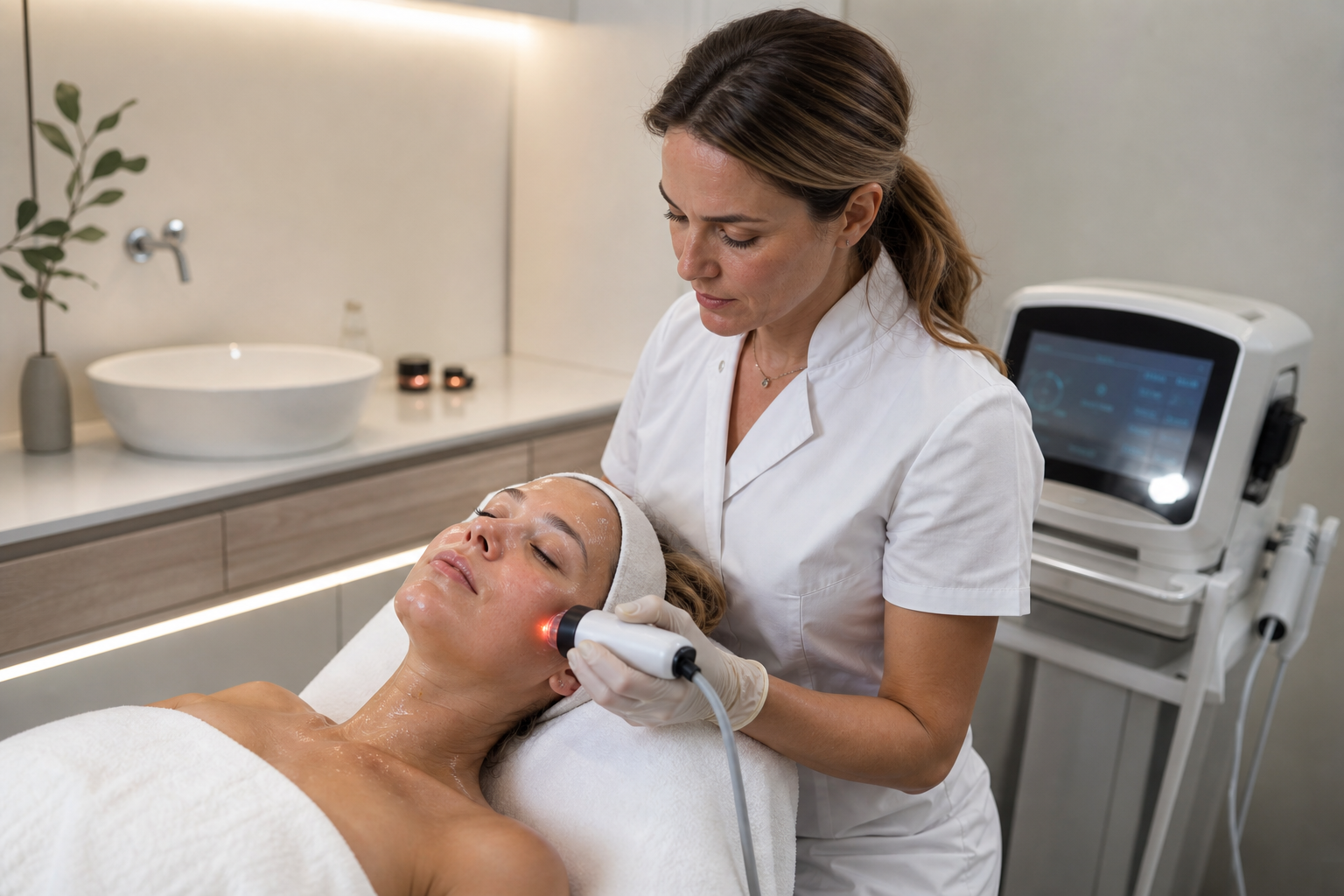
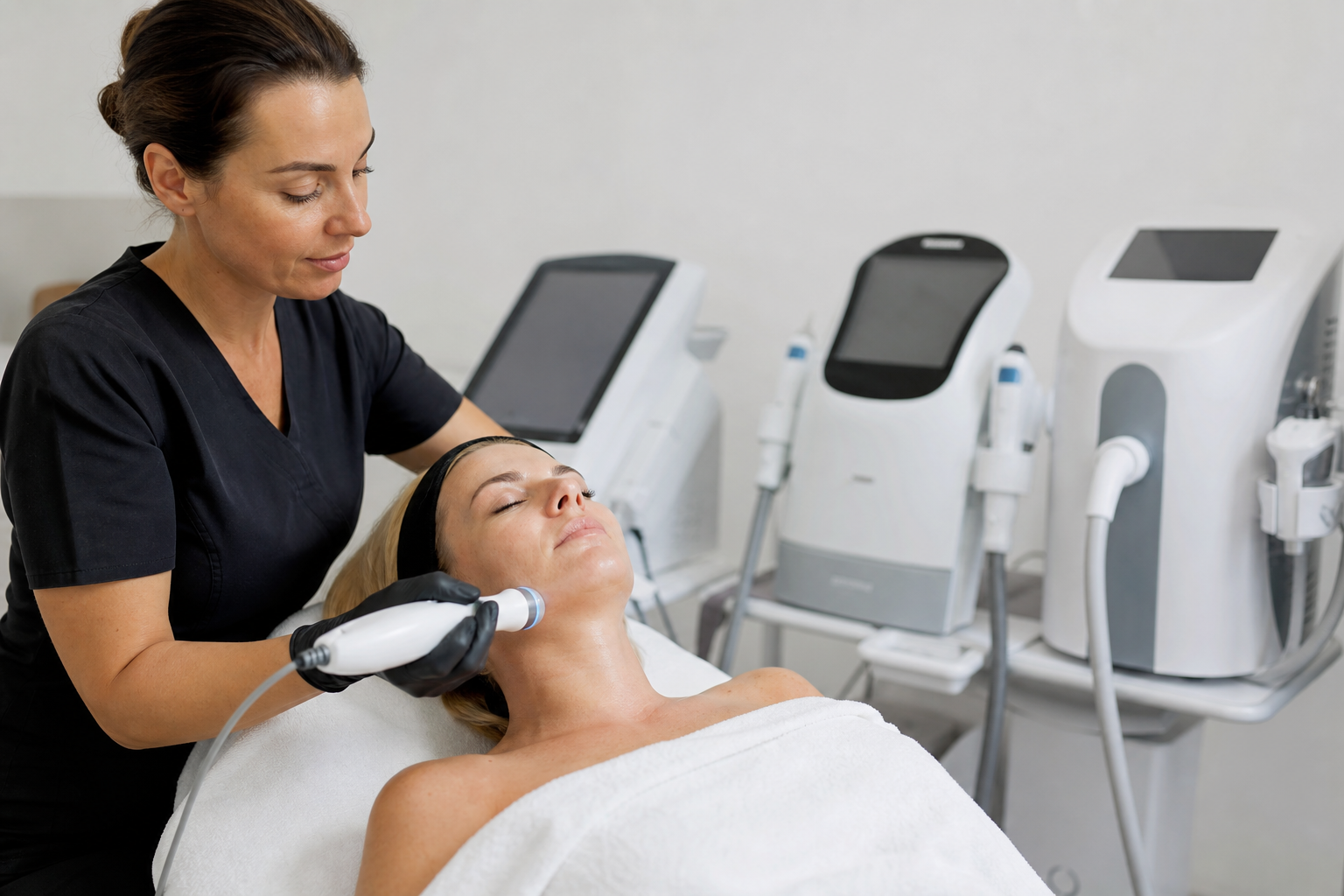
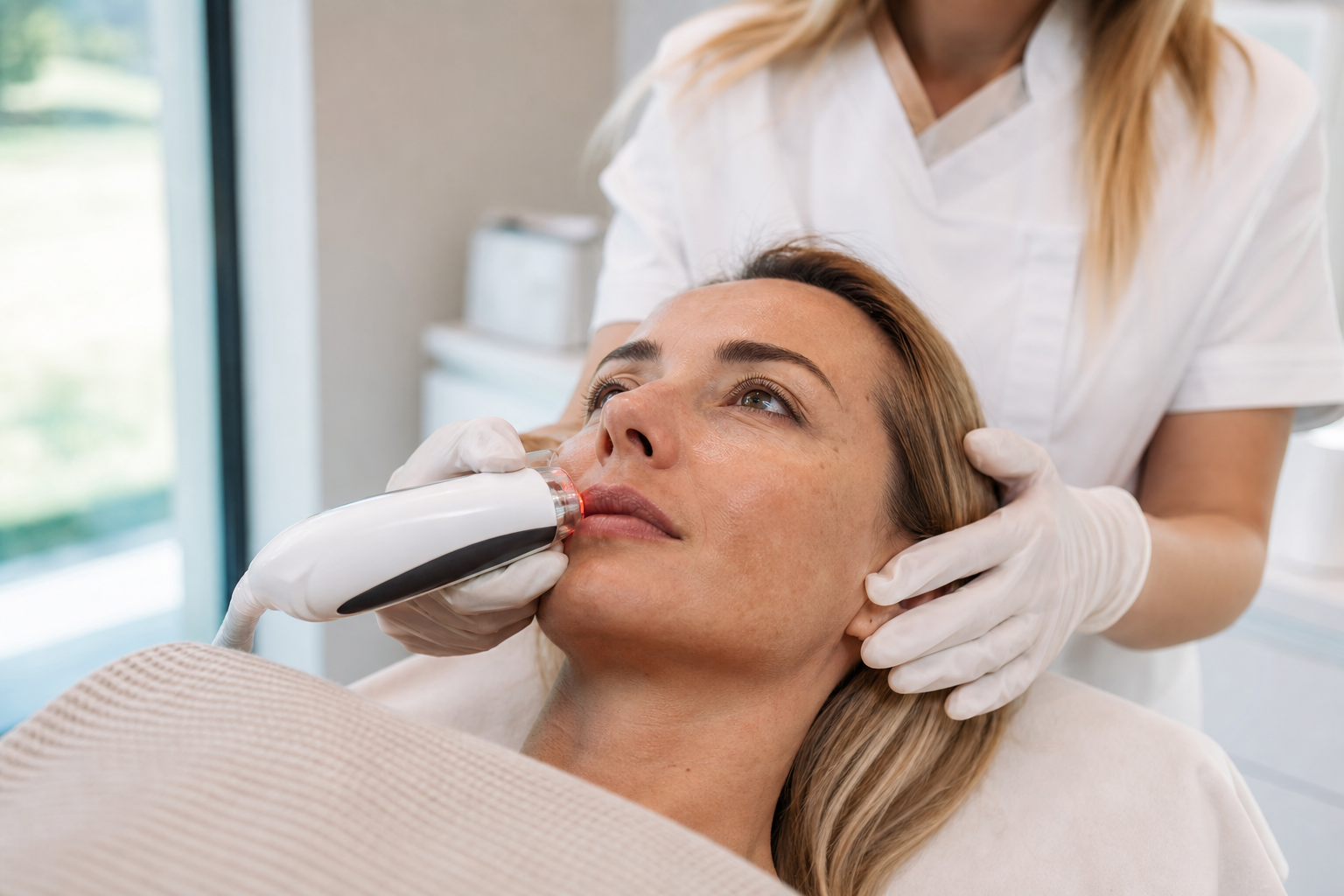
A typical RF session is conducted in a clinical or spa setting and lasts between 30 minutes to an hour depending on the treatment area size. After cleansing the skin, a conductive gel is applied, and the RF device is methodically passed over the targeted zone delivering controlled thermal energy.
Patients often experience a warming sensation, frequently described as pleasant or mildly uncomfortable, but without pain. There is usually no need for anesthesia or sedation. Some immediate erythema or mild swelling may occur but generally resolves within hours.
Following a course of treatments—commonly spaced several weeks apart—patients observe gradual improvements in skin firmness and texture. Instructions for post-care typically emphasize hydration, sun protection, and avoidance of harsh skincare products. Most individuals resume normal activities immediately.
Common Questions About RF Treatments and Collagen Stimulation
How many treatments are necessary to see collagen stimulation effects? The stimulation of collagen is a cumulative process that unfolds over time. Patients often require between three to six sessions spaced 3 to 6 weeks apart to achieve notable improvement, with results continuing to develop for up to six months post-procedure.
Is RF treatment safe for all skin types? Yes, RF energy is color-blind and does not target melanin, making it safe for all Fitzpatrick skin types without significant risk of pigmentation changes, unlike some laser treatments.
Are there any side effects linked to RF skin tightening? Side effects are generally mild and transient and can include redness, slight swelling, or tenderness. Serious complications are rare when treatments are conducted by trained professionals.
Can RF treatment reverse deep wrinkles? While RF can improve skin texture and firmness, deep wrinkles and folds may require adjunctive approaches such as dermal fillers for optimal correction.