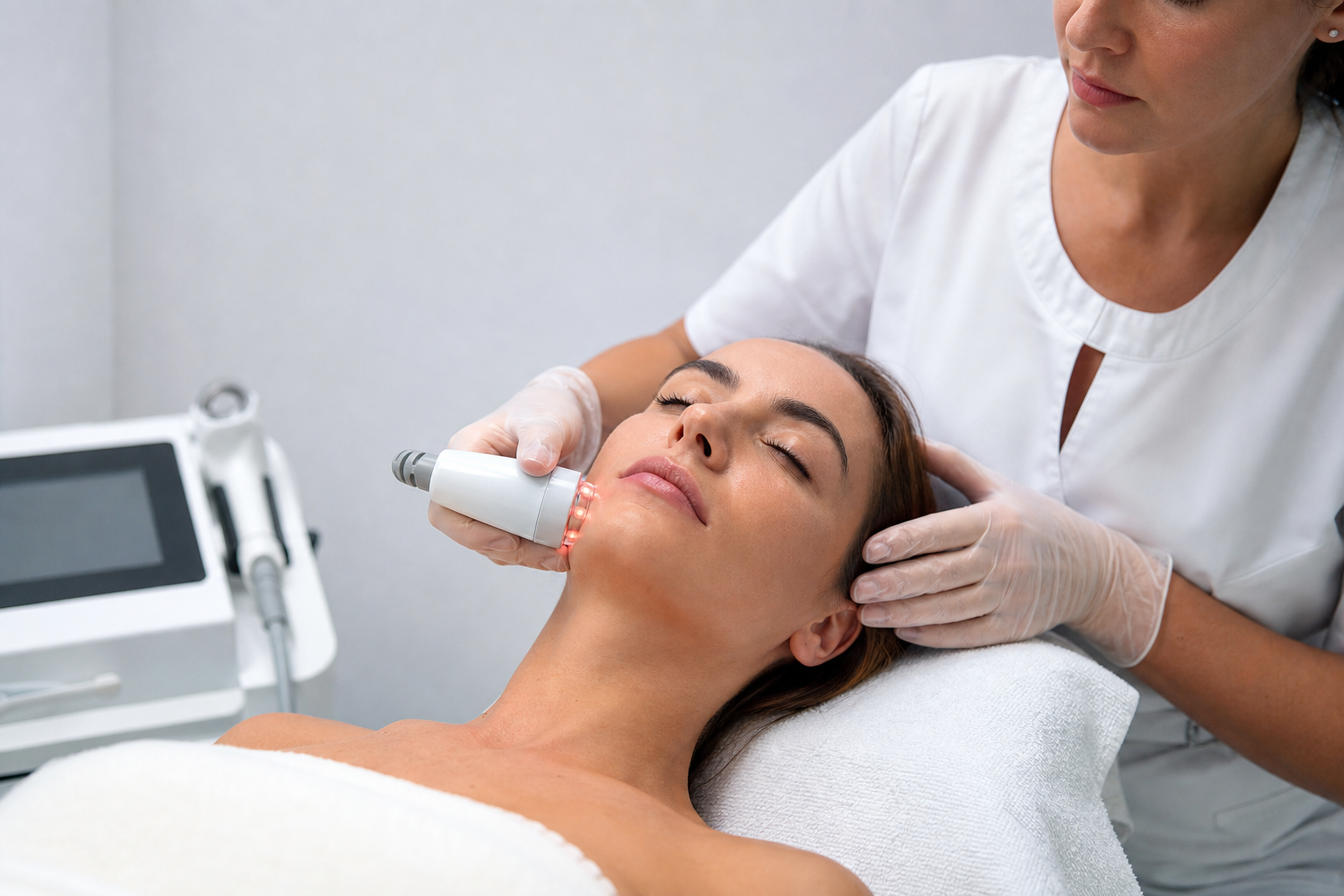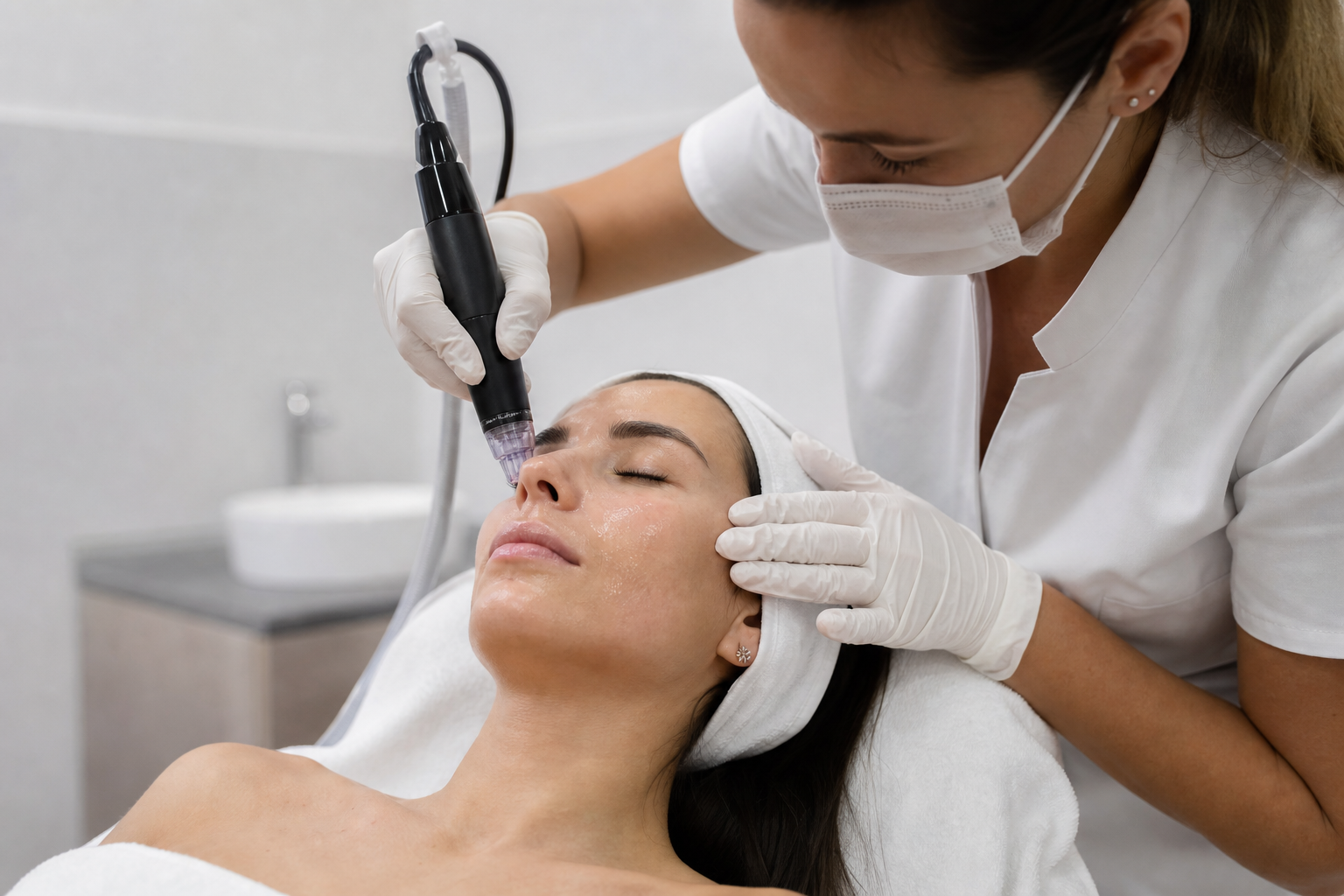
Radiofrequency (RF) treatments have emerged as a revolutionary approach in aesthetic medicine, offering non-invasive options for skin tightening and rejuvenation. This advanced technology employs controlled electromagnetic waves to stimulate the underlying layers of the skin, promoting collagen and elastin production—key proteins for maintaining skin’s firmness, elasticity, and youthful appearance. With a growing demand for less invasive procedures that deliver visible improvements without extended downtime, RF skin tightening has gained prominence among practitioners and patients alike.
Understanding the nuances among various types of RF treatments is crucial for clinicians customizing protocols for individual patients and for clients seeking optimal outcomes tailored to their skin concerns. This article delves into four primary RF technologies: monopolar, bipolar, multipolar, and fractional RF, each distinguished by their specific mechanisms, depth of tissue penetration, and clinical indications. Such insight enables the selection of the most appropriate treatment modality according to skin type, area of focus, and desired effect.
Aimed at dermatologists, aesthetic practitioners, and informed patients, this comprehensive guide examines the technical attributes, benefits, and practical applications of the main RF treatment types. Given the expanding role of RF devices in facial and body contouring, familiarity with their distinctions contributes to effective treatment planning and realistic patient expectations, ultimately enhancing satisfaction and safety.
How Does Radiofrequency Skin Tightening Work to Rejuvenate the Skin?
At its core, radiofrequency skin tightening involves directing electromagnetic waves at frequencies typically ranging from 0.3 to 10 MHz into the skin. This energy converts into heat within the dermis, raising tissue temperature to a therapeutic range usually between 39 and 43 degrees Celsius. The controlled thermal stimulus activates fibroblasts, the cells responsible for synthesizing collagen and elastin fibers, which are vital for skin’s structural integrity.
The heating effect denatures existing collagen fibers, triggering the body’s wound-healing response and resulting in neocollagenesis and elastogenesis. Over time, these regenerating fibers restore skin tightness and elasticity, diminish fine lines and wrinkles, and improve overall skin texture. Importantly, the epidermis (outermost skin layer) remains largely unharmed during proper RF treatment, minimizing risks such as burns or pigmentation irregularities.
This mechanism is the scientific basis for why RF treatments are sought after as a non-surgical alternative to facelifts and body lifts, providing gradual yet noticeable improvements. The precision in delivering energy at varying depths distinguishes the different RF technologies, allowing customization according to clinical goals.
What Is Monopolar RF and Which Conditions Does It Address?
Monopolar radiofrequency treatment uses a single active electrode to emit radiofrequency waves, with a grounding pad placed elsewhere on the body to complete the circuit. This configuration allows electromagnetic energy to travel deeply into tissues, sometimes reaching depths of up to 5 centimeters, encompassing the dermis, subcutaneous fat, and even muscle fascia layers.
Due to its deep tissue penetration, monopolar RF is particularly effective for tightening loose or sagging skin on larger body areas such as the abdomen, thighs, arms, and buttocks. It is widely employed in body contouring therapies, including post-weight loss skin tightening and cellulite reduction. The thermal impact promotes collagen remodeling in the dermal and subdermal layers as well as tightening of the fibrous septae responsible for cellulite’s dimpled appearance.
In facial treatments, monopolar RF can address moderate to severe skin laxity, delivering a pronounced tightening effect. However, this requires precise operator skill to avoid excessive heating and ensure patient comfort, given the intensity of energy delivered.
While monopolar RF’s depth advantage is considerable, its trade-off lies in potentially greater discomfort and longer recovery times compared to shallower-penetrating modalities. Adequate skin cooling and patient monitoring are essential to mitigate risks of thermal injury.
How Does Bipolar RF Differ, and When Is It Preferred?
Bipolar RF treatment utilizes two closely spaced electrodes positioned on the treatment area’s surface. The radiofrequency current oscillates between these electrodes, creating a localized electromagnetic field that concentrates heating more superficially within the skin’s dermal layer—typically no deeper than 2 centimeters.
This focused, more controlled energy delivery makes bipolar RF especially suitable for delicate facial skin, where targeted collagen induction and skin tightening are desired without affecting deeper tissues. It is commonly employed to smooth fine lines, reduce wrinkles, and enhance skin texture on the face, neck, and areas such as the periocular region where tissue sensitivity is higher.
Bipolar RF’s superficial action translates to increased safety and comfort, as thermal effects are confined and more uniform, reducing the likelihood of pain or adverse events. Its precision allows for treatment of smaller, more sensitive anatomical zones with less risk of overheating.
Practitioners often select bipolar RF when aiming for subtle rejuvenation in patients with mild to moderate skin laxity or those who require maintenance therapy following more intensive interventions.
What Advantages Does Multipolar RF Offer Compared to Other Types?
Multipolar radiofrequency technology represents an advancement over bipolar systems by integrating three or more electrodes that operate simultaneously to emit radiofrequency energy. This creates multiple current paths within the skin, facilitating even and controlled distribution of heat across a broader treatment area.
The key benefit of multipolar RF lies in its ability to heat the mid-dermal layers effectively while maintaining a balanced thermal profile that minimizes hotspots. This allows for enhanced stimulation of collagen production and fibroblast activity with greater patient comfort and treatment efficiency.
Multipolar RF is versatile, frequently used for both facial and body treatments. Its design enables practitioners to treat larger zones promptly while maintaining the precision necessary for delicate skin regions. Moreover, by dispersing energy through multiple electrodes, this method reduces impedance and enhances energy penetration consistency.
This widespread adoption of multipolar RF arises from its favorable safety profile, comfort during treatment, and ability to produce visible skin tightening with minimal to no downtime.
What Is Fractional RF and How Does It Elevate Skin Rejuvenation?
Fractional radiofrequency combines the principles of RF energy with fractional delivery methods that target microscopic zones within the skin, leaving surrounding tissues intact. This approach intensifies collagen remodeling while promoting faster healing due to the preservation of untreated skin segments.
Fractional RF treatments appear in two main forms: needle-free fractional RF and RF microneedling. Needle-free fractional RF employs specialized applicators to create controlled thermal microzones superficially, ideal for improving fine lines, pigmentation irregularities, and mild photoaging without breaking the skin barrier.
Conversely, RF microneedling involves the use of fine needles that penetrate the epidermis, allowing direct radiofrequency energy delivery to deeper dermal layers. This minimally invasive method is particularly effective for addressing deeper wrinkles, acne scars, stretch marks, and pronounced skin laxity.
By combining mechanical injury from the microneedles with thermal stimulation, RF microneedling synergistically enhances collagen and elastin production, resulting in more dramatic and long-lasting rejuvenation effects compared to non-fractional RF techniques.
How Does the Efficacy and Experience of Conventional RF Compare to RF Microneedling?
Conventional, non-invasive RF treatments typically involve external electrode application, heating dermis uniformly without damaging the epidermis. These procedures are well tolerated and require little to no recovery time, making them ideal for patients seeking mild to moderate improvement with minimal disruption.
In contrast, RF microneedling is a minimally invasive procedure where micro-injuries are deliberately created via fine needles that deliver RF energy directly within the dermal matrix. While this approach offers superior collagen induction and is advantageous for challenging skin concerns, it entails slightly longer downtime, including mild redness and swelling lasting a few days.
The choice between these modalities depends on the skin’s condition, depth of concerns, and patient tolerance. Those with superficial wrinkles or early laxity may benefit most from conventional RF treatments, whereas individuals with scars, deep wrinkles, or more significant skin laxity might achieve better results with RF microneedling.
When Should Monopolar or Bipolar RF Be Chosen for Facial Treatments?
Selecting between monopolar and bipolar RF for facial rejuvenation hinges on treatment goals, skin type, and desired depth of energy penetration. Monopolar RF excels in cases requiring substantial collagen remodeling and lifting in deeper facial tissues, suitable for patients with moderate to severe skin laxity.
In contrast, bipolar RF is preferred for patients presenting with early signs of aging, mild to moderate wrinkles, or those with sensitive skin prone to irritation. Its depth control and controlled heating minimize risks, making it safer for delicate zones like around the eyes and mouth.
Often, an integrated approach combining both monopolar and bipolar RF technologies can optimize outcomes by targeting multiple layers and tissue depths within the same treatment plan, tailoring interventions to specific facial areas.