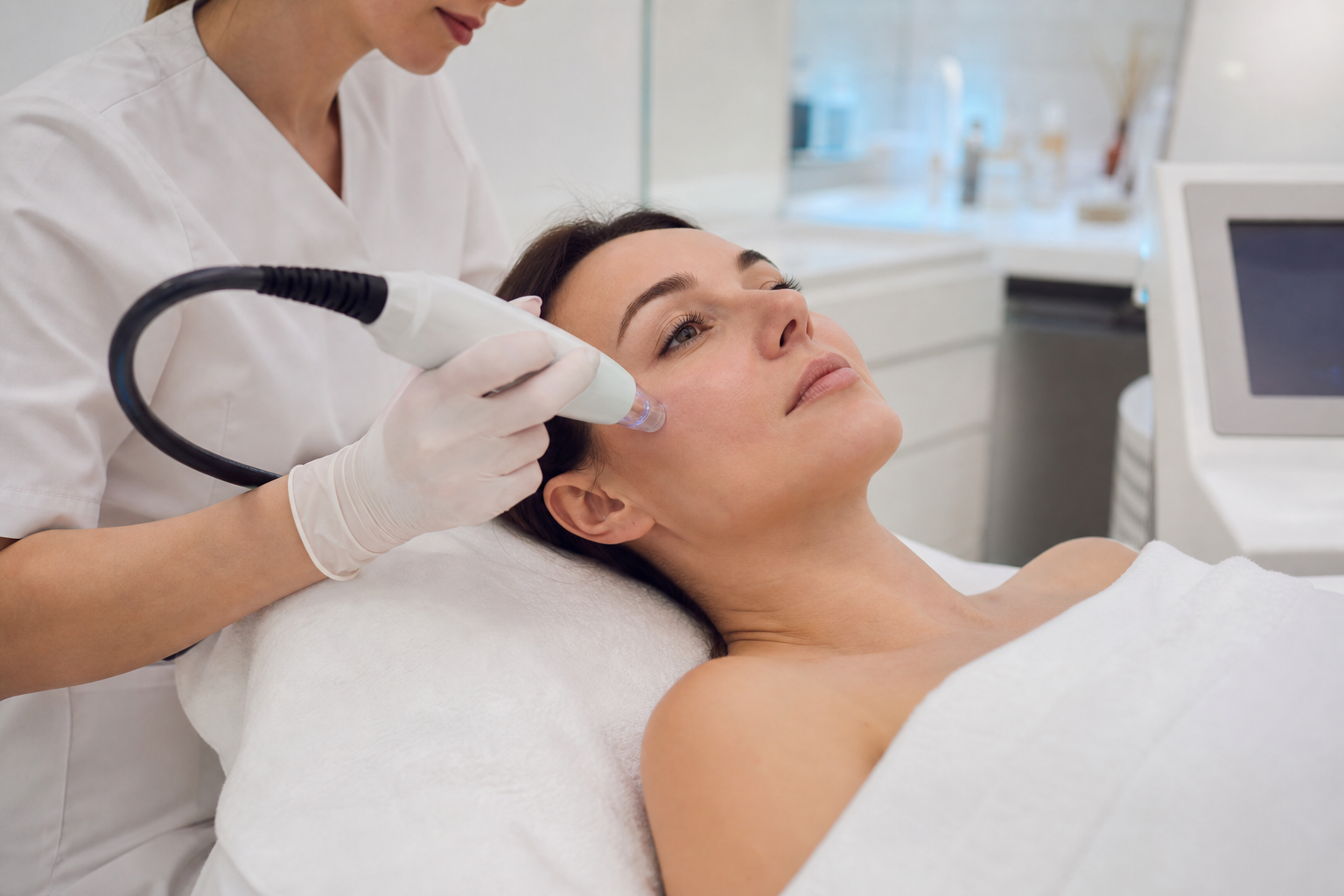
Radiofrequency (RF) energy has emerged as a pivotal innovation in dermatology and aesthetic medicine, heralding a new era of non-invasive skin rejuvenation techniques. This technology leverages specific electromagnetic waves to stimulate and tighten the skin without resorting to surgical interventions. For individuals seeking to restore youthful firmness, diminish the appearance of fine lines, or enhance skin texture without the risks and recovery associated with traditional facelifts, RF treatments present a compelling alternative.
Understanding how RF energy interacts with the skin's anatomy is essential for anyone considering these procedures—from patients evaluating their cosmetic options to practitioners aiming to optimize treatment outcomes. RF lifting, or radiofrequency skin tightening, is a technique designed to safely penetrate the skin's deeper layers, promoting natural regenerative processes that enhance collagen and elastin production. These structural proteins are fundamental to maintaining skin elasticity and resilience, both of which tend to decline with age.
This article delves into the science and application of RF energy on the skin, exploring the mechanisms behind its effectiveness, the different treatment modalities available, and what patients can expect in terms of results and safety. By clarifying how RF treatments work, it aims to equip readers with informed knowledge that supports confident decision-making regarding skin rejuvenation therapies.
What Is Facial RF Lifting and How Does Radiofrequency Affect the Skin?
Facial RF lifting, a subset of radiofrequency skin tightening, utilizes electromagnetic waves in the radiofrequency spectrum to induce controlled heating within the skin's layers. Unlike surgical facelifts, which physically remove and reposition skin and underlying tissues, RF lifting stimulates biological responses that lead to skin tightening and rejuvenation from within.
When RF energy is applied, it delivers heat primarily to the dermis and subcutaneous layers beneath the outer epidermis. This heating triggers fibroblasts—cells responsible for generating collagen and elastin—to increase their activity. Collagen fibers, which provide structural support, and elastin fibers, which provide skin elasticity, are remodeled and regenerated over time, resulting in firmer, more resilient skin.
The technology can adjust different parameters, such as frequency, energy intensity, and depth of penetration, to tailor treatments according to individual skin conditions and treatment goals. Because the epidermis remains largely unaffected by the heat, RF lifting provides a non-ablative approach that minimizes downtime and reduces the risk of complications commonly associated with more invasive procedures.
Who Is an Ideal Candidate for RF Skin Tightening Treatments?
RF treatments cater to a diverse range of individuals seeking skin improvement without surgery. Ideal candidates typically fall into the category of those experiencing mild to moderate skin laxity, early signs of aging such as fine lines and wrinkles, or loss of skin tone and elasticity. Patients may be in their late 30s to 60s, although suitability depends on individual skin characteristics rather than age alone.
People who prefer non-invasive procedures with minimal discomfort and no extended recovery periods often find RF treatments appealing. Additionally, individuals with busy lifestyles who cannot afford significant downtime benefit from the quick treatment sessions and gradual, natural-looking outcomes.
However, RF treatments may not be suitable for those with severe skin sagging that requires surgical intervention, active infections in the treatment area, or certain medical devices like pacemakers. A thorough consultation with a qualified practitioner is necessary to evaluate candidacy and determine the most appropriate RF modality.
How Does RF Energy Penetrate Skin Layers and Stimulate Collagen Production?
Radiofrequency energy works by emitting alternating electrical currents at high frequency, which generate heat through resistance in the skin tissue. The depth of penetration can range from a few millimeters to several millimeters, depending on the device and technique used. This targeted heating affects the dermis and subcutaneous tissue without damaging the superficial epidermis.
The thermal effect induces controlled collagen denaturation, causing existing collagen fibers to contract immediately. More importantly, the heat triggers a wound-healing response, stimulating fibroblasts in the dermis to produce new collagen and elastin over subsequent weeks and months. This collagen neogenesis is a crucial mechanism underlying the gradual improvement in skin firmness and texture observed after RF treatments.
By carefully modulating the temperature and duration of RF energy application, treatments can maximize collagen stimulation while maintaining patient safety and comfort. This precision allows practitioners to address various skin concerns effectively and customize therapies based on individual tissue responses.
What Are the Different Types of RF Treatments and Their Distinct Mechanisms?
Advancements in RF technology have led to multiple treatment variants, each designed to target specific skin concerns with differing levels of invasiveness and precision.
Non-invasive RF Treatments: These utilize handheld applicators placed on the skin surface that emit RF energy to heat underlying tissues. Without breaking the skin barrier, these treatments induce collagen remodeling with no recovery time, making them ideal for patients seeking subtle to moderate improvements.
Fractional RF without Needles: This approach divides the RF energy into controlled micro-zones of thermal damage across the skin. While still non-ablative, fractional RF induces micro-injury in fractional patterns, promoting more robust collagen production and skin renewal with minimal downtime.
RF Microneedling: Combining an array of fine needles with RF emission, this technique delivers energy directly into the dermis through punctures, allowing more precise and deeper heating. The micro-injuries created by the needles stimulate natural healing pathways, further enhancing collagen synthesis. Slight discomfort and short recovery may accompany this minimally invasive method.
Minimally Invasive RF: Some treatments employ radiofrequency delivered via probes inserted under the skin through tiny incisions, targeting deeper tissue layers such as the subcutaneous fat and muscle fascia. These procedures can address more severe skin laxity and shape facial contours, blending surgical efficacy with reduced trauma.
Does RF Lifting Truly Tighten the Face and Reverse Signs of Aging?
Scientific studies and clinical experiences affirm that RF lifting effectively tightens the skin and improves its overall appearance. While RF cannot replicate the dramatic tissue repositioning achieved by surgical facelifts, it nonetheless offers meaningful restoration of skin tone and elasticity.
Results typically manifest as a gradual improvement rather than an instantaneous change, with optimal outcomes appearing several weeks post-treatment as new collagen integrates into the dermal matrix. Patients often report smoother skin texture, diminished fine lines, and a lifted, more youthful facial contour.
The cumulative effect of repeated sessions can further enhance these benefits, making RF lifting a practical option for those seeking maintenance or early intervention against aging without surgery.
How Deep Does Radiofrequency Energy Penetrate, and Why Does It Matter?
The penetration depth of RF energy is a critical factor that influences treatment effectiveness and safety. Typically, RF devices are engineered to reach depths spanning from approximately 1.5 mm into the dermis up to 6-7 mm targeting subcutaneous tissues.
Shallower penetration focuses on improving skin surface quality, elasticity, and fine wrinkles, while deeper penetration can impact fat layers and connective tissues, offering skin tightening and contouring benefits. The ability to precisely control penetration depth allows tailored applications, addressing multiple facets of skin aging in a comprehensive manner.
Since skin thickness and tissue characteristics vary among individuals and anatomical regions, experienced professionals calibrate RF settings to optimize results while avoiding burns or adverse reactions to the epidermis.
What Should Patients Expect During and After an RF Treatment?
RF treatments are generally well-tolerated, with sessions lasting between 30 minutes to an hour depending on the area and method. Patients typically experience a warming sensation in the treated skin, sometimes described as comfortable heat or mild prickling. The non-invasive nature usually means no anesthesia is necessary.
Post-treatment effects may include slight redness or swelling, which typically subsides within hours to a day. Since the epidermis remains intact, there is minimal risk of infection or scarring.
Because collagen remodeling is a biological process requiring time, initial improvements may be subtle, progressing over 2 to 3 months. Multiple treatment sessions spaced several weeks apart are often recommended to maximize skin tightening and rejuvenation.
Regular sun protection and skin care complement the effects of RF therapy and promote lasting results.
What Are Common Questions About RF Skin Tightening Addressed?
Is RF lifting painful? Most patients experience mild warmth without pain. Some devices incorporate cooling mechanisms to enhance comfort.
How long do results last? Results typically last from 6 months to over a year, depending on factors like age, skin condition, and lifestyle. Maintenance sessions help sustain benefits.
Can RF be combined with other treatments? Yes, RF is often incorporated with other modalities such as fillers, Botox, or laser resurfacing for comprehensive rejuvenation.
Are there any risks or side effects? When performed by qualified practitioners, RF treatments have a strong safety record. Temporary redness or swelling can occur, but serious complications are rare.


