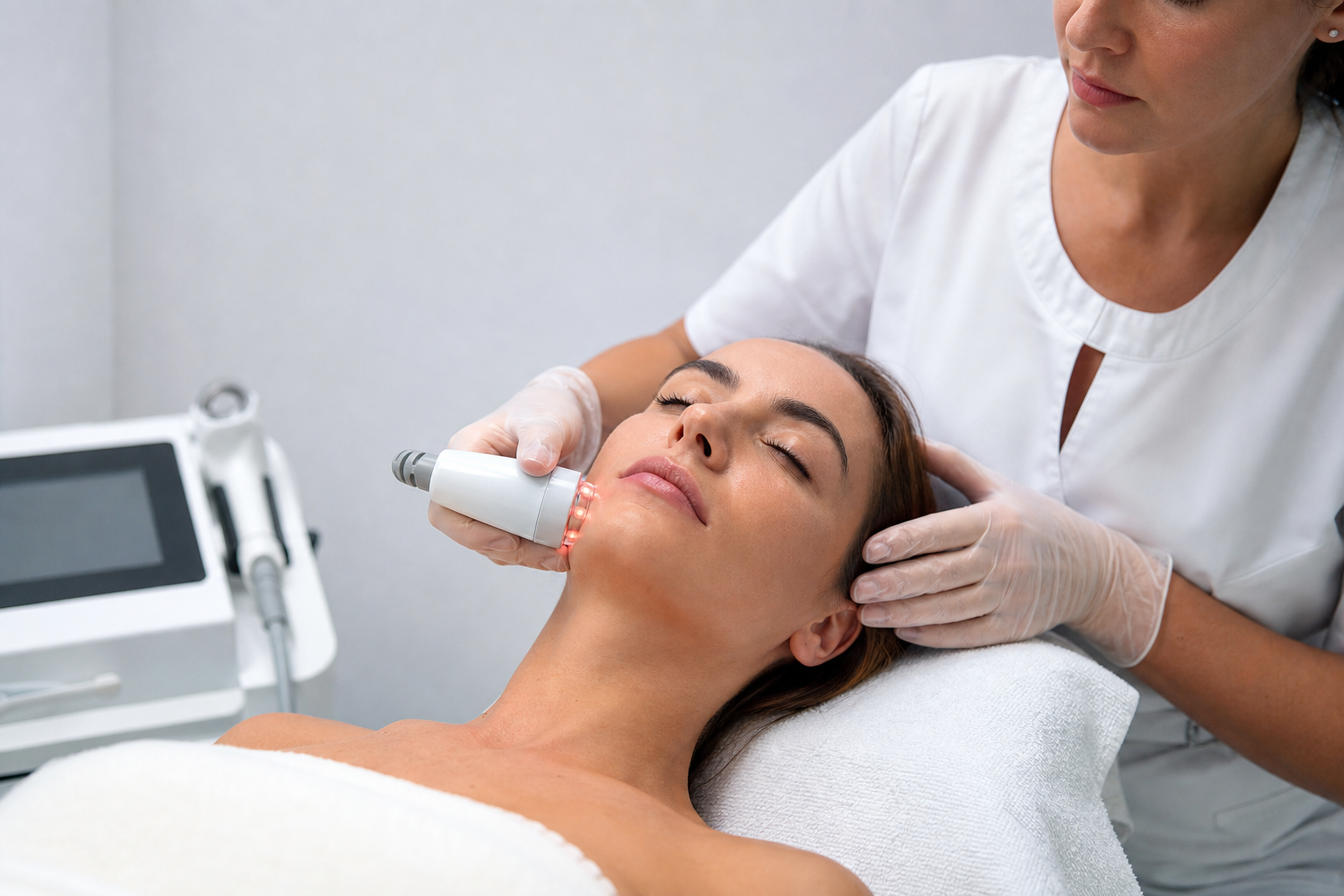
In the evolving domain of aesthetic medicine, surface and deep radiofrequency (RF) skin heating has emerged as a groundbreaking technology. Designed as a non-surgical approach to rejuvenate and tighten the skin, RF treatments target the deeper layers of the dermis, encouraging collagen and elastin production to restore firmness and elasticity. These treatments provide a compelling option for individuals seeking skin improvement without the risks or downtime associated with invasive surgery.
Radiofrequency skin tightening, commonly referred to as RF lifting, encompasses a range of therapeutic techniques differentiated primarily by the depth of energy penetration. From surface-level warming to deep tissue heating, RF technologies stimulate the skin’s natural regenerative processes in bespoke ways tailored to the patient’s skin condition and aesthetic goals.
This article is dedicated to educating anyone interested in understanding surface and deep RF skin heating. It is particularly useful for those considering non-invasive or minimally invasive options for facial and body skin rejuvenation, including patients seeking a safer alternative to surgical facelifts. With increasing demand for treatments that combine efficacy with minimal recovery, learning about RF heating’s mechanisms, applications, and outcomes is essential for making informed decisions.
What Is Radiofrequency Skin Tightening and How Does It Work?
Radiofrequency skin tightening uses controlled radiofrequency energy to safely heat targeted layers of the skin. This thermal stimulus promotes the body's natural collagen and elastin synthesis, the essential proteins responsible for skin structure and elasticity. Unlike surgical facelifts, RF lifting utilizes heat rather than incisions to firm and contour the skin.
During an RF treatment, radiofrequency waves penetrate into the dermis and sometimes subdermal layers, depending on the method employed. This controlled heating process facilitates collagen remodeling and reduces the appearance of fine lines, wrinkles, and mild to moderate skin laxity. Unlike ablative procedures that damage the surface, RF treatments can be non-ablative, preserving the epidermis and enabling quicker recovery.
RF lifting is versatile and can be applied to multiple anatomical areas including the face, neck, jawline, décolleté, abdomen, arms, and thighs. Its adaptability makes it suitable for addressing a variety of aesthetic concerns ranging from early signs of aging to more pronounced drooping and skin texture irregularities.
How Do Surface and Deep RF Treatments Differ?
The primary distinction between surface and deep RF treatments lies in the depth of radiofrequency energy delivery and the targeted tissue layers. Surface RF heating generally focuses on the epidermis and upper dermis. The effect is to smooth fine wrinkles, enhance skin tone, and gently tighten mild skin laxity. This approach suits individuals with initial signs of aging or those desiring maintenance of existing skin firmness.
In contrast, deep RF heating targets the lower dermis and subcutaneous tissue, areas where collagen and elastin pools are thicker yet more susceptible to degradation over time. By delivering energy deeper beneath the skin, these procedures can treat more significant sagging, improve skin contours, and stimulate profound collagen regeneration. Deep RF treatments therefore suit patients with moderate to advanced skin laxity or those addressing secondary signs of aging.
The distinction guides practitioners in treatment planning, balancing the patient’s skin condition, desired degree of tightening, and tolerance for recovery time or discomfort.
What Are the Main Types of Radiofrequency Treatments Available?
Several RF modalities exist, each distinguished by electrode configuration, energy delivery pattern, and invasiveness. Key types include monopolar, bipolar, and multipolar RF treatments, along with innovations such as fractional RF and RF microneedling.
Monopolar RF utilizes a single active electrode with a grounding pad placed elsewhere on the body. This configuration produces deeper energy penetration reaching subcutaneous layers, making it effective for body contouring and treating pronounced skin laxity. Because energy disperses over a wider volume, monopolar devices need careful parameter adjustment to avoid superficial overheating.
Bipolar RF devices employ two closely spaced electrodes to confine current flow to a shallower and more controlled area. This yields precise surface and upper dermis heating, ideal for delicate areas such as the face where more delicate skin tightening is desired. Bipolar RF is often used to reduce fine lines and improve skin texture without deep penetration.
Multipolar RF combines multiple electrodes to allow synchronous energy delivery at varied depths. This enhances safety and uniformity of heating, reducing discomfort and delivering comprehensive skin tightening. Multipolar systems are commonly used in facial treatments for moderate tightening and rejuvenation.
Fractional RF applies energy in targeted tiny zones, leaving surrounding tissue intact to accelerate healing. This method promotes intense collagen remodeling with reduced downtime and is especially effective for skin resurfacing and scarring treatment.
RF Microneedling synergistically combines fine needles penetrating the epidermis with concurrent RF energy delivery to deeper dermal layers. This minimally invasive technique maximizes collagen stimulation and is employed to treat wrinkles, scars, and sagging skin with enhanced precision and efficacy compared to surface RF alone.
Who Is an Ideal Candidate for Surface Versus Deep RF Skin Heating?
An essential part of treatment planning involves determining whether surface or deep RF heating best suits an individual’s skin condition and goals. Surface RF treatments are typically appropriate for younger patients with early aging signs — fine wrinkles, slight sagging, and uneven texture. These patients often seek gentle rejuvenation with negligible downtime, making surface RF advantageous.
Conversely, deep RF procedures are aimed at individuals experiencing more notable skin laxity, such as loss of jawline definition, significant wrinkles, or looseness on the neck or body. Patients who prefer to avoid surgery but want more dramatic results may opt for deep RF techniques including monopolar RF or RF microneedling.
It is important to note that multiple treatment sessions are often necessary regardless of approach, and that RF treatments are not substitutes for surgical lifts but rather complementary or alternative options with less risk and downtime.
What Are the Key Benefits of RF Lifting and What Results Can Be Expected?
Radiofrequency skin tightening offers several advantages that make it attractive in aesthetic practice. The primary benefit is the stimulation of natural collagen and elastin production, which progressively improves skin firmness, elasticity, and surface quality over weeks following treatment.
Unlike invasive procedures, RF treatments usually cause minimal discomfort and require little to no downtime, allowing patients to resume daily activities immediately. The gradual nature of the results provides a natural, subtle enhancement in appearance rather than an abrupt change.
RF technology can tighten not just the face but also body areas affected by loose skin, offering a holistic approach to skin rejuvenation. The ability to combine RF with other modalities such as fillers or laser therapies further augments the aesthetic outcome.
While outcomes vary based on individual factors like age, skin condition, lifestyle, and the specific technology used, many patients observe significant improvements in skin texture, contour, and wrinkle reduction following a treatment series.
How Are RF Procedures Performed and What Should Patients Expect During and After Treatment?
The initial step includes a thorough skin evaluation by a trained professional to determine the appropriate RF modality and treatment parameters. The procedure typically lasts between 20 and 60 minutes depending on the targeted areas.
Before treatment, a conductive gel is applied to facilitate RF energy transfer and to protect the epidermis. The practitioner then applies the RF device across the skin surface in a controlled manner to heat the selected layers. Patients commonly report a warming sensation and mild tingling but generally do not experience significant pain.
Post-treatment, the skin might show mild redness or sensitivity, which usually resolves within hours to a day. Patients are advised to use moisturizers and sun protection to support skin recovery. Multiple sessions spaced several weeks apart are often recommended to achieve optimal results.
Because RF treatments preserve the skin surface and avoid harmful UV exposure or aggressive mechanical disruption, recovery is straightforward and complications are rare when conducted by experienced providers.
What Are Common Questions Related to Surface and Deep RF Heating of the Skin?
Is RF skin tightening safe? When performed by qualified clinicians using FDA-cleared devices, RF skin tightening is considered safe. Treatments are carefully customized to each patient’s tolerance and skin anatomy, minimizing risks.
How many treatments are usually needed? Most patients undergo a series of 4 to 6 sessions spaced 2 to 4 weeks apart, with maintenance sessions annually or biannually as desired.
Which is better: classic RF or RF microneedling? The choice depends on skin condition and treatment goals. RF microneedling penetrates deeper and is ideal for scarring and pronounced skin laxity, while classical RF is effective for surface tightening and texture improvement.
Can RF treatments be combined with others? Combining RF with fillers, Botox, lasers, or PRP can enhance overall rejuvenation. Coordinated treatment planning ensures combined modalities complement each other safely.


