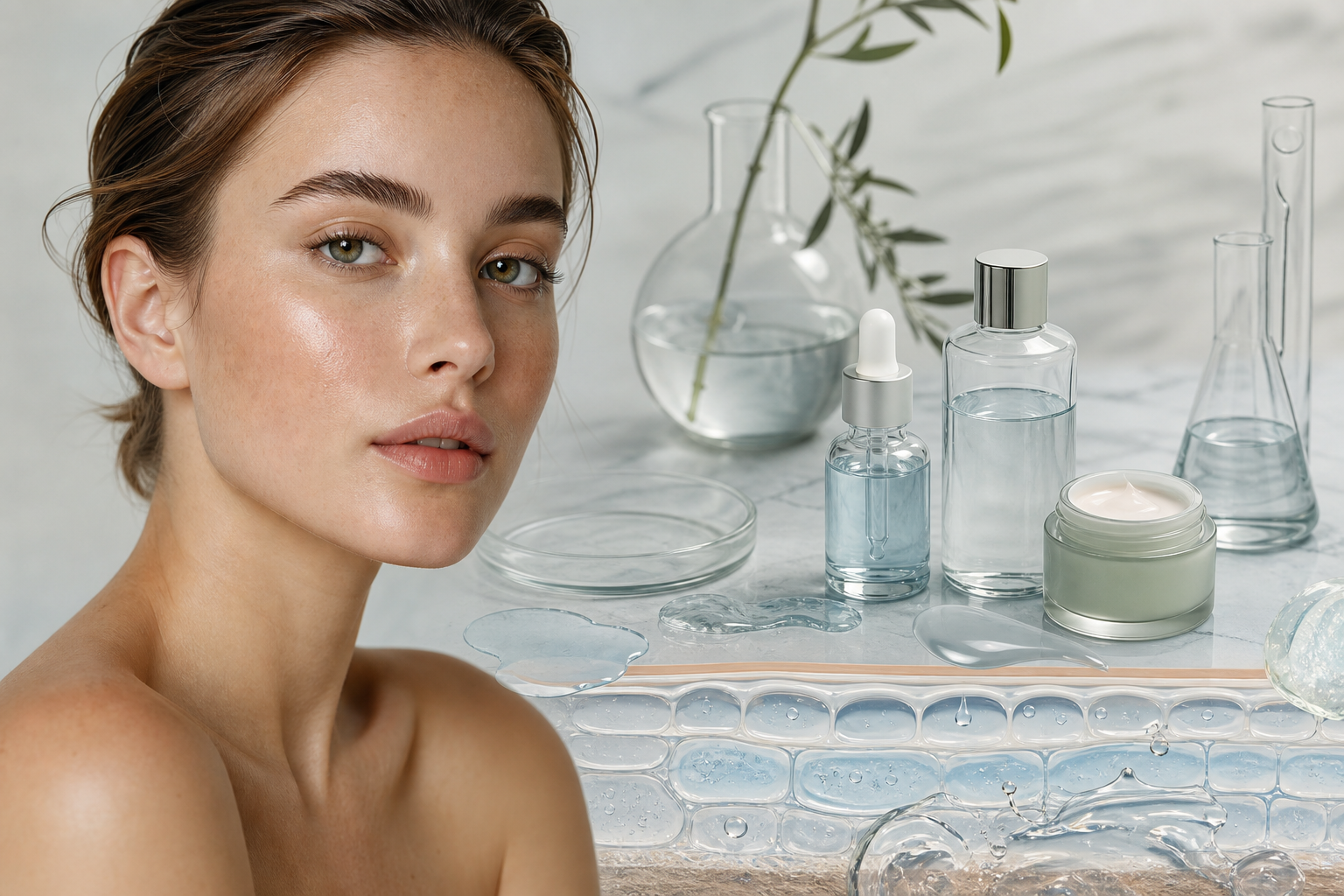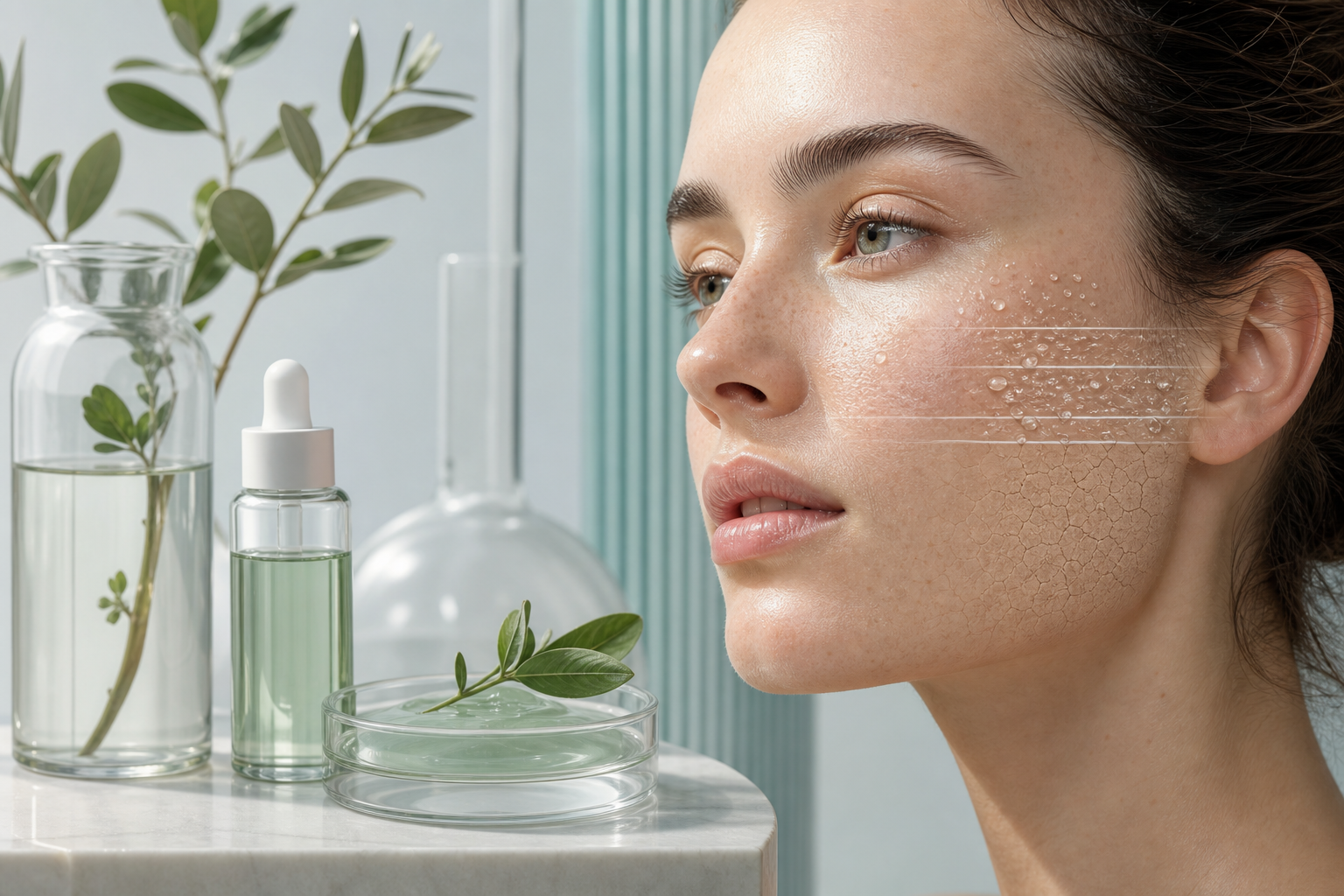
Hydrated skin is not simply skin that temporarily appears softer and more radiant. Proper hydration refers to the skin’s ability to retain water, maintain a stable protective barrier and defend itself against external influences. When this balance is disrupted, the skin may become tight, rough, flaky, red and overly sensitive, while fine lines can appear more pronounced.
The problem cannot always be solved by adding another hyaluronic acid serum. Sometimes the skin genuinely lacks water, but this is often accompanied by damage to the lipids that prevent moisture from evaporating. A serious approach to hydration must therefore include gentle cleansing, properly selected moisturising ingredients, restoration of the skin barrier and protection from factors that could damage it again.
What Does Skin Hydration Actually Mean?
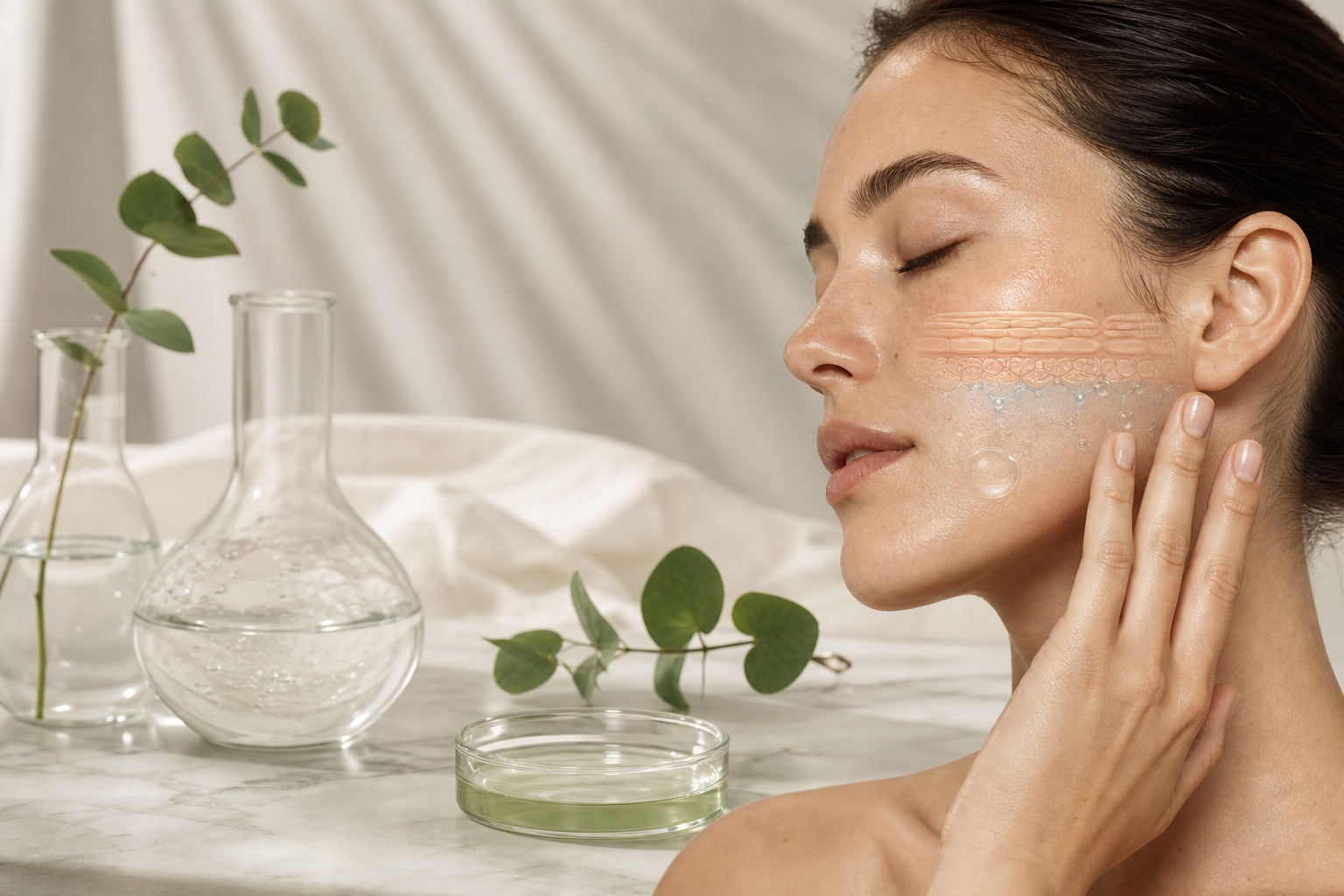
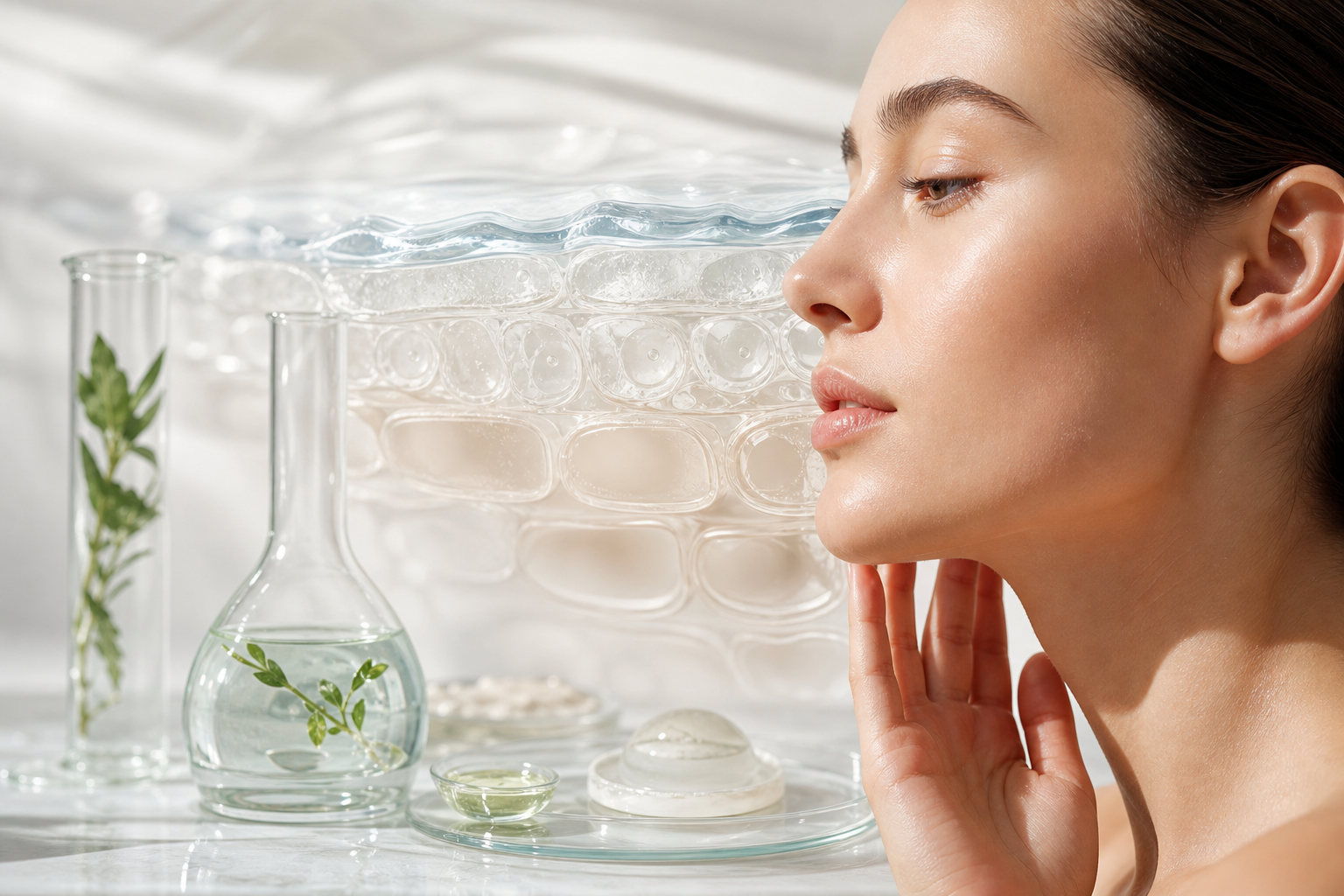
Hydration refers to the amount of water present in the skin’s surface layers, primarily the stratum corneum—the outermost layer of the epidermis. This layer is often compared to a wall: skin cells represent the “bricks”, while the lipids between them act as the “mortar” that keeps the structure compact.
When this system is stable, the skin retains water more effectively and tolerates changes in temperature, wind, pollution, cleansers and active skincare ingredients more successfully. When the barrier is damaged, water evaporates more easily from the surface and potentially irritating substances can penetrate the skin more readily.
Hydration should therefore not be viewed simply as adding water. A complete approach should simultaneously:
attract water to the surface layers of the skin;
soften and smooth the skin’s surface;
replenish some of its protective lipids;
slow down moisture evaporation;
remove or reduce the causes of irritation.
Dry and Dehydrated Skin Are Not the Same
Dry skin is a skin type that naturally produces less sebum. It is usually less oily, prone to tightness and flaking, and its pores are often less noticeable. This skin type generally benefits from richer creams and products containing higher levels of emollient and occlusive ingredients.
Dehydration is a temporary skin condition that can affect any skin type, including oily and acne-prone skin. Dehydrated oily skin may produce a considerable amount of sebum while still feeling tight, sensitive and dull. Makeup often looks uneven on dehydrated skin, and fine lines may become more visible.
Dehydration can be caused by cold weather, dry air, excessive cleansing, alcohol-based products, intensive exfoliation, retinoids, sun exposure, inappropriate combinations of active ingredients and insufficient use of moisturiser.
The distinction matters because a lightweight hydrating serum may help dehydrated oily skin, but it will rarely be sufficient for severely dry skin that lacks protective lipids.
What Is the Skin Barrier and Why Is It Important?
The skin barrier is located in the outermost part of the epidermis. Its function is not merely cosmetic. It limits water loss, protects the body from external irritants and contributes to its defence against microorganisms.
Ceramides, cholesterol and fatty acids are among the most important lipids within the skin barrier. When their balance and organisation are disrupted, transepidermal water loss increases. This refers to the amount of water that escapes unnoticed through the skin.
Signs of a compromised barrier may include:
tightness after cleansing;
stinging when applying products that were previously well tolerated;
redness and increased reactivity;
dry or flaky areas;
rough or uneven texture;
sudden intolerance to acids, retinoids or vitamin C;
skin that feels both oily and dehydrated.
These signs do not necessarily indicate a dermatological condition, but they suggest that the skincare routine should be simplified. If the symptoms are severe, persistent or accompanied by itching, sores or inflammation, a dermatologist should be consulted.
Why Does the Skin Lose Moisture?
Skin hydration is affected by both internal and external factors. Cold air, wind and indoor heating reduce environmental humidity, causing water to evaporate more quickly from the skin’s surface. Long showers in very hot water can have a similar effect.
Aggressive cleansing is another common cause. Harsh cleansers and excessively frequent removal of oil can disrupt the skin’s surface lipids. A “squeaky-clean” feeling after washing is not necessarily a sign of thorough cleansing; it may indicate that the cleansing process was too aggressive.
Over-exfoliation is also a frequent problem. Combining glycolic acid, salicylic acid, retinoids, abrasive scrubs and cleansing brushes does not accelerate skin renewal indefinitely. Instead, it can cause stinging, redness and reduced tolerance to almost every product.
Sun exposure also damages the skin’s structures and contributes to dryness, uneven texture and premature ageing. Daily photoprotection is therefore not separate from hydration—it is an essential part of maintaining a healthy skin barrier.
How Do Moisturisers Work?
A well-formulated moisturiser usually combines three groups of ingredients: humectants, emollients and occlusives. Understanding their roles makes it easier to select an appropriate product.
Humectants attract and bind water. Examples include glycerin, hyaluronic acid, lower concentrations of urea, sorbitol, panthenol, betaine, amino acids and sodium PCA.
Emollients fill the spaces between surface skin cells, making the skin feel softer and smoother. This group includes squalane, various esters, triglycerides, plant oils and fatty alcohols such as cetyl and cetearyl alcohol. Fatty alcohols are not the same as drying ethanol and generally serve a beneficial purpose in moisturising creams.
Occlusives create a protective layer that slows down water loss. Examples include petrolatum, mineral oil, dimethicone, lanolin and certain waxes. Heavier textures are not necessary for everyone, but they can be extremely helpful for very dry, cracked or temporarily damaged skin.
The American Academy of Dermatology notes that creams and ointments are generally more effective than lightweight lotions for pronounced dryness because they are better at limiting moisture loss.
The Most Important Ingredients for Hydration and Repair
Glycerin is one of the most dependable moisturising ingredients. It is well researched, accessible and effective in many different formulations. Its position on the ingredient list may be more relevant than a fashionable ingredient added in a very low concentration.
Hyaluronic acid binds water and can immediately improve the skin’s plumpness and smoothness. It is available in different molecular weights, but it is not a complete solution for dryness on its own. It works best in a formula that also contains ingredients capable of reducing water loss.
Ceramides are a natural component of the skin barrier. Products that combine ceramides with fatty acids and cholesterol can be particularly helpful when the skin is dry, sensitive or stressed by active treatments.
Panthenol has moisturising and soothing properties. It is frequently included in products formulated for sensitive skin and recovery after irritation.
Niacinamide can support the skin barrier, contribute to a more even complexion and help regulate sebum. However, a higher concentration is not automatically better. Sensitive skin may tolerate formulas containing approximately two to five per cent more comfortably than very highly concentrated products.
Urea in lower concentrations hydrates and softens the skin. At higher concentrations, it has a stronger keratolytic effect and may sting very sensitive or damaged skin.
Squalane is a lightweight emollient that softens the skin without creating an excessively greasy sensation. It can work well in products for both dry and combination skin.
Colloidal oatmeal, beta-glucan, allantoin and Centella asiatica are frequently used as soothing ingredients. They may be beneficial, but the quality of a product depends on its entire formulation rather than one featured botanical extract.
Why Is a Serum Often Not Enough?
A hydrating serum can feel pleasant and temporarily improve the appearance of the skin, but it usually consists primarily of water and humectants. If it is not followed by a suitable moisturiser, particularly in a dry environment, the effect may be short-lived.
For oily skin, a lightweight gel cream that combines humectants and emollients may be sufficient. Dry skin usually requires a richer cream, while severely dry areas may benefit from a thin final layer of an occlusive product.
It is not essential to use an essence, toner, serum and cream in the same routine. One well-formulated moisturiser can often replace several separate products. The number of steps is not a measure of a routine’s quality.
The Right Routine for Hydrating the Skin
A morning routine can be very simple. The skin may be cleansed with a gentle product or, in the case of extremely dry and sensitive skin, rinsed only with lukewarm water if that suits its condition. This is followed by a hydrating serum or moisturiser, with a broad-spectrum sunscreen of at least SPF 30 applied as the final step.
An evening routine should include the removal of makeup and sunscreen, gentle cleansing and the application of a suitable moisturiser. If retinoids or acids are used, they should be introduced gradually and applied at a frequency the skin can tolerate.
Applying moisturiser while the skin is still slightly damp can help retain water. Dermatologists also recommend brief washing or showering with lukewarm rather than hot water, followed by the immediate application of a moisturising product.
How Can a Damaged Skin Barrier Be Restored?
When the skin stings, becomes red and reacts to numerous products, the first step is not to introduce more active ingredients. The routine should be temporarily simplified.
During the recovery period, it is generally advisable to:
use a gentle cleanser without abrasive particles;
stop using physical scrubs and cleansing brushes;
take a break from strong acids and retinoids;
choose a fragrance-free moisturiser without unnecessary irritants;
use a product containing ceramides, glycerin and emollients;
apply sunscreen every day;
avoid introducing several new products at once.
Recovery can take anywhere from a few days to several weeks, depending on the severity of the damage and whether an underlying dermatological condition is present. Active ingredients should be reintroduced one at a time, less frequently than before and only after basic products no longer cause discomfort.
If even a simple moisturiser causes intense stinging, or if sores, swelling, weeping skin or severe itching are present, further experimentation at home is not advisable. These symptoms require assessment by a dermatologist.
Hydration According to Skin Type
Oily skin can still be dehydrated and should not be deprived of moisture. Lightweight gel creams, fluids and non-comedogenic formulations containing glycerin, panthenol, niacinamide or hyaluronic acid are often suitable. The goal is not to eliminate sebum completely, but to maintain balance.
Dry skin generally needs richer textures containing ceramides, squalane, fatty acids and occlusive ingredients. A fuller-textured night cream may be particularly helpful during winter.
Combination skin does not necessarily require the same product on every part of the face. A lightweight fluid may be applied to the oilier T-zone, while a richer cream can be used on the cheeks and other dry areas.
Sensitive skin usually responds best to simple, fragrance-free formulas without an excessive number of botanical extracts. A product labelled “natural” is not automatically gentler. Essential oils and fragrant plant ingredients can also cause irritation.
Acne-prone skin needs hydration that does not unnecessarily complicate the routine. A lightweight, non-comedogenic moisturiser can improve tolerance to salicylic acid, benzoyl peroxide or retinoids. Drying the skin until it flakes is not a requirement for successful acne treatment.
Does Drinking Water Hydrate the Skin?
Adequate fluid intake is important for overall health, and significant dehydration of the body can affect the skin’s appearance. However, drinking large amounts of water cannot repair a damaged skin barrier on its own.
For someone who already consumes enough fluids, additional glasses of water cannot replace gentle cleansing, an appropriate moisturiser and sun protection. Skin hydration is maintained primarily through its ability to retain water, not simply through the amount of water a person drinks.
Diet, sleep, stress, hormonal changes, medication and overall health can all affect the skin. Nevertheless, an appropriate skincare routine still plays an important role in preserving the surface barrier.
Professional Skin-Hydration Treatments
A professional treatment can temporarily improve the skin’s smoothness, softness and radiance, but it should be selected according to the skin’s actual condition. Not every case of dehydrated skin requires aggressive exfoliation before hydration.
Gentle hydrating treatments usually combine mild cleansing, controlled exfoliation when necessary, hydrating serums, a soothing mask and protective finishing products. Their purpose should be to improve comfort and support the skin barrier, rather than aggressively eliminate every visible sign of texture in a single session.
Treatments for highly reactive skin should be kept simple. Strong acids, powerful enzymes, abrasive exfoliation, fragranced masks and numerous active ampoules can worsen a condition the client may describe only as “dehydration”.
Methods such as mesotherapy, skin boosters and other procedures involving needles should not be treated as equivalent to conventional cosmetic hydration treatments. These are medical or minimally invasive procedures with specific indications, risks and contraindications. They should be performed by an appropriately qualified healthcare professional.
How Can You Assess the Quality of a Hydrating Treatment?
A good treatment begins with an assessment of the skin, the client’s habits and the products they use. The practitioner should ask about allergies, diagnosed skin conditions, pregnancy, medication, recent procedures and previous reactions to active ingredients.
Quality is not determined by the number of ampoules and devices used. It is more important that the treatment is appropriate for the skin’s condition and does not compromise its tolerance.
After a properly selected treatment, the skin may look more rested, feel softer and appear more even. However, claims about “deeply infusing the skin with water”, permanently erasing wrinkles or completely renewing the skin after a single visit should be approached with caution.
Professional treatments produce the best results when they complement an effective home-care routine rather than attempting to compensate for aggressive daily skincare.
The Most Common Hydration Mistakes
One of the most common mistakes is constantly changing products. The skin needs time to demonstrate whether a particular routine suits it. Introducing several serums, acids and creams at the same time makes it difficult to identify the cause of irritation.
Another mistake is relying solely on hyaluronic acid. It is a useful humectant, but the result may be insufficient without emollients and ingredients that reduce moisture evaporation.
Exfoliation is also frequently overused. The immediate smoothness following a peel may create the impression that the skin is healthier, even though excessive use of acids can gradually increase sensitivity.
Applying an extremely rich cream to every skin type can also cause problems. An occlusive formula may be excellent for severely dry areas but too heavy for someone prone to clogged pores. Products should be selected according to the skin’s needs, rather than the assumption that the thickest cream is always the most effective.
How Quickly Can Results Be Seen?
An improvement in tightness and surface softness may be noticed very quickly, sometimes after the first use of a suitable moisturiser. More stable restoration of the barrier requires consistency and removal of the factors causing irritation.
If a person continues to use an aggressive cleanser, several acids and a retinoid their skin cannot tolerate, no hydrating mask will provide a lasting solution.
Progress should be assessed through reduced tightness, flaking, redness and stinging, improved product tolerance and a more stable appearance throughout the day. An immediate “glass skin” glow is not a reliable indicator of healthy skin.
When Is It Time to See a Dermatologist?
Dryness and dehydration can often be improved with an appropriate skincare routine, but not every condition is purely cosmetic. A dermatological examination is important when any of the following are present:
persistent redness and itching;
painful cracks or sores;
weeping, crusting or signs of infection;
intense stinging;
swelling;
skin changes that continue to spread;
persistent flaking that does not respond to gentle care;
suspected eczema, rosacea, psoriasis or contact dermatitis.
In these situations, introducing additional cosmetic products may disguise the symptoms or make the condition worse.
What Does a Simple and Effective Routine Look Like?
For most people, a good basic routine does not need to be complicated.
In the morning, gentle cleansing when needed, an appropriate moisturiser and broad-spectrum sunscreen with at least SPF 30 are sufficient.
In the evening, makeup and sunscreen should be removed carefully, followed by cleansing with a gentle product and the application of a suitable moisturiser. An additional serum may be used when there is a specific need, but it is not essential.
Active ingredients should only be introduced once the basic routine is stable. Introduce one new product at a time so that any reaction can be more easily linked to its cause.