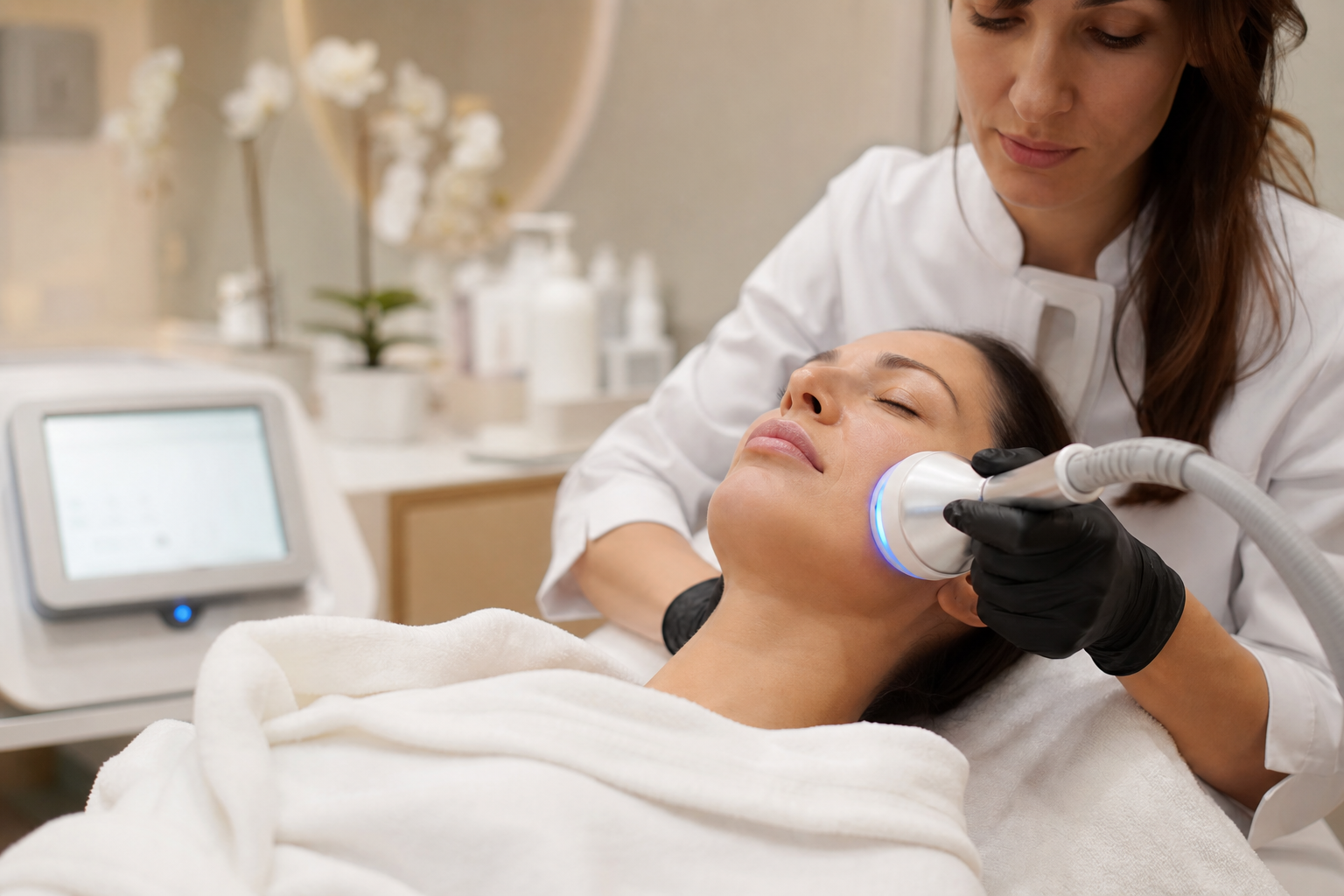
In recent years, needle-free fractional radiofrequency (RF) treatments have emerged as an increasingly popular option for individuals seeking effective skin rejuvenation without the discomfort or risks associated with invasive procedures. This modern technology harnesses radiofrequency waves to stimulate collagen and elastin production deep within the dermis, promoting firmer, smoother, and more youthful-looking skin. Uniquely, needle-free fractional RF accomplishes these benefits without penetrating the skin with micro-needles, differentiating it markedly from treatments such as RF microneedling. Its non-invasive nature, combined with the ability to target specific skin concerns like fine lines, mild wrinkles, and uneven texture, makes it particularly attractive for those who desire significant improvements but wish to avoid downtime or potential complications.
This treatment is suitable for a broad spectrum of individuals—from those with early signs of skin laxity to people with sensitive skin who cannot tolerate more aggressive interventions. Importantly, needle-free fractional RF provides a bridge between traditional non-invasive RF therapies and more invasive microneedling approaches, offering a balanced solution that prioritizes safety and comfort without sacrificing effectiveness. Understanding how this technology works, who it benefits most, and what to expect throughout the treatment process is crucial for anyone considering this innovative method for skin tightening and rejuvenation.
In this comprehensive editorial, we will dissect the fundamentals of needle-free fractional RF—explaining its mechanism, delineating its advantages and distinct features, and clarifying misconceptions. We will also explore how it compares to other types of RF treatments, such as monopolar, bipolar, multipolar RF, and RF microneedling, to provide a well-rounded perspective that aids you in making an informed choice. From candid insights about safety profiles and treatment protocols to answering common user questions, this article aims to illuminate everything you should know about needle-free fractional RF as an advanced skin revitalization option.
What Is Needle-Free Fractional Radiofrequency and How Does It Differ From Other RF Treatments?
Radiofrequency skin tightening encompasses a range of treatments that use controlled RF energy to generate heat within the skin, encouraging fibroblasts to ramp up collagen and elastin synthesis. Traditional RF therapies deliver energy either uniformly or broadly across the skin's surface, which can lead to effective results but sometimes comes with longer recovery or less targeted impact.
Needle-free fractional RF represents a sophisticated evolution of this principle. Here, the device emits radiofrequency energy in a controlled, fractionated pattern—targeting numerous microscopic zones within the skin while sparing the intervening tissue. This fractional approach creates a pattern of thermal microzones without breaching the skin barrier because it does not use micro-needles. The absence of penetration distinguishes this treatment significantly from RF microneedling, which uses fine needles to physically puncture the skin and deliver RF energy deeper.
This method results in a dual benefit: the fractional delivery stimulates thorough collagen remodeling while preserving the skin's outermost layers, which leads to reduced irritation, redness, and downtime. While standard non-fractional RF heats more broadly and superficially, needle-free fractional RF takes advantage of the phenomenon where these micro-thermal zones induce a strong, localized healing response. Consequently, skin texture, tone, and elasticity gradually improve with minimal discomfort.
Compared to monopolar, bipolar, and multipolar RF treatments, fractional RF adds precision and enhanced efficacy in addressing mild to moderate skin aging signs. Monopolar RF often penetrates deeply but without the fractionated pattern, while bipolar and multipolar options offer different depths of energy delivery and coverage areas but similarly may not employ fractional targeting. Thus, needle-free fractional RF occupies its unique niche by combining the safety of non-invasive treatment with the benefits of focused remodeling.
Who Is the Ideal Candidate for Needle-Free Fractional RF Treatments?
Needle-free fractional RF is most suitable for individuals exhibiting early to moderate signs of skin aging, including the appearance of fine lines, mild wrinkles, subtle skin laxity, and uneven skin tone or texture. Those who have experienced some loss of firmness but do not yet require surgical intervention often find this treatment to be a compelling option.
It also appeals particularly to patients who prefer to avoid needles or who have sensitive skin prone to irritation or redness from invasive procedures. Since the treatment does not compromise the skin's surface integrity, it is well-suited for individuals with busy lifestyles who cannot afford downtime or for those who have previously had adverse reactions to other resurfacing or microneedling therapies.
Moreover, people with lighter skin tones and diverse ethnic backgrounds can generally undergo this treatment safely, given its non-thermal damage to the epidermis. However, consultation with a qualified dermatologist or skincare professional is essential to confirm candidacy, especially for patients with active inflammatory skin conditions, infections, or certain chronic illnesses that may contraindicate radiofrequency treatment.
While needle-free fractional RF offers broad applicability, it is not intended to replace surgical facelifts or deep laser resurfacing procedures but rather to serve as an intermediate step that balances effectiveness with minimal risk and enhanced comfort.
What Are the Key Benefits of Needle-Free Fractional RF Therapy?
The primary advantage of needle-free fractional RF lies in its ability to stimulate the skin’s natural regenerative mechanisms—specifically the production of collagen and elastin—without disrupting the protective barrier of the skin. These structural proteins are critical for maintaining elasticity, firmness, and youthful contour.
By delivering precise radiofrequency energy in fractional patterns, this treatment encourages the skin to heal and remodel over time, resulting in tighter pores, improved tone, and decreased fine lines. Patients frequently observe a smoothing of subtle textural irregularities, a reduction in mild pigmentation issues, and a more balanced complexion.
Another notable benefit is the negligible downtime associated with this procedure. Since the skin surface remains intact, common side effects like redness or peeling are minimized and short-lived. This enhances patient comfort, enables rapid return to daily activities, and makes the treatment accessible even for those with active or demanding schedules.
Furthermore, needle-free fractional RF is versatile—its energy can be safely applied to delicate areas such as around the eyes, the neck, and the décolletage, which are sometimes challenging for more invasive techniques. This broad applicability allows for comprehensive rejuvenation of facial and even some bodily regions prone to sagging or textural changes.
Lastly, the non-invasive nature significantly lowers risk factors associated with bleeding, infection, or prolonged inflammation, making it a suitable alternative for patients wary of needles or more aggressive treatments.
How Does the Technology Behind Needle-Free Fractional RF Function?
The core principle of needle-free fractional RF involves the emission of high-frequency electromagnetic waves that penetrate skin layers and generate controlled thermal energy within the dermis. The device emits radiofrequency in a fractionated manner—creating microscopically spaced zones of heat—eliciting a biological wound-healing response without actual wounding.
The generated heat selectively stimulates fibroblast cells, which are essential for collagen and elastin synthesis. This thermal activation encourages cellular turnover, remodeling of the extracellular matrix, and gradual restoration of skin integrity and elasticity.
The key to the treatment's safety and effectiveness lies in its capacity to directly target deeper skin structures while keeping the epidermis intact. This contrasts with RF microneedling where needles physically pierce the skin to deliver energy, potentially increasing discomfort and recovery time.
The fractional pattern ensures that large areas of the skin remain untouched between the treated zones, allowing these healthy tissues to accelerate healing and limit adverse reactions. Thanks to this innovative approach, needle-free fractional RF promotes consistent improvements while maintaining an excellent safety profile.
What Is the Typical Treatment Protocol and Expected Timeline for Results?
Needle-free fractional RF treatments generally involve a series of sessions spaced several weeks apart—commonly three to six sessions with intervals of around three to four weeks. This schedule supports gradual stimulation and remodeling of collagen networks, yielding progressive improvements with each treatment.
Each procedure typically takes between 20 to 40 minutes, depending on the treated areas and individual skin condition. The treatment is usually well tolerated, causing minimal sensations such as mild warmth or tingling—which fade quickly after the session.
Clients seldom experience lengthy recovery, with mild redness or tightness dissipating within a few hours. Makeup can often be applied shortly after, facilitating a seamless return to social or professional engagements.
Results build over time; patients might notice subtle enhancements in skin texture and tone within a couple of weeks post-treatment, with maximum rejuvenation becoming apparent after completing the full treatment course. The longevity of results varies based on natural aging, lifestyle, and maintenance treatments but can last six months to a year or more.
Periodic maintenance sessions are advisable to sustain improvements and to forestall the recurrence of skin laxity.
How Does Needle-Free Fractional RF Compare to RF Microneedling?
While both needle-free fractional RF and RF microneedling use radiofrequency energy to stimulate collagen remodeling, the two differ fundamentally in their delivery mechanisms and invasiveness.
RF microneedling relies on fine micro-needles to puncture the skin, creating micro-channels through which radiofrequency energy is directly delivered into the deeper dermis. This minimally invasive method often produces robust collagen induction and can be particularly effective for deeper wrinkles, scars, and skin tightening.
However, breaking the skin barrier introduces possible side effects such as bleeding, transient swelling, or infection, and usually requires a short recovery period during which patients may avoid sun exposure and certain cosmetic products.
Conversely, needle-free fractional RF treats the skin surface without breaching it, greatly minimizing risks and discomfort. This gentler approach is often preferred by patients with lower tolerance for downtime or needle treatments and is well suited for mild to moderate skin concerns.
Choosing between these options depends largely on individual goals, skin condition, pain tolerance, and willingness to undergo recovery. Consultation with a skin specialist can determine the most appropriate modality aligned with personal needs and expectations.
What Are Potential Side Effects and How Should Patients Prepare for Treatment?
Needle-free fractional RF is renowned for its favorable safety profile. Common temporary side effects are typically limited to mild skin redness, a sensation of warmth or tightness, and occasionally slight swelling immediately following the session. These symptoms usually resolve within hours to a day.
Preparing properly for treatment can further minimize adverse reactions. Patients should avoid prolonged sun exposure, tanning beds, and use of irritating skincare products such as retinoids or exfoliants for at least a few days before treatment. Such precautions reduce the risk of increased skin sensitivity or inflammation.
After the procedure, patients are advised to maintain good hydration, apply soothing moisturizers, and avoid harsh treatments or cosmetic products that could disrupt the healing process. Sun protection is critical to safeguard newly stimulated skin and maintain results.
A thorough consultation with a qualified practitioner to assess skin health, review medical history, and discuss realistic outcomes is indispensable prior to embarking on treatment. This ensures personalized care, mitigates contraindications, and maximizes benefits.
How Does Needle-Free Fractional RF Fit Into the Larger Spectrum of RF Treatments?
Radiofrequency technology has evolved in recent decades, leading to a variety of devices and protocols tailored to distinct aesthetic objectives and patient preferences. Traditional monopolar RF devices deliver energy deeply and broadly, suitable for body contouring but sometimes less precise for delicate facial areas. Bipolar and multipolar RF configurations target intermediate depths with greater uniformity and safety, often utilized for facial skin tightening.
Fractional RF techniques—including both microneedling and needle-free approaches—represent cutting-edge advancements allowing for segmented, controlled, and more intense stimulation with reduced surface damage. Needle-free fractional RF, in particular, stands out for combining high efficacy with patient comfort and minimal downtime, bridging the gap between non-invasive and minimally invasive treatments.
As part of a comprehensive skincare regimen, needle-free fractional RF can be complementary to other modalities like topical therapies, lasers, or traditional RF devices, allowing for customized treatment plans that address varied skin conditions.
This versatility and adaptability have made needle-free fractional RF an integral player in modern aesthetic medicine, meeting increasing demands for effective yet gentle rejuvenation technologies.
Frequently Asked Questions About Needle-Free Fractional RF
Does the treatment hurt? Most patients experience only a mild warming or tingling sensation during the session. Anesthesia is generally not required.
How long does each session last? Depending on the treated area, sessions typically range from 20 to 40 minutes.
When will I see results? Initial improvements often appear within a few weeks, with progressive benefits becoming most evident after completion of the full course.
Is it safe for all skin types? Needle-free fractional RF is safe for most skin tones and types; however, consulting a specialist is necessary to ensure no contraindications exist.
How long do results last? Results can last several months to a year, and are extendable with maintenance treatments and appropriate skincare.


