Laser hair removal is becoming an increasingly popular choice among men who want to reduce unwanted hair, make personal grooming easier and prevent problems such as ingrown hairs, irritation and folliculitis. The treatment can be performed on almost any area of the body, but the back, chest, abdomen, shoulders, neck and intimate areas are among the most commonly treated zones.
Unlike shaving and waxing, which provide temporary results, laser hair removal targets the hair follicle itself. After a properly planned series of treatments, hair growth can be significantly reduced, while the remaining hairs usually become finer, lighter and less noticeable.
However, successful treatment depends on several factors, including the type of laser, skin tone, hair colour and thickness, hormonal influences, treatment parameters and the experience of the professional performing the procedure.
How Does Laser Hair Removal Work on Male Hair?
Laser hair removal works through selective photothermolysis. The laser emits light at a specific wavelength, which is absorbed by melanin—the pigment found in the hair. This light energy is converted into heat and transferred to the follicle, damaging the structures responsible for future hair growth.
The treatment is most effective when the hair is in the active growth phase, known as the anagen phase. Since not all hairs are in this phase at the same time, one treatment cannot affect every follicle. This is why laser hair removal is performed as a series of sessions at carefully planned intervals.
Male hair is often thicker, darker and more deeply rooted than female hair. This can make it a good target for laser treatment, particularly when there is a clear contrast between the hair and the skin. At the same time, dense male hair may require carefully adjusted energy levels and adequate cooling to keep the treatment both effective and comfortable.
Laser hair removal does not necessarily mean the complete and permanent disappearance of every hair. A more realistic goal is long-term hair reduction. After the initial treatment series, occasional maintenance sessions may be necessary, especially in hormonally sensitive areas.
Which Areas Do Men Treat Most Often?
Men can undergo laser hair removal on most body areas, provided that the skin is healthy and there are no contraindications.
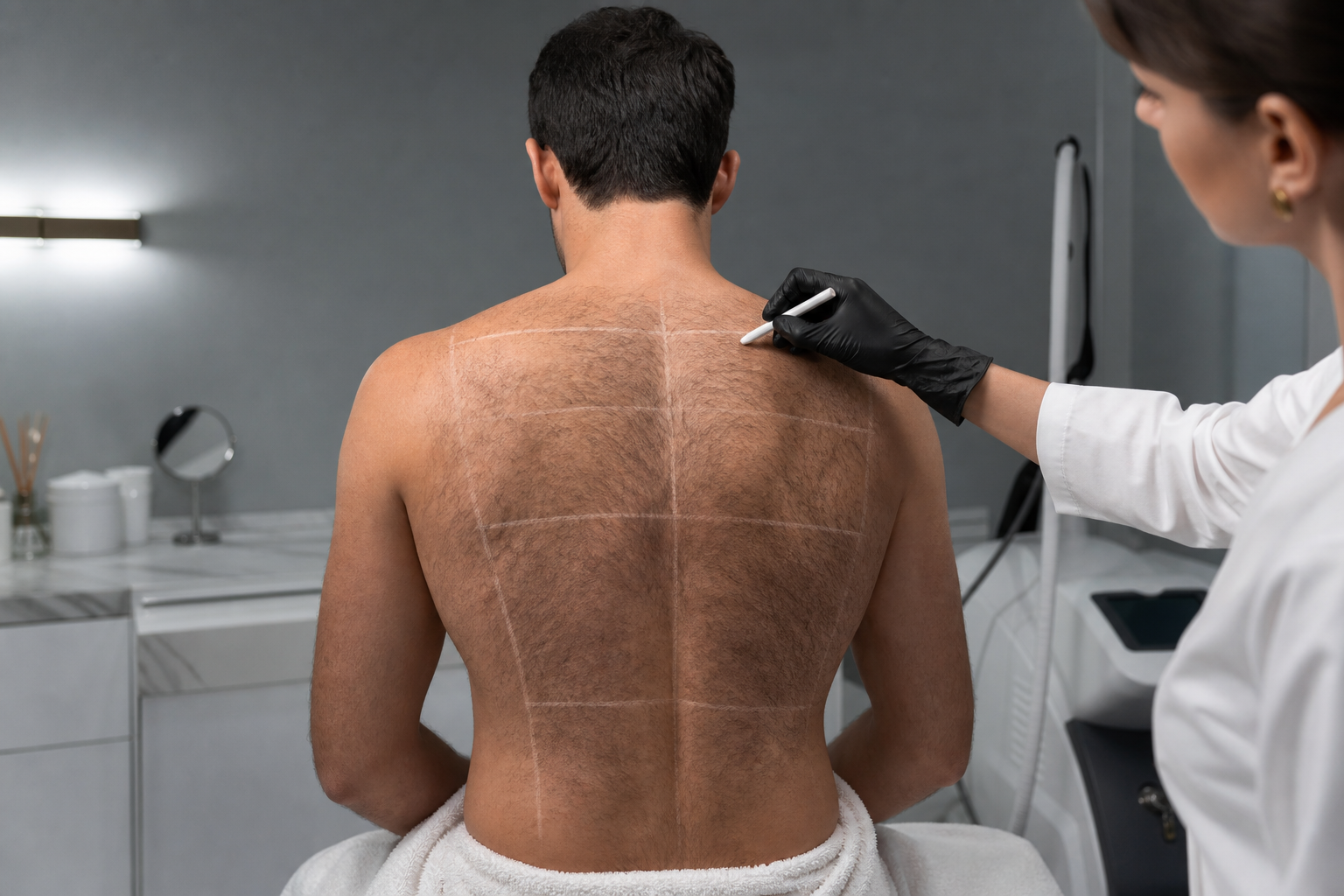
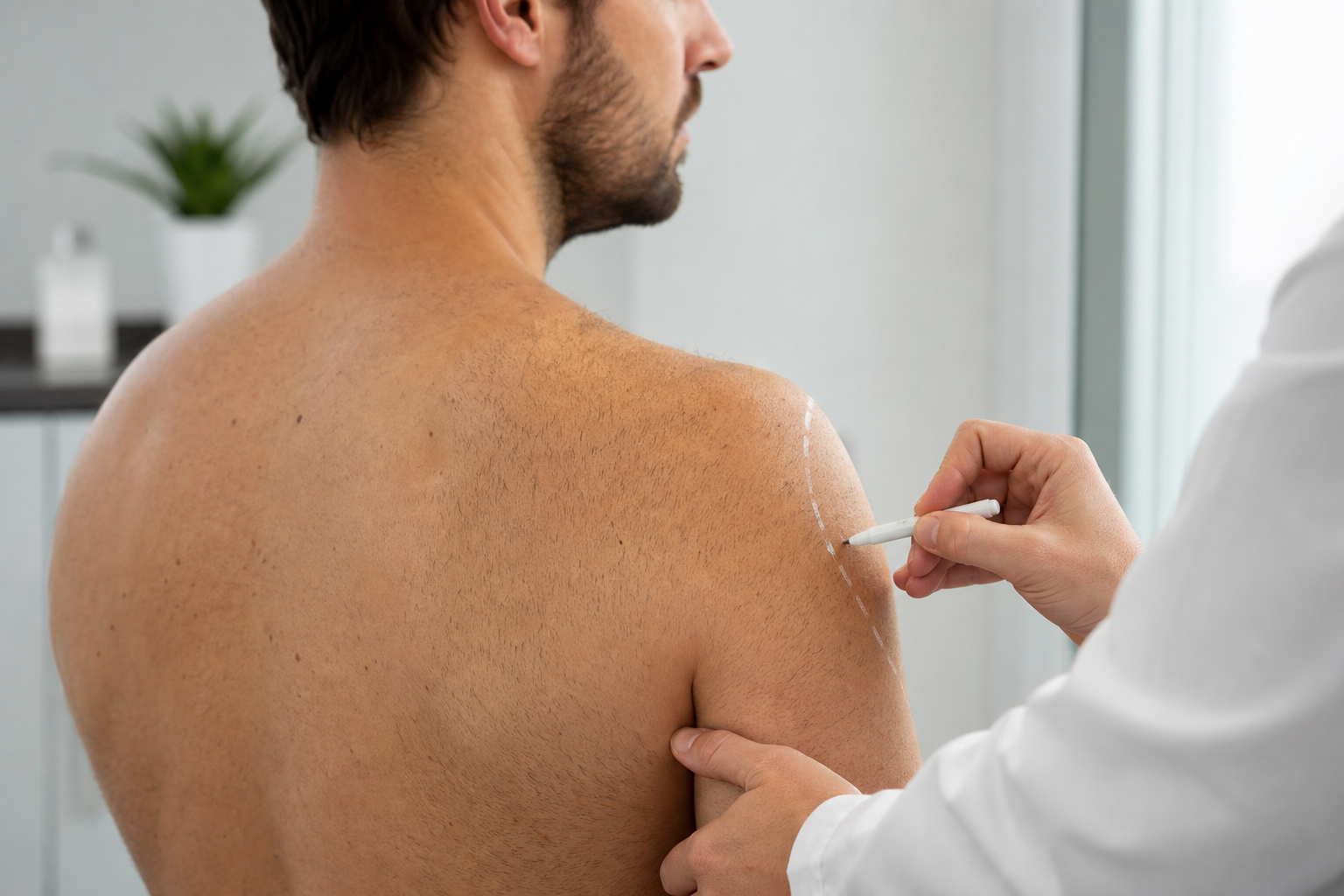
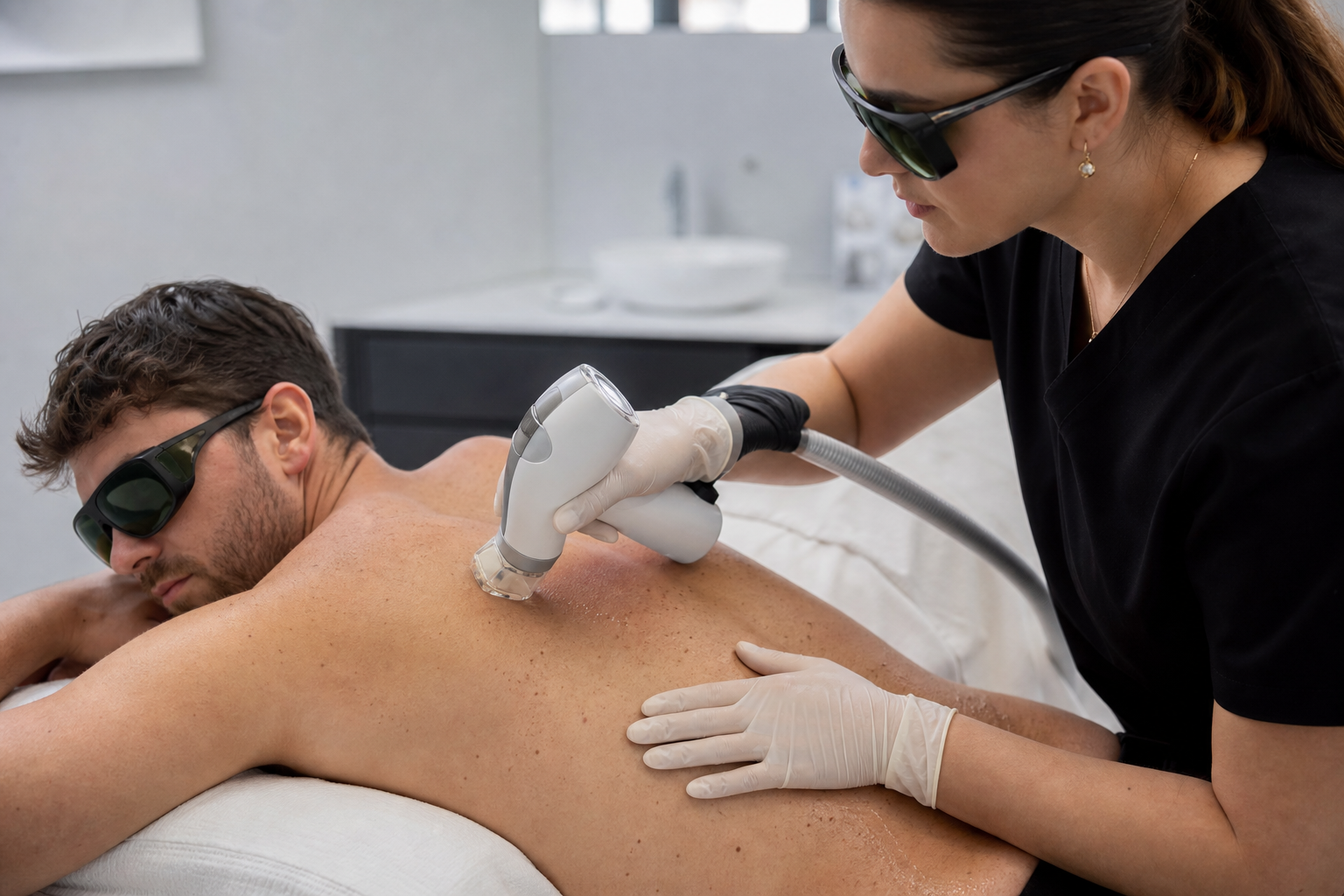
The back and shoulders are among the most commonly treated areas because they are difficult to shave or maintain without assistance. Laser treatment can significantly reduce both hair density and the time required for regular grooming.
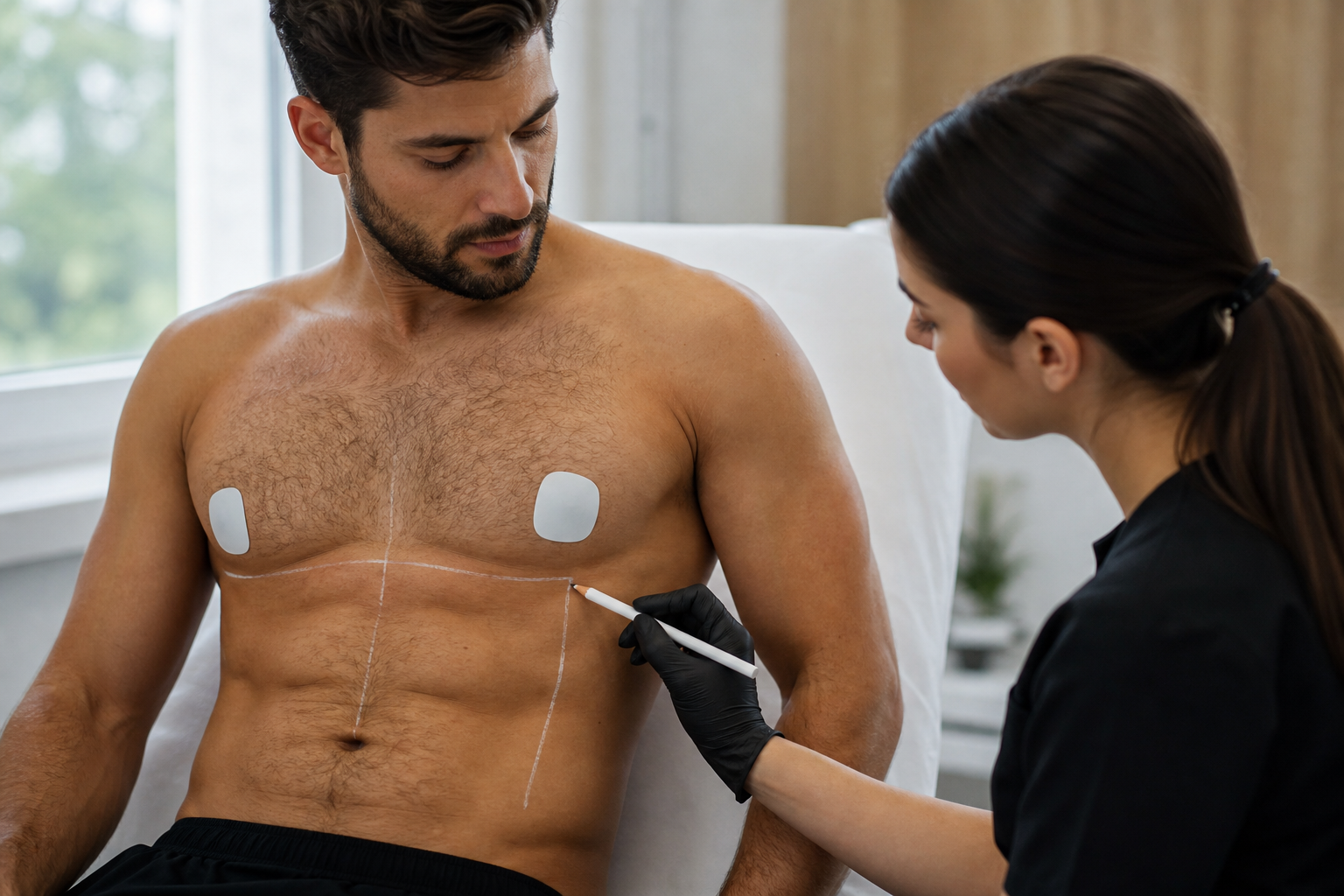
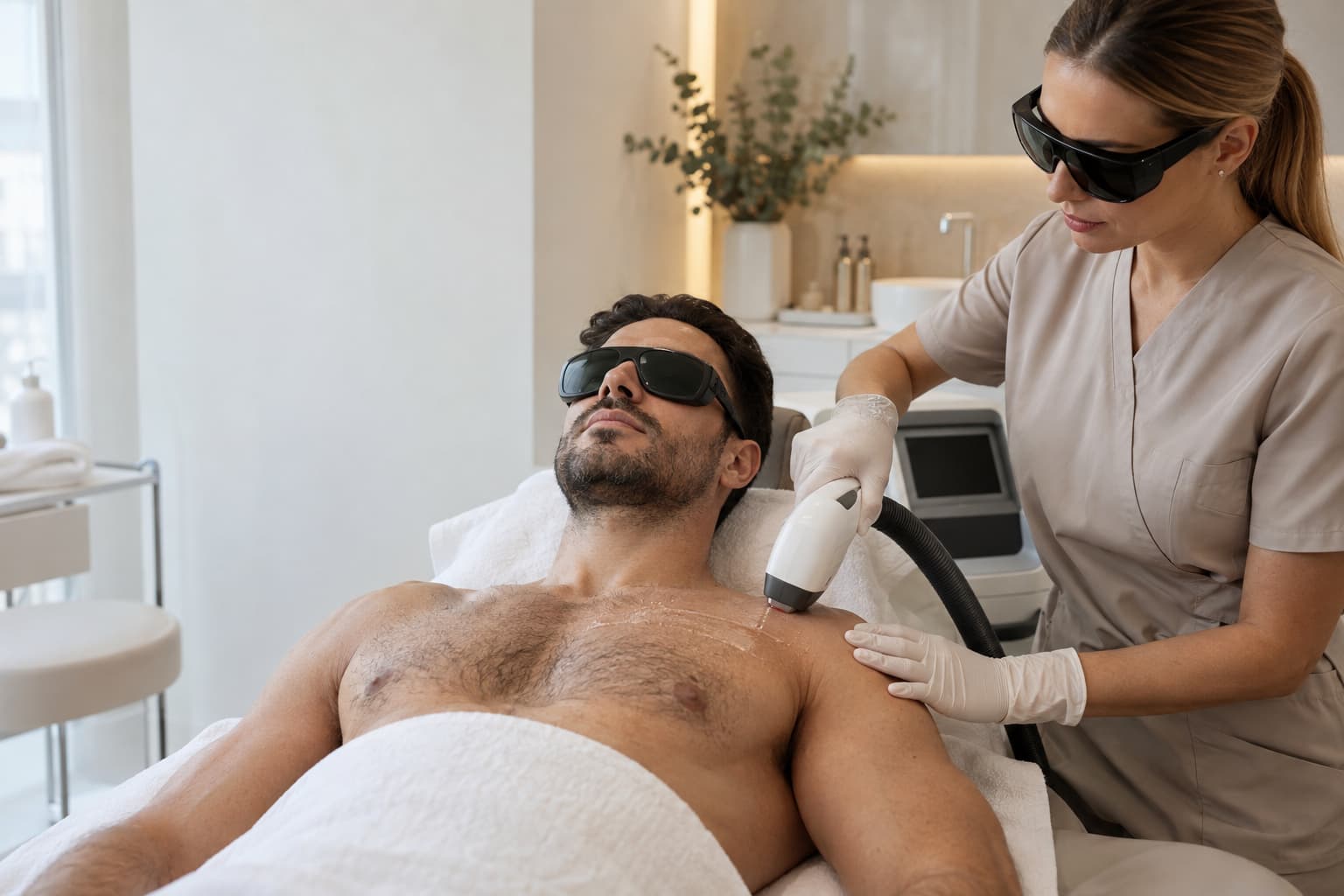
The chest and abdomen are also popular choices. Some clients want almost complete hair reduction, while others prefer to keep a natural appearance with less density. The treatment plan should therefore reflect the client’s personal preferences rather than follow a single standard for everyone.
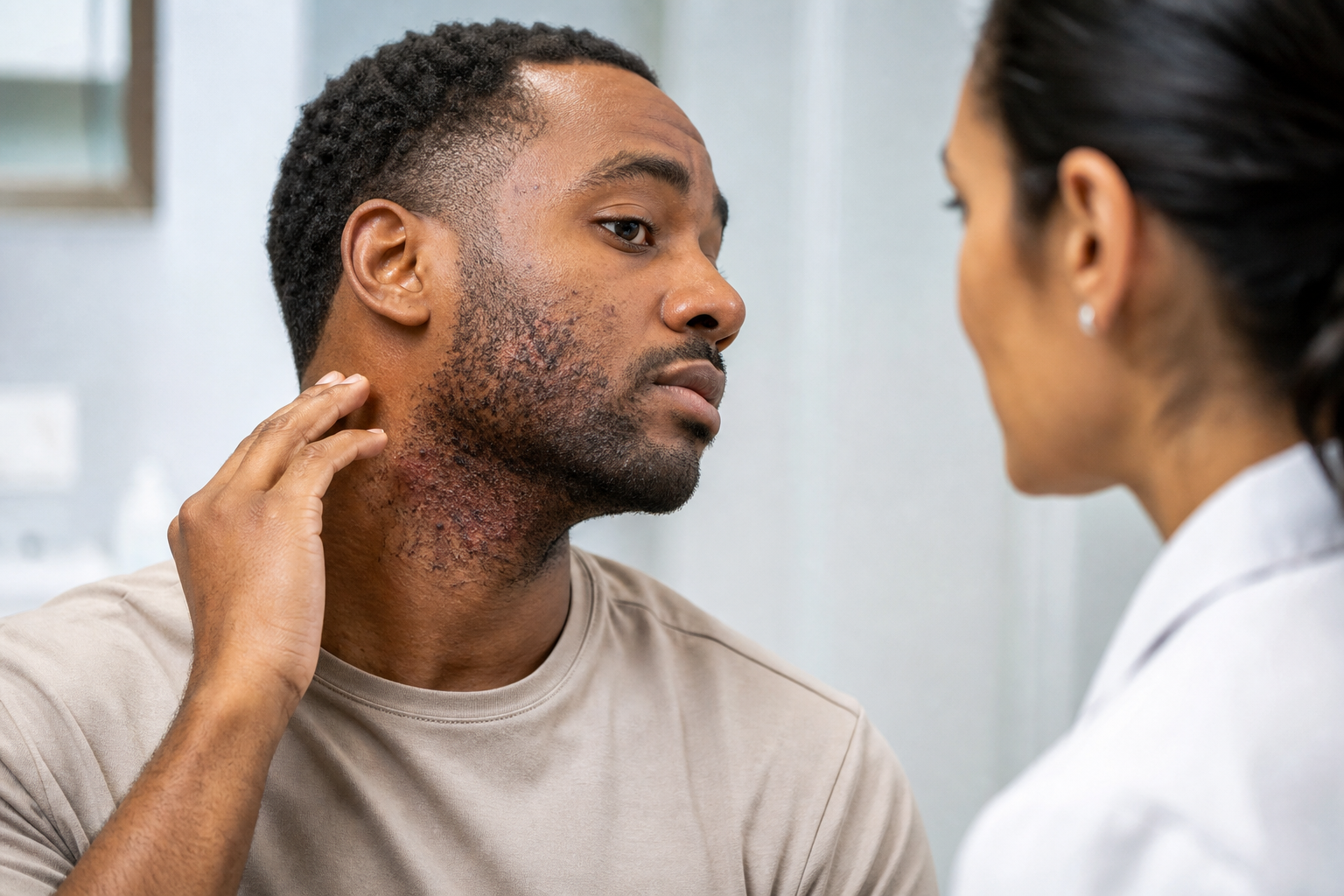
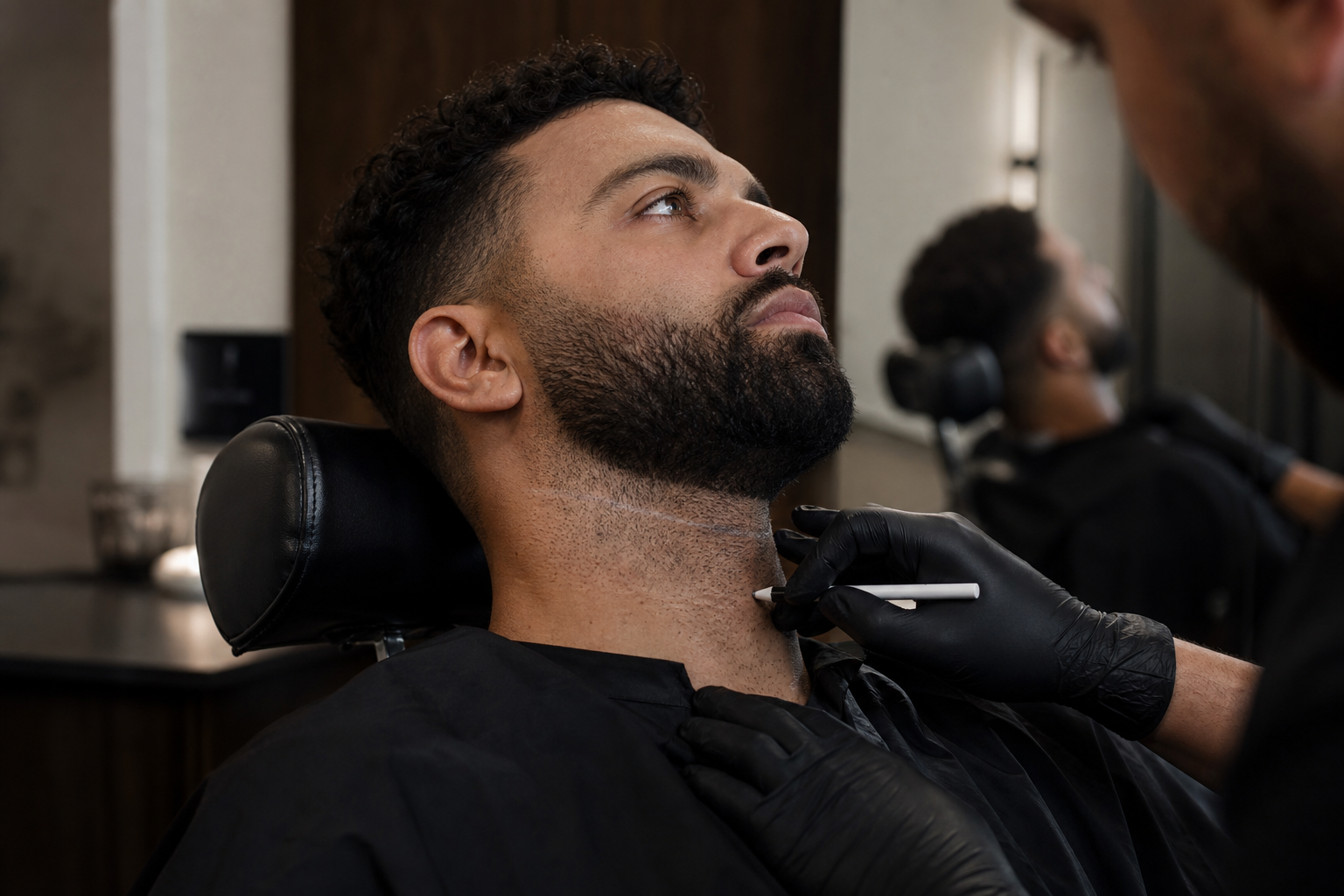
The neck is frequently treated by men who experience irritation, redness or ingrown hairs after shaving. Laser treatment can help create a cleaner beard line and reduce inflammation, but the desired beard shape should be agreed upon before beginning the treatment series.
Other commonly treated areas include:
upper arms and forearms
underarms
legs
ears and the area between the eyebrows
gluteal region
intimate areas
areas affected by recurring folliculitis
Special care is required when shaping the beard or treating visible areas of the face. Removing hair from the wrong area may create an unnatural line that is difficult to correct later.
How Many Treatments Are Needed and What Results Can Be Expected?
The number of sessions varies from person to person. Most men require a series of approximately six to ten treatments, although some areas may need additional sessions.
The exact number depends on:
the treatment area
hair density and thickness
hair colour
skin tone
hormonal activity
the type and quality of the laser
treatment parameters
consistency in following the recommended schedule
Areas such as the back, shoulders and chest can be strongly influenced by hormones, which means that maintenance treatments may occasionally be needed even after a successful initial series.
The first changes are usually noticed after the initial sessions. Treated hairs do not disappear immediately. Over the following days and weeks, they gradually shed from the follicles. As the treatment series progresses, hair tends to grow more slowly, unevenly and with reduced density.
Results should be evaluated over the entire treatment course rather than after a single appointment. One session may produce visible improvement, but it cannot permanently affect all hairs because follicles pass through different growth phases.
Hair that is very light, grey, white or red contains little or no melanin. Because the laser relies on pigment to recognise and heat the hair, these hair colours generally respond poorly to conventional laser hair removal.
What Does the Treatment Involve and How Should You Prepare?
Before the first treatment, a consultation should be performed to assess the client’s skin tone, hair characteristics, health history, medication use and previous reactions to cosmetic procedures.
The professional should also explain the expected results, treatment schedule and possible temporary skin reactions. When necessary, a patch test may be performed on a small area before treating a larger zone.
The area should normally be shaved before the appointment, according to the salon’s instructions. The hair should remain inside the follicle, but it should not be long above the skin because excess surface hair can absorb energy and make the treatment less comfortable.
Waxing, tweezing and epilation devices should be avoided before and during the treatment series. These methods remove the hair from the follicle, leaving the laser without a suitable target. Shaving is generally allowed because it shortens the hair without removing its root.
Clients should also avoid intensive sun exposure and artificial tanning before treatment. A recent tan increases the amount of pigment in the skin, which may increase the risk of burns, blisters or changes in pigmentation.
During the treatment, both the client and the professional must wear suitable protective eyewear. The laser handpiece is passed over the treatment area, delivering controlled pulses of energy. Most modern devices use contact cooling, cold air or another cooling system to protect the surface of the skin and improve comfort.
The sensation is often described as warmth, brief stinging or the snap of a small elastic band. Comfort levels vary depending on the area, hair density and individual sensitivity.
Which Lasers Are Used?
Different laser systems operate at different wavelengths, and each wavelength interacts with the skin and hair in a particular way. Commonly used technologies include alexandrite, diode and Nd:YAG lasers.
Alexandrite lasers are known for their strong absorption by melanin and can be highly effective on lighter skin with dark hair. Diode lasers are widely used for various skin and hair profiles, depending on the device and selected parameters. Nd:YAG lasers penetrate more deeply and are often considered for darker skin tones because their wavelength is less strongly absorbed by epidermal melanin.
The name of the technology alone does not guarantee a safe or successful treatment. Results also depend on:
the quality and maintenance of the device
accurate assessment of skin and hair
suitable energy levels
pulse duration and spot size
the cooling system
the operator’s training and experience
Parameters that are too low may provide limited or temporary improvement. Parameters that are too aggressive can increase the risk of burns and pigmentation changes. Effective treatment therefore requires an individual approach rather than the same settings for every client.
Safety, Possible Reactions and Aftercare
When performed correctly, laser hair removal is generally well tolerated. Temporary redness, warmth and slight swelling around the follicles are common immediately after treatment. These reactions usually settle within several hours, although they may last longer in sensitive skin.
The treated area should be handled gently. Depending on the skin reaction and the salon’s instructions, clients may be advised to avoid:
hot showers, saunas and steam rooms
intensive exercise immediately after treatment
tight clothing that creates friction
strongly perfumed or irritating products
exfoliating acids and harsh scrubs
direct sun exposure
scratching or picking the treated skin
Sun protection is especially important when exposed areas are treated. The skin should not be deliberately tanned between sessions, and a suitable broad-spectrum sunscreen should be applied regularly.
More serious complications are uncommon but may include burns, blisters, crusting, prolonged irritation and temporary or persistent pigmentation changes. The risk increases when inappropriate parameters are used, recently tanned skin is treated or the client fails to disclose relevant medication and health information.
Clients should inform the practitioner about medications, active skin conditions, photosensitivity, recurring infections, previous scarring problems and any other relevant medical factors before treatment.
Laser treatment should not be performed directly over active infections, open wounds or severely irritated skin. Tattoos must also be carefully avoided because tattoo pigment can absorb laser energy and cause burns or damage to the tattoo.
How to Recognise a Professional Laser Hair Removal Salon
A professional salon should begin with a proper consultation rather than promising guaranteed results before examining the client’s skin and hair.
The practitioner should explain:
which technology will be used
why it is suitable for the client
how many sessions may be required
what results are realistic
which reactions are normal
how to prepare for the appointment
how to care for the skin afterwards
The treatment area should be clean, protective eyewear must be provided and the device should be operated according to appropriate safety protocols. A reliable salon keeps treatment records and adjusts parameters according to previous results and skin reactions.
Be cautious of claims that all hair will disappear permanently after only one or two sessions. The biology of hair growth makes this unrealistic. Professional communication should clearly distinguish long-term hair reduction from the promise of complete and permanent removal.
Price is important, but it should not be the only criterion. The quality of the equipment, professional assessment, treatment safety and correct adjustment of settings directly influence both the results and the risk of complications.
Common Myths About Male Laser Hair Removal
One common misconception is that laser hair removal is intended only for women. In reality, an increasing number of men choose the treatment for aesthetic, practical and dermatological reasons.
Another myth is that laser treatment always creates a completely hairless appearance. The result can be adapted to the client’s goals. Some men want maximum reduction, while others simply want thinner, softer and less dense hair.
Laser hair removal also does not make hair grow back thicker. After successful treatment, the remaining hair is generally finer and grows more slowly. Uneven regrowth between sessions is normal because different follicles are active at different times.
The procedure is not necessarily painless, but modern cooling technologies can make it considerably more comfortable. Sensitivity depends on the treated area, hair density and individual pain threshold.
Finally, one session is not enough for lasting results. A treatment series is necessary because the laser is most effective only on hairs that are in the appropriate growth phase.
How Much Does Laser Hair Removal for Men Cost?
The price depends primarily on the size of the treatment area, the type of equipment, the location of the salon and the number of sessions required. Large areas such as the back, chest and legs are usually more expensive than smaller areas such as the neck, ears or the space between the eyebrows.
Male treatments may sometimes cost more because the hair is denser and the treatment area requires more time. Some salons offer packages that include several sessions or combinations of multiple body areas.
When comparing prices, it is important to check exactly what the service includes. A lower price does not necessarily represent better value if treatments are performed with unsuitable equipment, weak parameters or inadequate professional supervision.
The final cost should be considered in relation to the long-term reduction in shaving, waxing, skin irritation and the time spent on regular grooming.