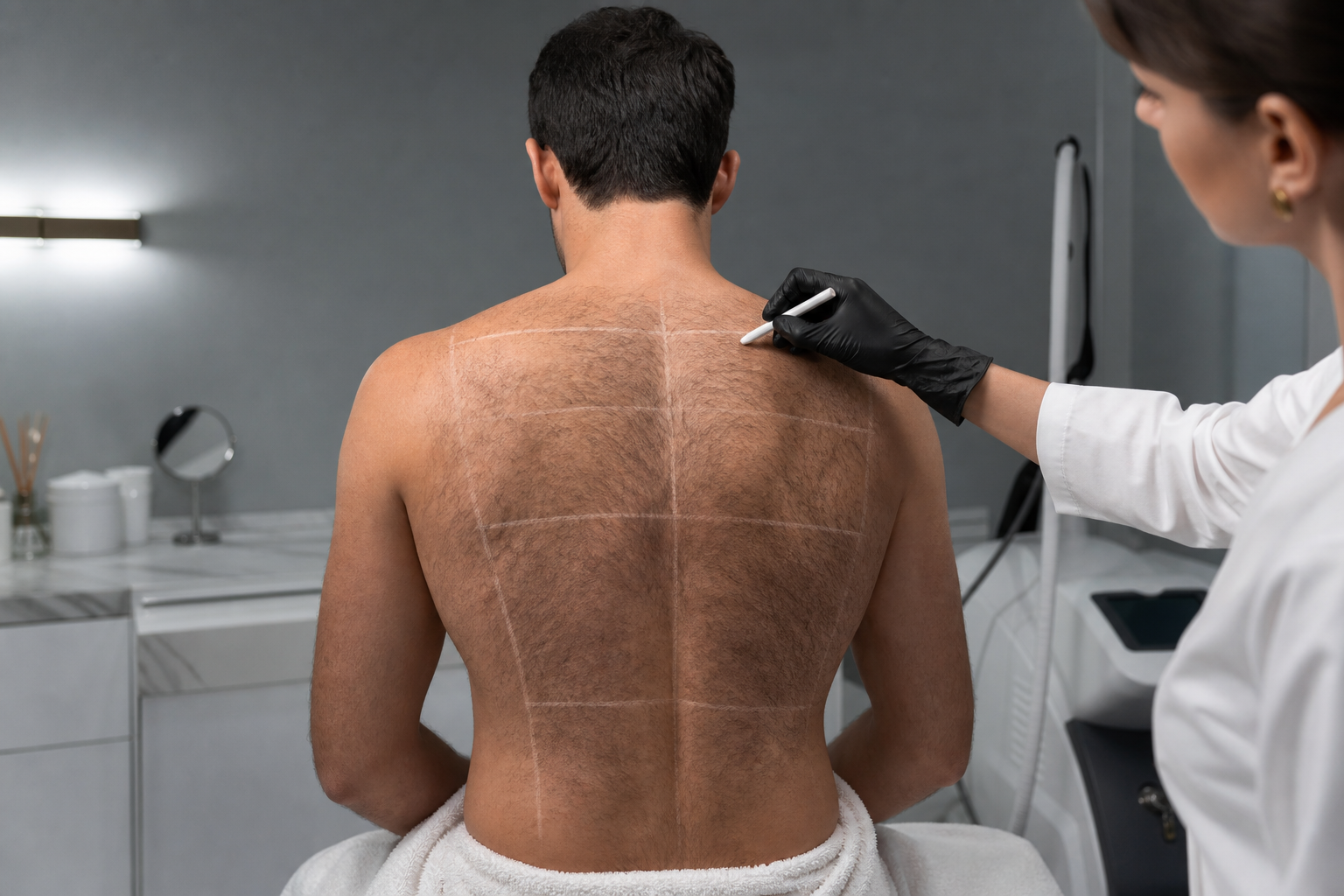
Back laser hair removal for men stands as a specialized and increasingly sought-after aesthetic treatment designed to address the unique challenges of managing hair growth on the male back. Characterized by a large surface area with varying hair density and growth patterns, the male back presents particular considerations that distinguish it from other body regions and from female laser hair removal. Men who struggle with dense, coarse hair on their upper and lower backs often face not only aesthetic concerns but also practical issues such as discomfort, hygiene difficulties, and the inconvenience of shaving a hard-to-reach area.
This comprehensive guide delves into the specifics of upper and lower back laser hair removal for men, highlighting the technical, biological, and procedural nuances essential for achieving effective and natural-looking results. By exploring who benefits most from this treatment, how phototype and sun exposure influence the process, and the realistic expectations regarding hair density reduction versus complete removal, the article aims to empower men considering this transformative option. Additionally, it outlines practical aspects such as positioning during treatment, session duration, and maintenance, while emphasizing the importance of achieving a seamless aesthetic transition toward shoulders and neck.
Ultimately, back laser hair removal is not merely an aesthetic intervention but a functional enhancement to men’s grooming routines and comfort. Whether to improve muscular definition for athletes, simplify personal care for daily life, or restore confidence affected by excessive back hair, understanding this treatment's tailored approach is pivotal. For those seeking broader context on back-related care, a more general resource is also available under the article ID 237, avoiding unnecessary repetition here but providing further insights.
What Makes Back Laser Hair Removal Unique for Men Compared to Other Areas?
Laser hair removal operates on the principle of using targeted light energy to destroy hair follicles, ideally leading to permanent reduction or elimination of hair growth. However, the male back differs considerably in anatomical and physiological aspects from other body zones like the chest, shoulders, or neck, each requiring adapted strategies.
First, the back covers a substantial surface area, posing logistical challenges in thoroughly and evenly applying laser treatment. This is compounded by hair characteristics: men often exhibit significantly denser, coarser, and darker hair on their backs compared to women, amplifying the complexity and duration of sessions. The thick hair shafts contain abundant melanin, which aids laser absorption but simultaneously demands precision to avoid skin damage, especially in individuals with darker skin phototypes.
Furthermore, hair growth zones on the back display variability. The upper back, from the lower neck to between the shoulder blades, typically exhibits the densest and most uniform hair distribution, whereas the lower lumbar region may have sparser or finer hair. This gradient necessitates careful mapping to deliver appropriate laser energy without abrupt visual contrasts post-treatment. Additionally, the male back’s limited visibility and challenging access for self-care mean that professional execution is crucial to ensure full coverage and safety.
Which Men Are the Ideal Candidates for Upper and Lower Back Laser Hair Removal?
Back laser hair removal suits a diverse group of men motivated by different personal or professional factors. Athletic men, particularly bodybuilders and swimmers, frequently seek this treatment to accentuate muscular definition by eliminating hair that can obscure muscle contours. For these individuals, a smooth back helps provide a clean, sculpted look essential for competition or personal satisfaction.
Beyond sports, men who experience discomfort due to heavy back hair—such as increased sweating, irritation, or difficulty maintaining hygiene—can benefit significantly. Removing hair or reducing its density can alleviate heat retention and reduce skin infections or folliculitis occurrences, enhancing overall comfort.
Moreover, men troubled by the cosmetic appearance of thick back hair or those who dislike the time and effort involved in regular shaving or waxing often consider laser hair removal a long-term solution. This treatment offers a less labor-intensive alternative, freeing them from frequent grooming chores.
It is essential to note that ideal candidates typically have a high contrast between hair and skin color to maximize laser effectiveness. Men with lighter skin and darker hair generally see faster and more pronounced results; however, advancements in laser technology have expanded treatment possibilities for a range of phototypes.
How Does Skin Phototype and Sun Exposure Affect Back Laser Hair Removal Outcomes?
Skin phototype—based on the Fitzpatrick scale describing skin’s reaction to sun exposure—is a primary determinant influencing laser hair removal safety and efficacy. Lighter skin tones (Phototypes I–III) absorb less laser energy, reducing the risk of epidermal damage, thus facilitating a more straightforward treatment course. Conversely, darker skin types (Phototypes IV–VI) possess more melanin, confounding laser selectivity, and posing a higher risk of hyperpigmentation or burns if unsuitable laser parameters are used.
Men considering back laser hair removal must disclose recent sun exposure since tanned skin modifies laser absorption dynamics. Typically, avoiding sun exposure, tanning beds, or self-tanners for 4 to 6 weeks before and after treatment is recommended to minimize complications and maximize effectiveness. The skin during this period is less likely to react adversely, and the contrast between hair pigment and unpigmented skin is optimized for laser targeting.
Clinicians often tailor settings or select specific laser types—such as Nd:YAG lasers—that penetrate deeper and permit safer treatment for darker phototypes. Adhering to pre- and post-treatment sun safety protocols is critical to prevent adverse events and ensure consistent results.
What Are the Distinctions Between Hair Density Reduction and Complete Removal on the Male Back?
Back laser hair removal results can be customized broadly across a spectrum, ranging from moderate reduction in hair density to near-total elimination of hair follicles. Understanding these goals is instrumental for managing patient expectations and programming treatment protocols.
Density reduction aims to thin out and lessen the volume of hair without eradicating it entirely, appealing to men who prefer maintaining a natural, subtle coverage rather than bare skin. This approach involves applying laser energy sufficient to impair many follicles but not enough to fully destroy all, resulting in finer, sparser hair. Because fewer treatments and lower energy levels suffice, maintenance procedures are often less frequent.
Complete removal, while technically more challenging on the back due to follicular depth and regrowth potential, targets maximum follicle destruction to achieve smooth, hairless skin. This course usually necessitates more sessions with higher cumulative laser doses and meticulous follow-ups. It suits men focused on aesthetics demanding hairless back skin or those seeking maximal functional benefits in sports or daily comfort.
Clinicians guide the decision based on patient preference, hair and skin characteristics, and lifestyle considerations, ensuring realistic expectations regarding the extent and permanence of results.
How Is the Back Positioned and Prepared for Effective Laser Hair Removal Sessions?
Given that the back is physically unreachable by oneself for shaving or grooming, preparation and positioning are critical for successful laser hair removal. The process begins with trimming or shaving hair on the day prior to treatment while avoiding waxing or plucking, which remove hair follicles and impede the laser’s ability to target roots.
During the procedure, men typically lie prone on treatment beds with strategic arm placement (e.g., extended overhead or relaxed along the sides) to maximize access to the entire back. Practitioners may request repositioning or use specialized equipment to raise the torso or shoulders when necessary, allowing optimal laser exposure across upper and lower zones.
Protective eyewear specific to the laser type is mandatory to shield both patient and operator. Cooling devices or gels are often employed to mitigate discomfort and prevent epidermal injury, particularly important when treating large surfaces like the back. These measures collectively enhance treatment precision, safety, and patient comfort over longer sessions.
What Realistic Progress and Maintenance Should Patients Expect Over the Treatment Course?
Back laser hair removal is not instantaneous; it unfolds as a gradual process over multiple sessions spaced approximately 4 to 6 weeks apart. A full course can range from 6 to 10 sessions, influenced by the thickness and growth rate of back hair, skin type, and individual responsiveness.
Patients generally observe the first discernible reduction in hair density and slowed regrowth after the second or third treatment. Initially, shedding and patchiness are common, indicating follicular damage. Over successive sessions, more follicles become dormant or entirely inactive, translating into smoother skin.
While some men experience near-complete hair elimination, others notice residual thin hairs or very sparse patches requiring periodic maintenance. Maintenance treatments, typically once a year or biannually, help sustain results and address any new growth stimulated by hormonal changes or follicle reactivation.
Patience and adherence to recommended session frequency are paramount; skipping sessions or improper pre/post care can compromise outcomes. Setting reasonable goals—whether density thinning or total removal—ensures satisfaction and realistic expectations.
How to Achieve a Natural Aesthetic Transition Between the Back, Shoulders, and Neck?
A significant aesthetic consideration lies in preventing abrupt lines or visible demarcations between laser-treated areas and untreated zones such as the shoulders and neck. Since hair distribution and density differ anatomically, a sudden change in coverage can appear artificial or patchy.
To circumvent this, practitioners intentionally create graduated treatment zones, reducing laser intensity and pass frequency gradually as they approach the borders. This fading technique produces a seamless visual blend where hair appears naturally lighter and thinner rather than abruptly absent. It requires expert planning and executed finesse.
Moreover, synchronized treatments across interconnected areas—linking back laser hair removal with shoulder and neck procedures—can ensure uniformity. Patients benefit from a holistic approach, avoiding incongruent hair patterns that undermine the smooth aesthetic effect intended.
What Practical Benefits Beyond Appearance Does Back Laser Hair Removal Offer Men?
While cosmetic improvement often initiates interest in back laser hair removal, multiple practical advantages encourage men to pursue this option.
Foremost among these is improved hygiene. Dense back hair can trap sweat and bacteria, potentially fostering odors or follicular infections. Laser hair removal decreases hair density, reducing moisture retention and facilitating skin health.
The treatment also alleviates discomfort caused by persistent itching, folliculitis, or razor burn from frequent shaving. Men engaged in vigorous physical activities may notice boosted performance and comfort as skin breathes easier and remains dry.
Simplifying grooming routines leads to time and cost savings as dependence on waxes, creams, or razors diminishes. This convenience enhances overall lifestyle quality, making grooming less cumbersome.
Subtle psychological impacts are also notable—reduced self-consciousness, elevated confidence, and a positive body image encourage wellbeing.
How Does Back Laser Hair Removal Fit within a Comprehensive Male Laser Hair Removal Strategy?
Many men opt for comprehensive laser hair removal regimens addressing multiple zones. Back hair removal harmonizes naturally with treatments on the chest, shoulders, neck, and beard areas. A coordinated plan considers hair characteristics and treatment complexities in each region, ensuring consistency and avoiding contrasting textural differences.
For example, men interested in muscle definition often combine Back Laser Hair Removal for Men with Chest Laser Hair Removal for Men or Shoulder Laser Hair Removal for Men to showcase an uninterrupted clean physique. Similarly, addressing facial hair concerns by including Male Beard Laser Hair Removal and Ingrown Hairs treatments complements the overall grooming overhaul.
Understanding whether men require more laser sessions than women, as explored in Do Men Need More Laser Hair Removal Sessions?, is crucial for realistic planning and budget setting.


