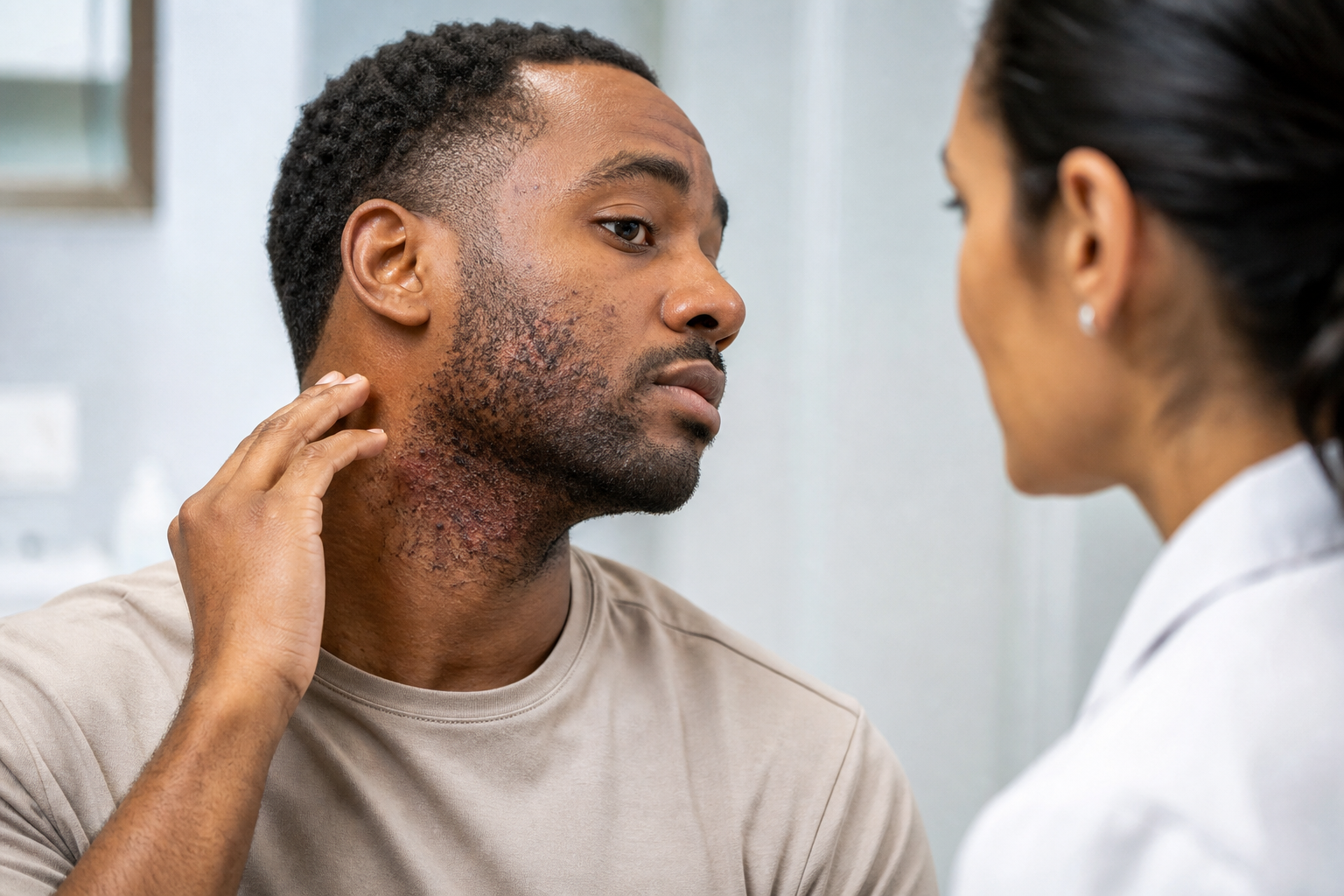
The male beard has long served as a potent symbol of masculinity, personal style, and identity, yet its maintenance is often accompanied by challenges that can impact both appearance and skin health. One of the most prevalent and vexing conditions affecting men with beards is ingrown hairs, medically recognized as pseudofolliculitis barbae. This condition manifests as irritating bumps, redness, and inflammation that not only cause discomfort but may also lead to scarring if not properly addressed. Understanding the intricacies of pseudofolliculitis barbae, its distinction from infectious folliculitis, and the role of beard hair characteristics and grooming habits is essential for men who strive to maintain a healthy, aesthetically pleasing beard.
This comprehensive article is crafted for men grappling with ingrown hairs in their beard region, as well as those seeking to deepen their understanding of beard-related skin conditions and modern therapeutic approaches. Particularly, the discussion will highlight how laser hair removal emerges as an effective strategy for managing troublesome ingrown hairs by selectively targeting thick, pigmented terminal hairs prone to curling and embedding beneath the skin surface.
The conversation further touches upon important considerations unique to men with darker skin tones, who experience different risks and benefits related to laser treatments due to variations in skin pigmentation. We will also explore the careful balance between thinning and complete removal of beard hairs, the potential hazard of permanently patchy beard patterns, and the prerequisites for safe treatment including skin preparation and identification of when professional dermatological assessment is necessary. By elucidating these aspects, readers will be equipped with grounded knowledge that informs smart decisions about their skin and beard care routines.
What Is Pseudofolliculitis Barbae and How Does It Differ from Infectious Folliculitis?
Pseudofolliculitis barbae (PFB) refers to an inflammatory skin condition characterized by the presence of ingrown hairs that re-enter or fail to exit the skin after shaving or trimming. This condition primarily affects men with coarse, densely pigmented, and notably curved beard hair. The hairs, instead of growing outward in a straight line, curl back and penetrate the epidermis causing localized irritation, erythema, and the formation of papules or pustules.
In contrast, infectious folliculitis is an infection of the hair follicles themselves caused by bacterial agents such as Staphylococcus aureus or, less commonly, fungal organisms. This infection leads to tender, red pustules often with purulent exudate. Although the symptoms of PFB and infectious folliculitis sometimes overlap, the underlying pathologies differ markedly. PFB is fundamentally a mechanical and inflammatory issue bearable to trauma from ingrown hairs, whereas folliculitis is a bona fide infection necessitating appropriate antimicrobial treatment.
Because visual manifestations might be similar, misdiagnosis can occur if one attempts self-assessment. The ambiguity accentuates the importance of consulting with a dermatologist or a qualified healthcare professional who can distinguish between these conditions through clinical evaluation and potentially laboratory tests. Identifying the correct diagnosis is crucial for avoiding ineffective treatments and exacerbation of the skin condition.
How Do Curved, Coarse Hair and Shaving Techniques Contribute to Ingrown Hairs?
The structural characteristics of beard hair play a pivotal role in the development of ingrown hairs. Beard hairs that grow thick, coarse, and notably curved tend to embed themselves back into the skin following shaving or trimming. When the tip of the hair is cut very close to the follicle — especially when shaved against the grain — the sharp, stubby end can easily pierce the epidermis as the hair grows, triggering a localized inflammatory response.
Shaving methods that exacerbate this problem include multiple passes with a razor, shaving too frequently, and applying excessive pressure while shaving. Additionally, the use of dull blades or improper hygiene during shaving sessions may inflame the skin and increase susceptibility to ingrown hairs and secondary infections.
On the other hand, gentler shaving with proper direction — typically along the grain of hair growth — tends to reduce the risk of hairs curling back beneath the skin. Incorporation of mild exfoliation routines can also help shed dead skin cells, preventing blockage of hair follicles that might trap emerging hairs. Collectively, these interventions can mitigate the incidence of pseudofolliculitis barbae when combined with other treatment strategies.
Where Can Reduction of Pigmented Terminal Hair Provide the Most Benefit?
Terminal hairs — the thick, coarse, pigmented hairs primarily responsible for the beard's visual density — are often the main culprits behind ingrown hairs, particularly in predisposed individuals. By reducing the density and number of these pigmented hairs, the incidence of pseudofolliculitis barbae can be substantially decreased.
Areas commonly affected include the cheeks, jawline, chin, and neck. Especially on the neck, where hair growth patterns tend to be irregular and skin is more sensitive, managing the concentration of terminal hairs can alleviate persistent irritation and break cycles of inflammation. Here, methods such as laser hair removal have demonstrated significant efficacy in selectively targeting melanin-rich hair follicles, facilitating a long-term reduction in troublesome hair growth without damaging the surrounding skin.
It is crucial to recognize that such reduction goals are generally aimed at thinning the beard rather than complete elimination, preserving the individual's style and masculinity while optimizing skin health. The precise treatment plan depends on personal preference, skin type, and the severity of pseudofolliculitis barbae.
How Does Skin Phototype Influence Laser Hair Removal for Beards?
The safety and efficacy of laser hair removal are closely tied to an individual’s skin phototype, a classification system based on the skin’s reaction to ultraviolet light and melanin content. Men with darker phototypes (Fitzpatrick skin types IV to VI) have a higher concentration of melanin in their skin, presenting unique challenges during laser treatments.
The laser targets melanin within the hair follicle; however, the surrounding skin’s melanin can inadvertently absorb the laser energy as well, increasing the risk of adverse effects such as hyperpigmentation, hypopigmentation, or even thermal injury. Consequently, treatment protocols for darker skin tones require specialized lasers such as Nd:YAG with longer wavelengths and tailored settings that optimize follicular targeting while minimizing collateral damage.
In these cases, treatment focus frequently favors hair thinning instead of full removal, balancing effectiveness with safety. Awareness of these nuances ensures patients receive customized care that mitigates the development of uneven pigmentary changes, a particularly important consideration for maintaining facial aesthetics.
What Are the Risks of Permanently Patchy Beard Growth After Laser Hair Removal?
While laser hair removal offers a promising avenue for reducing beard density and managing ingrown hairs, it carries potential risks, including the emergence of patchy beard growth if improperly performed. Incomplete or uneven treatment may leave some hair follicles untreated while others are permanently disabled, resulting in irregular beard appearance.
Moreover, overtreatment or aggressive laser parameters can cause follicular damage beyond the intended hair reduction, leading to permanent hair loss in areas where hair thinning is not desirable. This outcome can be particularly distressing for men who value a uniform and full beard.
Minimizing these risks depends heavily on provider expertise, appropriate laser selection, and adhering to conservative treatment settings especially during initial sessions. Clear communication between patient and practitioner about desired outcomes, tolerance for hair thinning, and potential cosmetic consequences is essential to align expectations and safeguard aesthetics.
What Skin Preparation Steps Are Necessary Before Beard Laser Hair Removal?
Successful and safe laser hair removal hinges on meticulous skin preparation prior to treatment. Patients should avoid exposure to direct sunlight and refrain from tanning for several weeks before the procedure to reduce photosensitivity and the risk of pigmentary alterations.
The treatment area should be clean, free from lotions, creams, or makeup. It is customary to shave the beard area 24 to 48 hours before treatment to allow the laser beam to effectively target the hair follicle beneath the skin surface without interference from the hair shaft. Avoid waxing or plucking hairs beforehand as these remove the follicles targeted by laser.
Additionally, patients are advised to avoid the use of harsh chemical exfoliants or creams that could sensitize the skin immediately before the session. Any active skin infections, irritations, or open wounds in the treatment zone should be addressed and treated prior to laser intervention.
When Should Active Inflammation Prompt Dermatological Assessment?
Before considering laser hair removal, it is paramount that any active inflammation in the beard or neck region be evaluated by a dermatologist. Signs that warrant professional assessment include persistent redness, soreness, swelling, pustules, cysts, or areas of broken skin suggestive of infection or severe irritation.
Attempting laser treatment over inflamed skin may exacerbate symptoms, delay healing, and increase the chance of complications such as scarring or pigment changes. A dermatologist can diagnose the underlying disorder, distinguish between pseudofolliculitis barbae and infectious folliculitis, and initiate appropriate management, which may include topical or systemic therapies.
Only once the inflammation has resolved or is controlled should laser hair removal be contemplated as a viable long-term strategy. Coordination with skin care specialists ensures the patient receives holistic care optimizing both immediate relief and longer-term skin health.


