Laser Hair Removal: A Complete Guide to Treatment, Results, and Realistic Expectations
Laser hair removal is one of the most effective methods for achieving a long-term reduction in unwanted hair. Unlike shaving, waxing, or using an epilator, laser technology targets the structures involved in hair growth. Following an appropriately planned course of treatments, hair usually becomes finer, lighter, less dense, and considerably slower to return.
However, laser hair removal does not permanently eliminate every hair after a single appointment. Results depend on hair color and thickness, skin tone, the treatment area, hormonal factors, the technology being used, and the timing of each session. Understanding how the procedure works is therefore essential for setting realistic expectations and choosing a suitable provider.
How Does Laser Hair Removal Work?
A laser device emits light energy at a specific wavelength. The pigment known as melanin, which gives hair its color, absorbs this energy and converts it into heat. That heat travels down the hair shaft toward the follicle, where it damages the structures responsible for producing new hair while minimizing the effect on the surrounding skin.
For the treatment to work effectively, the hair must contain enough pigment to absorb the laser energy. Dark, coarse hair generally responds best. Very light blond, gray, white, and some red hair contains too little melanin to be treated reliably with conventional laser systems.
Laser energy does not affect every hair equally during a single appointment. It is most effective when a hair is in the active, or anagen, stage of its growth cycle. Only a proportion of the hairs in a particular area are in this stage at any given time, which is why multiple sessions are necessary.
Treated hairs do not always disappear immediately. They normally begin to shed gradually over the following days and weeks. This can occasionally look like continued growth, even though the damaged hairs are being pushed out of their follicles.
Laser or IPL: What Is the Difference?
Although the terms are sometimes used interchangeably, laser hair removal and IPL are not the same treatment.
A laser produces concentrated light at a precisely controlled wavelength. Depending on the device, the treatment may use alexandrite, diode, or Nd:YAG technology. Each system has different characteristics and may be better suited to particular skin tones and hair types.
IPL, or intense pulsed light, uses a broader spectrum of light rather than a single laser wavelength. A high-quality IPL system may produce good results in appropriately selected candidates, but its action is not identical to that of a medical laser. Its effectiveness depends on the quality and power of the device, the filters being used, the operator’s experience, and the selected settings.
It is not enough for a clinic to advertise “permanent hair removal.” Clients should know which device is being used, whether it is a true laser or an IPL system, who will perform the procedure, and how the treatment settings will be selected.
Modern systems may use contact cooling, cold air, or cryogenic spray to improve comfort and protect the surface of the skin. Effective cooling is valuable, but it does not by itself prove that a device is powerful, safe, or clinically effective.
Who Is a Suitable Candidate?
The most noticeable results are generally achieved by people with lighter skin and dark, coarse hair. The contrast between skin and hair helps the device direct energy toward the pigment inside the hair while limiting the amount absorbed by the surrounding skin.
People with darker skin tones may also undergo laser hair removal, but the device, wavelength, and treatment settings must be appropriate for their skin type. Incorrect settings may increase the risk of burns and pigmentation changes. Settings that are too low, on the other hand, may make the procedure ineffective.
The outcome may be affected by:
hair color, density, and thickness;
natural skin tone and current skin condition;
the area being treated;
the hair growth cycle;
hormonal influences;
consistency between appointments;
the type and quality of the device;
the operator’s experience;
preparation and aftercare.
Very fine hair, particularly on the face, requires careful assessment. If the hair is light, barely visible, or downy, laser treatment may not be suitable. Inappropriate treatment of fine facial hair may produce limited results and, in uncommon cases, stimulate increased growth in or around the treated area.
People with polycystic ovary syndrome, thyroid conditions, elevated androgen levels, or other hormonal imbalances may still achieve a substantial reduction in hair growth. However, an ongoing hormonal stimulus may mean that more sessions and more frequent maintenance treatments are required.
What Happens During Treatment?
Before the first session, the provider should assess the skin and hair. The consultation should include questions about medical conditions, medications, previous skin reactions, scarring, sun exposure, and earlier experiences with laser or light-based procedures.
A patch test may be recommended on a small area of skin. This can help evaluate the initial response, although it cannot guarantee that no reaction will occur during a full treatment.
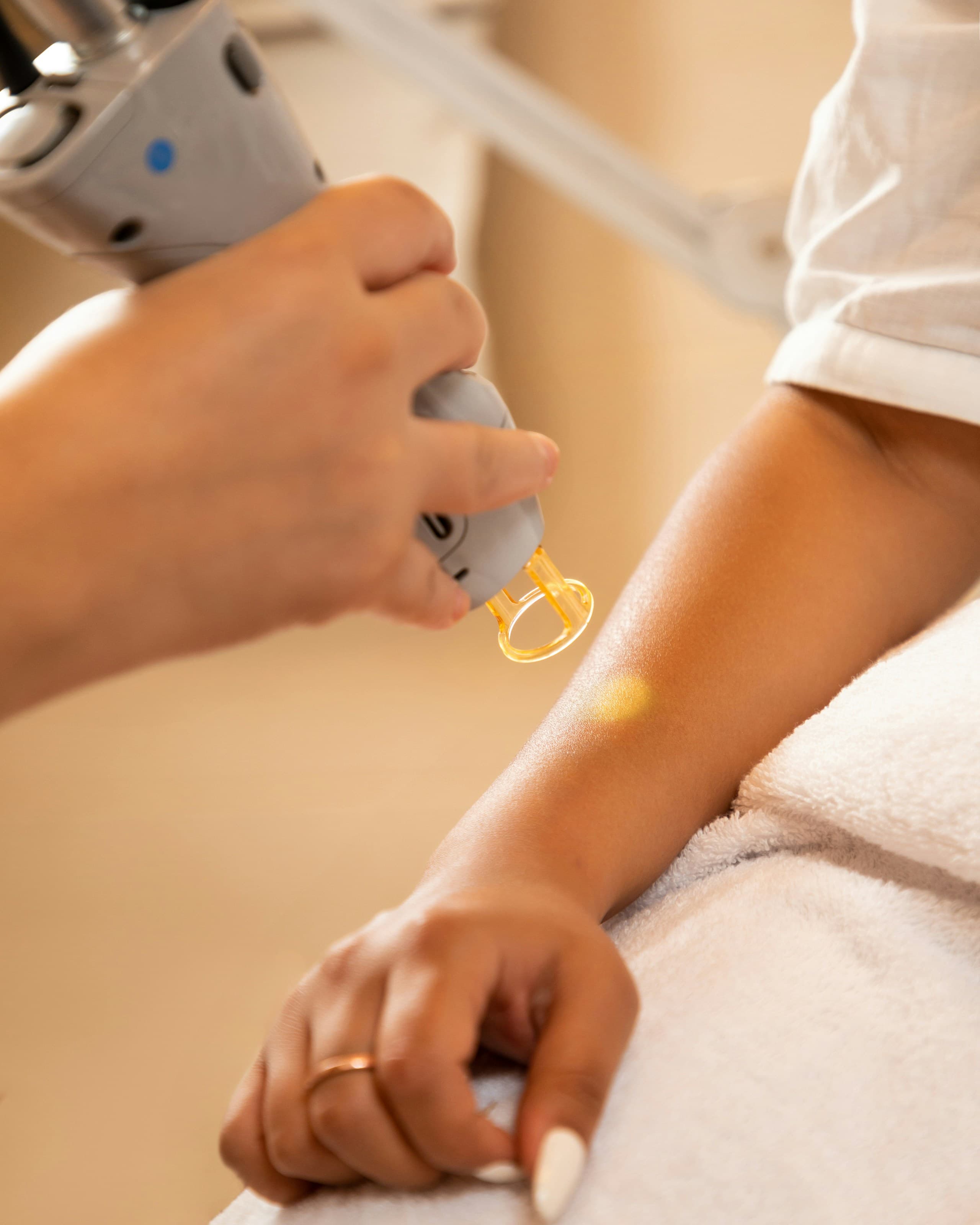
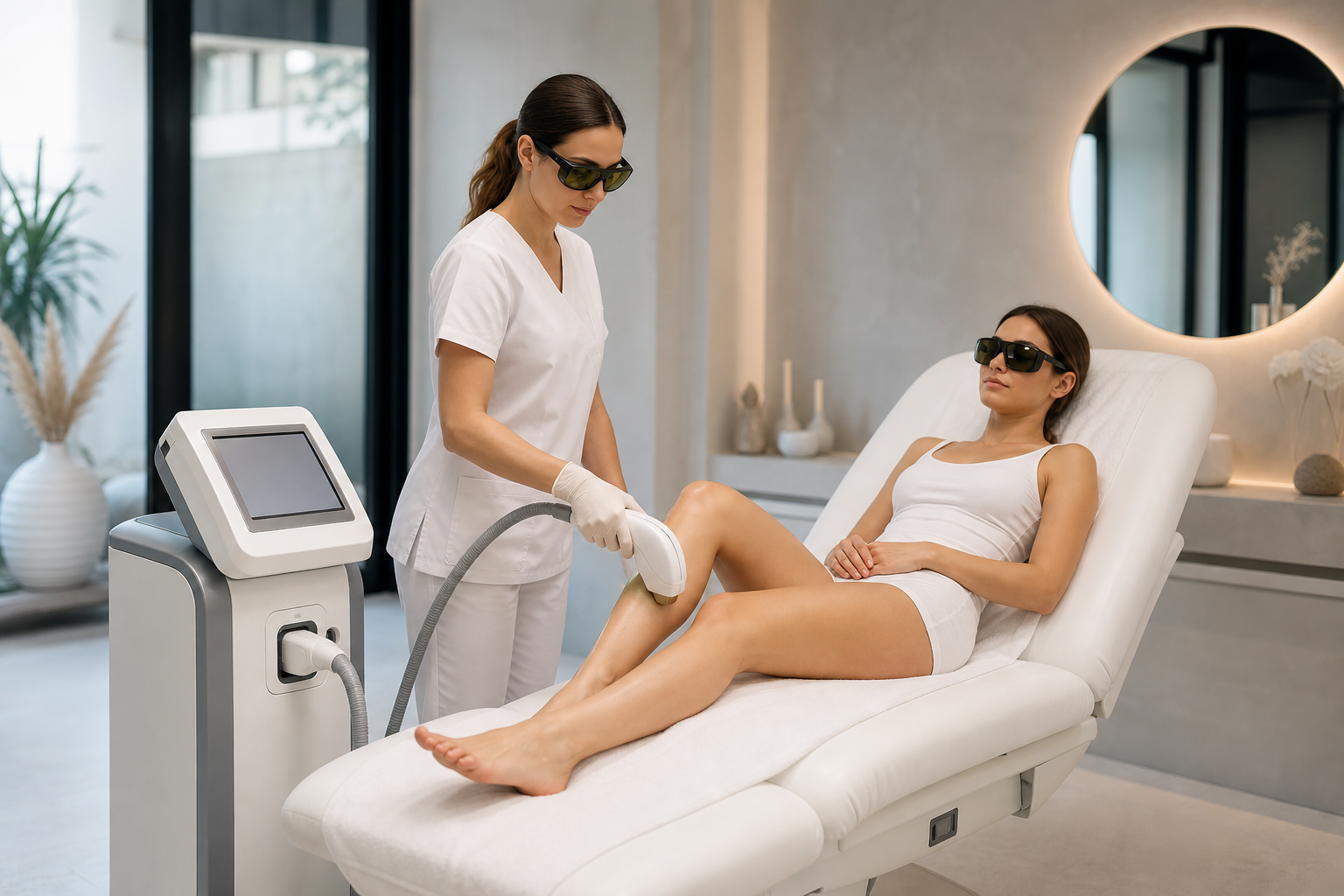
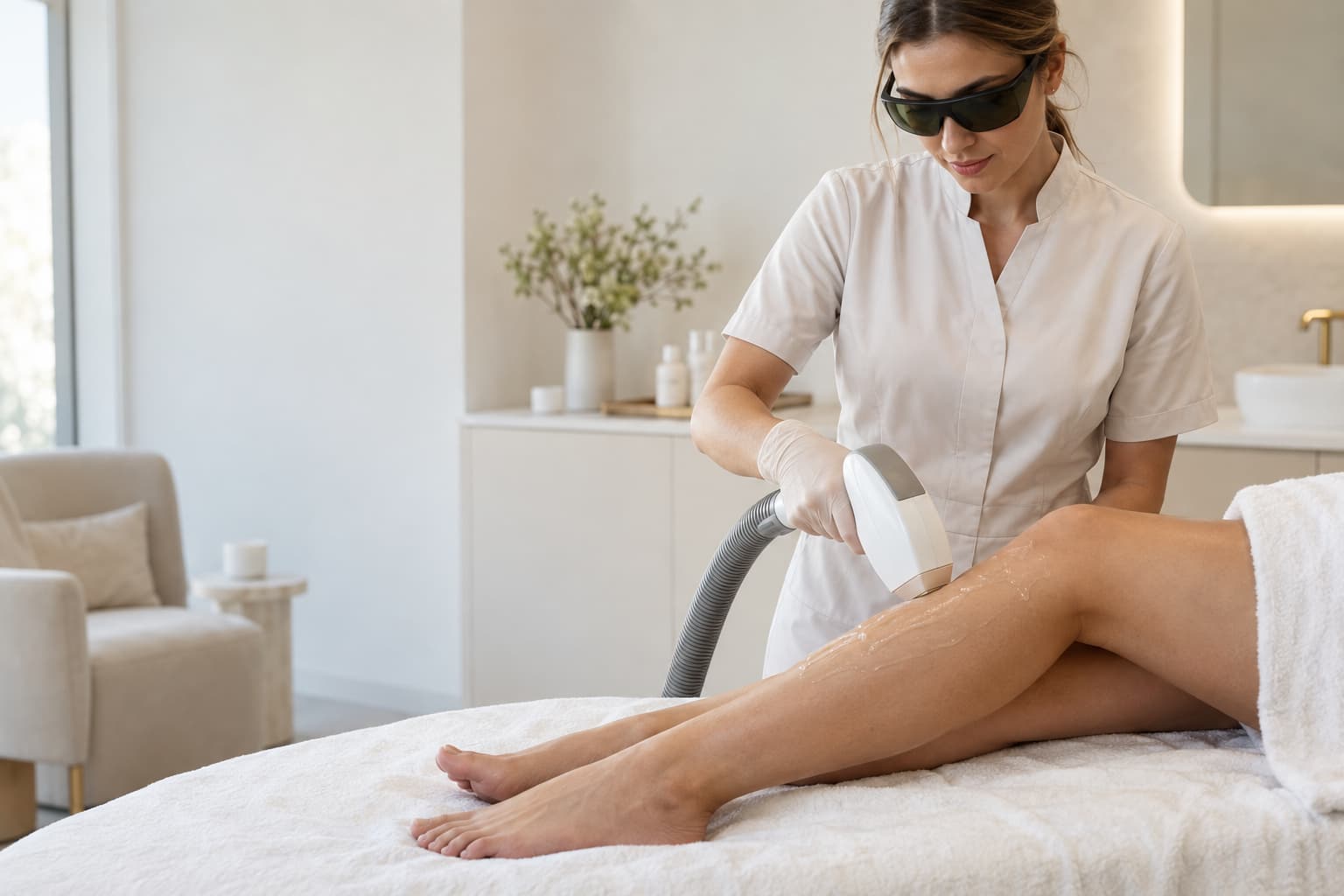
At the beginning of the appointment, the area is cleaned and the hair may be trimmed if necessary. Both the client and practitioner must wear appropriate eye protection. The handpiece is then moved across the skin while individual or repeated pulses of energy are delivered.
The sensation is often described as brief heat, a snapping feeling, or a series of small stings. Comfort levels vary according to the treatment area, hair density, laser settings, stage of the menstrual cycle, and personal sensitivity. Areas with dense, coarse hair, including the bikini line and underarms, are often more sensitive.
Treatment time depends on the size of the area. The upper lip may require only a few minutes, while full legs or several combined body areas take considerably longer.
How Many Sessions Are Needed?
There is no universal number of treatments that guarantees the same result for everyone. An initial course often includes approximately six to ten sessions, although some people may need fewer and others considerably more.
The face and hormonally influenced areas generally require more persistence than areas such as the underarms, lower legs, or bikini line.
Intervals between sessions depend on the treatment area and the rate at which new hair becomes visible. Facial appointments are usually scheduled more frequently, while longer intervals are used for body treatments. As growth slows, the spacing between appointments should normally become longer.
More frequent treatment does not necessarily produce faster results. If the next group of hairs has not entered an appropriate stage of growth, an early appointment may offer little benefit. The treatment plan should respond to actual regrowth rather than following the same fixed schedule throughout the entire course.
A good provider should review the progress at each appointment and adjust the treatment plan when necessary.
What Results Can Realistically Be Expected?
Laser treatment is most accurately described as providing long-term hair reduction rather than the complete and permanent removal of every hair.
Following an effective course of treatment, clients may experience:
a significant reduction in the number of visible hairs;
slower regrowth;
finer and softer remaining hair;
longer periods of smoother skin;
fewer ingrown hairs;
less irritation caused by shaving;
easier long-term maintenance.
Early changes often become noticeable after the first few appointments. Hair may begin to return unevenly, in smaller patches, and after progressively longer periods. This is an expected part of the process rather than a sign that treatment has failed.
Results should not be judged only by how much hair sheds immediately after a session. Changes in density, thickness, and the speed of regrowth between appointments provide a more meaningful measure of progress.
Maintenance sessions may be required after the initial course has been completed. Some people need only occasional treatment, while those with hormonally influenced growth may require maintenance more regularly.
Pregnancy, hormonal changes, certain health conditions, and some medications may activate follicles that were previously producing little or no visible hair. This does not necessarily mean that the original course was unsuccessful.
If there is almost no improvement after several appropriately spaced sessions, the device, treatment settings, hair type, appointment schedule, and possible hormonal influences should be reassessed. Repeating an ineffective protocol indefinitely is unlikely to produce a different outcome.
Preparing for Laser Hair Removal
Hair should not be removed from the root with waxing, tweezing, sugaring, threading, or an epilator during a laser treatment course. The hair must remain connected to the follicle so that laser energy can reach the intended target. Shaving is permitted because it removes only the portion of hair above the skin.
The treatment area is commonly shaved around 24 hours before an appointment, although clients should follow the specific instructions provided by their clinic. Hair that is too long can absorb energy above the skin, increasing discomfort and the risk of a superficial reaction.
Before treatment, clients should:
avoid tanning and sunbeds;
stop using self-tanning products in advance;
disclose all medications and supplements;
avoid harsh exfoliants and irritating skincare products immediately before treatment;
arrive with clean skin free from deodorant, perfume, oils, and heavy creams;
report any active infection, rash, injury, or change in the skin.
Tanned skin contains additional melanin, which may absorb some of the laser energy intended for the hair. This increases the risk of burns and pigmentation changes. It may also require the practitioner to reduce the energy, potentially making the treatment less effective.
Extra caution is required with medications that increase sensitivity to light and with certain prescription acne treatments. Medication should never be discontinued without medical advice. The prescribing clinician and laser provider should determine whether treatment needs to be postponed.
Aftercare and Skin Recovery
Mild redness and swelling around the follicles may develop immediately after treatment. This response is often temporary and may settle within a few hours, although sensitive skin can take longer to calm down.
The skin should be treated gently after the procedure. Very hot showers, saunas, steam rooms, intense exercise, swimming pools, and other activities that increase heat or irritation should be avoided for the period recommended by the provider.
Clients should not scratch the skin or attempt to pull out treated hairs with tweezers. When shedding begins, gentle exfoliation may help, but only after the skin has completely settled and if approved by the practitioner.
Areas exposed to daylight require appropriate UV protection. This is particularly important for the face, neck, arms, and lower legs, as sun exposure following treatment may increase the risk of darker or lighter pigmentation.
If blistering, severe pain, crusting, persistent redness, or pronounced changes in skin color occur, the clinic or an appropriate healthcare professional should be contacted promptly. Significant reactions should not be treated with randomly selected creams or home remedies.
Side Effects, Contraindications, and Special Considerations
When performed with an appropriate device and correctly selected settings, laser hair removal is generally considered a safe procedure. However, no laser treatment is completely free from risk.
Possible reactions include:
temporary redness and swelling;
warmth, tenderness, or stinging;
skin irritation;
superficial burns or blistering;
temporary or longer-lasting darkening of the skin;
lightening of the treated skin;
crust formation;
reactivation of cold sores in susceptible clients;
scarring, although this is uncommon;
paradoxical hair stimulation in certain circumstances.
Treatment is usually postponed when there is an active infection, open wound, significant irritation, or recent tan. Moles and suspicious pigmented lesions should not be treated directly without appropriate assessment.
Laser hair removal is generally postponed during pregnancy as a precaution because there is insufficient evidence to justify an elective cosmetic procedure during this period. Pregnancy-related hormonal changes may also make hair growth and treatment results less predictable.
Laser hair removal must not be performed directly over a tattoo. Tattoo pigment can absorb a large amount of laser energy and cause a serious skin reaction. Tattooed areas must be clearly marked and avoided.
Clients with a history of keloid scarring, recurrent herpes, pigmentation disorders, photosensitivity, or certain medical conditions require an individual risk assessment before treatment.
How to Choose a Qualified Provider
Price should not be the only deciding factor. A very inexpensive package offers little value if the provider uses an underpowered device, unsuitable settings, or the same protocol for every client.
Before beginning a course, consider asking:
Which device will be used?
Is it a true laser or an IPL system?
Which wavelength does it use?
Is the device suitable for my skin tone?
Who will perform the treatment, and what training do they have?
How are the settings selected?
Are previous settings and skin reactions recorded?
How many treatments are realistically expected for this area?
How does the clinic manage adverse reactions?
What preparation and aftercare are required?
A responsible provider will not promise that every hair will disappear forever or guarantee identical results for every client. They should explain the limitations, evaluate hair thickness and color, and decline treatment when a particular area or hair type is not suitable.
Progress should be monitored throughout the course. If the hair is becoming finer, less dense, and slower to return, the plan is probably working. If there is no meaningful change, the provider should review the settings and treatment approach rather than simply continuing with an unlimited number of identical sessions.