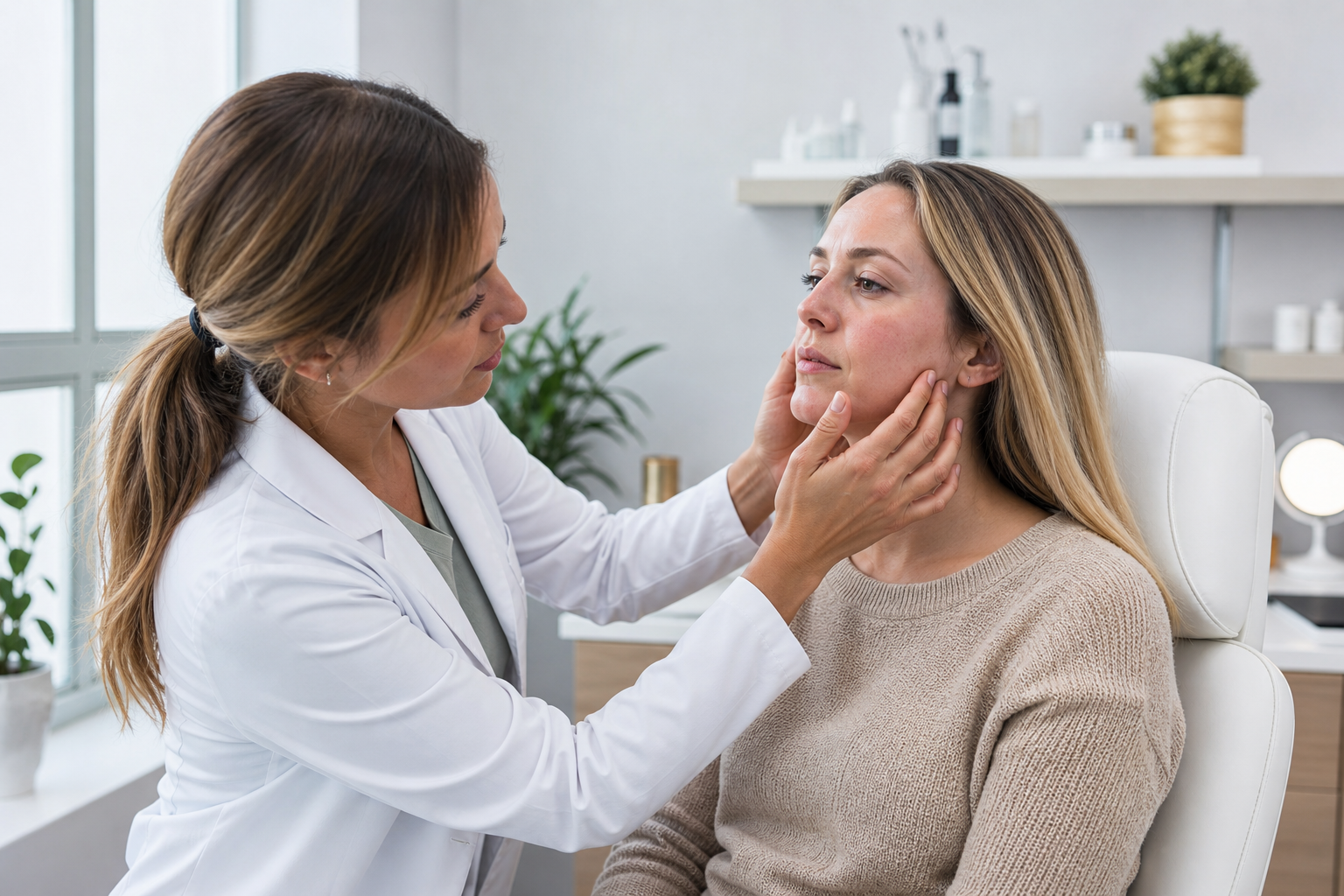
Red cheeks are often perceived as a simple sign of sensitive skin reacting to external triggers such as cold weather, wind, or harsh skincare products. However, persistent redness on the cheeks may signal underlying conditions that require more careful assessment and specialized care. For many individuals who notice their facial redness lasting beyond temporary irritation or who experience accompanying symptoms like visible blood vessels, itching, or acne-like bumps, it becomes apparent that their skin concerns might be more complex than just sensitivity.
This article is intended for anyone struggling with persistent redness localized on their cheeks or for those curious about why red cheeks are sometimes much more than a benign cosmetic issue. Understanding the causes behind facial redness, distinguishing between sensitive skin and dermatological conditions such as rosacea, various forms of dermatitis, or post-acne erythema, plays a vital role in determining an effective treatment approach. Moreover, the article explores options like vascular laser treatments, clarifies misconceptions about laser therapy (notably that IPL is not a laser), and emphasizes realistic expectations for symptom management.
Why does it matter if your cheeks are red? Because misidentifying persistent redness as merely sensitive skin can lead to inadequate remedies, prolonged discomfort, and psychological distress due to aesthetic concerns. Early recognition of when red cheeks signify something more serious allows for timely intervention, better management, and prevention of symptom progression. This comprehensive review will guide you through the potential reasons behind red cheeks, the nuances in differential diagnosis, and modern therapeutic strategies that improve skin appearance and comfort when sensitivity alone is not the culprit.
What Does Facial Redness on the Cheeks Indicate and When Should It Raise Concern?
Facial redness, particularly concentrated on the cheeks, can stem from a range of causes that reflect different underlying mechanisms. The simplest explanation is capillary dilation in response to environmental factors, emotional triggers, or transient irritation from skincare products. This type of redness often accompanies a sensation of tightness or mild stinging but diminishes when the provocative factors are removed.
However, when cheek redness persists, intensifies, or occurs alongside other symptoms such as itching, scaling, bumps, or prominent blood vessels, it warrants further evaluation. Chronic redness may reflect ongoing inflammation or vascular changes not typical of sensitive skin alone. Conditions such as rosacea, various dermatitis types, or residual erythema following acne flare-ups can all present with red cheeks but require distinct diagnostic considerations and management.
Recognizing the difference between temporary redness and a chronic dermatologic condition is paramount. Constant redness impacts skin barrier integrity and overall facial aesthetics, potentially leading to discomfort and decreased quality of life. Thus, persistent red cheeks should prompt individuals to seek dermatological assessment to identify the precise nature of the problem and to tailor appropriate interventions.
Distinguishing Sensitive Skin from Rosacea: Why It Matters
Sensitive skin is a common condition characterized by heightened reactivity to environmental stimuli, leading to episodic redness, burning, or stinging sensations. This sensitivity usually involves compromised skin barrier function but does not inherently indicate an inflammatory disease process. Individuals with sensitive skin might experience occasional flushing, particularly after exposure to irritants or extreme weather, yet they typically do not display overt inflammatory lesions or prominent blood vessels.
Rosacea, by contrast, is a chronic inflammatory disorder with a complex pathophysiology involving genetic, vascular, and immune system components. It commonly manifests with persistent erythema, telangiectasia (visible small blood vessels), papules, pustules, and sensations of warmth or burning. Unlike sensitive skin, rosacea is a progressive condition that may worsen without treatment and has a notably greater impact on facial appearance.
Understanding these differences is critical because the treatment regimens for rosacea often include prescription topical or oral medications alongside procedural interventions, whereas sensitive skin generally requires gentle skincare and avoidance of offending agents. Furthermore, laser treatments may assist in reducing visible vessels and redness in rosacea but do not cure the underlying disease, making patient expectations and comprehensive management strategies important considerations.
The Role of Dermatitis in Facial Redness and Its Variants
Dermatitis encompasses various inflammatory skin disorders that commonly involve redness and irritation on the face. The major types impacting the cheeks include contact dermatitis, atopic dermatitis, and seborrheic dermatitis, each with distinct clinical features.
Contact dermatitis arises from exposure to allergens or irritants, leading to localized or widespread redness, swelling, itching, and sometimes blistering or scaling. The cheek area can react to cosmetics, sunscreens, or environmental substances, making this a frequent concern. Identifying and eliminating the causative agent is essential for resolution.
Atopic dermatitis often begins in childhood but may present in adults with dry, itchy, and red patches that sometimes affect the cheeks. It is associated with a predisposition to allergic diseases and requires moisturizing regimens alongside anti-inflammatory treatments.
Seborrheic dermatitis involves red, greasy, and flaky patches, commonly visible on the central face including cheeks, especially along nasal folds and eyebrows. Differentiating it from rosacea can be challenging as both conditions can cause redness and sometimes scaling, but seborrheic dermatitis responds well to antifungal and anti-inflammatory therapies tailored to its yeast-related component.
Due to overlapping symptoms, professional evaluation is crucial to distinguish between these dermatitis variants and to develop an effective, customized treatment plan.
Understanding Post-Acne Erythema as a Cause of Persistent Red Cheeks
Post-acne erythema is the persistent redness that remains following the healing of inflammatory acne lesions, caused by dilated blood vessels and residual inflammation in the affected skin areas. This discoloration can last weeks, months, or longer, sometimes causing significant aesthetic concerns.
Unlike active acne or rosacea, post-acne erythema does not signify ongoing inflammation but rather a healing phase marked by vascular prominence. Its appearance may be influenced by skin type, acne severity, and treatment history. While it often improves gradually, patients frequently seek accelerated resolution for cosmetic reasons.
Among the therapeutic options, vascular laser treatments have been employed to target the visible capillaries contributing to this redness, thereby enhancing skin tone uniformity. The success of such interventions depends on factors like lesion depth and patient skin characteristics, underscoring the need for specialized dermatologic guidance in managing post-acne erythema.
How Do Vascular Laser Treatments Work to Reduce Facial Redness?
Vascular laser procedures harness specific wavelengths of light that are absorbed preferentially by hemoglobin within blood vessels. This selective photothermolysis causes targeted blood vessels to constrict or collapse, resulting in their gradual absorption by the body and a subsequent reduction in visible redness.
Modern vascular lasers are designed to minimize damage to surrounding tissues, offering precise control to treat dilated capillaries, telangiectasias, and diffuse redness associated with conditions like rosacea and post-acne erythema. These treatments can lead to significant cosmetic improvement and reduced skin discomfort in suitable candidates.
However, it is essential to recognize that while these lasers can ameliorate the redness caused by visible blood vessels, they do not cure underlying inflammatory disorders such as rosacea. Thus, laser therapy is often part of a broader, multidisciplinary approach including topical or systemic anti-inflammatory medications and lifestyle modifications.
Another important point is that Intense Pulsed Light (IPL) therapy, often confused with laser treatments, is a broad-spectrum light treatment, not a laser, and it works differently. Some patients may benefit from IPL, but it is distinct from laser interventions and has different indications and outcomes.
Why Is Your Face Constantly Red? Exploring Underlying Mechanisms
When facial redness becomes persistent, it usually reflects chronic vascular dilation combined with ongoing inflammation and possibly skin barrier damage. Multiple mechanisms contribute to this state, including dysregulation of skin blood flow, heightened immune responses, and external aggravating factors like UV exposure, stress, or irritant contact.
Conditions like rosacea demonstrate vascular hyperreactivity to triggers that promote flushing and sustained redness. Skin barrier impairment in sensitive or atopic skin allows irritants to penetrate more readily, maintaining or worsening inflammation. Seborrheic and contact dermatitis perpetuate redness through allergic or irritant reactions. Post-acne vascular changes leave residual redness due to structural alterations in superficial vessels.
Comprehensive management involves addressing these underlying mechanisms, protecting and repairing the skin barrier, controlling inflammation, and minimizing vascular visibility. This often entails a combination of skincare routines, medical therapies, avoidance of triggers, and, where appropriate, procedural interventions such as laser treatments.
When Should You Consult a Dermatologist About Red Cheeks?
Seeking professional advice is recommended if facial redness is persistent, worsening, or accompanied by other symptoms such as discomfort, itching, scaling, bumps, or visible veins. Sudden onset redness with swelling or blistering should prompt urgent evaluation to rule out allergic reactions or infection.
Dermatologists can perform thorough assessments to differentiate sensitive skin from chronic dermatological disorders, order necessary investigations, and devise personalized treatment plans. Early consultation can prevent progression and mitigate the psychosocial impact of visible redness.
Moreover, before undergoing advanced treatments like vascular laser therapy, professional evaluation ensures that the modality is appropriate, that expectations are realistic, and that treatment is integrated into a holistic skin care regimen.
Practical Tips for Managing Red Cheeks Beyond Medical Procedures
Alongside medical treatments, adopting strategies to minimize triggers and support skin health is vital. Gentle cleansing with fragrance-free, non-irritant products helps maintain skin barrier integrity. Consistent application of suitable moisturizers reinforces hydration and resilience.
Sun protection using broad-spectrum physical sunscreens reduces ultraviolet-induced vascular and inflammatory changes. Avoiding known irritants such as alcohol-based toners, harsh exfoliants, and extreme temperatures can prevent exacerbation of redness.
Lifestyle factors, including stress management and a balanced diet, may influence inflammatory skin conditions. Recognizing and maintaining a personalized skincare routine refined by dermatologic guidance optimizes skin appearance and comfort.


