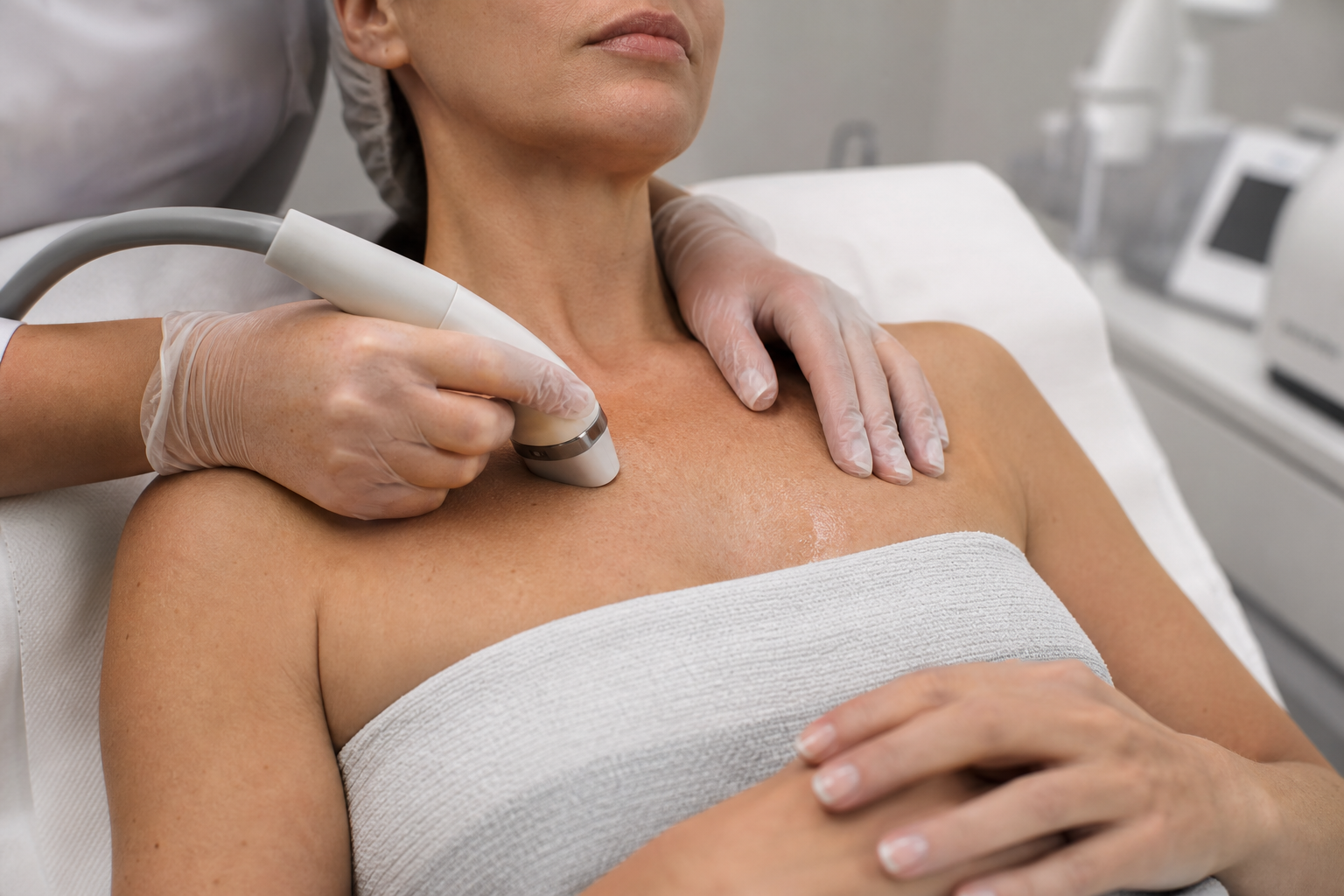
Radiofrequency (RF) treatment for the neckline and hands is increasingly recognized as a sophisticated and effective solution for rejuvenating these delicate and often overlooked areas. As skin ages, it naturally loses volume, elasticity, and firmness, resulting in visible sagging, wrinkles, and a less youthful appearance. The neckline and the backs of the hands are particularly vulnerable to these changes due to their thinner skin, frequent sun exposure, and relatively minimal subcutaneous fat. RF treatment offers a modern, non-invasive or minimally invasive method to stimulate collagen and elastin production deep within the skin, promoting tissue tightening and skin renewal without the need for surgery.
This therapy is suitable for individuals noticing early to moderate signs of skin laxity on their necks and hands or those looking to prevent the onset of these aging changes. Unlike facial skin, which is often the focus of daily skincare and treatment, the neckline and hands can reveal age prematurely due to neglect or lack of targeted treatment options. Often exposed yet treated less carefully, these areas demand a specialized approach. RF technology’s adaptability allows practitioners to customize treatment intensity and method, from non-invasive fractional RF without needles to RF microneedling and minimally invasive procedures, ensuring optimal safety and results tailored to skin type and condition.
Understanding RF treatment for the neckline and hands is important for anyone interested in rejuvenating their skin's texture and firmness. With an aging population increasingly seeking non-surgical aesthetic interventions, RF treatment stands out as a refined approach offering tangible skin tightening and revitalization benefits with minimal discomfort and downtime. This in-depth exploration will navigate the technology's mechanisms, its various techniques, patient suitability, expected outcomes, and considerations necessary for selecting proper treatment for these specialized regions.
What Is RF Treatment and How Does It Work on the Neckline and Hands?
Radiofrequency treatment uses controlled electromagnetic waves to deliver heat energy deep into the dermal layers of the skin. This thermal effect is carefully calibrated to avoid damage to the surface but to stimulate cellular activity beneath. The key target cells are fibroblasts, responsible for producing collagen and elastin—structural proteins vital for maintaining skin integrity and resilience.
When heat energy reaches these cells, it triggers a natural wound healing response without injuring the skin. Fibroblasts increase the synthesis of collagen and elastin, resulting in gradual restoration of skin density, elasticity, and firmness over subsequent weeks and months following treatment. This process leads to the reduction of fine lines and wrinkles, the lifting of mildly sagging skin, and an overall refreshment of the skin’s appearance.
The neckline and the hands require cautious application of RF because the skin in these areas is thinner and more delicate than facial skin. Additionally, the hands have minimal fatty tissue cushioning beneath, increasing the need for precise energy delivery to avoid discomfort or adverse effects. Proper patient assessment and technique selection are critical to achieving optimal outcomes safely.
Who Is an Ideal Candidate for RF Treatment on Neckline and Hands?
RF treatment is well-suited for adults experiencing mild to moderate skin laxity or texture issues in the neckline and hands. Candidates typically notice subtle sagging, loss of skin tone, fine wrinkles, or dehydration-induced crepiness. The procedure can also appeal to younger individuals who want to take preventive steps against aging signs, especially those with significant sun exposure history or lifestyle factors accelerating photoaging.
It is important to understand that RF treatment works best for patients with realistic expectations and without advanced skin laxity or severe volume loss. Those with more pronounced sagging or deep wrinkles may require adjunctive treatments or alternative modalities such as surgical lifting or volumizing injectables for comprehensive rejuvenation.
Patients with certain medical conditions, open skin wounds, active infections, or implanted electronic devices are generally advised against RF therapy in the treated areas. A thorough consultation with a skilled specialist will identify individual suitability and tailor the approach accordingly.
What Are the Different Types of RF Treatments Available for the Neckline and Hands?
RF treatment encompasses a range of techniques that vary by invasiveness, depth of energy delivery, and mechanism of action. The choice among these depends on the skin’s condition, patient comfort preferences, and desired results.
Non-invasive Fractional RF Without Needles
This method applies radiofrequency energy externally without penetrating the skin. It gently heats the dermis to stimulate collagen remodeling while leaving the epidermis intact. Fractional RF devices deliver energy in a grid-like pattern, allowing efficient treatment with minimal recovery time. This approach is particularly suitable for early signs of laxity or as a maintenance treatment for skin health on the neckline and hands.
RF Microneedling
This technique combines microneedling with RF energy delivered directly into the dermis through fine needles. The microscopic injuries created by the needles in conjunction with RF-induced heating promote a more aggressive collagen synthesis than non-invasive RF alone. RF microneedling is ideal for moderate skin laxity, texture irregularities, and pigmentation issues often present on sun-exposed neck and hand skin. Though minimally invasive, it may involve mild downtime, including redness and swelling for a few days.
Minimally Invasive RF Procedures
In certain cases, specialists may employ internal RF treatments where electrodes are inserted below the skin to deliver heat precisely to deeper tissue layers. These procedures, while more invasive, provide pronounced skin tightening results and may be combined with other treatments like lipolysis for contouring. Due to their complexity, these are recommended for patients with significant sagging and must be performed by experienced practitioners under clinical settings.
How Does the RF Treatment Protocol Differ Between the Neckline and Hands?
While the underlying principle of RF treatment remains consistent, specific protocols differ to accommodate anatomical and physiological differences between the neckline and hands.
The neckline's skin, though delicate, exhibits more laxity over time compared to the hands. Treatment here may involve slightly deeper energy penetration and longer session durations to effectively stimulate deeper collagen fibers responsible for structural support. Additionally, maintaining natural neck contours and avoiding overtightening that can lead to unnatural appearance require technical finesse.
On the hands, the main challenge lies in thin, fragile skin with minimal padding and prominent visible veins and tendons. Consequently, RF energy must be carefully titrated to avoid discomfort or damage. Effective treatment aims not only to tighten skin but also to enhance hydration, improve pigmentation irregularities, and restore a more youthful texture without compromising hand function or sensitivity.
Typically, multiple treatment sessions spaced a few weeks apart are recommended for both areas to achieve progressive collagen remodeling. Follow-up maintenance sessions may be advised to sustain results.
What Benefits Can Patients Expect from RF Treatment for Neckline and Hands?
Patients can expect several aesthetic and functional benefits from RF treatment, including:
Smoother, Firmer Skin: Enhanced collagen and elastin production reduce skin laxity and improve texture, making skin appear tighter and more toned.
Reduction in Fine Lines and Wrinkles: Surface aging signs become less pronounced as skin regeneration progresses post-treatment.
Improved Skin Quality: Increased blood circulation and lymphatic drainage promoted by RF energy contribute to healthier skin with a more even tone and glow.
Non-Surgical Alternative with Minimal Downtime: Patients avoid the risks, anesthesia, and recovery time associated with surgical lifts or invasive interventions.
Customized Approaches to Suit Skin Sensitivity: Different RF modalities allow tailored treatments for delicate areas prone to irritation.
What Should Patients Expect During and After RF Treatment Sessions?
Each RF session for the neckline or hands typically lasts between 30 to 60 minutes, depending on the size of the treated area and specific technique used. The procedure is generally well tolerated, with patients feeling a warm sensation in the skin caused by radiofrequency energy heating the dermis.
Non-invasive treatments involve no needles and minimal discomfort, while RF microneedling may cause slight pinprick sensations during the needling process. Some patients compare the warmth to a mild sunburn but rarely report pain.
Immediately following treatment, the skin might appear mildly red or flushed due to increased circulation and heat stimulation, but this usually resolves within hours. For microneedling RF, slight swelling or sensitivity may last a few days, during which patients should avoid direct sun exposure and follow skincare guidance from their provider.
Repeated sessions over several weeks are necessary to build optimal collagen remodeling. Visible improvements generally develop gradually up to three months post-treatment as new collagen matures.
Are There Any Risks or Side Effects Associated with RF Treatments on the Neckline and Hands?
Radiofrequency treatments are considered safe when performed by trained professionals who adhere to proper protocols and patient selection criteria. Side effects are usually mild and transient. These can include temporary redness, swelling, tenderness, or slight bruising in the treated areas.
More serious adverse events are rare but can occur if excessive energy is applied, leading to burns, blistering, or uneven texture changes. Such outcomes underscore the importance of experienced practitioners adjusting energy settings to skin type and thickness, especially in regions as sensitive as the neckline and hands.
Patients with pacemakers or certain implanted devices, active infections, open wounds, or severe skin conditions are contraindicated from undergoing RF treatment. A comprehensive medical history and physical evaluation ensure safe treatment delivery.
How Does RF Treatment Compare to Other Skin Rejuvenation Options for Neckline and Hands?
RF treatment occupies a unique position among aesthetic modalities for neck and hand rejuvenation due to its non-invasive yet effective approach to stimulating natural skin repair mechanisms.
Compared to topical creams or serums, RF offers deeper skin remodeling rather than superficial improvement. Its effects surpass those of standard moisturizers or anti-aging products, which cannot restore lost collagen at an advanced level.
In comparison to laser therapies, RF’s use of heat rather than light energy allows treatment of all skin types with lower risk of pigmentary changes and less discomfort, making it safer for sensitive areas. Additionally, RF induces a more uniform heating effect conducive to collagen tightening.
Surgical options, while capable of dramatic lifting, involve downtime, scarring, and higher risk, making RF particularly attractive for mild to moderate aging signs or preventive care.
Injectable fillers complement RF by restoring volume rather than tightening skin, and many patients benefit from combined treatment plans tailored to their specific needs.
What Are the Essential Aftercare Guidelines to Maximize RF Treatment Results?
Post-treatment care plays a vital role in ensuring optimal results and minimizing side effects. Patients should keep the following points in mind:
Protect Skin from Sun Exposure: Use broad-spectrum sunscreen diligently as treated skin is more sensitive to UV damage during healing.
Stay Hydrated: Maintaining good hydration supports skin regeneration and improves elasticity.
Avoid Harsh Skincare Products: Refrain from exfoliants, retinoids, or other potentially irritating ingredients for a few days post-treatment.
Follow Provider’s Specific Instructions: Use recommended soothing or moisturizing products and attend scheduled follow-ups for progress assessment.
What Long-Term Benefits and Maintenance Are Associated with RF Treatment?
The collagen-boosting effects of RF treatment typically continue to evolve for three to six months post-procedure, leading to sustained skin tightening and improved texture. However, as with all aging skin, the natural decline in collagen production continues over time.
To maintain benefits, patients are advised to undergo periodic maintenance sessions, often annually or biannually, depending on individual skin aging progression and lifestyle factors. Integrating RF treatment into a comprehensive anti-aging regimen, including sun protection, healthy nutrition, and proper skincare, enhances longevity of results.


