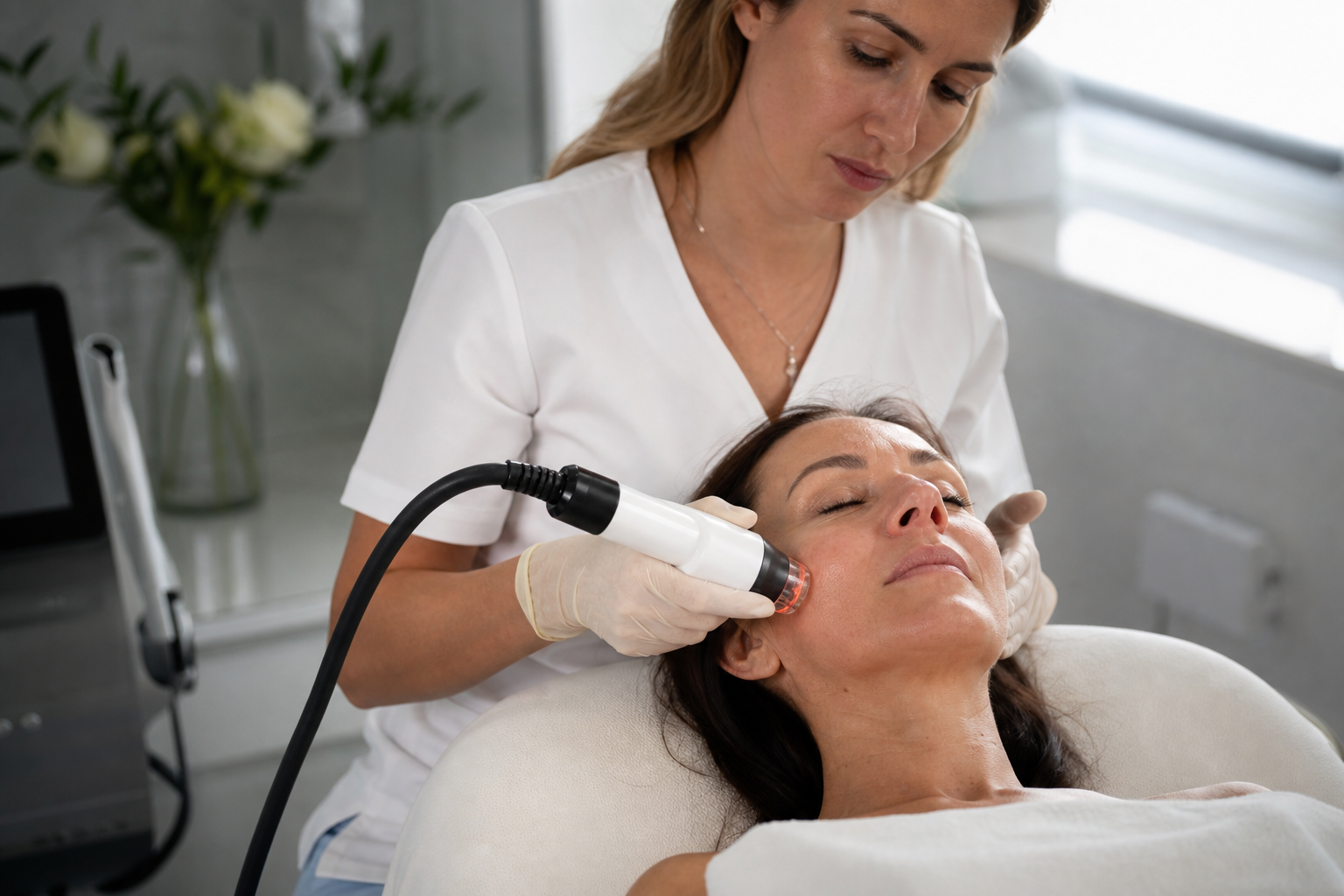
Can RF treatments restore lost facial volume? This question echoes frequently among those seeking aesthetic rejuvenation without resorting to surgery. Radiofrequency (RF) treatments, widely recognized for their skin tightening capabilities, represent a modern frontier in non-invasive facial care. They harness controlled heat energy to stimulate collagen and elastin production, targeting the subtle signs of aging such as mild laxity, loss of skin elasticity, and diminished facial contour definition.
This editorial explores the fundamental nature of RF treatments, elucidating who stands to benefit most from these procedures and why they hold considerable appeal in contemporary aesthetic medicine. While RF treatments offer meaningful improvements in skin texture and firmness, they do not serve as a direct replacement for volume restoration. Understanding the distinct mechanisms, realistic outcomes, and potential limitations is paramount for anyone considering RF therapy for facial volume concerns.
For those desiring a refreshed appearance with minimal downtime, and for professionals seeking a detailed perspective on RF’s role in facial rejuvenation, this article delves comprehensively into the nuances of RF technology and its efficacy in restoring youthful facial contours.
What Is RF Treatment and How Does It Influence Facial Volume?
Radiofrequency treatment for facial lifting employs electromagnetic waves to penetrate the skin’s deeper layers, generating controlled heat that encourages fibroblast activity and collagen synthesis. Collagen, a structural protein critical to skin firmness and volume, diminishes naturally with age, contributing to sagging and hollowing of facial features.
By stimulating new collagen production and elastin regeneration, RF therapy improves skin tightness and elasticity, which can create the illusion of restored volume as facial contours subtly lift and skin texture refines. However, the treatment does not introduce new tissue or fat to the face but instead enhances the skin’s existing framework. This distinction is vital for setting appropriate expectations regarding the extent to which RF can counteract volume loss.
Unlike dermal fillers, which directly replenish volume by physically adding substance beneath the skin, RF treatments work biologically to strengthen the skin from within, contributing to a more youthful look through natural processes.
Who Is the Ideal Candidate for RF Facial Treatments Focused on Volume Enhancement?
RF treatments are best suited for individuals experiencing early to moderate signs of facial aging, particularly those with mild to moderate skin laxity and subtle volume depletion. Candidates are often individuals who notice a softening facial contour, slight sagging around the jawline or cheeks, and a general loss of skin suppleness but do not yet have significant tissue loss that would require more invasive intervention.
Patients desiring a natural, gradual improvement without the risks and recovery time associated with surgery typically find RF an appealing option. It caters well to those looking for enhanced skin tone, reduction in fine lines, and gentle lifting effects that refresh the face’s overall appearance.
Conversely, individuals with substantial volume loss—such as deep hollowing in the cheeks or severe jowling—may need adjunctive treatments like hyaluronic acid fillers, fat grafting, or surgical procedures to achieve satisfactory results.
How Do Different RF Modalities Vary in Their Impact on Facial Volume?
Radiofrequency technology comes in several modalities, each differing in invasiveness, depth of energy delivery, and subsequent effects on skin and tissue remodeling:
- Non-Invasive RF: Delivered via surface applicators, this method gently heats the skin without penetration, primarily enhancing skin firmness and texture. It offers subtle volumetric enhancement through increased skin tightness but is limited in treating deeper volume loss.
- Fractional RF without Needles: This technique targets microscopic areas of the skin with controlled thermal points, boosting collagen production more intensively without breaching the skin barrier, resulting in improved skin quality and mild contour lifting.
- RF Microneedling: By combining the mechanical action of tiny needles with RF energy, this method achieves deeper dermal stimulation, promoting stronger collagen synthesis and more noticeable improvements in skin texture and elasticity. It can follow up with mild volumetric improvements, particularly when deeper layers are affected.
- Minimally Invasive RF Treatments: These involve the insertion of RF-emitting needles into subdermal tissues, delivering controlled heat precisely where collagen contraction and remodeling are most beneficial. Due to its intensity, this method can elicit more considerable volume contouring effects, generally necessitating some recovery time.
The choice among these depends on individual goals, skin condition, tolerance for recovery, and professional advice.
What Can Patients Realistically Expect Regarding Volume Restoration from RF Treatments?
RF treatments deliver notable improvements in skin laxity, highlighting sharper jawlines, smoother cheeks, and a fresher facial appearance. The contraction of existing collagen fibers tightens the skin, which contributes to an enhanced sense of volume, often described as a subtle plumping effect.
However, RF treatments do not physically replace lost mass in the face. For signs of significant soft tissue depletion, RF alone may not suffice, necessitating a multimodal approach for comprehensive rejuvenation. Patients should anticipate progressive improvements over multiple sessions, with visible benefits accumulating over weeks to months as collagen remodeling occurs.
Importantly, RF treatments boast an excellent safety profile with minimal discomfort and no downtime, allowing patients to resume daily activities immediately post-procedure, which is a valuable consideration compared to surgical options.
How Is RF Technology Employed in Specific Facial Areas to Address Volume and Contouring?
RF treatments are tailored to address common zones affected by aging-related volume loss:
- Jawline and Lower Face Contouring: Tightening the skin in this region can reduce jowling and emphasize mandibular definition. While not adding volume per se, improved firmness can visually create a sleeker, more lifted lower face silhouette.
- Cheeks and Midface: By enhancing collagen density and skin elasticity here, RF contributes to a gentle lift and softening of nasolabial folds, offering a refreshed appearance without injectable volume augmentation.
- Double Chin Reduction: RF energy can target submental fat and lax skin, promoting tightening and contour refinement, which can diminish the perception of fullness beneath the chin, indirectly affecting the visual balance of facial volume.
Each treatment area requires a protocol adapted to the skin’s thickness, degree of laxity, and desired results, underscoring the necessity of customized treatment plans developed by experienced practitioners.
What Are the Limitations of RF Treatments in Facial Volume Restoration?
While RF treatments stimulate biological renewal and improve skin tone, they cannot replicate the volumizing capacity of dermal fillers or surgical lifting procedures that manipulate deeper tissues and fat pads. Patients with advanced facial aging, marked hollowness, or substantial skin sagging typically require combined or alternative therapies for optimal correction.
Additionally, RF’s efficacy hinges on proper patient selection and treatment parameters. Excessive expectations or use as a standalone solution for profound volume loss may lead to dissatisfaction. Maintaining treatment outcomes involves repeated sessions and complementary skin care regimens.
In summary, RF treatments are a valuable tool in the aesthetic arsenal, best viewed as an adjunct to volume-restoring techniques when necessary, rather than a solitary answer to all volumetric deficiencies.
How Do RF Treatments Compare to Other Non-Surgical Options for Volume Replacement?
Compared with injectable fillers, which provide immediate, tangible volume replacement by depositing substances under the skin, RF treatments act more gradually by enhancing the skin’s scaffolding and tightening laxity. Fillers address hollowness and contour directly, whereas RF therapies improve underlying tissue quality and skin firmness.
Fat transfer procedures physically augment volume by relocating a patient's own adipose tissue, offering long-lasting results but necessitating minor surgery and recovery.
RF’s role is complementary, often used to maintain or enhance skin condition pre- and post-volume applications. Its natural stimulation of collagen can extend or amplify filler effects, creating a harmonious and rejuvenated appearance.
What Does the Treatment Process Involve and What Are the Aftercare Considerations?
RF treatment sessions typically last between 30 to 60 minutes, depending on the area and modality. Most patients experience minimal discomfort described as warming or mild tingling sensations. The absence of epidermal injury in non-invasive RF translates to no downtime, with some mild redness resolving within hours.
Multiple sessions spaced weeks apart are generally recommended to achieve cumulative collagen remodeling. Maintenance treatments support sustained results over time.
Post-treatment care includes sun protection, gentle skincare, and hydration to support skin regeneration. Patients are advised to avoid excessive heat exposure or aggressive facial treatments immediately following RF therapy.
What Advances Are Shaping the Future of RF Treatments in Facial Volume Enhancement?
Innovations in RF technology, such as combination devices integrating ultrasound or laser energy, promise enhanced depth targeting and efficacy. Refinements in needle-based RF allow precise, minimally invasive therapy with tailored energy delivery for improved volumetric effects.
Ongoing research exploring the molecular pathways activated by RF energy may facilitate protocols that optimize fibroblast stimulation and collagen architecture restoration. Personalized treatment algorithms based on skin imaging and diagnostic assessments are also evolving, enhancing outcome predictability and patient satisfaction.
As these advancements progress, RF treatments are likely to solidify their position as a cornerstone in comprehensive non-surgical facial rejuvenation strategies.


