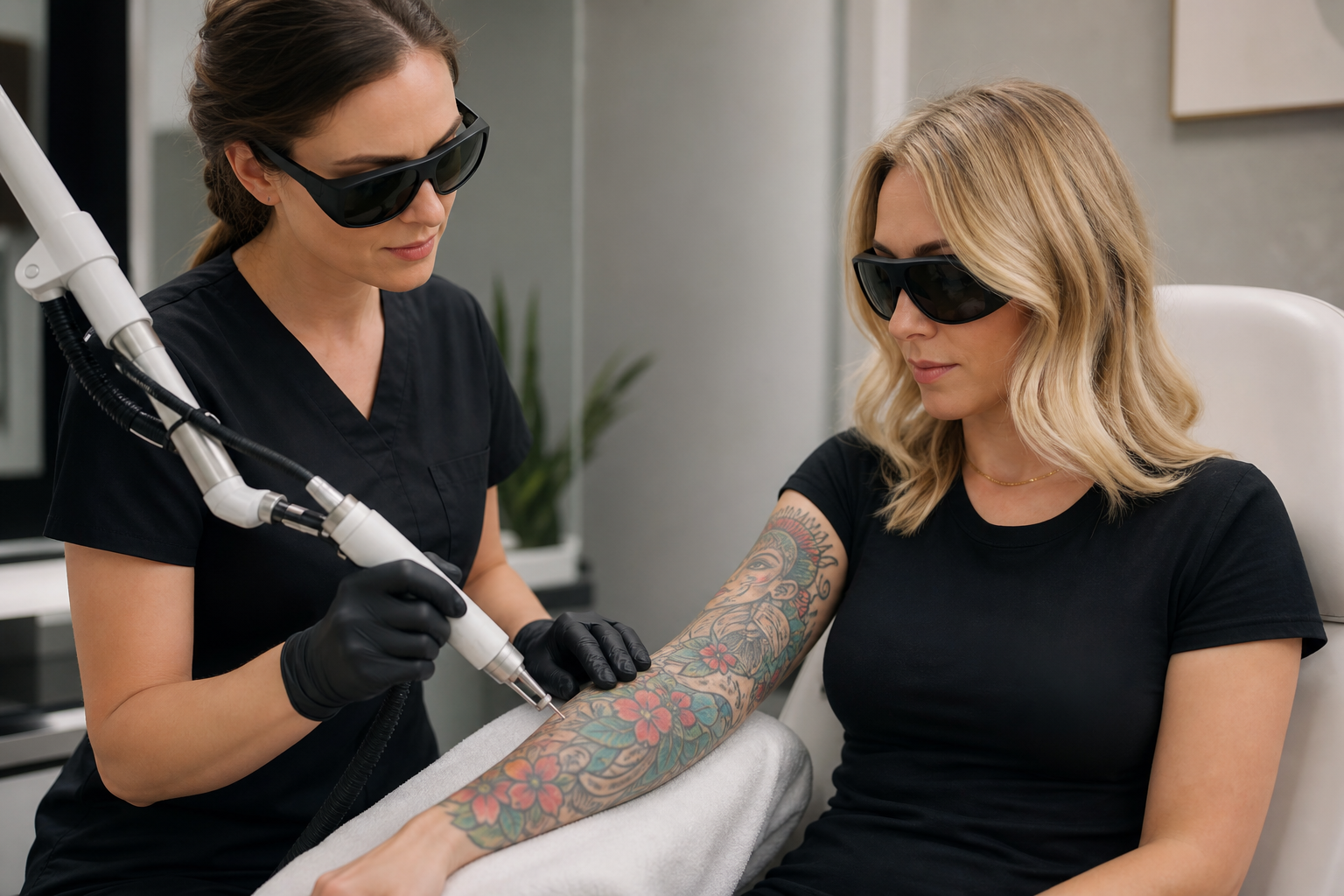
Tattoo removal is a complex and increasingly sought-after procedure as individuals seek to alter or erase body art that no longer aligns with their personal preferences or professional requirements. Among the various techniques available, laser tattoo removal has emerged as the gold standard due to its relative safety and efficacy in breaking down ink pigments gradually for natural elimination by the body. However, not all skin conditions present the same level of suitability for immediate treatment, particularly when it concerns tanned skin.
This article explores the reasons why tattoo removal is often postponed on tanned skin, addressing the underlying biological mechanisms, associated risks, and clinical considerations. It is intended for individuals contemplating laser tattoo removal, healthcare providers, and cosmetic professionals seeking to understand how skin pigmentation influences treatment timing and outcomes. Understanding these factors is vital as they directly impact the safety and success of the procedure, mitigating adverse effects such as pigmentary changes and skin damage.
The interaction between laser energy and melanin — the pigment responsible for skin color and UV protection — frames the core explanation for why tanned skin requires special caution. This discourse will unpack the physiological explanations, discuss relevant skin classification systems, examine potential risks, and review preventative strategies and treatment protocols that aim to ensure optimal results while protecting skin integrity.
What Happens to the Skin When It Is Tanned and Why Does This Affect Laser Tattoo Removal?
Tanning occurs primarily as a photoprotective response of the skin to ultraviolet (UV) radiation, stimulating melanocytes to produce more melanin pigment. This increased melanin concentration darkens the skin, serving to absorb and dissipate UV rays, thereby reducing DNA damage in skin cells. While this is a beneficial natural defense mechanism, it complicates laser tattoo removal procedures significantly.
Laser tattoo removal works by emitting specific wavelengths of light that are absorbed by the tattoo ink particles, fragmenting them so they can be cleared by the immune system. However, melanin also absorbs laser energy, particularly certain wavelengths, meaning that increased melanin in tanned skin effectively competes for absorption with the tattoo pigment. This non-selective absorption leads to elevated heat within the surrounding skin tissue, increasing the risk of injury.
The consequences of this include heightened chances for hyperpigmentation (dark spots), hypopigmentation (light spots), burns, scarring, and uneven removal of the tattoo pigment. These risks necessitate a careful assessment of skin tone and condition prior to scheduling or performing laser treatments on tanned individuals.
How Does the Fitzpatrick Skin Type Guide the Timing of Laser Tattoo Removal Treatments?
The Fitzpatrick skin type classification is a widely recognized system used to categorize skin based on its natural color and its typical reaction to UV exposure. It spans six phototypes, from I (very fair, always burns, rarely tans) to VI (very dark, never burns, deeply pigmented). This classification helps clinicians predict the skin’s response to laser treatments and sun exposure.
Individuals with lighter skin types (I–III) generally have lower baseline melanin levels, which tends to reduce the risk of laser-induced pigmentary complications. For these clients, moderate tanning might not significantly delay treatment plans. Conversely, those with darker skin types (IV–VI), or those who have recently tanned, bear a naturally higher melanin content. In these cases, laser settings must be extensively customized, and the procedure is often postponed until the tan fades because the risks of side effects increase sharply.
Understanding one's Fitzpatrick skin type guides not only the timing but also the selection of laser technology and treatment parameters, ensuring that skin safety is prioritized without compromising the efficiency of tattoo removal.
What Specific Risks Are Associated with Laser Tattoo Removal on Tanned Skin?
The principal risks related to performing laser tattoo removal on tanned skin stem from melanin's light-absorbing properties. These include:
1. Hyperpigmentation: An overproduction of melanin triggered by laser-induced inflammation can result in transient or, in some cases, persistent darkened patches on the skin. Such post-inflammatory hyperpigmentation (PIH) often requires medical interventions and can undermine cosmetic outcomes.
2. Hypopigmentation: Excessive laser energy can destroy melanocytes, the pigment-producing cells, causing lighter spots that may be difficult to reverse. Hypopigmentation is particularly distressing as it disrupts the natural skin tone balance.
3. Thermal Injury and Burns: Because melanin absorbs laser energy, elevated heat in the epidermis and dermis could cause thermal damage, leading to redness, swelling, blistering, or even scarring.
4. Suboptimal Tattoo Clearance: A reduced optical contrast between ink particles and the darker background of tanned skin lowers laser efficiency, often necessitating more sessions or resulting in incomplete removal.
Cumulatively, these risks underscore the rationale for professional caution and the necessity to avoid rushed treatments on recently tanned skin.
How Can One Prepare the Skin Before Laser Tattoo Removal to Minimize Risks on Tanned Skin?
Preparation is paramount for minimizing complications and ensuring effective tattoo removal, especially for individuals with tanned skin. Critical steps often advised by specialists include:
Avoiding any form of UV exposure: Limiting sunbathing, solarium use, or any intensive UV exposure at least 4 to 6 weeks before treatment allows melanin levels to normalize, reducing risks dramatically.
Using high-SPF sunscreen consistently: Daily application of broad-spectrum sunscreens with SPF 50+ shields the skin from UV-induced melanogenesis and preserves the baseline skin tone during the pre-treatment phase.
Chemical or topical skin lighteners: Under professional supervision, dermatologists may prescribe agents like hydroquinone or azelaic acid to gently lighten hyperpigmented areas, facilitating safer laser targeting.
Discontinuation of predisposing skincare: Patients should avoid cosmetic procedures that might sensitize or damage the skin, such as chemical peels or waxing, on or near the tattooed area prior to laser sessions.
Comprehensive consultation: Prior to treatment, a full assessment of skin phototype, current pigmentation, and tattoo characteristics must be conducted to schedule laser sessions appropriately and tailor the approach.
Which Laser Technologies Are Most Suitable for Treating Tattoos on Darker and Tanned Skin?
Technological advancements have led to laser devices optimized for use on varied skin types, improving safety and results in patients with increased melanin. The most widely recommended laser system for tanned and darker skin types is the Q-switched Nd:YAG laser operating at a wavelength of 1064 nm.
This laser wavelength penetrates deeply, targeting tattoo ink particles while being less absorbed by epidermal melanin, minimizing thermal damage to surrounding skin. Its versatility also supports the treatment of black and dark blue tattoo pigments, which are the most responsive to laser therapy.
Contrastingly, shorter wavelength lasers (e.g., 532 nm) that effectively target lighter pigment colors pose greater risks for melanocyte damage in tanned skin and are typically avoided until the skin tone returns to baseline.
The laser choice must be precisely matched to the patient's skin type and tattoo composition, managed by experienced clinicians using calibrated settings to strike a balance between efficacy and safety.
Why Is Seasonal Timing Important for Scheduling Laser Tattoo Removal on Tanned Skin?
Seasonality heavily influences the feasibility and safety of laser tattoo removal on tanned skin. Cooler months such as autumn and winter are ideal for initiating treatment, as natural UV exposure is reduced, and skin tone tends to be lighter. This minimizes melanin-related risks while enhancing laser effectiveness.
Conversely, summer poses significant challenges due to intensified sun exposure, making tanned skin more prevalent and unstable for laser procedures. If treatment is urgently needed during summer, stringent protective measures including enhanced sunblock use and minimizing sun exposure after sessions become essential.
Moreover, spacing sessions 6 to 8 weeks apart enables skin healing and assesses pigmentary responses, further supporting successful tattoo clearance without compromising skin health.
How Can Patients Recognize and Respond to Adverse Reactions Post-Laser Treatment on Tanned Skin?
Awareness of post-treatment skin changes is crucial for early intervention and prevention of lasting complications. Patients should monitor for symptoms such as:
Persistent redness and swelling: While temporary erythema is expected, prolonged inflammation may indicate infection or burn injuries.
Unexpected pigmentation changes: Darkening or lightening that does not resolve over weeks warrants medical evaluation.
Formation of blisters or open sores: These suggest over-treatment or skin damage requiring prompt care.
Excessive itching or pain: Could signify allergic reactions or adverse inflammatory responses.
Timely consultation with a dermatologist or laser specialist is imperative when these signs arise, ensuring appropriate management and minimizing long-term effects.
Why Does Avoiding DIY Tattoo Removal Methods Matter, Especially for Tanned Skin?
Unsupervised attempts at tattoo removal using non-professional methods pose severe risks, particularly for individuals with pre-existing skin pigmentation alterations like tanning. Do-it-yourself approaches often lack precision and can cause irreversible damage including burns, infections, scars, and pigmentary disorders.
Moreover, unregulated devices or chemical products fail to accommodate skin variability and do not allow for vital clinical assessments such as skin type evaluation or laser parameter customization. This is amplified in tanned skin, where improper energy delivery may exacerbate melanin-related complications.
Entrusting tattoo removal to certified clinics and trained professionals not only improves safety but also enhances cosmetic outcomes by applying evidence-based protocols tailored for diverse skin types.
What Strategies Help Reduce Pigmentary Changes After Laser Tattoo Removal on Tanned Skin?
Mitigating pigment alterations requires a multi-faceted approach centered around professional judgment and patient compliance:
Custom laser parameters: Using the appropriate wavelength and adjusting energy and pulse duration to minimize excessive heat in melanin-rich areas.
Skin cooling techniques: Employing equipment or topical coolants before, during, and after treatment to reduce thermal injury and inflammation.
Post-treatment photoprotection: Vigilant use of sunblock and avoidance of UV exposure prevent stimulus of melanogenesis during the vulnerable healing phase.
Regular follow-ups: Enables early detection and management of pigmentary complications with topical agents or adjunct therapies as needed.
Adherence to these strategies considerably enhances patient satisfaction and preserves skin integrity alongside effective tattoo clearance.