The decision to remove a tattoo is often motivated by a variety of personal reasons, ranging from changes in lifestyle or aesthetics to professional considerations or simply the desire to move on from a past choice. While modern laser technologies have revolutionized tattoo removal, making it more effective and safer than ever, individuals considering this journey frequently wonder about the outcomes and possible complications. A particularly pressing question many prospective patients ask is whether a tattoo can leave a noticeable shadow after removal.
This article comprehensively explores that very question, unpacking the concept of tattoo shadows post-removal and the nuanced factors involved. It is intended for those contemplating laser tattoo removal, individuals already engaged in the process, and professionals in dermatology and aesthetic medicine seeking to enrich their understanding of outcome variability. Recognizing the realistic results and inherent limitations of laser removal can guide informed decision-making and set apt expectations.
Understanding whether a tattoo can leave a residual shadow after removal is not only about mastering the technical aspects of laser treatment but also about appreciating the physiological response of the skin and the complexities presented by different ink types. This knowledge is crucial since lingering shadows, or residual discolorations, can carry both aesthetic and psychological weight, sometimes regarded as unwelcome reminders of the original tattoo.
What Does It Mean When a Tattoo Leaves a Shadow After Removal?
In the context of tattoo removal, a “shadow” refers to a remnant discoloration or faint outline that remains visible on the skin even after multiple laser treatment sessions. This residual image may manifest as a subtle grayish or darker patch in the area where the tattoo once was and is distinct from the original tattoo pigment that lasers are designed to fragment and remove.
It is important to understand that these shadows are not simply leftover ink but often result from changes in skin pigmentation or texture. This includes hypopigmentation, where the skin lightens due to melanocyte destruction, or hyperpigmentation, where the skin darkens as a reaction to inflammation or injury from laser exposure. Additionally, minor scarring can contribute to these shadow-like appearances. Thus, a shadow is a complex interplay of the tattoo's residual pigment and the skin's healing response.
The presence of a shadow is influenced by multiple factors and cannot be predicted with absolute certainty prior to treatment. Accepting this variability is integral to setting realistic expectations when considering laser tattoo removal.
Which Ink Colors Are More Likely to Leave Shadows After Removal?
One of the most significant determinants of whether a tattoo might leave a shadow post-removal is the type and color of the ink used. Black and dark blue inks generally respond best to laser removal because they absorb laser light efficiently, allowing the pigment to break down more readily. Conversely, lighter-colored inks such as yellow, green, turquoise, pink, and even some reds tend to resist laser treatment more stubbornly.
These lighter inks are often formulated from different chemical compounds that respond variably to laser wavelengths. For instance, white or pastels may not absorb laser energy properly and can even become more visible after certain treatments due to pigment alteration. Furthermore, multicolored tattoos, which incorporate multiple pigments, increase complexity and may heighten the risk of residual discoloration.
Understanding the spectral properties and chemical composition of tattoo inks is a specialized area of study for laser practitioners, underscoring the importance of seeking treatment from experienced professionals who can tailor the approach accordingly.
What Factors Influence the Success of Tattoo Removal and Reduce the Risk of Shadowing?
A multitude of factors beyond ink color impact the likelihood of shadow formation after tattoo removal. The number and quality of laser treatment sessions play a critical role. Each session aims to fragment the ink particles; however, overly aggressive treatments or insufficient recovery between sessions can damage the skin, leading to scarring and pigment changes.
The age of the tattoo is another important consideration. Older tattoos often fade with time, making ink easier to break down and eliminating pigmentation more complete. Conversely, fresh tattoos may require cautious, strategic treatment since the ink is more deeply embedded and the skin is in a relatively active state of healing and pigment deposition.
Location also matters. Tattoos in areas with robust blood circulation, such as the upper arms, generally clear faster and with fewer side effects. Areas with poorer circulation or thinner skin—like the ankles, hands, or feet—are more prone to lingering pigmentation changes or texture alterations, increasing shadow risk.
Lastly, individual skin type and healing capacity cannot be overstated. Persons with darker skin tones have a higher chance of hyper- or hypopigmentation after laser treatments due to melanocyte sensitivity.
How Does Laser Tattoo Removal Work and Why Is Understanding the Process Important?
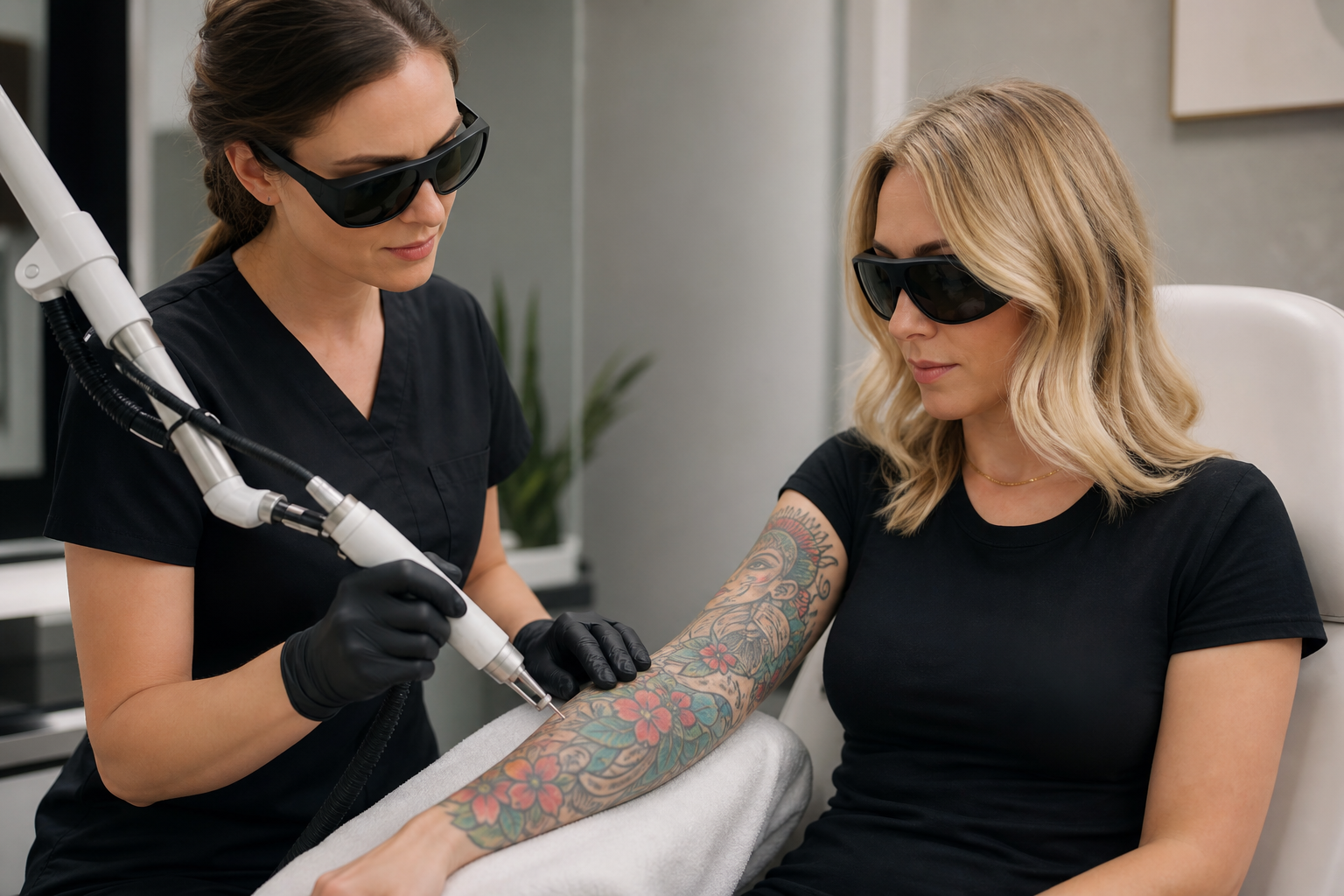
Laser tattoo removal operates on the principle of photothermolysis: lasers emit short pulses of light at specific wavelengths designed to penetrate the skin and target tattoo pigments selectively. When laser light is absorbed by the ink particles, it heats and breaks them into smaller fragments that the body’s immune cells gradually remove via the lymphatic system.
The effectiveness of laser treatment hinges on matching the correct laser wavelength to the specific ink colors involved, as well as adjusting parameters such as pulse duration and fluence (energy level). Different types of lasers—such as Q-switched Nd:YAG, Alexandrite, or PicoSure lasers—are used depending on the tattoo and skin characteristics.
Clients must understand that laser removal does not guarantee immediate or complete pigment elimination. Multiple sessions spaced over weeks or months are necessary to allow skin healing and pigment clearance. Overly aggressive treatment risks damage, while under-treatment prolongs the process without substantial improvement, each increasing the chance of residual shadow.
How Many Laser Sessions Are Typically Needed to Minimize Shadows and Achieve Optimal Results?
The exact number of treatment sessions varies depending on the tattoo’s size, color complexity, ink depth, and individual immune response. On average, effective removal commonly requires anywhere from five to ten sessions, sometimes more for multi-colored or professionally applied tattoos.
Each session is usually scheduled with an interval of six to eight weeks. This pacing permits skin tissue to recuperate and the immune system to process fractured ink. Rushing sessions or extending intervals excessively can both hinder outcomes.
It is crucial to recognize that no two tattoos will respond identically, and fostering patience with the process is essential. An experienced practitioner will evaluate progression throughout the course and adjust plans to optimize clearance and skin preservation, thereby reducing the likelihood of shadow effects.
When Can One Expect to See the First Visible Outcomes of Tattoo Removal?
Clients often notice initial results within several weeks following the first laser session. Usually, this manifests as slight fading or lightening of the tattoo pigment. However, the full aesthetic impact typically unfolds gradually as subsequent sessions fragment more ink and the skin’s natural elimination mechanisms progress.
Because the body requires time to clear particles and repair any damage, visible improvement might continue over months. The skin’s condition, immune health, and treatment adherence influence this timeline.
Regular consultations during the removal course are important for monitoring response and timely identification of complications, enabling interventions to mitigate shadow formation or scarring if they emerge.
Why Is Adhering to Recommended Intervals Between Laser Sessions Crucial?
Spacing laser treatments properly is paramount to balancing effective ink removal with skin safety. The customary 6 to 8 week interval is based on the physiological time needed for skin repair processes and lymphatic clearance of pigment fragments.
Deviating from these intervals — particularly by reducing recovery time — can exacerbate skin trauma, increasing risks of post-inflammatory hyperpigmentation or hypopigmentation. These pigmentary shifts constitute the primary contributors to residual tattoo shadows post-removal.
Moreover, sufficient recovery allows for the accurate assessment of progress and strategic planning of subsequent treatments. Patient compliance with these intervals is a significant factor in optimizing results and minimizing adverse effects.
What Realistic Outcomes Should One Expect After Complete Tattoo Removal and Are Shadows Permanent?
Most individuals undergoing professional laser tattoo removal will experience significant fading and, in many cases, near-complete erasure of their tattoo. Yet, the degree of clearance varies widely due to the factors discussed. Some residual shadowing may persist, appearing as faint discolorations or textural changes discernible under close inspection.
Permanent shadows, while not inevitable, can occur, especially in cases with stubborn inks, improper treatment protocols, or compromised skin healing. When shadows are present, supplementary treatments—such as fractional laser resurfacing, microneedling, or cosmetic camouflage techniques—may help improve appearance.
It is important for patients to embrace a holistic understanding of the process rather than expecting flawless results. Open communication with experienced practitioners supports this mindset, helping to establish achievable goals and maintain satisfaction throughout the treatment journey.
What Are the Risks of Attempting Tattoo Removal at Home and Why Is Professional Care Essential?
The growing availability of over-the-counter laser devices and home remedies has tempted some to pursue tattoo removal independently. However, such approaches pose substantial safety risks including burns, infections, scarring, and exacerbation of pigmentary disturbances leading to more pronounced shadows than professional treatment.
Professional laser tattoo removal is performed with medically approved devices by trained clinicians who can tailor protocols specifically to the tattoo characteristics and skin type. This expertise optimizes efficacy while minimizing harm and undesirable outcomes.
Moreover, clinical settings provide essential post-treatment monitoring and support, offering wound care guidance and early intervention if complications occur. Such resources are unavailable in home contexts, increasing the risk of lasting scars or discolorations.