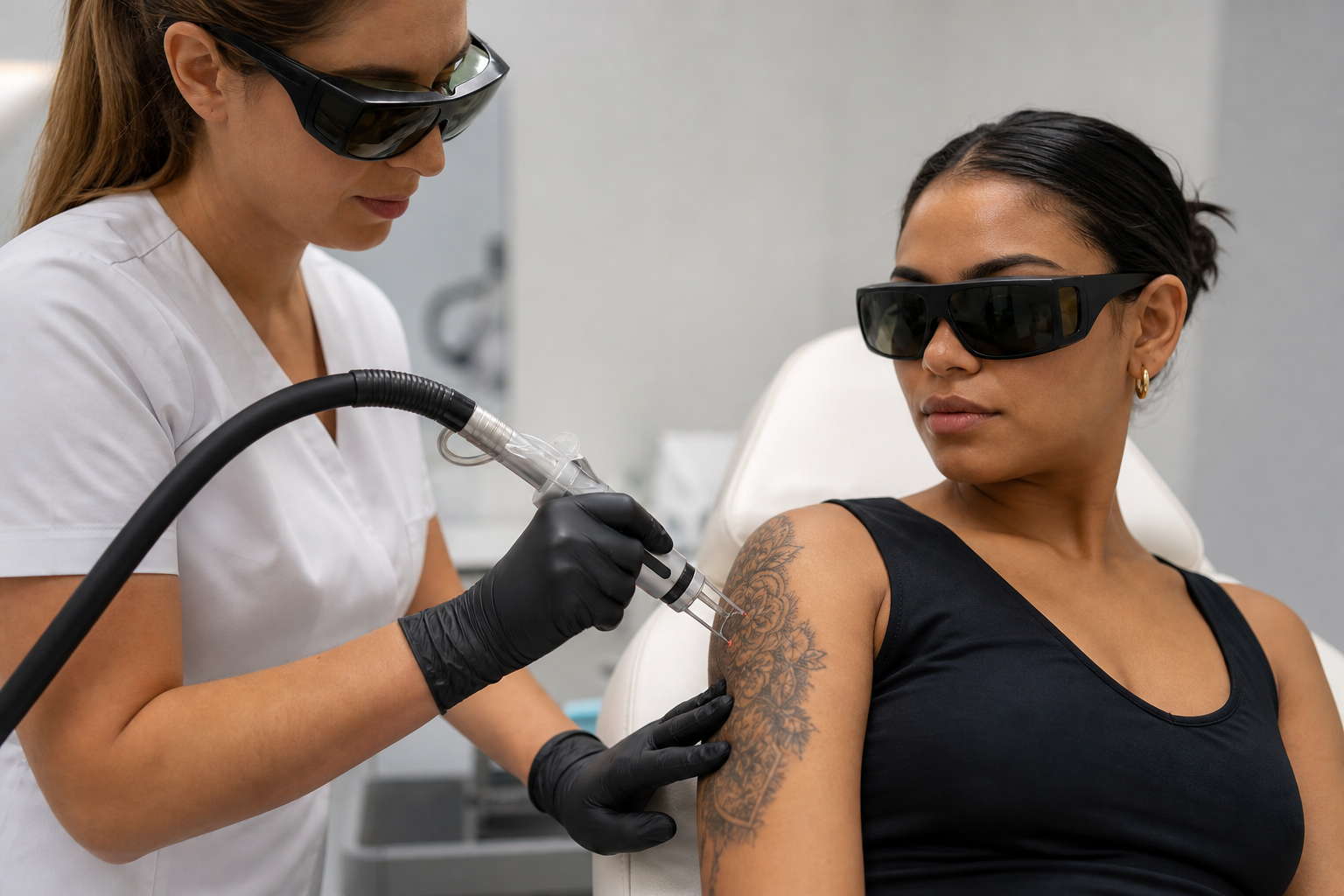
Tattoo removal on sensitive skin poses a unique challenge within the realm of laser treatments. As tattoos have become a popular mode of self-expression, the desire or necessity to remove them is increasingly common. However, individuals with sensitive skin must approach tattoo removal with caution due to the heightened risk of adverse reactions and complications. The intersection of delicate skin types, including those with darker and tanned skin tones, demands a carefully tailored approach that prioritizes safety and efficacy.
This article is intended for anyone considering laser tattoo removal, especially those with sensitive skin or darker complexions, as well as practitioners seeking deeper insight into safely managing these cases. Understanding the nuances of skin sensitivity, the body's response to laser energy, and proper preventive measures can profoundly influence outcomes, minimizing risks and safeguarding skin health.
By exploring the expected skin reactions, potential risks, tailored protocols, and the importance of professional guidance over DIY methods, this comprehensive examination addresses the most critical facets of tattoo removal in sensitive skin. Particular attention is given to the role of melanin and the Fitzpatrick skin type classification system, which are essential for achieving safe and effective results.
What Does Sensitive Skin Mean in the Context of Laser Tattoo Removal?
Sensitive skin is characterized by an increased reactivity to external or internal irritants, which can be genetic, medical, or environmental in origin. In the context of laser tattoo removal, such skin is more prone to inflammation, redness, swelling, and pigmentary changes. This heightened sensitivity also correlates with a greater likelihood of experiencing complications ranging from transient irritations to more severe tissue damage.
Importantly, sensitive skin is not a uniform category but rather a complex spectrum influenced by skin barrier integrity, underlying health conditions, and individual immunologic characteristics. For many patients with sensitive skin, especially those with darker tones (Fitzpatrick phototypes IV and above), melanin content further complicates how laser energy interacts with the tissue.
Notably, melanin serves as a natural photoprotective pigment, but it also absorbs laser wavelengths, sometimes leading to unintended side effects. Consequently, laser tattoo removal on sensitive skin demands a comprehensive skin assessment and a personalized treatment plan that accounts for these variables.
What Are the Common Risks and Expected Skin Reactions During Tattoo Removal on Sensitive Skin?
Laser tattoo removal works by targeting ink pigments beneath the dermis, fragmenting them so the body can gradually eliminate the particles. While advanced laser technology has enhanced treatment precision, the response of sensitive skin can present distinct challenges.
Typical immediate reactions include erythema (redness), edema (swelling), discomfort such as mild pain or tingling sensation, and transient skin irritation. These are often manageable but may feel more intense for those with sensitive skin.
Risks that are more prevalent and of greater concern with sensitive skin include:
Hyperpigmentation: Darkened patches resulting from excess melanin production stimulated by laser treatment or inflammation.
Hypopigmentation: Loss or reduction of skin pigment caused by laser-induced melanocyte damage.
Scarring and textural changes: Damage to the epidermal or dermal layers can lead to permanent alterations in skin surface and elasticity.
Infections: Breakdown of the skin barrier without adequate care can invite bacterial colonization.
Recognizing early signs—such as persistent redness lasting beyond normal healing times, blistering, excessive itching, or pain—is crucial for timely intervention and mitigating complications.
Why Is Extra Caution Needed for Darker and Tanned Skin in Laser Tattoo Removal?
Individuals with darker skin tones or sun-exposed, tanned skin have increased melanin content, which affects laser treatment safety and efficacy. Melanin absorbs light energy, meaning lasers not only target the ink pigment but also stimulate the natural skin pigment, potentially causing undesired effects.
For these patients, the risk of post-inflammatory hyperpigmentation and hypopigmentation is significantly elevated. The laser’s energy parameters must be meticulously adjusted—wavelengths that minimally affect melanin, lower fluence, and longer pulse durations are often utilized to reduce risk.
Additionally, laser selection plays a pivotal role; Nd:YAG lasers at 1064 nm are preferred for darker skin because their deeper penetration selectively targets tattoo pigments with less absorption by epidermal melanin.
Pre- and post-treatment photoprotection are imperative. Avoiding UV exposure is essential because recent tanning increases melanin concentration and elevates sensitivity, making adverse reactions more probable.
Overall, treating darker and tanned skin requires specialized expertise and technology to navigate the delicate balance between effective tattoo removal and preservation of skin health.
What Defines a Safe Protocol for Tattoo Removal on Sensitive Skin?
A safe protocol commences with a comprehensive consultation and skin evaluation. Determining the Fitzpatrick skin type, examining the tattoo's color, size, depth, and pigment density, and assessing the skin’s baseline sensitivity establish the foundation for personalized treatment.
Following assessment, laser parameters must be cautiously chosen. Lower energy settings, longer intervals between sessions (often 6–8 weeks), and the use of skin-cooling devices during treatment can help minimize discomfort and skin trauma.
Multiple treatments with gradual pigment breakdown are favored over aggressive, high-intensity sessions, which increase the risk of side effects on sensitive skin. Treatment frequency balances efficacy with allowing adequate time for skin repair and pigment clearance.
Equally vital is patient education focusing on skin care routines before and after treatment. This includes moisturizing to bolster the skin barrier, strict sun avoidance, and use of broad-spectrum sunscreens with high SPF. Avoidance of irritants such as harsh soaps, fragrances, and exfoliants under dermatological guidance further supports skin recovery.
Throughout the treatment course, consistent follow-ups enable monitoring of skin response and adjusting protocols accordingly, ensuring the process remains safe and effective.
Why Are DIY Tattoo Removal Methods Especially Risky for Sensitive Skin?
Home-based tattoo removal methods—ranging from chemical peels and abrasive techniques to unregulated lasers—pose significant dangers, more so for sensitive skin types. Without professional assessment and sterile, regulated equipment, these practices can result in irreversible harm.
DIY strategies frequently lead to severe irritation, infection, scarring, and unpredictable pigment changes. Lacking proper knowledge of laser-tissue interaction, incorrect energy application can penetrate too deeply or superficially, exacerbating skin damage or failing to adequately break down tattoo pigment.
Moreover, absence of medical oversight means complications are often detected late, sometimes when damage is extensive. Sensitive skin’s fragility amplifies these risks, making professional intervention indispensable.
Hence, healthcare professionals and dermatologists universally advise against non-professional tattoo removal attempts, advocating for certified clinics with experienced operators and FDA-approved laser systems.
How Can the Risk of Pigmentary Changes After Laser Removal Be Minimized?
Reducing the risk of hyperpigmentation and hypopigmentation hinges on a multifaceted approach tailored to skin type and sensitivity. Pre-treatment strategies involve sun avoidance for several weeks leading into sessions and initiating topical agents that may help stabilize melanocyte activity, under supervision.
During treatment, employing laser wavelengths suited for the patient’s skin type, utilizing lower fluence, and incorporating skin-cooling systems limit epidermal injury and pigment disturbance.
Post-treatment care emphasizes photoprotection with high-SPF sunscreens, use of gentle skin emollients, and avoidance of irritants that could provoke inflammation. Implementing anti-inflammatory and skin barrier repair products as recommended can also promote optimal healing.
Prompt recognition and treatment of early pigmentary changes through dermatological follow-up can mitigate long-term effects. For persistent or severe pigment disturbances, further interventions such as topical lightening agents or advanced dermatologic therapies may be necessary.
When Is It Advisable to Postpone Tattoo Removal, Especially During Summer?
Tattoo removal treatments are best scheduled during periods when skin is not recently sun-exposed or tanned. UV radiation from sunlight or artificial sources increases skin photosensitivity and melanin production, rendering laser procedures riskier.
Summer months, characterized by heightened sun exposure, are typically discouraged for initiating or continuing laser tattoo removal, especially for individuals with sensitive or darker skin. The residual pigmentation from tanning can absorb laser energy excessively, potentially exacerbating side effects like burns or pigmentary shifts.
Clinicians recommend waiting until skin tone returns to baseline, which can take several weeks or longer depending on exposure intensity. Adhering to this timing reduces complications and supports more controlled pigment clearance during tattoo removal.
Patients should actively avoid sunbathing, solariums, and unprotected outdoor activities in the pre- and post-treatment windows, irrespective of season, to maintain skin integrity and treatment safety.
What Outcomes Can Be Expected and How Many Sessions Are Typically Required for Sensitive Skin?
The number of sessions required for effective tattoo removal varies substantially, typically ranging from six to twelve treatments spaced over several months. Sensitive skin often necessitates longer intervals and more conservative laser settings, potentially extending the overall course but enhancing safety.
Outcomes depend on tattoo characteristics—including ink color (black and dark inks respond best), amount, depth—and patient factors such as skin type and healing capacity. While complete removal is achievable for many, some residual pigmentation or textural changes might persist, particularly with older or professionally done tattoos.
Patients with sensitive skin can expect careful management to minimize risks, which sometimes means a slower but steady fading of the tattoo. Satisfaction also relies on adherence to post-care instructions and regular follow-ups with practitioners.
Realistic expectations and open communication between patient and dermatologist contribute to the most favorable results.


