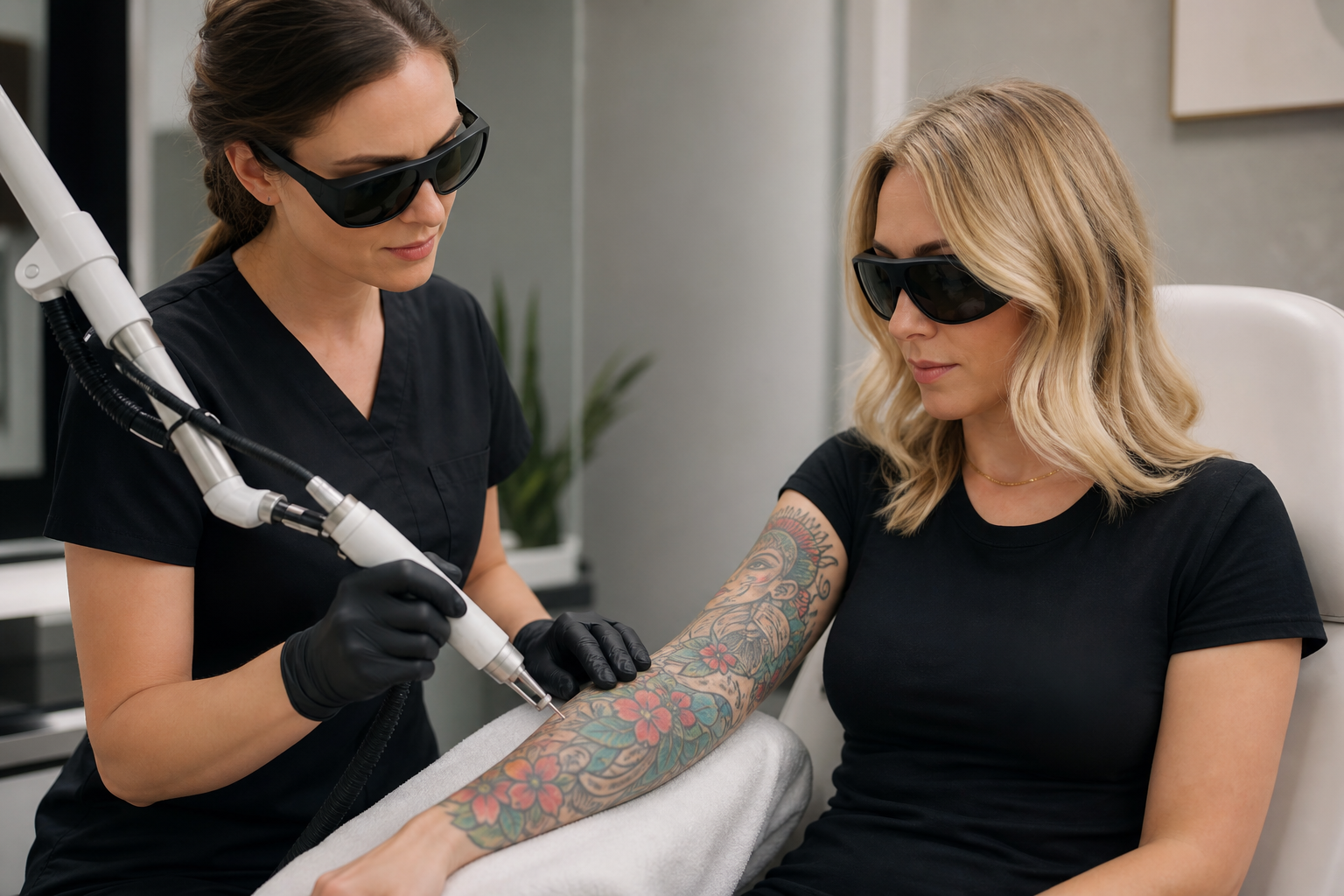
The role of different laser wavelengths is fundamental to the science and practice of laser tattoo removal, a procedure that has gained significant popularity in aesthetic medicine. Understanding this role is crucial for patients considering tattoo removal, as well as for dermatologists, cosmetic specialists, and laser technicians who perform these treatments. Laser tattoo removal operates on the principle that specific wavelengths of light can selectively target various tattoo pigments, breaking them down so that the body's natural processes can gradually eliminate the ink. This article explores in depth how different laser wavelengths function in this context, what makes each suitable for certain colors and skin types, and the limitations and realistic expectations for their use.
Laser tattoo removal is far from a one-size-fits-all procedure. The success and safety of treatment depend heavily on selecting the appropriate laser wavelength that corresponds to the colors and depth of the tattoo pigment. Without this understanding, treatment outcomes may be suboptimal or lead to unwanted side effects such as skin damage or incomplete removal. This article presents a detailed, scientifically grounded overview of laser wavelengths, aiming to clarify the technical aspects for anyone seeking comprehensive, accurate information—whether prospective clients, healthcare providers, or industry professionals.
We will begin by defining what laser wavelengths are and why they matter in tattoo removal. Then, we will examine the types of lasers most commonly used in clinical practice, the specific wavelengths they emit, and how these correlate with pigment colors. Moving forward, the discussion will cover how laser-tissue interaction varies with wavelength, addressing penetration depth, pigment absorption, and potential skin responses. Further sections explore the advantages and limitations inherent to different wavelengths, helping frame realistic expectations. Finally, the article will consider how treatment parameters are chosen to optimize outcomes, all while highlighting the present boundaries of this technology.
What Does "Laser Wavelength" Mean and Why Is It Pivotal in Tattoo Removal?
In the realm of lasers and optics, wavelength is defined as the distance between two consecutive peaks of a light wave, typically measured in nanometers (nm). Each laser type generates a specific wavelength that determines the light’s characteristics, including color and tissue interaction.
When removing tattoos, the laser wavelength is a critical factor because it influences how deeply the laser light penetrates the skin and which tattoo pigments absorb the energy most effectively. Different pigments absorb different wavelengths to varying degrees—a principle known as selective photothermolysis underpins the efficacy of laser treatments. By carefully selecting the laser’s wavelength, practitioners can target ink particles while minimizing the impact on surrounding tissue, reducing side effects and improving pigment clearance.
For example, black and dark blue inks absorb a broad range of wavelengths, especially longer wavelengths like 1064 nm, allowing for deeper penetration and effective pigment breakdown. Conversely, bright colors such as red, orange, yellow, and green require wavelengths that correspond more precisely to their absorption spectra. Understanding these interactions ensures treatments are tailored appropriately to the tattoo’s composition and the patient’s skin type.
Which Laser Types and Wavelengths Are Predominantly Used in Tattoo Removal?
Several types of lasers have become standard in clinical tattoo removal, chiefly distinguished by the wavelengths they emit. The most widely employed are Q-switched lasers and picosecond lasers, each with unique features that impact their suitability for treating different pigments.
Q-switched lasers include several subtypes commonly deployed in practice:
Nd:YAG Laser: Emits light primarily at 1064 nm (near-infrared) and has a frequency-doubled output at 532 nm (green visible light). The 1064 nm wavelength is highly effective for black and dark blue pigments because it penetrates deeply with limited melanin absorption, thus safer for use on darker skin tones. The 532 nm wavelength targets red and orange pigments but has a shallower skin penetration.
Alexandrite Laser: Generates light at 755 nm, a wavelength that sits between the infrared and visible red spectrum. It’s suited for green and blue inks due to their absorption profile and is known for precise targeting with moderate penetration depth.
Ruby Laser: Produces light at 694 nm. It was among the first lasers applied for tattoo removal and is effective against green and blue pigments, although its use is now less frequent due to longer pulse durations and increased risk of side effects compared to newer lasers.
In recent years, picosecond lasers have revolutionized tattoo removal. They emit pulses in one-trillionth of a second durations, far shorter than traditional nanosecond Q-switched lasers. Picosecond lasers available at variable wavelengths, often including 532 nm, 755 nm, and 1064 nm, offer superior pigment fragmentation with less heat diffusion and tissue damage. Their rapid pulses cause ink particles to shatter more efficiently, enabling quicker clearance with potentially fewer sessions.
How Do Different Wavelengths Affect Laser-Tissue Interaction and Pigment Absorption?
The interaction between laser light and skin tissue is governed by multiple factors, among which wavelength is paramount. Two key consequences of varying wavelength are differential penetration depth and selective pigment absorption.
Longer wavelengths, such as the Nd:YAG laser’s 1064 nm, penetrate more deeply into the dermis, allowing treatment of pigments located beneath the skin surface. They are less absorbed by epidermal melanin, thus posing a lower risk of hyperpigmentation or hypopigmentation, making them safer for individuals with darker skin tones.
Shorter wavelengths, like 532 nm or 694 nm, are more strongly absorbed by superficial pigments including red, orange, and some green inks. However, they do not penetrate as deeply and carry a higher chance of affecting epidermal melanin, increasing the caution required for darker skin patients.
Selective absorption is driven by the pigment’s color and chemistry. Black pigments absorb across the entire visible and near-infrared spectrum, enabling effective treatment with multiple wavelengths. Blue and green pigments have more specific absorption peaks matching alexandrite or ruby laser wavelengths. Red and orange inks absorb better near 532 nm. Yellow pigments pose a particular challenge, often requiring specialized wavelengths that are less common.
Ultimately, precise wavelength selection maximizes laser energy absorption within the tattoo ink particles, causing their thermal or photoacoustic disruption and facilitating elimination by the immune system while minimizing damage to normal tissues.
Which Tattoo Colors Are Best Addressed by Each Laser Wavelength?
Properly matching the laser wavelength to the tattoo ink color is essential for effective removal. The most successful treatments feature a wavelength-pigment combination aligned to absorption characteristics.
Black and Dark Blue Inks: These pigments absorb a broad range of wavelengths, with 1064 nm Nd:YAG laser pulses penetrating deeply and breaking down ink effectively. This wavelength is the workhorse for black tattoos and can be safely used on various skin types.
Red and Orange Pigments: More selectively absorb 532 nm light emitted by frequency-doubled Nd:YAG lasers. As these wavelengths have shallower penetration, treatment of these pigments works best for tattoos closer to the skin surface.
Green and Blue Inks: Their absorption peaks align well with the 755 nm alexandrite laser and the 694 nm ruby laser. These lasers can specifically target these colors. The alexandrite laser benefits from modern Q-switch capabilities, offering superior safety and precision compared to the ruby laser, which is less commonly used today.
Yellow Pigments: These are notoriously difficult to remove due to their limited absorption in standard laser wavelengths, often requiring multiple wavelengths or adjunctive treatments to see meaningful improvement.
What Are the Main Advantages and Limitations of Different Laser Wavelengths in Tattoo Removal?
Each wavelength presents distinct advantages and challenges. Understanding these allows practitioners to develop realistic treatment plans and counsel clients effectively.
Advantages:
The Nd:YAG 1064 nm laser’s deep penetration and minimal melanin absorption makes it versatile and safer for darker skin types, while its 532 nm variant addresses red and orange pigments efficiently. Alexandrite lasers provide excellent selectivity for green and blue colors, with a balance of precision and penetration. Picosecond lasers improve pigment fragmentation, reduce the number of treatment sessions required, and generally lower side effects like scarring or pigmentary changes.
Limitations:
Shorter wavelengths, despite being effective for certain pigment colors, are absorbed more by the epidermis, raising risks of burns, hyperpigmentation, or hypopigmentation, particularly in darker-skinned individuals. Some inks, including yellow and pastel colors, remain resistant or require prolonged treatment with no guaranteed complete removal. Additionally, the depth and layering of tattoo pigments and the presence of mixed colors in a tattoo complicate wavelength selection and outcomes. No wavelength alone can address all colors perfectly; often a combination of lasers is needed for comprehensive treatment.
How Are Appropriate Laser Wavelengths Selected for Individual Patients and Tattoos?
Successful tattoo removal begins with a thorough assessment of the tattoo’s features — including ink color(s), depth, density, and the patient’s skin type. A practitioner must understand the spectrum of absorption for the tattoo pigments involved and balance this with the skin type’s susceptibility to adverse effects.
For instance, a black tattoo on darker skin will often be treated primarily with the 1064 nm Nd:YAG laser, starting conservatively to monitor skin reactions. Tattoos with multiple colors might require sequential treatment with different lasers, such as combining 1064 nm for black areas and 532 nm or 755 nm alexandrite lasers for reds and greens.
Practitioners often rely on established protocols, clinical experience, and sometimes test spots to observe the skin and pigment reaction before proceeding with full treatment. Factors like patient health, skin condition, and the presence of scar tissue also guide wavelength choice.
What Can Patients Realistically Expect Regarding Tattoo Removal Results Based on Different Wavelengths?
The effectiveness of tattoo removal varies, influenced largely by how well the laser wavelength matches the pigment’s absorption profile, the tattoo’s age, ink quality, and skin type. Generally, darker inks like black respond well to 1064 nm lasers, often requiring fewer sessions.
Colored tattoos, especially those containing green, blue, or yellow hues, require more targeted wavelengths, longer treatment courses, and sometimes multiple laser types. Even then, some pigments may fade incompletely or show residual discoloration.
Patients should understand that while modern lasers offer significant improvements, complete removal is not always guaranteed. Side effects such as temporary redness, swelling, blistering, or pigmentary changes can occur but tend to resolve with proper care.
Patience, adherence to treatment protocols spaced appropriately to allow skin healing, and consultation with experienced providers who understand wavelength selection are key to optimizing outcomes and minimizing complications.
Why Is Comprehensive Knowledge of Laser Wavelengths Crucial for Safe and Effective Tattoo Removal?
Given the diversity of tattoo pigments and individual skin characteristics, a deep understanding of laser wavelengths underpins the foundation of safe, effective tattoo removal. Incorrect wavelength choice can lead to suboptimal pigment targeting, increased treatment sessions, and heightened risk of adverse effects, including scarring and dyspigmentation.
Training in wavelength selection informs practitioners on tailoring treatment strategies, choosing appropriate laser types, and setting realistic patient expectations. It also helps in evaluating emerging laser technologies like picosecond systems, integrating them optimally within existing treatment paradigms to enhance efficacy.
For patients, awareness of how wavelengths impact treatment aids in choosing qualified providers and fostering informed consent discussions, significantly contributing to satisfaction and safety.