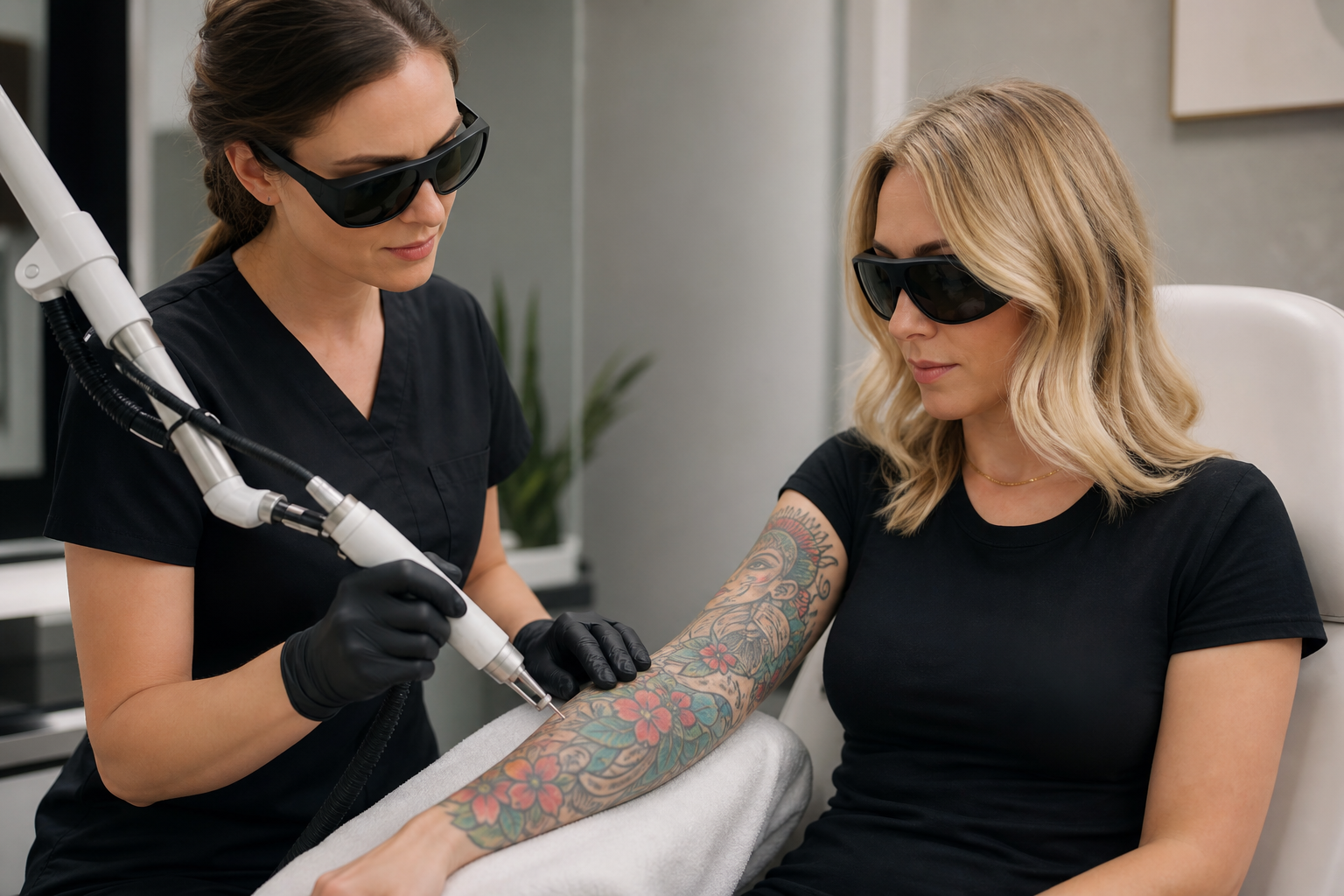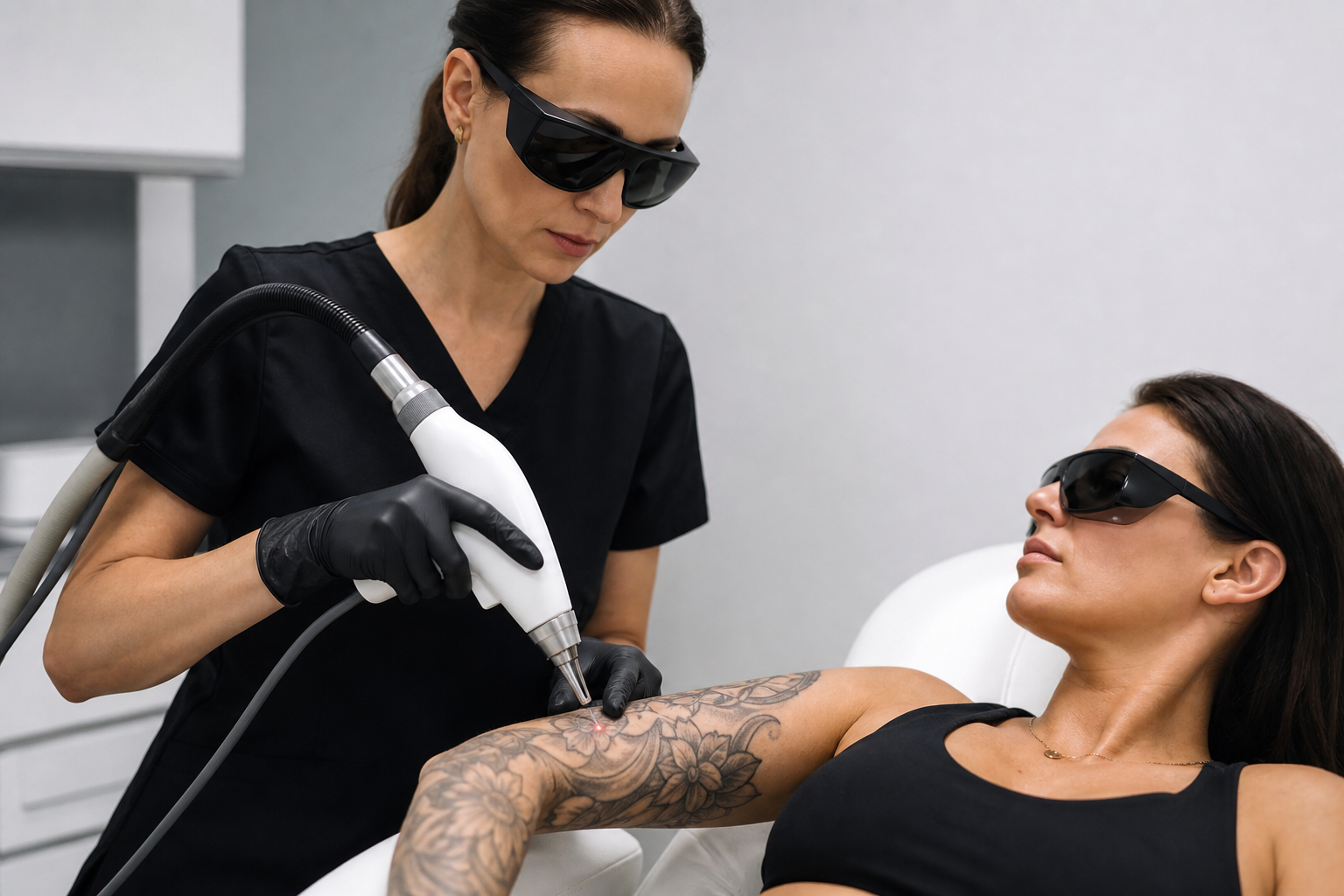
Tattoo removal has become an increasingly sought-after procedure as more individuals reconsider their body art, whether due to changes in personal style, professional requirements, or simply a desire to erase past decisions. Among the available technologies designed to fade or eradicate unwanted tattoos, the ruby laser emerges as a prominent and historically significant option. Renowned for its precision and ability to target specific pigment colors, this technology continues to be relevant in modern dermatological and aesthetic practices.
This article delves deeply into the role of the ruby laser in tattoo removal, clarifying how it functions, the types of tattoos for which it is most suitable, its benefits, potential limitations, and what patients can realistically expect from treatments involving this laser. Unlike general overviews or DIY guides, the focus here is to provide an informative, expert-backed understanding tailored for individuals seriously exploring laser tattoo removal.
Understanding the ruby laser's mechanism and applications equips prospective patients with the knowledge needed to make informed decisions and set appropriate expectations about the course and outcome of their tattoo removal journey.
What Is a Ruby Laser and How Does It Function in Tattoo Removal?
The ruby laser is a type of Q-switched laser technology that operates at a wavelength of approximately 694 nanometers. This distinct wavelength allows it to be particularly effective in targeting dark and red pigments within tattoo ink. The mechanism relies on delivering extremely brief yet intense bursts of light energy that penetrate the skin to fragment tattoo pigments into smaller particles.
These shattered pigment fragments are then recognized as foreign material by the body's immune cells, namely macrophages, which gradually engulf and eliminate them. Since the laser specifically targets pigment molecules while sparing surrounding tissues, it reduces the risk of extensive skin damage—a critical factor in cosmetic procedures.
Because the process involves fragmenting the pigments, complete removal typically requires multiple treatment sessions spaced over several weeks or months, depending on factors such as tattoo size, ink density, and individual skin response.
Compared to other lasers like diode or Nd:YAG types, which operate at different wavelengths, the ruby laser’s 694 nm wavelength renders it uniquely effective against black, red, and dark pigment shades. Its precise targeting capability minimizes collateral tissue injury, enhancing both treatment safety and visual outcomes.
Which Tattoo Types Are Best Treated with the Ruby Laser?
The ruby laser excels in treating tattoos with dark pigments such as black, dark gray, and especially red and red-based hues including maroon and some shades of orange. Red inks traditionally pose challenges for laser removal, but the ruby laser’s wavelength facilitates more efficient absorption and fragmentation of these pigments compared to other laser types.
Conversely, colors like blue, green, or yellow absorb less energy at 694 nm and are not optimally treated with a ruby laser. Such colors may require alternative laser systems—such as Alexandrite lasers (755 nm) or Nd:YAG lasers (1064 nm)—which are better suited for those specific pigment colors. Additionally, certain fluorescent or pastel inks may respond poorly to ruby laser treatment.
The age and depth of a tattoo also influence treatment success. Older tattoos with ink deposited deeply in the dermis or partially treated tattoos may require a more nuanced approach, sometimes involving multiple laser modalities to achieve satisfactory fading or removal.
What Advantages Does the Ruby Laser Offer for Tattoo Removal?
The ruby laser’s key strengths lie in its precision, specificity, and established clinical track record. By focusing its energy on targeted pigments, it minimizes damage to adjacent skin layers, which translates to a lower incidence of scarring and pigmentary alterations like hyperpigmentation or hypopigmentation.
Its efficacy in addressing difficult-to-remove red pigments places it in a distinctive niche within tattoo removal technologies, where many lasers struggle to produce consistent results. Additionally, the short, high-energy pulses disrupt pigment particles effectively without prolonging thermal injury, which can compromise healing.
Clinically, the ruby laser has demonstrated durable results over decades of use, proving its reliability and safety when administered by experienced practitioners. Its long-standing presence in dermatology underscores a foundation of scientific validation and practical outcomes.
What Are the Limitations and Risks Associated with Ruby Laser Treatment?
Despite its many benefits, the ruby laser is not a universal solution for all tattoo removal needs. Limitations include its reduced efficacy on lighter colors like blue and green, necessitating alternative or combined laser approaches for these pigments. Additionally, the requirement for multiple treatment sessions can test patient patience and commitment.
Post-treatment side effects, although generally mild, can include temporary redness, swelling, blistering, scaling, and rarely pigmentary changes, especially in individuals with darker skin tones. These risks highlight the importance of seeking treatment from qualified professionals who can tailor treatment parameters and aftercare instructions appropriately.
Furthermore, some individuals may experience incomplete pigment removal or ink shadowing, factors influenced by tattoo composition, skin type, and the body’s immune response. Realistic expectations are essential to avoid disappointment and to understand that complete erasure may not always be guaranteed.
What Does the Ruby Laser Tattoo Removal Process Entail and What Can Patients Expect?
Treatment sessions using a ruby laser are relatively brief, typically lasting from a few minutes to approximately half an hour depending on the tattoo’s size. Prior to the procedure, topical anesthesia can be applied to minimize discomfort.
During treatment, the patient may feel sensations akin to snapping rubber bands or mild stinging as the laser pulses are delivered strategically across the tattooed area. Immediate effects include localized redness and swelling, which usually subside within days. Crusting or flaking of the skin may occur as part of the normal healing process.
Intervals of six to eight weeks between sessions are common to allow skin recovery and effective clearance of fragmented pigments by the immune system. A full treatment plan often involves six to ten sessions or more, adjusted based on individual response and tattoo characteristics.
diligent adherence to post-treatment consultation guidance, including sun avoidance and skin care, aids in minimizing complications and optimizing results.
How Does the Ruby Laser Compare to Other Lasers Used for Tattoo Removal?
The ruby laser is part of a family of Q-switched lasers sharing the unique capability to emit ultra-short, high-energy pulses that break down tattoo ink particles. However, each type differs in wavelength and target pigment affinity.
For instance, the Nd:YAG laser, operating at 1064 nm, is often preferred for black and dark blue inks, whereas the Alexandrite laser at 755 nm offers better absorption for green and blue pigments. Modern picosecond lasers, an emerging technology, emit even shorter pulses (in picoseconds rather than nanoseconds), often enhancing clearance speed and reducing skin damage.
Choosing the most appropriate laser modality depends on the tattoo’s color palette, depth, skin type, and patient health. The ruby laser remains a prime candidate particularly for red and dark pigment removal where its wavelength matches well, but integrated approaches mixing different laser systems may optimize overall outcomes.
What Are Essential Considerations for Prospective Patients of Ruby Laser Tattoo Removal?
Before embarking on a ruby laser tattoo removal journey, it is crucial to consult with an experienced dermatologist or certified laser specialist. A thorough assessment encompassing tattoo specifics, skin evaluation, medical history, and personal goals will guide a safe and effective treatment plan.
Patients should understand that multiple sessions are typically necessary and that complete tattoo eradication is not always possible. Realistic expectations, combined with a willingness to adhere to suggested treatment schedules and aftercare, enhance the likelihood of satisfactory results.
Avoid attempts at home-based laser removal or unregulated procedures, as these can carry significant risks for scarring, infection, and permanent pigmentation changes. Professional oversight ensures tailored care and mitigates complications.