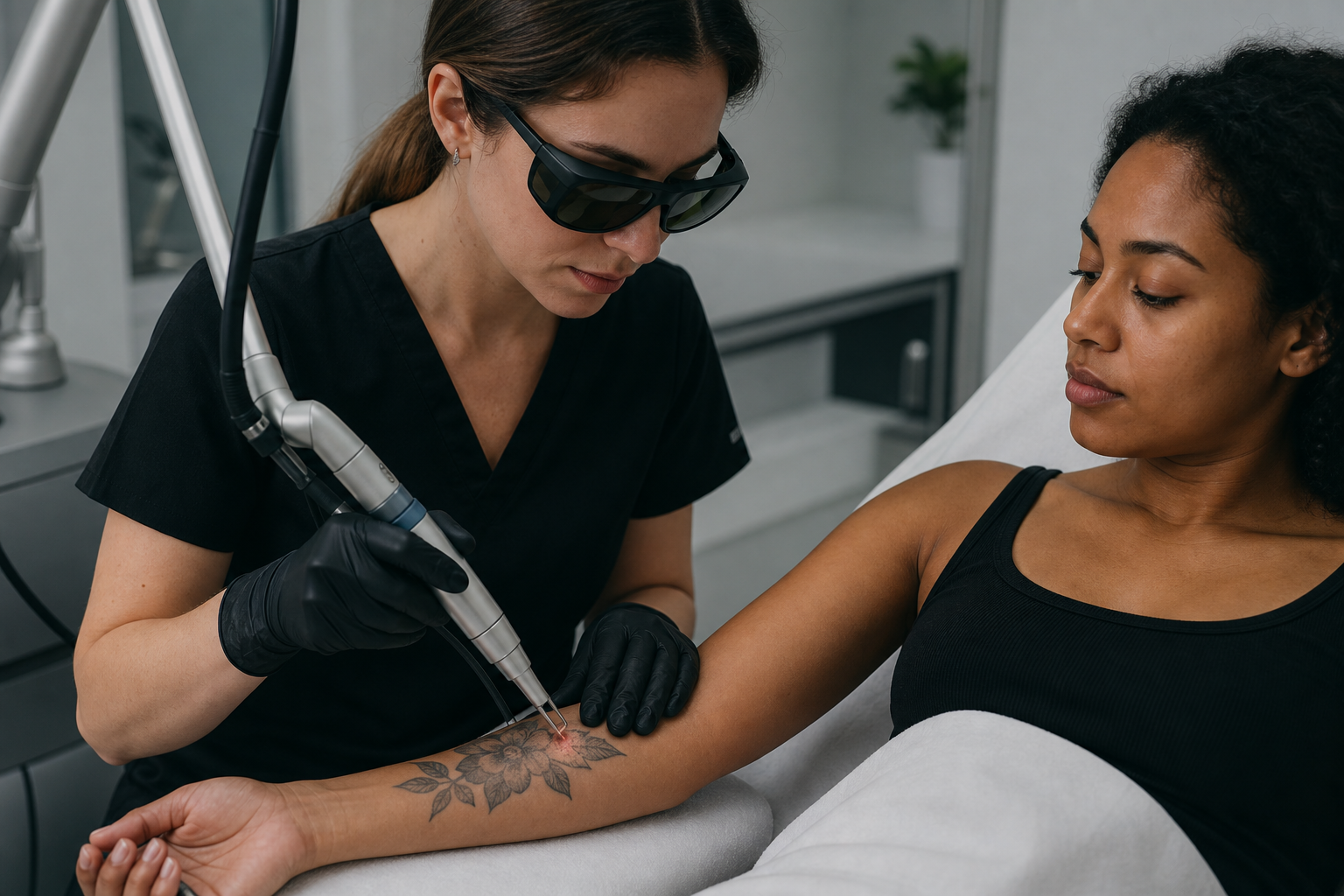
In the realm of tattoo removal, the Nd:YAG laser has earned its reputation as a particularly effective tool for addressing tattoos with black and dark blue pigments. As tattoo trends evolve and personal preferences shift, many individuals seek to erase or significantly fade their existing tattoos for various reasons—ranging from professional demands to a desire for a fresh start. Understanding how the Nd:YAG laser functions specifically concerning these darker inks is critical for anyone considering this treatment option. It is important to explore the technology behind this laser, who can benefit most from it, and what realistic outcomes can be anticipated.
Nd:YAG laser technology targets skin deeply and safely, offering a unique approach to the selective breakdown of dark tattoo pigments. Its precision facilitates the minimization of damage to surrounding tissue while efficiently fragmenting the ink particles embedded within the dermis. For those with black or dark blue tattoos seeking an effective removal method, the Nd:YAG laser stands as a leading choice, albeit with clear boundaries regarding its capabilities and treatment process.
This editorial will detail how Nd:YAG technology works for black and dark blue tattoos, delve into patient candidacy, clarify the scope of benefits and limitations, and set expectations for the treatment journey and results. It is designed to provide practical, evidence-aligned insights for potential patients and professionals in dermatology and aesthetic medicine alike.
What Is the Nd:YAG Laser and How Does It Remove Black and Dark Blue Tattoos?
The Nd:YAG laser—short for neodymium-doped yttrium aluminum garnet laser—is a sophisticated medical laser device that emits light at a wavelength of 1064 nanometers. This specific wavelength penetrates deeply into the skin, reaching the dermal layers where tattoo pigments reside without causing excessive damage to the epidermis.
Dark pigments such as black and dark blue ink strongly absorb this wavelength, making the Nd:YAG laser particularly effective against these tattoo colors. When the laser energy interacts with the pigment particles, it generates a rapid thermal effect, causing these particles to shatter into smaller fragments. This disintegration facilitates the body's immune system in gradually absorbing and clearing the ink fragments via lymphatic drainage.
The laser often operates in a Q-switched mode, delivering high-intensity pulses over nanoseconds. This brief, intense energy burst maximizes pigment breakage while sparing the surrounding skin from thermal injury. The precision and depth of Nd:YAG laser pulses make it indispensable for treating tattoos with black and deep blue pigments, which typically localize in deeper skin layers.
Which Tattoo Pigments Respond Best to Nd:YAG Laser Treatment?
Nd:YAG lasers excel at targeting and removing black and dark blue tattoo pigments due to their strong absorption at the 1064 nm wavelength. These pigments are often challenging to remove, as they reside deeply in the skin and are highly stable chemically. The deep tissue penetration and specific light energy absorption profiles of the Nd:YAG laser make it uniquely suited for this task.
Conversely, other tattoo colors such as reds, yellows, and greens do not absorb Nd:YAG laser light as effectively. These pigments often require alternative laser therapies like alexandrite or ruby lasers, which operate at different wavelengths better aligned with those ink colors. For instance, the alexandrite laser is frequently utilized for green and blue pigments, while ruby lasers may sometimes be employed depending on pigment composition.
Moreover, the age and intensity of the tattoo ink influence treatment success. Older tattoos may have already begun to fade naturally and can sometimes be easier to treat. In contrast, vivid and densely inked tattoos, especially if freshly applied, tend to require more extensive laser sessions to achieve noticeable fading or removal.
Who Is an Ideal Candidate for Nd:YAG Laser Tattoo Removal?
Patients looking to eliminate or diminish black and dark blue tattoos with minimal skin damage are prime candidates for Nd:YAG laser treatment. This includes individuals with varying skin types, particularly those with medium to darker skin tones, where the risk of pigmentation disturbances is higher with other laser types but reduced when using the Nd:YAG wavelength.
Before proceeding with treatment, it is essential to undergo a thorough medical evaluation. Individuals with active skin infections, unhealed wounds near the tattoo site, or certain systemic conditions like uncontrolled diabetes or severe immune deficiencies may not be suitable candidates at the time. Pregnant women are generally advised to delay laser tattoo removal until after delivery.
Patients should also have realistic expectations regarding the treatment course and results. Complete removal may not always be achievable; in some cases, a residual faint shadow or uneven pigment density may persist.
Advantages and Limitations of Nd:YAG Laser for Dark Tattoo Removal
The primary benefit of using the Nd:YAG laser for black and dark blue tattoos lies in its high efficacy for these pigment colors along with its safety profile across a range of skin types. Its ability to penetrate deeply and selectively target dark pigments reduces collateral tissue damage and minimizes scarring risk.
Furthermore, the Nd:YAG laser's technology allows for precise control over treatment parameters, enabling customization to individual patient needs. This precision supports a strategic approach to pigment fragmentation and gradual clearing by the body's natural processes.
However, there are inherent limitations. Multiple treatment sessions, typically spaced six to eight weeks apart, are almost always necessary to achieve significant fading. Treatment duration and overall number of sessions vary based on tattoo size, pigment density, and skin response. Light-colored inks remain resistant to this laser type, often necessitating complementary lasers or alternative methods.
Another consideration is the potential for side effects, including transient redness, swelling, pigment changes (hypo- or hyperpigmentation), and, rarely, scarring. Skilled providers utilize appropriate settings and cooling techniques to mitigate such risks.
What to Expect During and After Nd:YAG Laser Treatments?
The removal process begins with a detailed consultation to assess the tattoo's characteristics and the patient's skin type. Treatment sessions generally last from a few minutes up to 20 minutes depending on the tattoo’s size and complexity.
During the laser application, patients might experience sensations described as snapping or pinching, often moderated with topical anesthetics or cooling devices to enhance comfort. Immediately post-treatment, mild redness and swelling are common and typically resolve within a few days.
Post-procedure care is crucial for optimal results and includes protecting the treated area from sun exposure, applying recommended topical agents to support healing, and avoiding trauma or friction to the skin. Follow-up appointments help monitor progress and determine the timing for subsequent sessions.
How Many Treatments Are Typically Required, and How to Choose a Laser Specialist?
The number of treatments needed varies widely but commonly ranges between four and eight sessions. Factors influencing the number include tattoo age, ink density, body location, and individual healing and immune response.
Selecting an experienced, board-certified dermatologist or laser specialist is imperative. The clinician should have a comprehensive understanding of laser physics, pigmentation science, and skin anatomy, as well as practical experience with tattoo removal. Verification of credentials, a review of before-and-after photos, and transparent discussion of realistic expected outcomes are fundamental steps in choosing a provider.