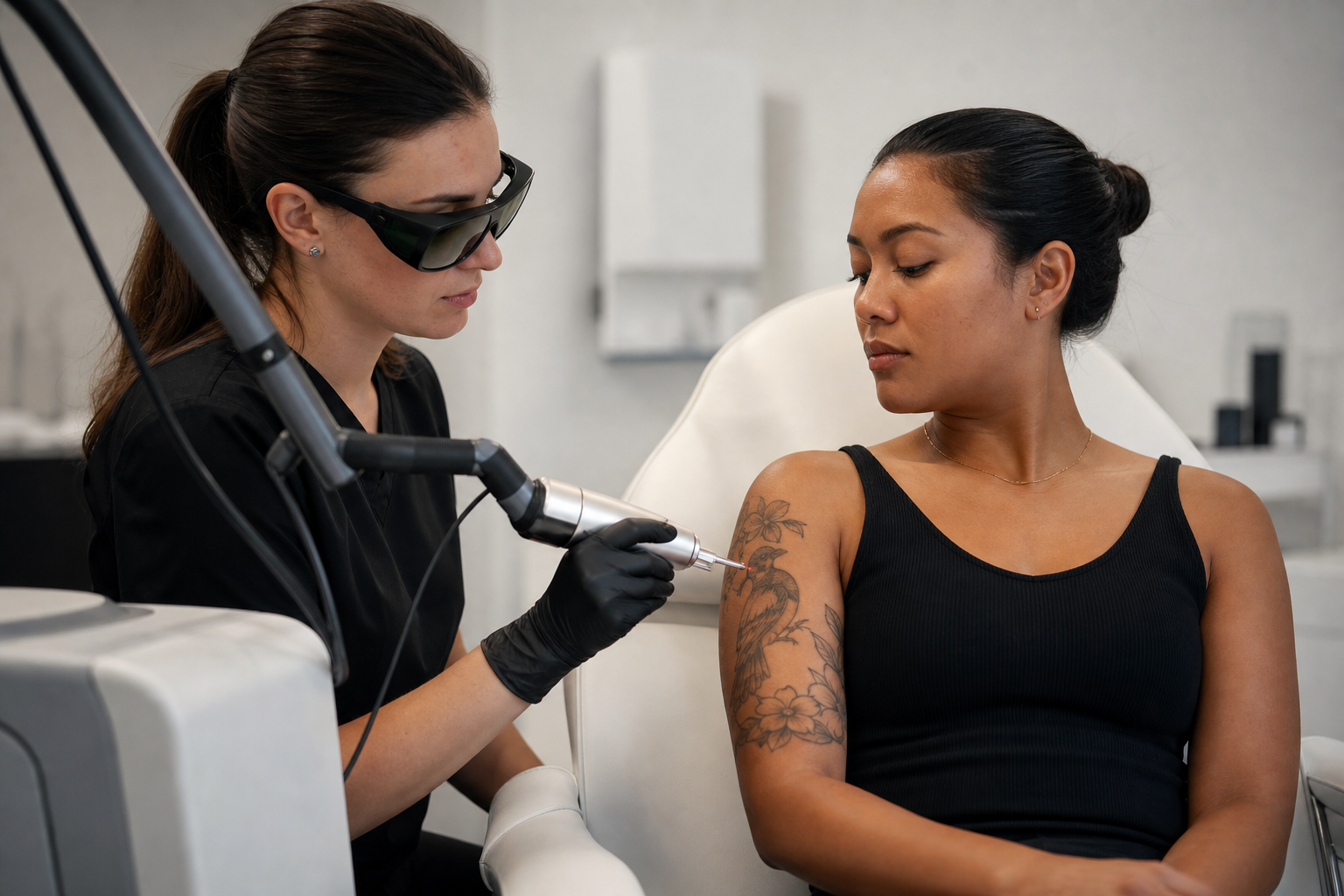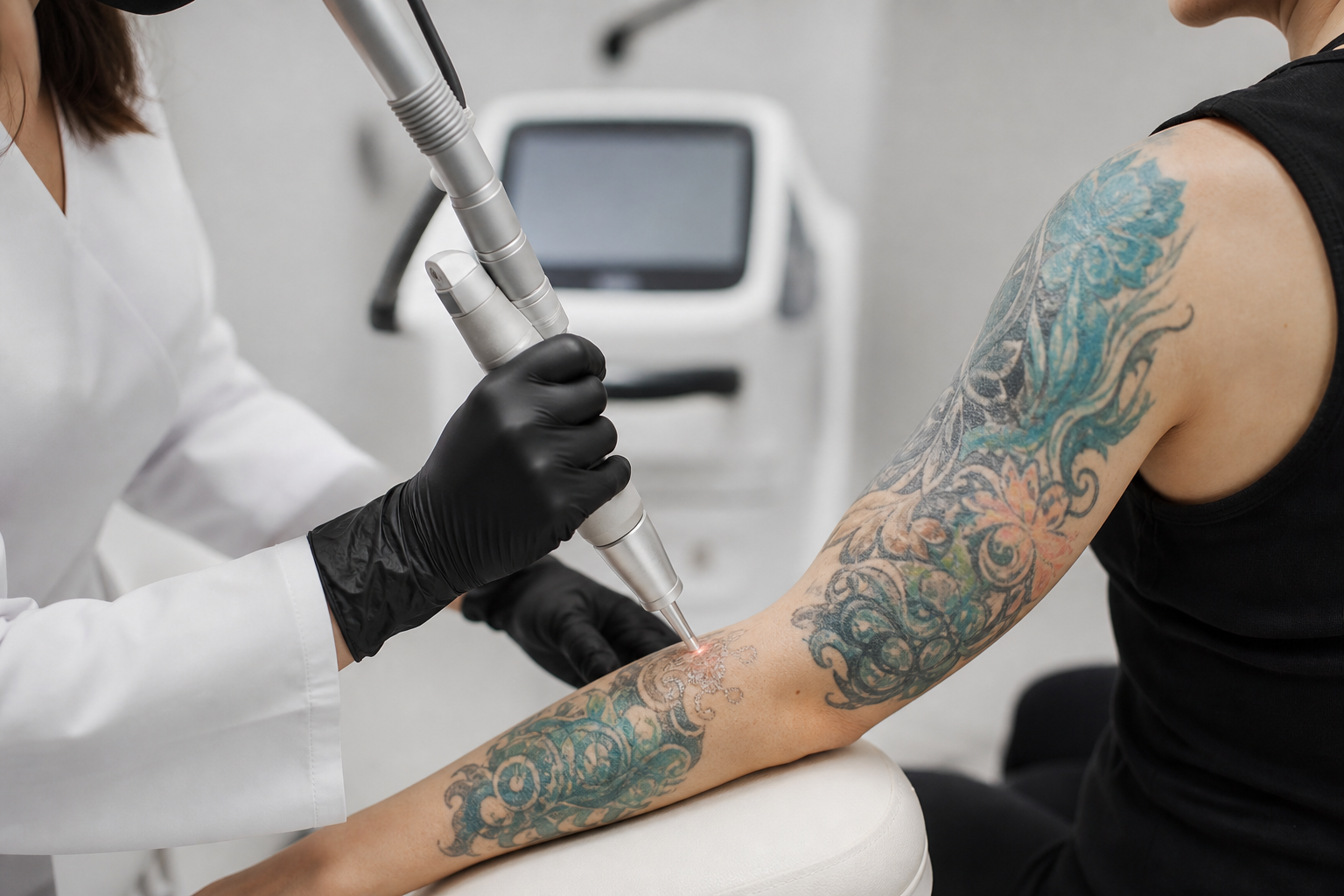
Tattoo removal has become increasingly common as more people decide to part ways with their body art for various reasons—be it changes in personal taste, professional requirements, or life circumstances. Among the spectrum of tattoo colors, green and blue pigments present some of the most formidable challenges in the realm of laser removal. Unlike black or red inks, which generally respond better to conventional laser treatments, green and blue tattoos require more specialized approaches due to their chemical makeup and skin interactions.
This article is dedicated to individuals considering the laser removal of green and blue tattoos, as well as practitioners seeking a deeper understanding of these complex treatments. It aims to demystify the intricacies of how different pigments respond to laser technologies, the realistic expectations regarding the number of sessions, and crucial safety considerations. Understanding these factors is instrumental for anyone weighing the benefits and limitations surrounding laser tattoo removal of these particular colors.
Laser tattoo removal fundamentally relies on directed light energy shattering pigment particles into smaller fragments, which the body’s lymphatic system then gradually eliminates. However, the efficacy of this process is influenced heavily by the tattoo’s colors, ink composition, and placement depth beneath the skin's surface. As pigments like green and blue have distinct optical characteristics, their removal demands tailored laser wavelengths and methodical treatment planning.
What Makes Green and Blue Tattoo Inks More Resistant to Laser Removal?
The difficulty in removing green and blue inks primarily stems from their chemical and optical properties. These pigments are often composed of copper phthalocyanine compounds and other complex molecules that exhibit higher photostability than simpler black carbon-based inks. Photostability refers to the pigment molecules’ resistance to breaking down when exposed to light energy, especially the specific wavelengths lasers emit.
Furthermore, green and blue pigments absorb laser wavelengths less efficiently than black ink. For example, black ink strongly absorbs the 1064 nm wavelength used by Nd:YAG lasers, which makes it comparatively easier to break down. Green and blue inks, however, absorb light better at shorter wavelengths, such as 532 nm or 755 nm, but these wavelengths have shallower skin penetration, complicating the effective reach to deeply embedded pigment particles.
This optical mismatch means that standard laser protocols optimized for black or red tattoos often yield suboptimal results for blue and green colors. The choice of laser type and wavelength must therefore be carefully matched to the specific pigments to maximize energy absorption without damaging surrounding tissues.
Who Are the Suitable Candidates for Laser Removal of Green and Blue Tattoos?
Individuals considering removal of blue or green tattoos should have realistic expectations and be prepared for a potentially prolonged treatment course. Ideal candidates typically have tattoos with flat inks of professional quality, minimal scarring, and good skin health. Tattoos that are older tend to fade naturally over time, which can sometimes make laser removal more effective because pigments may already be partially degraded.
Those with deeply saturated, vibrant tattoos or amateur work with uneven ink application may require more sessions. Additionally, skin type plays a significant role. Lighter skin tones generally respond better to laser treatments without adverse pigmentary changes, whereas darker skin requires cautious laser settings to minimize risks like hyperpigmentation or hypopigmentation.
Consultations with experienced dermatologists or laser specialists can provide assessments tailored to individual cases, incorporating factors such as ink colors, tattoo size, depth, and the patient's skin phototype.
How Does the Choice of Laser Technology Influence Removal Outcomes?
The effectiveness of eliminating green and blue tattoos heavily depends on selecting the appropriate laser technology. Q-switched lasers, including Nd:YAG, Alexandrite, and Ruby lasers, have long been the standard for tattoo removal, each excelling at different color targets based on their emission wavelengths.
For green and blue pigments, the Alexandrite laser emitting at 755 nm is often favored due to its higher absorption by these colors compared to Nd:YAG's 1064 nm wavelength. The 532 nm frequency-doubled Nd:YAG laser also works well for certain hues but is limited by its shallow penetration depth, which might not reach deeper pigment particles effectively.
Emerging picosecond lasers offer short pulse durations that increase peak power, improving pigment shattering while generally reducing collateral skin damage and session numbers. Though promising, picosecond technology is not universally available and may still face limitations concerning very stubborn green and blue inks.
It is crucial that laser parameters—including wavelength, pulse duration, and fluence (energy per area)—be precisely calibrated and customized per case to optimize removal efficacy and minimize side effects.
What Is the Typical Treatment Timeline and Expected Number of Sessions?
Laser removal of green and blue tattoos is usually a longer, more incremental process compared to black ink removal. While black tattoos often show marked fading after 3 to 5 sessions, green and blue colors frequently require between 8 and 12 sessions or more to achieve significant lightening.
Treatment sessions are commonly spaced 6 to 8 weeks apart to give the body sufficient time to eliminate fragmented pigment and to allow skin recovery. Shortening these intervals risks adverse skin reactions such as blistering or scarring without improving outcomes.
It is also important to note that complete removal to bare skin is not guaranteed for all cases. High-quality inks, multi-layered pigment placements, and individual skin responses can mean residual haze or shadows remain despite best efforts. Nonetheless, a substantial reduction in tattoo visibility is realistically attainable for most patients willing to commit to the process.
Why Is Patience and Proper Aftercare Critical During the Removal Process?
The gradual nature of laser tattoo removal calls for a patient and measured approach. Rushing treatments or pushing for faster results can increase the likelihood of skin damage and long recovery times.
After each session, diligent aftercare is necessary to protect the skin from infection, promote healing, and optimize results. This includes keeping the treated area clean, avoiding direct sun exposure, and following any specific guidance from the treatment provider.
Understanding that the body requires weeks to process and clear pigment particles highlights the importance of spacing treatments appropriately. Monitoring skin responses between sessions helps adjust treatment parameters for safety and efficacy.
Are There Alternatives or Complementary Methods to Laser Tattoo Removal?
While laser therapy remains the most refined and safest method for removing green and blue tattoos, other approaches exist but often with drawbacks. Surgical excision effectively removes the tattoo but is only feasible for small areas and leaves scars. Similarly, dermabrasion mechanically abrades the skin but can be imprecise and carries risk of pigmentation changes and scarring.
Cover-up tattoos—overlaying existing ink with new designs—are a popular cosmetic alternative when removal is impractical or undesired. However, this method does not eliminate the original ink and requires careful planning with skilled tattoo artists.
Some topical or chemical methods advertised for tattoo removal lack scientific validation and carry risks of skin damage or incomplete results. Consulting with qualified specialists ensures a safe, effective plan tailored to individual goals.
What Should Patients Look for When Choosing a Clinic and Specialist?
Selecting a reputable clinic with experienced laser professionals is fundamental to achieving optimal outcomes and maintaining safety. Prospective patients should inquire about:
— Laser types available: Clinics with a range of lasers including Alexandrite, Nd:YAG, and picosecond options are better equipped to tailor treatments for colored inks.
— Practitioner expertise: Specialists who can assess ink composition, tattoo age, and skin type accurately contribute to realistic expectations and effective protocols.
— Pre-treatment testing: Patch or test spot treatments to gauge skin reaction and pigment response reduce risks during full sessions.
— Transparent communication: Clear explanations of potential outcomes, session numbers, costs, and side effects foster informed consent and patient confidence.
Avoiding clinics promising rapid removal or low prices without thorough evaluation is prudent, as inadequate care can result in complications such as burns, scarring, or paradoxical pigment darkening.
How Do Ink Quality and Composition Affect the Removal Process?
Ink quality greatly influences laser removal success. Professional tattoo inks typically contain more stable pigments, including green and blue compounds designed for longevity and vibrancy, which conversely can be harder to remove.
Amateur inks or older formulations may contain impurities or less stable dyes that fade more readily. Additionally, the depth of ink placement varies between artists and tattoo styles, complicating energy delivery to the target area.
Understanding these nuances helps clinicians select appropriate laser settings and anticipate treatment progress. It also explains why some tattoos defy complete removal despite multiple sessions.