Photoageing represents a chronic and progressive condition of the skin triggered primarily by cumulative exposure to ultraviolet (UV) radiation from the sun. This phenomenon differs fundamentally from the natural ageing process, as it stems from environmental influences rather than genetics or intrinsic biological aging. The visible consequences of photoageing—characterized by fine and deep wrinkles, uneven pigmentation, rough texture, and loss of skin elasticity—pose a significant concern both aesthetically and psychologically for many individuals. Addressing these changes effectively is crucial for those seeking to restore a more youthful and vibrant skin appearance without resorting to invasive surgery.
This article delves into how laser technology offers a scientifically supported approach to ameliorate sun-damaged skin. It addresses the mechanisms by which lasers operate, the candidacy criteria for treatment, potential benefits and limitations, recovery expectations, and common risks involved. It is tailored for individuals experiencing the effects of photoageing, whether at early or advanced stages, as well as dermatology professionals and aesthetic practitioners interested in laser modalities for skin rejuvenation.
Understanding the role of lasers in counteracting photoageing facilitates informed decision-making for anyone exploring treatment options. While laser therapy does not promise complete eradication of sun damage, it can significantly reduce the prominence of age-related skin changes and improve overall skin quality through collagen stimulation and targeted pigment lightening.
What Exactly Is Photoageing and How Does Sun Exposure Impact the Skin?
Photoageing is a distinctive form of premature skin ageing induced primarily by chronic exposure to UVA and UVB radiation. Unlike intrinsic ageing governed by genetic and chronological factors, photoageing results from cumulative environmental damage, notably solar ultraviolet light, which disrupts the normal architecture and function of the skin.
The UV rays penetrate the skin and damage crucial structural proteins such as collagen and elastin within the dermis. Collagen degradation leads to thinning of the skin and loss of tensile strength, whereas elastin fiber damage compromises the skin's elasticity, culminating in sagging and wrinkle formation. UV exposure also precipitates mutations and oxidative stress at the cellular level, which accelerates dermal degeneration.
Furthermore, UV radiation promotes melanocyte dysregulation, often causing hyperpigmentation in the form of sun spots and uneven skin tone. It also interferes with the skin's natural renewal process, leading to rough texture and visible dryness. Collectively, these effects result in a skin surface that appears aged, dull, and less resilient, triggering many individuals to seek restorative therapies.
How Do Different Laser Treatments Mitigate the Effects of Photoageing?
Laser treatments for photoageing encompass various technologies designed to target the skin at different depths and via different mechanisms. The overarching goal is to stimulate collagen and elastin production, remodel dermal structures, and reduce pigmentation irregularities to enhance skin texture and tone.
Ablative lasers work by precisely vaporizing the superficial skin layers, thus removing the damaged outer skin and prompting a robust regenerative response. This can lead to marked improvements in wrinkles, surface irregularities, and pigmented lesions. However, ablative treatments usually entail a longer recovery period and carry a higher risk of side effects such as redness, swelling, and potential scarring.
In contrast, non-ablative lasers bypass superficial ablation and instead deliver heat energy deeper into the dermis to encourage collagen synthesis without disrupting the outer skin barrier. These treatments often result in subtler improvements and require multiple sessions but have significantly reduced downtime and are suitable for mild to moderate photoageing.
Fractional lasers represent a hybrid approach, creating numerous microscopic zones of controlled injury surrounded by undamaged tissue. This pattern facilitates rapid healing while enabling effective dermal remodeling. Fractional laser therapy is frequently employed to address fine lines, moderate wrinkles, and uneven pigmentation, balancing efficacy with patient convenience.
Specific pigment-targeting lasers focus on breaking down excess melanin deposits responsible for sun spots and uneven coloration, thereby evening out skin tone and enhancing brightness.
Who Is An Appropriate Candidate for Laser Treatment of Sun-Damaged Skin?
Ideal candidates for laser treatment of photoageing typically present with visible signs such as fine wrinkles, loss of skin firmness, patchy pigmentation, rough skin texture, or mild laxity. Candidates should possess realistic expectations about the outcomes, understanding that laser therapy aims to improve rather than perfect the skin's appearance.
Patients with active skin infections, inflammatory skin conditions, photosensitivity disorders, or a history of abnormal scarring may not be suitable candidates. Additionally, individuals with darker skin tones require careful evaluation due to increased risk of post-inflammatory pigmentation changes; thus, practitioner expertise in laser selection and settings is critical.
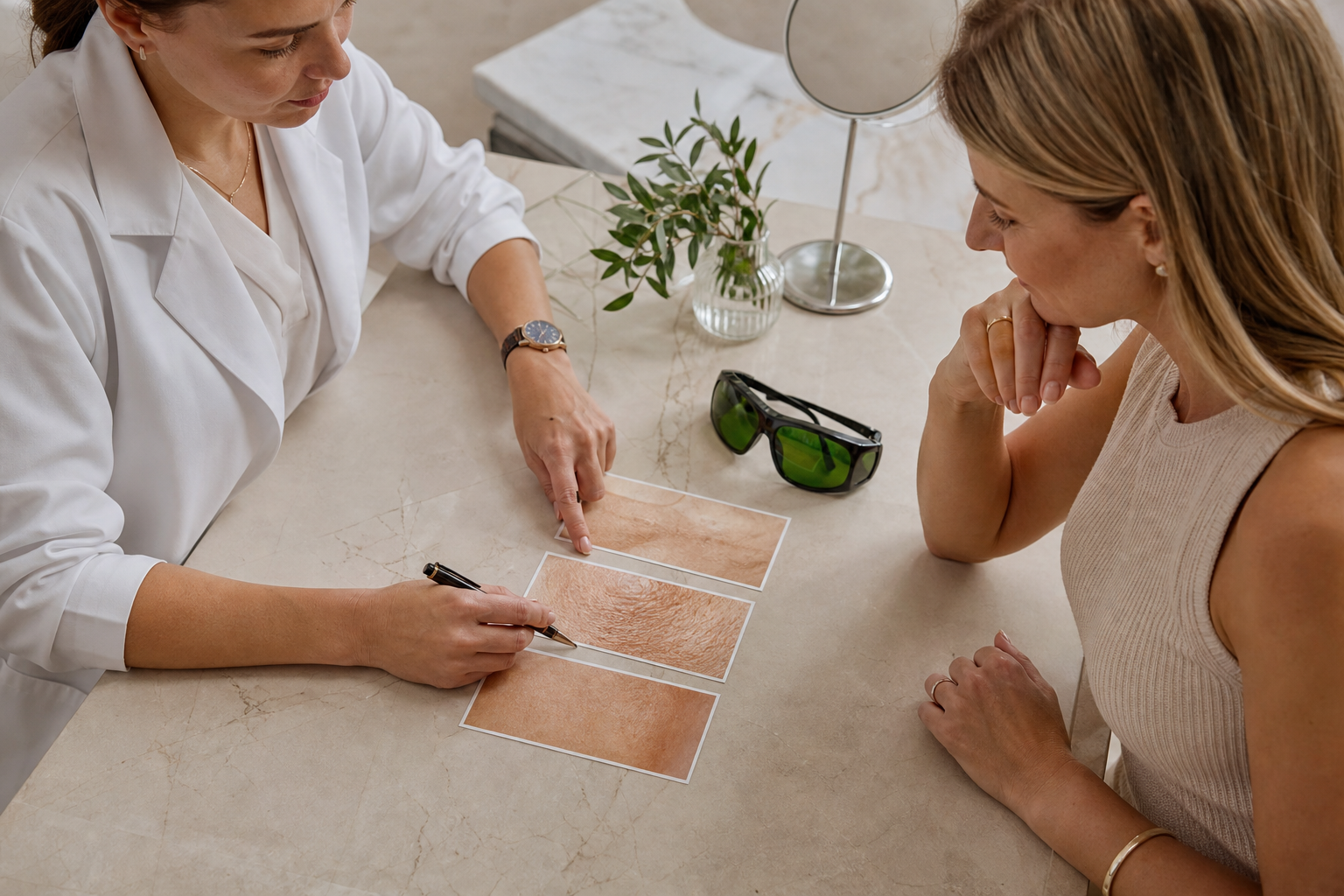
A thorough dermatological assessment prior to treatment planning helps ensure safe and effective therapy tailored to each patient's unique skin condition and goals. Prospective patients should discuss their medical history, current medications, and skincare routine for optimal planning.
What Are the Biological Effects of Laser Therapy on Photoaged Skin?
Laser energy induces controlled thermal injury within targeted skin layers, triggering wound healing pathways that promote tissue regeneration. This controlled damage stimulates fibroblasts, the cells responsible for producing collagen and elastin, essential proteins that confer the skin with strength and elasticity.
Concomitantly, laser treatments disrupt melanin aggregates responsible for hyperpigmentation, facilitating a gradual lightening of sun spots and improving uniformity of skin tone. By removing the stratum corneum or causing micro-injuries, lasers also accelerate epidermal turnover, resulting in smoother texture and enhanced radiance.
The remodeling of dermal and epidermal components unfolds over weeks to months following treatment, necessitating multiple sessions for optimal improvement. Gradual progress emphasizes that laser therapy is a skin rejuvenation strategy rooted in enhancing the skin's natural repair mechanisms rather than instant correction.
What Can Patients Expect Regarding Recovery and Potential Side Effects?
Recovery times vary by laser type and individual skin response. Ablative lasers commonly produce redness, irritation, peeling, and sensitivity lasting up to two weeks, requiring diligent wound care and sun avoidance. Non-ablative and fractional lasers typically provoke transient redness and swelling that subside within days, allowing quicker return to activities.
Common mild side effects include dryness, itching, or a sunburn-like sensation, with rare risks involving infection, scarring, or pigmentation alterations. Minimizing these risks mandates treatment under qualified medical supervision, adherence to pre- and post-procedural instructions, and photoprotection to prevent exacerbation of skin damage.
Patients should prepare for progressive improvement rather than immediate transformation, understanding that skin remodeling is a dynamic, ongoing process.
How Does One Determine the Most Suitable Laser Treatment for Photoageing?
The selection process hinges on multiple factors including the extent and nature of skin damage, skin type, patient age, and tolerance for downtime. Milder changes or preventive maintenance may be effectively managed with non-ablative lasers requiring little recovery time. More pronounced wrinkles, pigmentation, or texture issues may necessitate ablative or fractional laser interventions for meaningful impact.
Clinicians may also combine different laser modalities sequentially or adjunctively to maximize benefits, tailoring treatment protocols across sessions based on individual responses and goals. A personalized approach ensures that therapy balances efficacy with safety and patient lifestyle.
Ongoing consultation as well as evaluation of progress and modification of treatment plans are integral to achieving the best outcomes.


