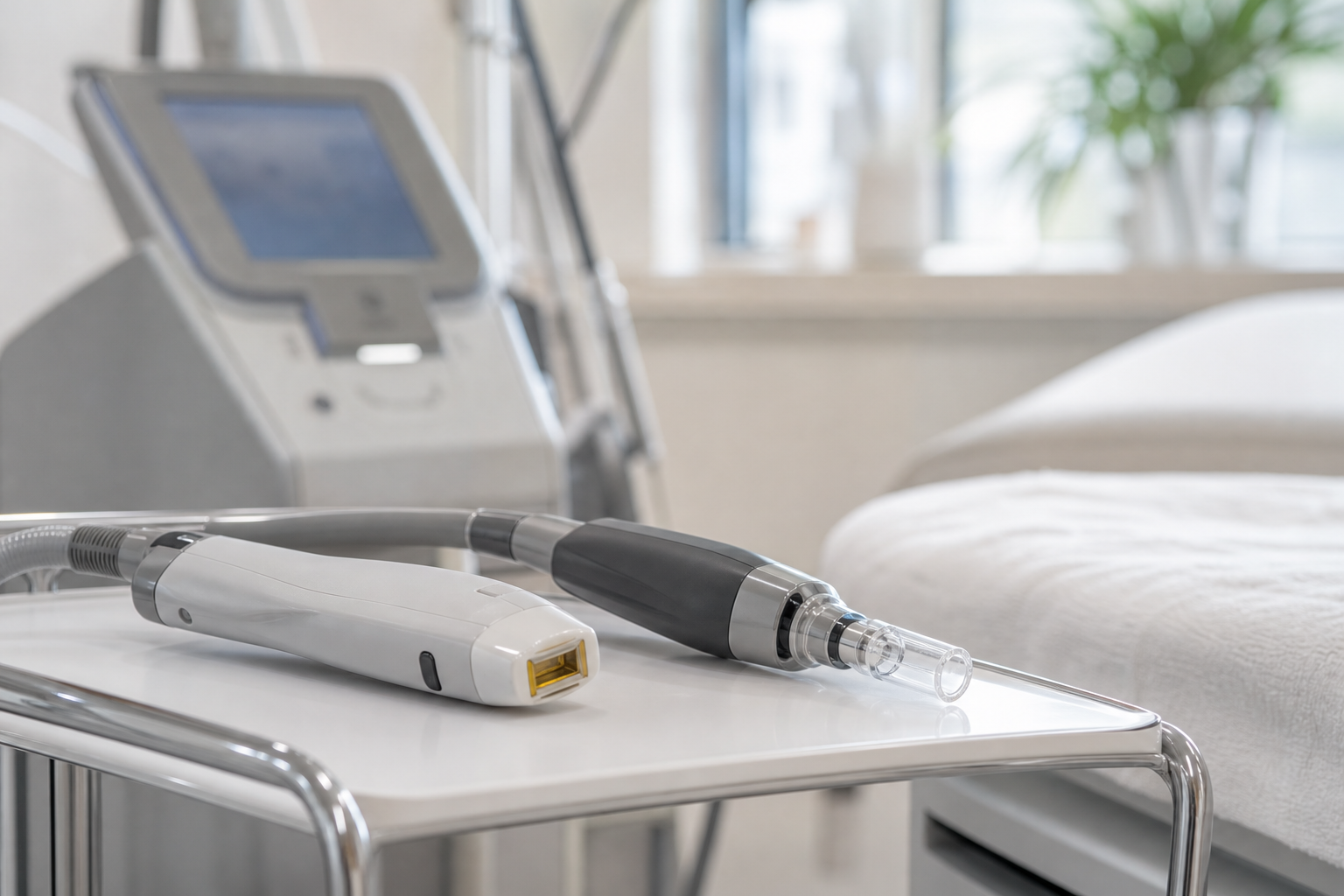
Skin laxity, characterized by sagging and loss of firmness, is a widespread concern affecting individuals as early as their thirties, intensifying with age and environmental exposure. The diminishing elasticity and decreased collagen production lead to noticeable sagging, particularly in delicate areas like the face, neck, and décolleté. Addressing this condition has become a focal point in dermatological and aesthetic practices, where laser technology offers a non-surgical approach to improving skin appearance.
This comprehensive article is intended for individuals exploring viable solutions to skin laxity, alongside dermatologists, cosmetic practitioners, and aesthetic professionals seeking to deepen their understanding of laser applications. It aims to demystify whether laser treatments can improve the appearance of skin laxity, clarifying their biological mechanisms, candidacy criteria, achievable outcomes, and inherent limitations.
Understanding how laser technology interacts with skin biology and contributes to structural rejuvenation is essential. This knowledge grounds decision-making in reality – enabling patients and clinicians to set appropriate expectations and choose treatments aligned with individual needs and skin conditions.
How Does Laser Therapy Work to Improve Skin Laxity?
Laser skin treatments for laxity function fundamentally by stimulating the skin's natural regenerative processes, primarily focused on collagen and elastin synthesis. Collagen, a key structural protein providing skin's firmness and strength, declines in production and quality with aging, leading to sagging and wrinkles.
Lasers emit specific wavelengths of light that penetrate the epidermis to reach the dermis where collagen resides. The controlled thermal energy delivered by lasers induces a mild injury that activates fibroblasts—the cells responsible for collagen and elastin production. This activation triggers neocollagenesis (the formation of new collagen fibers) and remodeling of existing collagen, gradually enhancing skin thickness and elasticity over several weeks to months.
Additionally, the laser’s thermal effect tightens existing collagen fibers, providing an immediate but modest lifting effect. With repeated treatment sessions, patients typically observe improvements in skin texture, tone, and a softening of laxity.
It is vital to acknowledge that laser therapy does not physically remove excess skin; rather, it enhances the skin's quality and reduces the visible signs of sagging by improving its underlying framework.
Which Types of Lasers Are Commonly Used for Skin Laxity?
The choice of laser technology for addressing skin laxity depends on the severity of sagging, skin type, and patient preferences regarding downtime and risk. The main categories include ablative, non-ablative, and fractional lasers, each with distinct mechanisms and indications.
Ablative lasers, such as carbon dioxide (CO2) and erbium-doped yttrium aluminum garnet (Er:YAG) lasers, work by vaporizing the outer skin layers. This intense effect triggers a robust healing response, stimulating collagen regeneration. Such treatments are effective for moderate to severe laxity and concomitant skin texture issues but entail longer recovery periods and higher risk of side effects.
Non-ablative lasers heat the dermis without damaging the epidermis, inducing collagen remodeling with minimal downtime. While these are better suited for mild to moderate laxity with fewer adverse effects, their results tend to develop more gradually and are less dramatic compared to ablative options.
Fractional lasers represent an innovative compromise, delivering laser energy in microscopic columns, leaving surrounding tissue intact to expedite healing. Fractional laser resurfacing can be either ablative or non-ablative, offering tailored treatments that balance efficacy, safety, and recovery time. These are particularly advantageous for patients seeking moderate improvement with manageable downtime.
Selecting the appropriate laser system requires an individualized assessment by a qualified practitioner, considering the patient’s skin characteristics, extent of laxity, and tolerance for recovery.
Who Is an Ideal Candidate for Laser Treatment of Skin Laxity?
Laser skin tightening is most beneficial for adults experiencing mild to moderate skin sagging, who are seeking non-invasive rejuvenation options. Patients in their 30s to 60s with early signs of collagen loss often find these treatments effective in restoring firmness and improving skin quality without the risks associated with surgery.
Ideal candidates should have realistic expectations, understanding that laser treatments soften and reduce the appearance of laxity but do not produce the dramatic lift achievable through surgical methods. Furthermore, candidates with healthy skin free of active infections, inflammatory conditions, or certain chronic illnesses are preferred to optimize safety and results.
Due to variability in skin types and conditions, individuals with darker skin pigmentation require cautious laser selection to mitigate risks of post-inflammatory hyperpigmentation or hypopigmentation. Proper pre-treatment evaluation by a skilled clinician is imperative.
What Improvements Can Patients Expect from Laser Treatment?
Patients undergoing laser therapy for skin laxity can anticipate gradual improvements manifested as tightening and firming of the treated areas. Enhanced skin texture and tone, diminished fine lines, and a reduction in the sagging appearance contribute to a more youthful and refreshed complexion.
Improvements typically become perceptible over several weeks as neocollagenesis advances. The visual softening of skin laxity and increased skin resilience often translate into heightened self-confidence and satisfaction with appearance.
Nonetheless, it is important to highlight that laser-induced changes are subtle rather than transformative. For extensive loose skin, especially following significant weight loss or advanced aging, surgical intervention may remain the most appropriate solution.
What Does the Laser Treatment Process Involve, and What Is the Recovery Like?
Laser treatments for skin laxity generally require a series of sessions scheduled weeks apart to maximize collagen stimulation and skin remodeling. Treatment durations vary from 30 to 60 minutes depending on the area and technology used.
During the procedure, topical anesthetics or cooling devices may be employed to enhance comfort. Most lasers create sensations described as warmth or mild prickling, which are typically well tolerated.
Recovery times depend on the laser type: non-ablative and fractional lasers often allow a rapid return to normal activities with only minimal redness or swelling, while ablative lasers induce more pronounced peeling, redness, and downtime lasting several days to two weeks.
Post-treatment care involves rigorous sun protection and adherence to skincare instructions provided by the clinician to facilitate healing and mitigate risks such as pigment disturbances or infection.
What Are the Potential Risks and Limitations of Laser Therapy for Skin Laxity?
When performed by experienced professionals, laser treatments are generally safe with low complication rates. However, all interventions carry specific risks including redness, swelling, transient discomfort, changes in pigmentation, scarring, and rare infections.
Patients with certain medical histories or skin conditions may be at increased risk for adverse effects. Additionally, over-aggressive treatment can lead to complications, underscoring the importance of individualized protocols.
One key limitation is that laser therapy does not provide permanent results; ongoing maintenance sessions might be necessary to sustain improvements. Furthermore, lasers do not restore lost volume or address deep facial structures, often necessitating complementary treatments in comprehensive rejuvenation plans.
Why Choose Laser Skin Tightening Over Other Treatments?
Laser skin tightening is a preferred option for those seeking a minimally invasive approach with relatively low risk, short recovery, and progressive yet natural-looking results. Compared to surgical lifting, lasers do not involve incisions, anesthesia, or significant downtime, making them accessible to a broader population.
In contrast to injectable fillers or neuromodulators, which target volume loss and dynamic wrinkles respectively, lasers improve the skin’s fundamental architecture and firmness. They are often integrated into multi-modality rejuvenation strategies to optimize outcomes.
Compared with other energy-based systems like radiofrequency or ultrasound, lasers offer specific wavelength selections allowing targeted and controlled dermal heating with proven efficacy in collagen stimulation.


