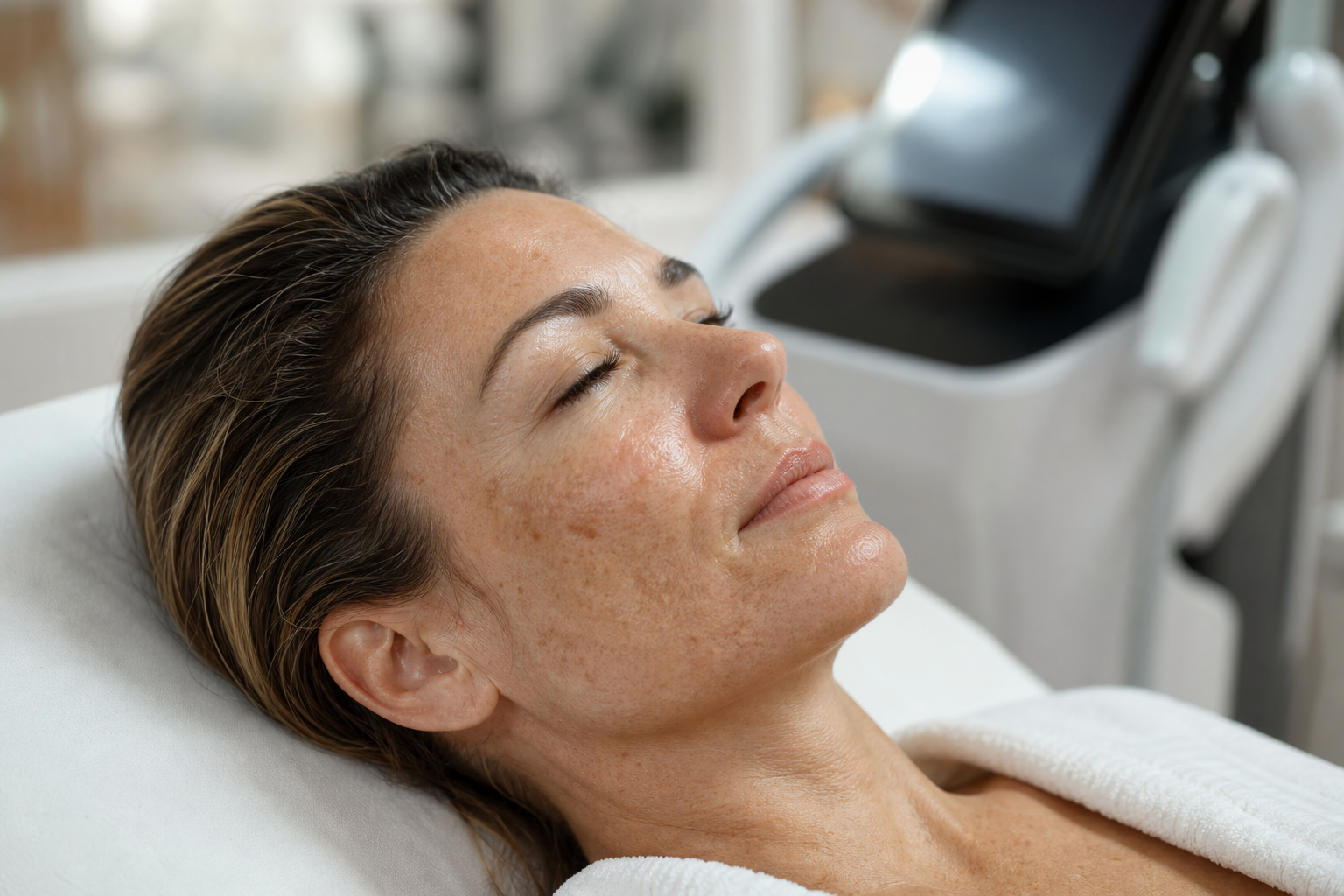
In the evolving landscape of dermatology and aesthetic medicine, laser treatments have secured a pivotal role in addressing a multitude of skin concerns. Among the most common issues individuals seek to improve are wrinkles, pigmentation spots, and enlarged pores—each symbolizing various manifestations of skin aging or damage. A recurring question among both practitioners and patients alike is whether a single laser treatment can effectively tackle these distinct and complex problems simultaneously.
This inquiry is not only practical but essential for anyone contemplating laser rejuvenation as a solution to multifaceted skin concerns. Understanding the capabilities and limitations of laser technology in this context is crucial to forming realistic expectations and making informed decisions. This editorial article is tailored for individuals exploring laser solutions for wrinkles, spots, and pore size, as well as for clinicians aiming to grasp the nuances of combined treatment goals.
The importance of this subject lies in the desire to achieve comprehensive skin improvement with minimal procedures, time, and risk. While the allure of a single laser addressing all concerns at once is appealing, the reality involves technical, biological, and individual skin factors that influence outcomes. This article will explore these dimensions in depth, delineating what modern laser technology can offer in terms of softening wrinkles, improving pigmentation irregularities, and reducing the visibility of enlarged pores.
Understanding the Distinct Skin Concerns: Wrinkles, Spots, and Enlarged Pores
Wrinkles, pigmentation spots, and enlarged pores each represent different dermatological challenges with unique underlying causes and manifestations. Wrinkles generally emerge due to structural changes in the skin’s collagen and elastin networks, often compounded by repetitive facial movements and environmental factors like UV exposure. These lines and creases diminish skin firmness and youthful smoothness.
Pigmentation spots, commonly referred to as age spots or sun spots, arise from localized accumulations of melanin, the pigment responsible for skin color. These spots do not signify universal melanin increase but rather irregular distribution, influenced by factors such as sun exposure, hormonal changes, and genetic predisposition.
Enlarged pores are an aesthetic concern linked to increased sebum production, loss of skin elasticity, and sometimes aging-related skin texture irregularities. While pores themselves are natural skin structures, their pronounced size contributes to a perception of uneven, rough, or aged skin.
Given these differences, it is clear that addressing all three concerns requires nuanced and often diverse therapeutic approaches. This distinctiveness is vital when contemplating why one laser might face challenges in resolving the trio thoroughly and simultaneously.
The Spectrum of Laser Technologies and Their Mechanisms
Laser devices used in skin rejuvenation typically fall into two broad categories: ablative and nonablative lasers. Ablative lasers function by vaporizing the outer layers of skin, inducing a controlled wound and stimulating a robust regenerative response. This method is effective for pronounced wrinkles and pigmentation irregularities but comes with prolonged recovery and increased potential for side effects.
Nonablative lasers, by contrast, deliver lower-energy beams that penetrate the dermis without removing surface skin, promoting collagen production and remodeling with reduced downtime. These are generally suited for mild to moderate wrinkles and improving overall skin texture, including pore appearance.
Fractional laser technology represents a sophisticated evolution, partitioning laser energy into microbeams targeting small areas, leaving the surrounding tissue intact. This fractional approach balances efficacy with safety, enabling treatment of multiple concerns with a controlled inflammatory stimulus that encourages skin renewal.
However, even within these classifications, lasers vary substantially in their wavelength, pulse duration, and other parameters—each influencing the depth of penetration, chromophore targeting (such as melanin, hemoglobin, or water), and therefore their suitability for different skin issues.
Is a Single Laser Treatment Viable for Multiple Skin Concerns?
The question of whether one laser can simultaneously and effectively address wrinkles, pigmentation spots, and enlarged pores does not allow for a simple affirmative or negative answer. While some advanced fractional laser systems are advertised as multifunctional and designed to induce collagen remodeling alongside pigmentation refinement, the reality is that each skin concern often requires tailored laser parameters or adjunct treatments for optimal results.
For instance, fractional ablative lasers can improve fine lines by resurfacing and stimulating collagen, and their fractional nature allows some impact on pigmentation irregularities. Yet, more stubborn or pigment-centered lesions might demand lasers specifically tuned for targeting melanin, such as Q-switched or picosecond lasers, which operate via photomechanical mechanisms to fragment pigment particles.
Similarly, pore size reduction benefits from treatments that enhance dermal thickness and reduce sebaceous activity, which lasers promoting collagen production can aid. However, enlarged pores rarely respond solely to laser, and improvements often appear as part of an overall enhancement in skin texture.'
Ultimately, any single laser treatment administering a standard protocol may achieve a marked softening and reduced visibility across all three issues, but rarely can one expect comprehensive resolution without personalization or combination strategies.
Candidacy: Who Benefits the Most from Combined Laser Treatments?
Ideal candidates for laser treatments targeting wrinkles, spots, and pores generally present with mild to moderate conditions and possess overall healthy skin without active inflammation or infection. Skin type and tone also critically influence laser choice and efficacy, as certain lasers may pose risks of pigmentary complications in darker skin phototypes due to melanin absorption.
Those with realistic expectations—viewing treatment as an improvement rather than total eradication—are more likely to be satisfied with outcomes. Conversely, individuals with deep wrinkles, extensive pigmentation disorders, or severely enlarged pores may require staged or multimodal approaches rather than a single laser session.
It is imperative to undergo thorough assessment by a qualified dermatologist or aesthetic practitioner prior to treatment. Such professionals evaluate skin characteristics, medical history, and aesthetic objectives to recommend the most appropriate laser technology or combination thereof.
Expected Outcomes and Recovery: What Patients Should Know
Laser treatments for skin rejuvenation do not produce instantaneous results. The decrease in wrinkle severity, softening of pigmentation spots, and reduction in pore visibility unfold gradually over several weeks to months, driven by natural collagen remodeling and epidermal turnover.
Ablative procedures involve a more significant healing phase, with redness, peeling, and sensitivity lasting from days to weeks. Patients must adhere to post-treatment care protocols, including rigorous photoprotection, to safeguard new skin and stabilize outcomes.
Nonablative and fractional nonablative treatments afford shorter recovery and milder side effects, often enabling return to daily activities with minimal interruption. Nevertheless, multiple sessions scheduled at intervals may be needed to achieve the desired cumulative effects across different skin concerns.
Risks and Limitations of Using One Laser for Multiple Skin Issues
Despite the advances in laser technology, certain risks persist, including transient redness, swelling, hyperpigmentation or hypopigmentation, and, rarely, scarring. These potential complications underscore the necessity of personalized treatment planning and execution by experienced practitioners.
Moreover, the inherent limitations of each laser modality mean that not all wrinkles, spots, or enlarged pores can be fully or permanently resolved with laser alone. Deep wrinkles or marked skin laxity may require surgical intervention or adjunct therapies. Similarly, stubborn pigmentation or textural concerns may warrant combining laser with chemical peels, microneedling, or topical agents.
Combining Laser Treatments with Other Modalities for Enhanced Results
In contemporary aesthetic practice, combining laser therapy with complementary procedures has become the cornerstone of effective skin rejuvenation. For example, pairing fractional laser sessions with chemical peels can amplify pigment correction, while integration with microneedling can boost collagen synthesis to address wrinkles and pore size.
Injections of dermal fillers or neuromodulators like botulinum toxin may also play a supportive role by mitigating dynamic wrinkle formation and restoring volume, thereby optimizing the overall skin appearance achieved through laser treatments.
The selection and sequencing of these combined approaches depend on individual assessment and treatment goals, aiming to maximize improvement while minimizing downtime and adverse effects.


