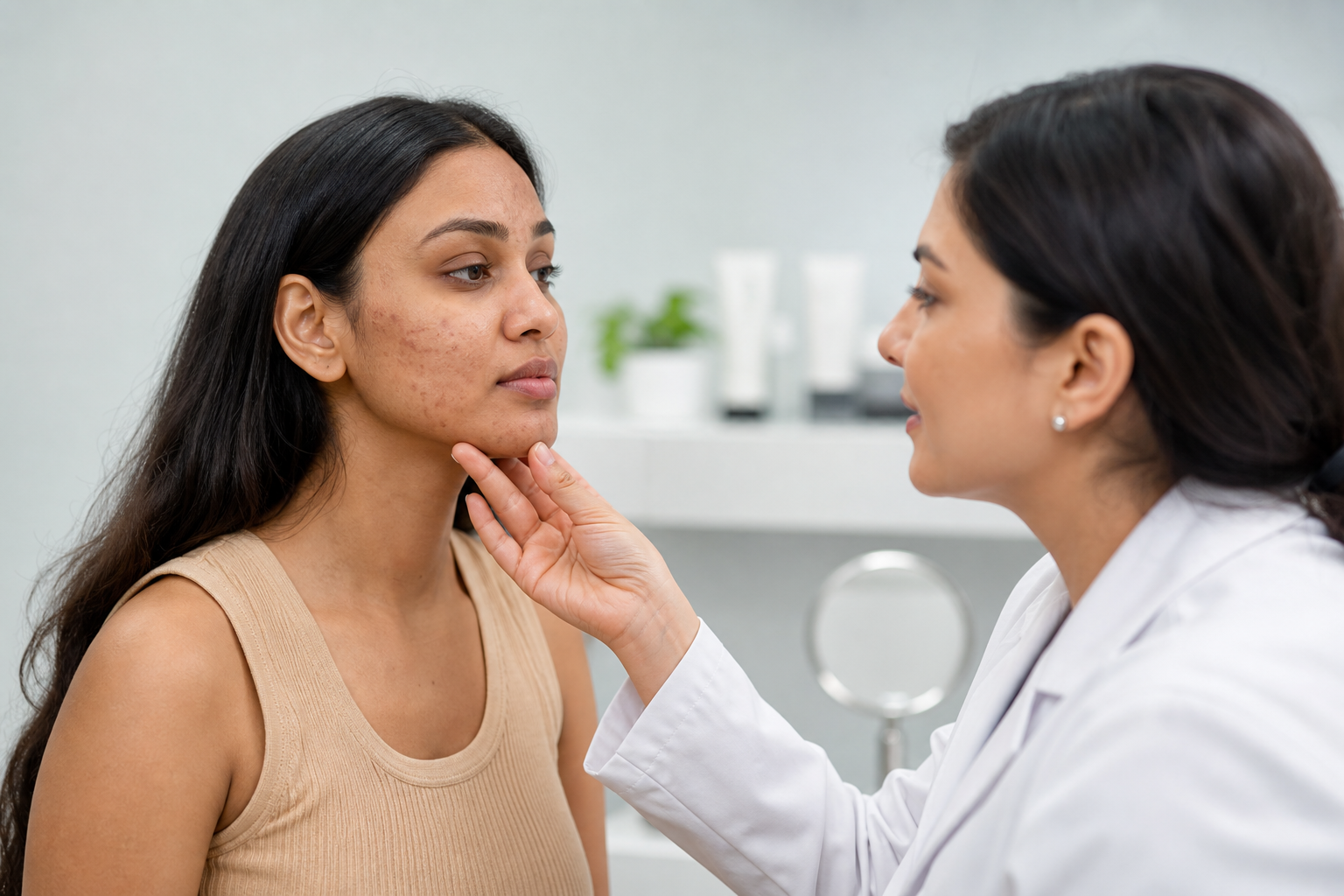
Acne, a common skin condition affecting millions worldwide, often leaves behind more than just healed blemishes. After the active phase subsides, many individuals notice lingering marks that can be red or brown in nature. These post-acne spots are not merely cosmetic nuisances; they can impact self-esteem and complicate skincare routines. Understanding the distinction between red and brown marks, their causes, and how to treat them appropriately is crucial for anyone looking to restore a more even skin tone.
This article delves deeply into the differences between red and brown post-acne marks, primarily focusing on post-inflammatory erythema (PIE) and post-inflammatory hyperpigmentation (PIH). These conditions reflect distinct physiological responses and demand tailored management strategies. Whether you are a patient grappling with these skin changes, a dermatologist seeking to refine treatment protocols, or a skincare professional interested in advanced therapeutic options, this guide is designed to provide comprehensive insight supported by current dermatological understanding.
Acquiring knowledge about red versus brown marks after acne is also vital in the context of emerging laser treatments and other procedural interventions. Such therapies, while promising, carry risks if applied without discerning the type of residual skin discoloration or without addressing underlying inflammation first. This article emphasizes the importance of timing, prevention, and individualized care, especially in individuals with darker phototypes who may experience distinct challenges.
What Defines Red Marks After Acne: Understanding Post-Inflammatory Erythema
Post-inflammatory erythema (PIE) is characterized by red or pinkish patches that remain on the skin after an acne lesion has resolved. Unlike pigmentation changes rooted in melanin production, PIE results from vascular alterations—specifically, the dilation of capillaries and persisting mild inflammation near the skin surface. These visible blood vessels reflect the skin's healing response but can last weeks to months, presenting an aesthetic concern for many.
PIE is most commonly observed in individuals with lighter skin types (Fitzpatrick phototypes I to III) but can appear in darker skin tones as well, albeit sometimes presenting differently. The redness can be flat or slightly raised and tends to fade gradually, although some cases may require intervention. Importantly, PIE signals ongoing vascular healing rather than permanent pigment disruption, indicating a favorable prognosis with appropriate care.
Managing PIE hinges on controlling active inflammation during and after acne flare-ups to minimize vascular damage. Topical agents that reduce inflammation and enhance vascular tone, combined with diligent skin hydration and sun protection, form the cornerstone of care. While PIE may diminish spontaneously, persistent cases can benefit from targeted laser therapies designed to address superficial blood vessels.
Deciphering Brown Marks: The Nature of Post-Inflammatory Hyperpigmentation
In contrast to the redness of PIE, brown or dark spots after acne are typically indicative of post-inflammatory hyperpigmentation (PIH). This condition arises due to an overproduction and uneven distribution of melanin in response to the skin's inflammatory process triggered by acne lesions. Melanocytes—the cells responsible for pigment production—become overactive, depositing excess pigment either in the epidermis or dermis, which manifests as brown or tan patches.
PIH is more frequently observed and more pronounced in individuals with darker skin tones (Fitzpatrick phototypes III and above), where the skin has a naturally higher melanin content and a greater propensity for pigmentary shifts. These brown spots can persist for months or even years without treatment, impacting quality of life and often motivating patients toward dermatological interventions.
Treatments for PIH must be carefully selected, because approaches designed for erythema often have limited efficacy against pigmentary disorders and vice versa. The key to addressing PIH lies in inhibiting melanogenesis through topical agents, procedural modalities, and rigorous sun protection to prevent exacerbation.
What Causes Red and Brown Marks to Develop After Acne?
The root cause for both red and brown post-acne marks is the inflammatory response elicited by the acne lesion itself. Acne triggers infiltration of immune cells and release of pro-inflammatory mediators, which not only damage skin structures but also disrupt vascular and pigmentary regulation.
For post-inflammatory erythema: Inflammation damages and dilates superficial blood vessels. Prolonged or intense inflammation increases the risk of capillary fragility and persistent redness. Stressors such as physical picking or squeezing of acne further aggravate this process.
For post-inflammatory hyperpigmentation: Melanocyte stimulation during inflammation drives excess melanin synthesis. This effect is compounded by ultraviolet (UV) exposure, which can darken existing spots and induce new pigmentation. The risk is also heightened in skin types predisposed to hyperactive melanogenesis.
Additional factors influencing the development and severity of these marks include:
- Duration and severity of acne inflammation
- Mechanical trauma to lesions (e.g., picking or scratching)
- Inadequate sun protection leading to UV-induced pigment darkening
- Genetic predisposition and individual skin type sensitivity
Why Controlling Active Inflammation Is Vital in Managing Post-Acne Marks
The foundation for effective treatment of both PIE and PIH lies in controlling ongoing skin inflammation. Without this, interventions aimed at fading marks are prone to partial failure or even adverse effects. Active inflammation perpetuates tissue damage and pigment disruption, which can extend the lifespan of red and brown marks or cause their intensification.
Moreover, prematurely applying procedures such as lasers or chemical peels on inflamed skin may exacerbate irritation, potentially inducing new pigmentary changes or worsening erythema. Therapeutic caution and clinical judgment are, therefore, essential in establishing that acne is stabilized and inflammatory activity diminished before pursuing corrective treatments.
Key strategies to control inflammation include:
- Consistent use of anti-inflammatory topical agents and systemic medications as prescribed
- Avoidance of mechanical disruption of lesions
- Strict sun protection to prevent UV-induced inflammation and pigment worsening
- Gentle skin care routines to preserve barrier function and reduce irritation
Special Considerations for Darker Skin Phototypes
Individuals with darker skin tones face unique challenges when dealing with post-acne pigmentation. Their increased melanin content makes them more susceptible to developing persistent and pronounced PIH. Additionally, more aggressive treatment modalities, especially lasers and chemical peels, carry an elevated risk of provoking further pigmentary alterations or hypopigmentation if not expertly managed.
Therefore, clinicians often adopt cautious, tailored approaches with specialized laser types such as fractional lasers or picosecond lasers, which offer more precise targeting of pigment with minimal collateral damage. Prolonged topical depigmentation regimens and vigilant photoprotection are fundamental adjuncts.
Education about the possibility of procedure-induced darkening is also important, ensuring that patients maintain realistic expectations and engage actively in prevention and maintenance protocols. The emphasis remains on individualizing therapy according to skin type, lesion characteristics, and the patient's lifestyle and preferences.
How Laser Treatments Address Red and Brown Post-Acne Marks
Laser therapy has emerged as a pivotal tool in managing both types of post-acne marks owing to its capacity for targeted intervention. Different wavelengths and laser technologies are selected based on whether the goal is to reduce vascular visibility (PIE) or dissipate excess pigment (PIH).
For red marks, vascular lasers and pulsed dye lasers are capable of selectively constricting dilated capillaries, thereby diminishing erythema. In cases where both scarring and pigmentation coexist, fractional lasers can remodel the skin while addressing discoloration.
For brown pigmentation, lasers like the picosecond laser deliver ultra-short bursts of energy that fragment melanin particles, facilitating their removal by the skin's natural processes. These treatments often require multiple sessions and careful pre- and post-treatment skin care to maximize benefit and reduce complications.
Nonetheless, the effectiveness and safety of laser therapy depend heavily on correct patient selection, assessment of active inflammation, and adjustment of settings based on skin phototype. Experienced practitioners are critical to optimize outcomes while mitigating the risk of posttreatment hyperpigmentation or erythema.
The Ideal Timing for Initiating Laser Therapy on Post-Acne Marks
Commencing laser treatment demands that active acne inflammatory signs have subsided, ensuring the skin's readiness to tolerate intervention without aggravating underlying issues. Typically, a waiting period of several months after the last active lesion allows for stabilization of post-inflammatory marks and reduces the risk of adverse effects.
During the pre-treatment evaluation, practitioners assess lesion characteristics, skin type, history of pigmentary disorders, and the patient's adherence to sun protection and skincare regimens. Detailed discussion about realistic expectations and potential limitations facilitates an informed consent process.
Starting laser treatment prematurely or on unstable skin may not only compromise results but also provoke rebound pigmentation and inflammation. Therefore, timing aligned with the skin's healing trajectory is essential to maximize benefit and minimize harm.
What to Expect After Laser Treatment and How to Care for Your Skin
Post-laser therapy, patients commonly experience transient reactions such as redness, mild swelling, or peeling, which are normal and indicate the skin's remodeling process. Appropriate post-procedure care helps accelerate recovery and safeguard against complications.
Key post-treatment measures include:
- Application of soothing, non-irritating moisturizers to support barrier repair
- Rigorous sun protection with broad-spectrum, high-SPF sunscreens to prevent pigment reactivation
- Avoidance of aggressive scrubs, exfoliants, or potentially irritating products until full healing occurs
- Following any prescribed topical regimens such as depigmenting agents in consultation with a dermatologist
Regular follow-up appointments enable monitoring of treatment efficacy and early identification of any adverse responses, facilitating adjustments to the therapeutic plan as necessary.
Frequently Asked Questions Regarding Red and Brown Marks After Acne
How can I tell if my post-acne marks are red (PIE) or brown (PIH)? Typically, red marks appear as pink to red, flat or slightly raised patches due to dilated blood vessels, often fading gradually with time. Brown marks are pigmented spots ranging from light to dark brown, caused by excess melanin deposition, and tend to be more persistent.
Will red marks fade on their own? In many instances, PIE does lighten spontaneously over weeks to months; however, persistent cases might require medical or laser treatments to accelerate resolution.
Does sun exposure worsen post-acne pigmentation? Yes, UV radiation can deepen brown spots and prolong red discoloration by stimulating melanogenesis and aggravating inflammation, making sun protection essential.
Are laser treatments safe for darker skin? With expert care and appropriate laser selection, lasers can be safely used on darker skin tones, but the risk of post-treatment pigmentation changes necessitates cautious, individualized approaches.


