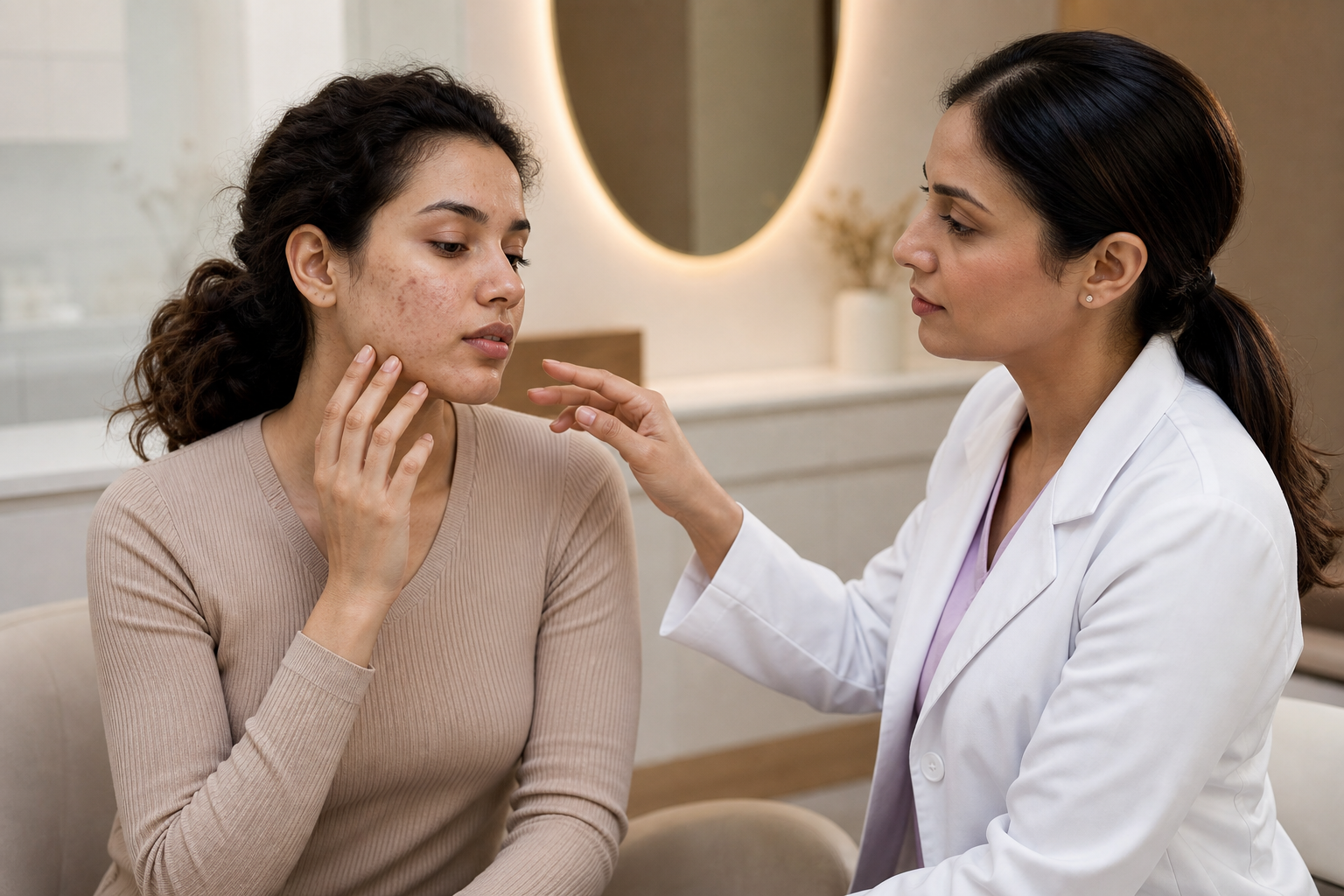
Post-acne marks, often stubborn and distressing, pose a common challenge in dermatological care and aesthetic treatments. These discolorations, primarily classified as post-inflammatory hyperpigmentation (PIH), arise after inflammatory acne lesions heal, leaving behind darkened spots that can persist for weeks, months, or longer. Intense Pulsed Light (IPL) therapy has emerged as a noteworthy option in addressing such pigmentation concerns. But while IPL offers a sophisticated approach to targeting these blemishes, it also requires nuanced application, especially considering the skin’s type and the specific nature of the marks.
This article delves deeply into IPL as a therapeutic intervention for post-acne marks, outlining its potential benefits and inherent limitations. It serves both individuals considering IPL for improving their skin’s appearance after acne and clinicians who seek to optimize treatment protocols with precise, evidence-informed methods.
The significance of understanding IPL’s role lies not only in its capability to enhance skin tone but also in safely navigating the fine line between therapeutic efficacy and unwanted side effects, such as further pigmentation or irritation. Differentiating between the brown pigmentation of PIH and red post-inflammatory erythema (PIE), controlling active skin inflammation before treatment, and managing expectations are critical to successful outcomes. Moreover, IPL’s application in darker skin phototypes necessitates particular caution due to the elevated risk of adverse pigmentary changes.
What Is IPL Therapy and How Does It Target Post-Acne Marks?
Intense Pulsed Light therapy employs broad-spectrum light wavelengths delivered in pulses to penetrate the skin’s surface. Unlike lasers, which use a single wavelength, IPL’s multiple wavelengths can simultaneously affect various chromophores—namely melanin and hemoglobin—making it versatile for treating both pigmentation and vascular changes. In the context of post-acne marks, IPL aims to break down excess melanin contributing to brown PIH, reducing discoloration and promoting a more uniform complexion.
By stimulating collagen production through controlled photothermal effects, IPL also encourages skin remodeling, which may improve texture irregularities associated with acne scarring. Its non-ablative nature means the procedure typically has minimal downtime, an appealing factor for many patients.
Who Is a Suitable Candidate for IPL Treatment of Post-Acne Marks?
IPL is most appropriate for individuals who have resolved their active acne and primarily seek improvement in discolorations left behind. Candidates usually have lighter to medium skin phototypes (Fitzpatrick I-IV), given the mechanism of IPL and the risk profile concerning pigmentation changes in darker skin types.
Before considering IPL, patients must have minimal to no active inflammation, as treating inflamed skin with IPL can exacerbate redness, irritation, or trigger new marks. Those with predominantly brown hyperpigmentation rather than red erythema stand to benefit most from the pigment-targeting effects of IPL wavelengths.
Conversely, individuals with darker phototypes should approach IPL cautiously or consider alternative treatments better suited to manage hyperpigmentation risks, such as specific fractional laser modalities or topical regimens, making professional medical consultation vital.
Why Is Distinguishing Between Brown PIH and Red PIE Essential Before Treatment?
Post-acne marks can manifest as either brown pigmentations (PIH) or red/pink discolorations (PIE), each arising from different physiological processes and responding variably to treatments. Brown PIH results from melanocyte activation and excess melanin deposition following inflammation, while red PIE stems from dilated blood vessels and persistent vascular inflammation.
IPL effectively targets melanin, thereby influencing brown PIH, but may not address or could even worsen red erythema if misapplied. For red marks, vascular-specific treatments such as pulsed dye lasers may be indicated. Hence, precise clinical differentiation, sometimes augmented with dermatoscopic examination, ensures that IPL is employed appropriately and safely, highlighting why "Red vs Brown Marks After Acne: What Is the Difference?" is a critical resource for understanding these nuances.
What Are the Potential Benefits of IPL in Managing Post-Acne Marks?
IPL offers several advantages when used judiciously for post-acne pigmentary issues. Primarily, it can effectively reduce brown hyperpigmented spots, diminishing their visibility and promoting a more even skin tone. By targeting melanin, IPL fragments pigment granules, facilitating their clearance by the immune system.
Furthermore, IPL stimulates dermal collagen synthesis, improving skin elasticity and surface smoothness, which may ameliorate textural irregularities arising from acne scarring. The procedure is generally quick, well-tolerated, and associated with minimal downtime, making it accessible for many patients.
Its versatility also enables treatment customization based on the individual’s skin characteristics and severity of pigmentation, allowing for incremental improvements over a series of sessions rather than aggressive single treatments.
What Limitations and Risks Should Be Considered When Using IPL for Post-Acne Marks?
A fundamental limitation of IPL is its reliance on accurate patient selection and timing. Treating active inflammatory lesions can aggravate skin inflammation, causing new pigmentation or worsening existing marks. Therefore, controlling active acne before IPL is imperative.
Another significant limitation concerns skin phototype. Individuals with darker skin harbor more melanin, which can unintentionally absorb IPL’s energy, leading to paradoxical worsening or new hyperpigmentation, sometimes termed treatment-induced darkening. This underscores the importance of professional assessment and cautious parameter selection when considering IPL for such patients.
Additionally, IPL may require multiple sessions spread over months to achieve meaningful results, and complete clearance of marks is not guaranteed. Some deep or persistent pigmentation may need adjunctive therapies for optimal improvement.
Moreover, there is no universally applicable IPL protocol for treating post-acne pigmentation. Intensity settings, session frequency, and intervals must be tailored carefully, balancing efficacy and safety to minimize adverse effects such as burns or pigmentary changes.
How Should Patients Prepare for IPL Treatment and What Is the Typical Procedure Like?
Prior to IPL therapy, patients should undergo thorough dermatological assessment to confirm the diagnosis, evaluate skin type, and rule out contraindications. They should avoid sun exposure, tanning beds, and certain photosensitizing topical agents or medications for several weeks to minimize risk.
On the day of treatment, thorough cleansing is performed, and a cooling gel may be applied. Patients experience brief pulses of light, often described as warm snaps or mild prickling sensations, generally well tolerated without anesthesia.
The session length varies based on treatment area size but usually lasts 20-40 minutes. Post-treatment, transient redness, mild swelling, or a warm sensation may arise, typically resolving within hours to days. Pigmented spots may darken temporarily before gradually fading.
Patients must adhere to post-care instructions focused on rigorous sun protection, gentle skin care, and avoidance of irritants to sustain treatment benefits and reduce recurrence risks.
When Is the Ideal Time to Initiate IPL Treatment After Acne?
The timing for IPL treatment is crucial. Initiating therapy while active acne lesions persist increases the risk of complications. Ideally, IPL should commence once the skin demonstrates stability, free from significant active inflammation or new lesion formation. This period may range from several weeks to months post-acne clearance.
Dermatologists may employ a phased approach—first treating active acne with topical or systemic agents, subsequently proceeding with IPL to address residual pigmentation. Such a staged protocol allows both primary acne control and safe pigment correction.
Assessments via clinical examination guide readiness for IPL, reinforcing that patience and appropriate sequencing enhance long-term outcomes.
What Results Can Be Reasonably Expected from IPL Treatment for Post-Acne Marks?
Realistic expectations from IPL for post-acne pigmentation involve noticeable improvement rather than complete eradication. Typically, brown marks fade over multiple sessions, and skin tone appears more uniform. Improvements in skin texture and youthful radiance due to collagen stimulation are additional benefits.
Results vary according to the depth and extent of pigmentation, skin type, and adherence to treatment protocols and sun protection. Deeper or longstanding marks may require combination therapies or alternative interventions for comprehensive management.
Importantly, pigmentary changes can recur if underlying inflammatory triggers are not controlled or if post-treatment photo-protection is neglected. Ongoing skincare and maintenance may therefore be necessary to sustain improvements.
Why Is Controlling Active Inflammation Before IPL Essential?
Active inflammation creates a vulnerable skin environment, prone to exacerbation when exposed to IPL’s energy. Inflammatory mediators and vascular changes can heighten pigmentation production and disrupt healing, leading to paradoxical worsening of post-inflammatory marks or induction of new ones.
Managing inflammation through medications, lifestyle adjustments, and skincare optimizes skin health, enabling IPL to act effectively on established pigmentation rather than active lesions. This strategy reduces risks of adverse outcomes and increases the likelihood of achieving cosmetic goals.
What Special Considerations Exist for IPL Use in Darker Skin Phototypes?
Due to increased melanocyte activity, darker skin types (Fitzpatrick V and VI) have a heightened risk of treatment-induced pigmentation changes when exposed to intense light modalities. IPL’s melanin absorption can cause unwanted heating and subsequent hyperpigmentation or hypopigmentation.
Therefore, IPL treatment in darker skin demands lower fluence settings, longer intervals between treatments, and vigilant monitoring. In some cases, dermatologists may recommend alternative devices or combination therapies better suited for pigment control.
Additionally, strict adherence to sun avoidance and use of broad-spectrum sun protection post-treatment is crucial in these patients to minimize the risk of rebound pigmentation and complications.
When Should IPL Treatment for Post-Acne Marks Be Avoided?
IPL is contraindicated in individuals with uncontrolled active acne, presence of infections, keloid susceptibility, photosensitive disorders, or ongoing use of photosensitizing medications. Extremely sensitive or damaged skin also necessitates postponing IPL until stabilization.
Patients with a history of severe post-inflammatory hyperpigmentation or scarring following light-based treatments should be approached with caution and alternative therapies considered. Thorough pre-treatment evaluation and history taking remain indispensable.
IPL for Post-Acne Marks Requires Expertise and Patient-Centered Approach
In addressing post-acne pigmentation, IPL constitutes a valuable technological option offering multiple benefits including pigmentation reduction and dermal rejuvenation. However, its efficacy and safety hinge upon precise patient selection, differentiating between brown PIH and red PIE, control of active skin inflammation, and consideration of individual skin phototypes.
Understanding the benefits and inherent limitations aids in managing realistic expectations and optimizing treatment outcomes. While IPL can significantly improve skin tone and appearance, it is not an absolute solution for all cases of post-acne marks.
Collaborative care involving knowledgeable dermatologists and patient adherence to careful protocols ensure the best balance between treatment advantages and risks. For those contemplating IPL, informed consultation is essential to achieve sustainable, pleasing improvements in post-acne skin.


