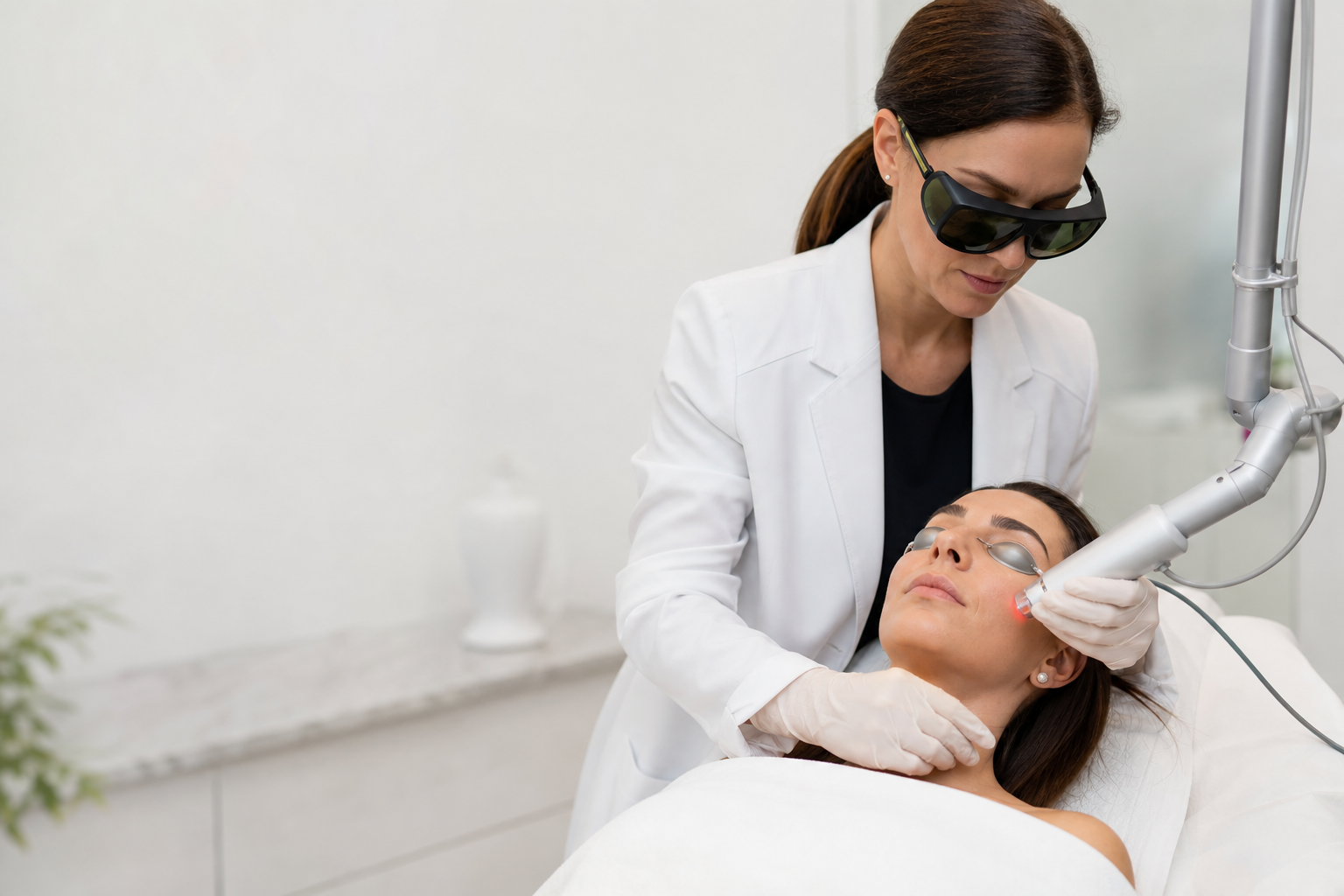
Q-switched Nd:YAG lasers have become an indispensable tool in contemporary dermatology and aesthetic medicine, particularly in the management of various pigmentation disorders. Their specificity in targeting melanin and other pigmented particles in the skin offers a potentially transformative approach for patients seeking to address uneven skin tone, lentigines, melasma, post-inflammatory hyperpigmentation, and other pigment-related concerns. This technology appeals especially to patients who prefer minimally invasive procedures backed by scientific understanding and clinical precision.
Understanding the operational mechanism of the Q-switched Nd:YAG laser, the spectrum of pigmentation conditions it can effectively treat, and its clinical limitations is paramount. Such knowledge ensures that patients receive treatments customized to their unique skin types and pigmentation issues, thus optimizing safety and outcomes. Given its nuanced use, the decision to employ this laser must rest with qualified professionals who rigorously assess each case.
In this comprehensive editorial, we delve into the intricacies of the Q-switched Nd:YAG laser for pigmentation treatment. We explore how the technology functions, its clinical indications, the considerations surrounding different skin phototypes, treatment parameters, benefits and constraints, as well as the potential risks. By demystifying this advanced laser therapy, the article aims to empower both practitioners and patients with a clear, evidence-based understanding of what to expect from a Q-switched Nd:YAG laser procedure.
What Is the Q-Switched Nd:YAG Laser and How Does It Work?
The Q-switched Nd:YAG laser derives its name from its gain medium, neodymium-doped yttrium aluminum garnet (Nd:YAG), and its distinctive Q-switch technology. This laser emits highly concentrated light pulses at nanosecond durations, enabling rapid energy delivery to target chromophores—primarily melanin—in the skin.
Operating predominantly at a wavelength of 1064 nm, the device produces light capable of penetrating deeply into the dermis, sparing the epidermis to a significant extent. This deep penetration suits treatments aimed at dermal or mixed epidermal-dermal pigmentations which are beyond the reach of many shorter-wavelength lasers. The short pulse duration ensures a photoacoustic effect rather than a photothermal one: the laser energy is absorbed by pigmented cells and rapidly causes their fragmentation without prolonged heating of surrounding tissues.
A secondary wavelength at 532 nm (frequency-doubled green light) is available and better for superficial, epidermal pigment targeting. However, it carries a higher risk of irritation or post-treatment hyperpigmentation, especially in darker skin types, and thus requires cautious use. The choice between these wavelengths and specific treatment settings hinges on the nature of the pigmentation and the patient's skin characteristics.
Which Types of Pigmentation Can Be Treated Using the Q-Switched Nd:YAG Laser?
The laser's versatility allows it to address a range of pigmentation disorders that commonly appear on the face, hands, and other sun-exposed areas:
Lentigines (Sun Spots): These well-defined, pigmented macules result from chronic ultraviolet exposure. The Q-switched Nd:YAG laser can selectively break down melanin deposits with minimal damage to surrounding tissue, improving skin clarity.
Melasma: This condition features irregularly shaped, hyperpigmented patches typically on cheeks and forehead. Although challenging to treat, the 1064 nm wavelength can penetrate the dermis to affect deeper melanin deposits while minimizing adverse effects.
Post-Inflammatory Hyperpigmentation (PIH): Emerging after cutaneous injury, infections, or inflammation such as acne, PIH involves localized melanin accumulation. The Q-switched Nd:YAG laser offers an effective option to reduce these discolorations when guided by appropriate parameters.
Uneven Skin Tone: Generalized pigment imbalance resulting from photoaging or environmental factors can benefit from the laser’s tone-normalizing capabilities.
Beyond pigmentation removal, the Q-switched Nd:YAG laser also plays an important role in tattoo removal, demonstrating its capacity to fragment a variety of pigment particles embedded at different tissue depths.
How Is Skin Phototype Determined, and Why Does It Matter for Nd:YAG Laser Treatment?
Skin phototype classification—most commonly assessed via the Fitzpatrick scale—ranges from Type I (very fair skin prone to burning) through Type VI (deeply pigmented skin with high melanin content and solar resistance). This classification is vital in anticipating the skin's reaction to laser energy and potential side effects.
The 1064 nm Nd:YAG laser is particularly well-suited for darker phototypes (III to VI) due to its minimal absorption by epidermal melanin, reducing the risk of epidermal injury, blistering, or subsequent dyspigmentation. This contrasts with lasers utilizing shorter wavelengths, which may produce undesirable pigmentation changes in darker skin if not carefully managed.
For lighter skin types (I and II), alternative or adjunctive laser modalities, such as the Alexandrite laser discussed in articles like Alexandrite Laser for Pigmented Lesions, may be preferred. By contrast, aggressive use of the green 532 nm wavelength in Nd:YAG lasers warrants caution in all but the palest skin types to avoid erythema and irritation.
Professional assessment is indispensable to determine the safest, most effective protocol according to phototype, lesion depth, density, and other skin variables. Customized parameter selection protects from adverse outcomes and improves patient satisfaction.
What Are the Key Treatment Parameters and How Do Professionals Customize Them?
Q-switched Nd:YAG laser treatment involves precise modulation of several variables, including:
Wavelength: 1064 nm for deeper pigment and darker skin versus 532 nm for superficial lesions in lighter skin.
Pulse Energy: The energy density impacts the extent of pigment fragmentation but must avoid excess levels that risk tissue damage.
Pulse Duration: Nanosecond durations induce the photomechanical effect while sparing thermal injury.
Pulse Frequency (Hz): The number of pulses delivered per second influences treatment time and tissue response.
Professionals also consider the size and depth of pigment clusters, anatomical location, and individual skin sensitivity when tailoring treatments. For instance, thicker epidermis or deeper dermal pigmentation demands different energy settings than thin, superficial lesions.
Due to the intricacies involved, a qualified dermatologist or aesthetic physician performs thorough diagnostics before therapy, ensuring that only appropriate parameters and intervals between sessions are utilized. Real-time monitoring and adjustments during treatment further enhance safety and efficacy.
What Are the Benefits and Limitations of Q-Switched Nd:YAG Laser for Pigmentation?
The Q-switched Nd:YAG laser’s strengths lie in its precision and versatility. Key advantages include:
Targeted Pigment Disruption: The laser selectively fragments melanin with minimal collateral damage, preserving surrounding tissues.
Suitability for Darker Skin: Its longer wavelength reduces risks of post-inflammatory hyperpigmentation common with other laser types.
Minimal Downtime: Patients typically experience short-lived erythema and mild swelling, allowing for rapid return to daily activities.
Wide Indications: From solar lentigo to melasma and tattoo ink, its applications are broad.
Nevertheless, limitations merit consideration:
Incomplete Clearance: Some pigmentation such as deep or chronic melasma may only partially respond, requiring adjunctive therapies.
Multiple Sessions Required: Gradual improvement over several treatments spaced weeks apart is typical.
Risk of Dyspigmentation and Scarring: Though reduced compared to other lasers, these complications occur if misused or if proper aftercare and sun avoidance are neglected.
Patient Compliance: Success depends on protection from ultraviolet exposure before and after procedures to prevent recurrence.
An informed discussion of potential benefits and realistic expectations is integral to the therapeutic process.
What Potential Risks and Side Effects Should Patients Be Aware Of?
While generally safe when administered by experienced practitioners, the Q-switched Nd:YAG laser is not devoid of risks, including:
Post-Inflammatory Hyperpigmentation (PIH): Especially in darker phototypes, excessive laser energy or inadequate sun protection post-treatment can intensify pigmentation.
Hypopigmentation: Over-treatment may disrupt normal melanin production, causing lighter patches, which may be permanent.
Thermal Injury and Burns: Improper parameter selection or device malfunction may cause epidermal damage.
Scarring: Uncommon but possible if aggressive treatment is performed on compromised skin or if complications arise.
Managing these risks necessitates strict patient screening, tailored protocols, and diligent post-treatment care including sun avoidance, use of broad-spectrum sunscreen, and monitoring for adverse effects.
In What Situations Is Q-Switched Nd:YAG Laser the Preferred Treatment Option?
Given the diverse array of laser technologies available for treating pigmentation, such as picosecond lasers, Alexandrite, and Ruby lasers, selecting the most appropriate device is a nuanced decision. The Q-switched Nd:YAG laser stands out as the preferred choice when:
Patient has a Darker Skin Phototype (III-VI): Minimizing epidermal melanin absorption is critical to prevent adverse pigmentary changes.
Pigmentation is Deeper or Mixed: The 1064 nm wavelength penetrates better to address dermal pigment components.
Cost or Availability Constraints: Compared to picosecond lasers—while slightly less rapid—the Q-switched Nd:YAG offers a cost-effective yet well-documented therapy.
Tattoo Removal is Considered: This laser's diverse wavelength options allow it to precisely target various tattoo ink colors.
The choice is ideally made after comprehensive evaluation, taking into account lesion characteristics, patient expectations, and potential benefit-risk profiles. Integration with other lasers or non-laser modalities may be considered to optimize outcomes, as explored in Laser Treatments for Pigmentation: A Complete Guide to Types of Dark Spots, Lasers, Results and Risks.
What Should Patients Expect During and After a Session?
Typically, treatment duration ranges from several minutes to half an hour, depending on lesion size and number. During the procedure, patients may perceive sensations akin to snapping or mild stinging from laser pulses. Topical anesthetics can be applied to enhance comfort if needed.
Immediately post-treatment, transient erythema, edema, or subtle pinpoint bleeding can occur but usually resolve within hours to a few days. Proper skin care involves using gentle cleansers, moisturizers, and diligent sun protection to promote healing and preserve results.
Multiple sessions spaced four to six weeks apart are often necessary for significant pigment reduction. Gradual fading is attributable to the body's natural clearance of laser-fragmented pigment particles.
Informing patients of the expected treatment course, potential discomfort, and recovery timeline is essential for realistic anticipation and adherence.


