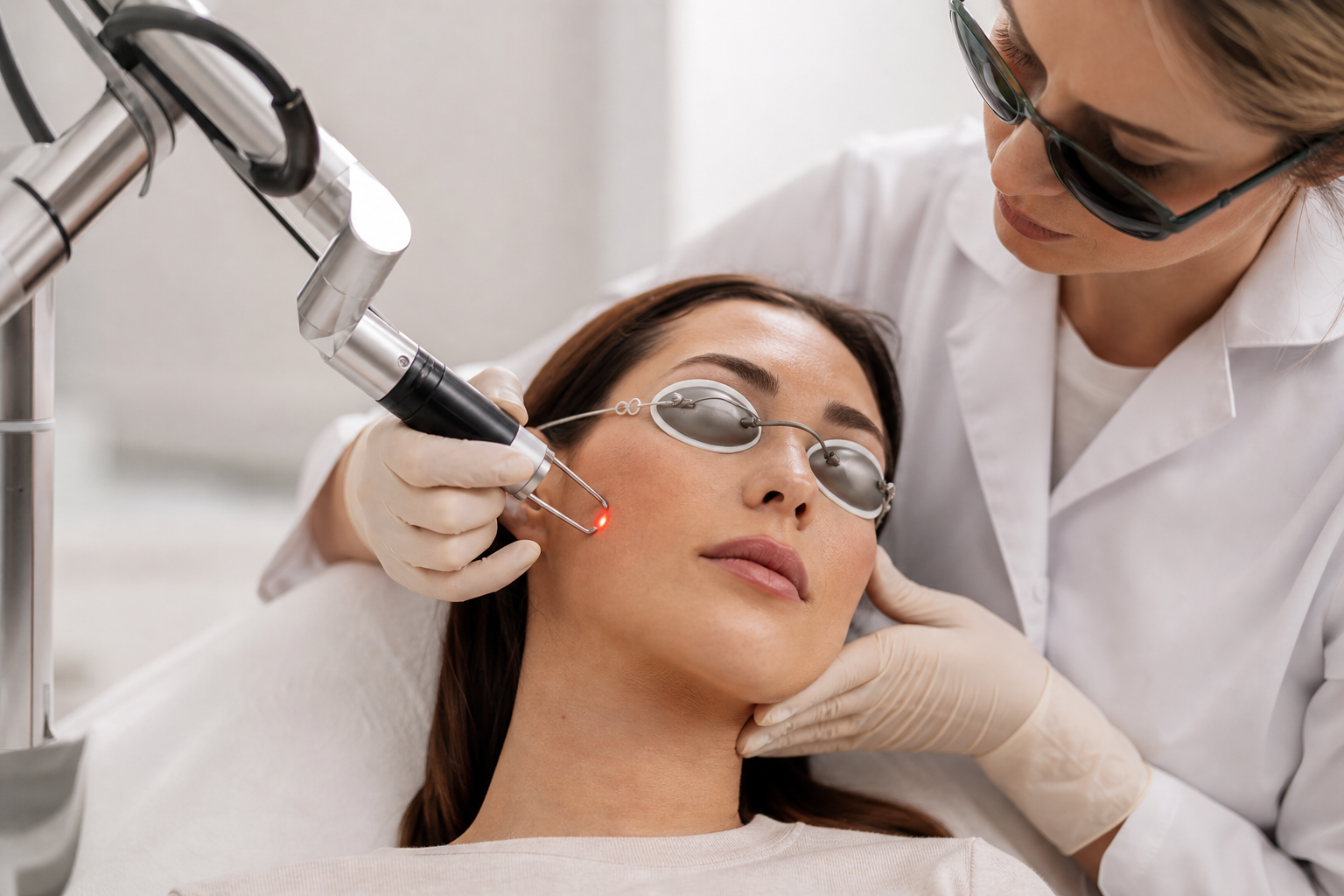
CO6 laser technology represents a sophisticated and important tool in modern dermatology and aesthetic medicine, particularly for addressing various pigmentation issues on the skin. Pigmentation disorders such as sun spots, post-inflammatory hyperpigmentation, and melasma can significantly affect an individual's appearance and self-confidence. Understanding the benefits and limitations of CO6 laser treatment for these concerns is crucial for patients considering this approach as well as for clinicians aiming to select the most appropriate therapeutic options.
This editorial explores the mechanisms by which CO6 lasers function in treating pigmentation, identifies the types of pigmentation most amenable to this therapy, examines contraindications and risks, and clarifies how skin type influences treatment planning. It is intended for dermatologists, aesthetic physicians, and informed patients who seek a rigorous, evidence-based perspective on this advanced laser modality without marketing embellishments.
The use of CO6 laser must be tailored carefully according to individual diagnosis and concerns. Only qualified professionals should determine treatment parameters and suitability after thorough skin evaluation. With this foundation, the article aims to provide a clear, nuanced understanding of when and how to use CO6 laser in pigmentation correction, what outcomes to expect, and how the procedure fits within the broader arsenal of laser technologies.
What is the Mechanism of CO6 Laser in Treating Pigmentation?
CO6 laser is classified as an ablative laser, emitting light at a wavelength around 10,600 nm. This wavelength is strongly absorbed by water molecules within the skin tissue, resulting in rapid heating and vaporization of the targeted epidermal and superficial dermal layers. The ablative nature enables precise removal of damaged or discolored skin layers, including pigmented cell accumulations.
Unlike non-ablative lasers that heat tissue without disrupting the epidermis, CO6 laser physically ablates thin layers of skin, which facilitates elimination of superficial pigment deposits. Moreover, by inducing controlled thermal injury, the laser stimulates fibroblast activity and subsequent collagen remodeling in the dermis, enhancing overall skin texture and tone uniformity.
In the context of pigmentation, these properties make the CO6 laser especially effective against epidermal pigmented lesions where melanin is densely localized near the skin surface. However, due to its ablative action, the treatment requires careful parameter calibration—energy density, pulse duration, and treatment density—to minimize risks and optimize therapeutic benefits.
Which Pigmentation Types Are Best Treated with CO6 Laser?
CO6 laser shows particular efficacy with certain pigmentation disorders, though it is not universally indicated for all types. The pigmentation conditions most amenable include:
Solar lentigines or age spots that arise from chronic sun exposure and tend to accumulate superficially in the epidermis. These lesions respond well to the ablative removal capability of CO6 lasers.
Post-inflammatory hyperpigmentation (PIH) that follows skin trauma or inflammatory conditions such as acne. When PIH is superficial, CO6 laser can effectively reduce the pigment by resurfacing damaged skin layers.
Melasma, a more complex and often deeper pigmentation disorder, may only partially benefit from CO6 laser, which is usually deployed as part of a multifaceted treatment plan given the risk of exacerbation and recurrence.
It is crucial to differentiate these conditions and consider their depth before selecting CO6 laser, as it is less effective or inadvisable for deep dermal pigmentations, which are better targeted by Q-switched, picosecond, or alexandrite lasers.
What are the Limitations and Contraindications of CO6 Laser in Pigmentation Treatment?
Despite its therapeutic potential, CO6 laser has inherent limitations that influence patient suitability and treatment planning:
Ablative nature: The procedure disrupts the epidermal barrier, resulting in a wound healing process that entails redness, swelling, crusting, and a recovery period lasting one to two weeks. This downtime and temporary cosmetic impact may not be acceptable to all patients.
Skin type sensitivity: Individuals with darker skin tones (Fitzpatrick phototypes III and above) are at heightened risk for paradoxical pigmentary changes post-treatment, including hyperpigmentation and hypopigmentation. Such cases necessitate cautious parameter adjustment or alternative treatments.
Active skin conditions: Patients with infections, open wounds, or inflammatory dermatoses are unsuitable candidates, as laser ablation could worsen symptoms or prolong healing.
These considerations underline the necessity of thorough pre-treatment assessment by a qualified practitioner, who can weigh risks and benefits tailored to each patient’s pigmentation pattern and overall skin health.
How Does Skin Phototype Influence CO6 Laser Treatment Selection and Outcomes?
Fitzpatrick skin phototype classification significantly impacts laser treatment decisions. Phototypes I and II, characterized by fair skin with minimal melanin content, generally tolerate ablative CO6 laser therapy well, exhibiting lower complication rates and favorable pigment clearance.
Conversely, phototypes III through VI, which have increased melanin levels and a greater propensity for pigmentary fluctuations post-inflammation, require a more conservative approach. In these patients, non-ablative lasers or pigment-specific Q-switched lasers are often preferred to minimize adverse effects.
When CO6 laser is considered for darker skin types, low fluence settings, fractional modes, and longer intervals between sessions help mitigate risks. Additionally, diligent post-procedure care to prevent sun exposure and inflammation is mandatory to support optimal healing and pigment normalization.
What Are the Principal Risks of CO6 Laser for Pigmentation and How Are They Minimized?
Key risks associated with CO6 laser pigment treatment include:
Infection: Ablation compromises the skin barrier, creating a susceptibility to bacterial or viral infections such as herpes simplex. Prophylactic antivirals and proper wound care reduce this risk.
Unintended pigment changes: Post-inflammatory hyperpigmentation remains the most common side effect, particularly in darker skin phototypes. Hypopigmentation can occasionally occur too. Prevention hinges on appropriate patient selection, tailored laser settings, and strict sun avoidance.
Tissue damage and scarring: Excessively aggressive settings or operator error can lead to burns and scarring, underscoring the importance of experienced specialists administering the treatment.
Proactive risk reduction includes thorough initial examination, conservative laser parameter choices, comprehensive patient education, and vigilant follow-up to promptly address any adverse signs.
When Is CO6 Laser the Appropriate Choice for Pigmentation Concerns?
Deciding on CO6 laser therapy involves a nuanced assessment of pigmentation features, skin type, patient expectations, and treatment goals. CO6 laser is most appropriate when:
– The pigmentation is superficial, localized, and clearly demarcated, such as solar lentigines in lighter-skinned individuals.
– The patient is prepared to accommodate the healing period and adhere to post-treatment care protocols.
– Other modalities have proven inadequate or unsuitable.
Complex or diffuse pigmentation disorders, deep dermal pigmentations, or patients prone to pigmentary instability often warrant alternative laser technologies or combined treatment strategies.
What Should Patients Expect During and After CO6 Laser Treatment?
Preparation for CO6 laser treatment involves pre-procedure skin conditioning and review of medical history to confirm suitability. During the procedure, local anesthesia or topical numbing agents are applied to minimize discomfort as the laser ablates microscopic layers of skin.
Immediately following treatment, redness, swelling, and a sensation resembling sunburn are typical, accompanied by crusting as the skin regenerates. The healing phase lasts approximately 7 to 14 days, during which meticulous wound care is essential.
Visible improvements in pigmentation may be noted after the initial session, though optimal and lasting results often require multiple treatments spaced weeks apart. Patients must maintain sun protection and avoid irritants to support sustained pigment normalization.
Who Should Perform CO6 Laser Treatments and What Qualities Define a Suitable Clinic?
Because of the precision required and the risks involved, CO6 laser procedures should be performed exclusively by qualified dermatologists or licensed aesthetic physicians with formal training in laser medicine. Experience with CO6 laser for pigmentary disorders is a critical factor in reducing complications and achieving results.
Patients selecting a clinic should consider the following:
– Verified credentials and certifications of the practitioner.
– Access to state-of-the-art laser equipment with appropriate safety features.
– Positive patient feedback and transparent communication about realistic expectations and potential risks.
– Comprehensive pre- and post-treatment support, including counseling and wound management guidance.


