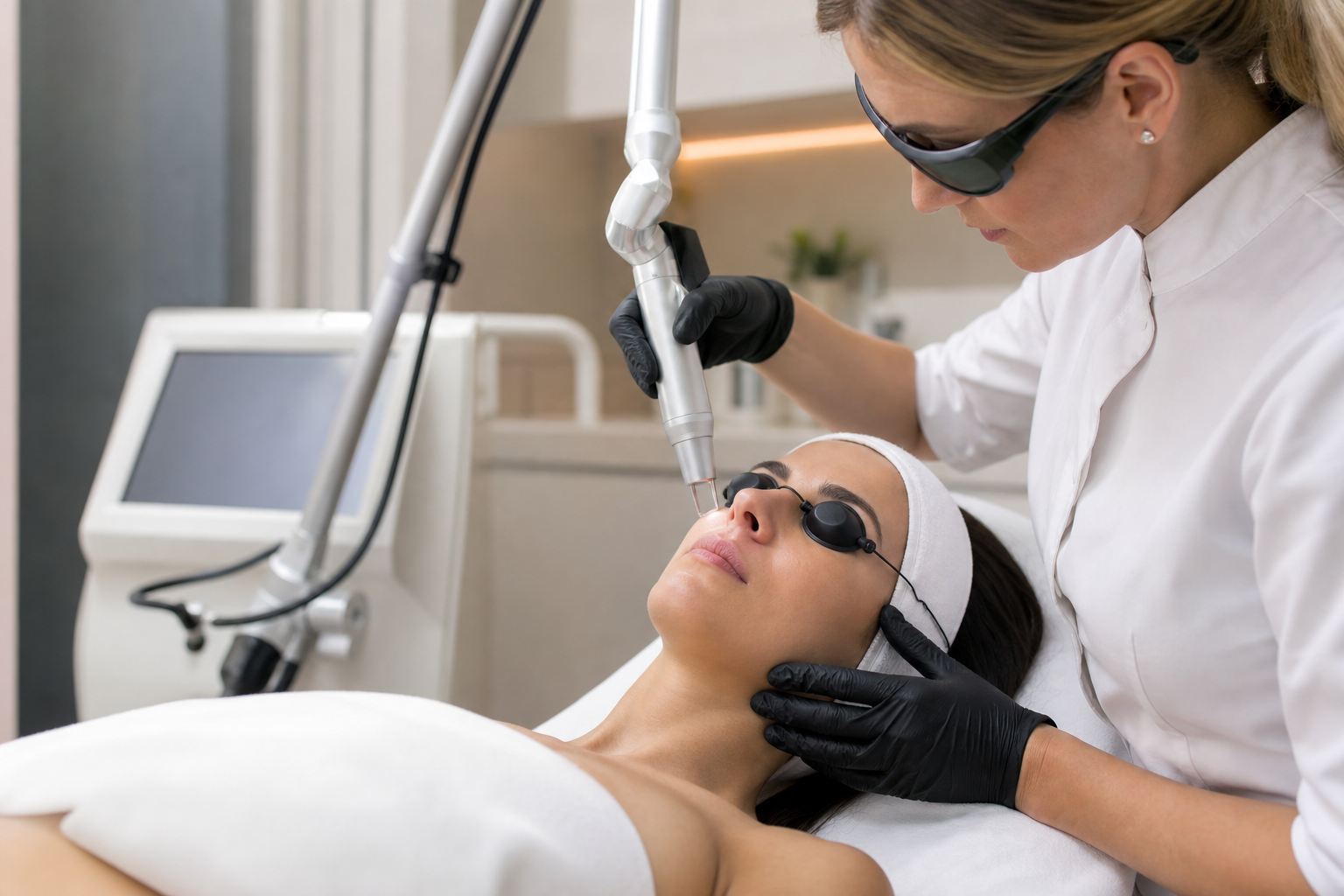
Pigmentation irregularities on the skin represent one of the most common aesthetic concerns affecting a broad range of individuals across different ages and skin phototypes. These pigmentary changes can manifest as dark spots, melasma, lentigines, or diffuse unevenness that detract from a uniform complexion. Addressing these imperfections has become a pivotal focus within contemporary dermatology and aesthetic medicine, which frequently employ advanced laser technologies to tackle such issues with precision and safety.
Among the laser modalities available, picosecond and nanosecond lasers stand out due to their demonstrated efficacy in pigment removal treatments. However, while both technologies target similar indications, they differ fundamentally in their mechanisms of action, treatment parameters, and suitability for various skin types and pigmentation concerns. Understanding these distinctions is crucial for patients seeking optimal results and for practitioners determining the most appropriate laser approach.
This article explores the key differences between picosecond and nanosecond lasers in the context of pigmentation treatment. It aims to provide a detailed yet accessible overview for patients considering laser options as well as for professionals aiming to deepen their clinical understanding of laser-tissue interactions in pigment correction. In doing so, it clarifies how these lasers work, their application indications and constraints, considerations for different skin types, and potential risks, ensuring informed decisions and safer clinical outcomes.
What Are Picosecond and Nanosecond Lasers and How Do They Work?
To appreciate the differences between picosecond and nanosecond lasers, it is essential first to understand the fundamental principle behind their operation. Both types of lasers emit highly concentrated pulses of light energy targeted at pigment molecules within the skin—primarily melanin or tattoo ink. The goal is to fragment these pigment particles into smaller pieces that the body’s immune system can subsequently clear away naturally.
The defining characteristic separating these lasers lies in the duration of their pulses, measured in fractions of a second. Nanosecond lasers emit pulses lasting one billionth of a second (10-9 seconds), whereas picosecond lasers produce pulses in trillionths of a second (10-12 seconds). This seemingly small numerical difference has significant biological consequences in how energy interacts with pigment particles and surrounding skin tissue.
Nanosecond lasers primarily exert their effect through a photoacoustic mechanism, generating mechanical shockwaves that physically break pigment particles apart. While effective, this process inherently produces a level of thermal energy that can affect adjacent skin tissue, potentially leading to collateral damage such as inflammation or pigment alteration.
In contrast, picosecond lasers combine photoacoustic and photothermal effects but deliver energy in ultra-short bursts with far greater peak power, which facilitates more precise pigment fragmentation. This results in a highly efficient breakup of pigment granules with significantly less heat diffusion to surrounding skin. Consequently, picosecond lasers tend to minimize thermal injury, thereby reducing the risks of side effects like scarring, burns, or pigmentation shifts.
Which Pigmentary Conditions Are Best Suited to Picosecond Versus Nanosecond Laser Treatments?
Both picosecond and nanosecond lasers are employed to address a spectrum of pigmentary issues, including age spots (lentigines), melasma, post-inflammatory hyperpigmentation, and tattoo removal. Yet, their optimal utility depends on the nature and depth of the pigment, as well as skin sensitivity and phototype.
Nanosecond lasers have a longstanding track record, particularly in removing tattoos and treating darker or denser pigment deposits. Their mechanical disruption can penetrate relatively deeply, making them effective for pigment particles embedded deeper within the dermis.
However, their comparatively longer pulse duration can increase the likelihood of side effects in patients with more sensitive skin or higher Fitzpatrick phototypes (III-VI). Their use in diffuse and complex pigmentary disorders like melasma requires caution due to the risk of exacerbating pigmentation irregularities.
Conversely, picosecond lasers are often preferred for treating fine, superficial, or complex pigmentations where precision and minimal thermal impact are paramount. Melasma, in particular, a notoriously challenging and recurrent pigmentation disorder, shows better outcomes when managed with picosecond technology. This is due to its targeted fragmentation ability and lower propensity for post-inflammatory pigment changes.
Moreover, picosecond lasers excel in dispersing difficult tattoo pigments, especially mixed and multicolored inks, which can pose challenges for nanosecond devices. Their enhanced efficacy and gentler effect make them more suitable for delicate facial areas and patients with darker skin tones who are prone to pigmentary side effects.
What Key Parameters Influence Efficacy and Safety in Picosecond and Nanosecond Laser Treatments?
Successful laser pigmentation treatment hinges on multiple adjustable parameters tailored to each patient’s unique presentation. Paramount among these are the laser's wavelength, pulse energy, pulse duration, and repetition rate.
Picosecond lasers often function at wavelengths such as 532 nm (green light) and 1064 nm (near-infrared), affording flexibility to target superficial or deeper pigments. These wavelengths correspond to absorption peaks of melanin and common tattoo ink colors, ensuring targeted energy delivery.
Nanosecond Q-switched lasers also utilize 532 nm and 1064 nm wavelengths but have longer pulse durations. Their broader energy delivery profile can require more cautious parameter selection to mitigate unintended tissue effects.
Beyond wavelength, practitioners adjust pulse energy (fluence) to balance between sufficient pigment disruption and minimizing heat load. Too low energy risks inadequate treatment, while excessive energy raises the chance of skin injury.
Pulse duration critically influences the photomechanical and photothermal effects, with picosecond lasers’ ultra-short pulses enabling highly selective photothermolysis. Repetition rates impact treatment speed and patient comfort but have lesser influence on pigment fragmentation quality.
Although technological parameters matter greatly, the practitioner’s expertise ultimately determines safe and effective parameter settings. Comprehensive skin assessment, including Fitzpatrick phototype classification and pigment depth evaluation, guides individualized treatment planning, avoiding over- or undertreatment and mitigating side effects.
What Advantages Does the Picosecond Laser Offer Over the Nanosecond Laser in Pigmentation Removal?
Picosecond laser technology represents a significant evolution in pigment-targeting lasers, marked primarily by its ultra-short pulse duration. This refinement translates into several clinical benefits that impact both efficacy and patient experience.
Firstly, the picosecond laser’s precision in breaking pigment particles reduces collateral thermal damage to surrounding tissues. This manifests clinically as reduced post-treatment inflammation, faster recovery times, and a lower risk of adverse events such as burns, scarring, or pigmentary shifting.
Secondly, the enhanced fragmentation capability facilitates clearance of difficult-to-treat pigmentations, including stubborn melasma, complex multicolor tattoos, and post-inflammatory hyperpigmentation, expanding the range of treatable conditions.
Thirdly, picosecond lasers demonstrate greater safety profiles across a wider spectrum of skin phototypes, making them especially advantageous for patients with darker skin who are more vulnerable to pigmentation complications.
Finally, patient comfort during and after the procedure tends to improve due to minimized tissue trauma, encouraging adherence to treatment regimens and satisfaction.
When Might Nanosecond Lasers Remain the Preferred Choice for Pigmentation Therapy?
Despite advances offered by picosecond lasers, nanosecond lasers retain distinct roles within clinical practice. Their cost-effectiveness and proven efficacy, particularly in traditional tattoo removal, continue to make them practical options.
Nanosecond lasers are well suited for deeper or denser pigment lesions where higher mechanical disruption is required. They can also be more appropriate for patients with lighter skin types, where risks related to thermal diffusion are lower, allowing for more aggressive treatment parameters.
Additionally, certain tattoo ink colors, such as black and dark blue, respond reliably to Q-switched nanosecond lasers, securing their place in comprehensive pigment management strategies.
Nevertheless, the decision to utilize nanosecond over picosecond technology should always follow thorough diagnostic evaluation to align laser choice with the patient’s specific pigment characteristics and safety considerations.
What Are the Potential Risks and Limitations Associated With Picosecond and Nanosecond Laser Treatments?
Laser pigmentation treatments, while generally safe, carry inherent risks that must be judiciously managed through appropriate device selection, parameter adjustment, and operator expertise.
Common side effects include transient redness, swelling, and mild discomfort during or immediately following the procedure. More significant complications such as burns, hypo- or hyperpigmentation, scarring, or textural changes can arise if treatments are improperly administered or patient selection is unsuitable.
Patients with darker skin phototypes are particularly susceptible to pigmentary disturbances post-treatment, necessitating cautious parameter optimization and sometimes favoring picosecond lasers due to their gentler profile.
Contraindications also exist, including active infections, recent sun exposure, certain photosensitizing medications, and pregnancy. Diagnostic diligence and clear patient communication about risks, benefits, and post-care are essential for minimizing adverse outcomes.
Who Are the Ideal Candidates for Laser Pigmentation Treatments and How Should They Prepare?
Laser treatments targeting pigmentation irregularities suit individuals seeking improvement of age spots, melasma, lentigines, or tattoo removal who possess realistic expectations and stable overall skin health. Ideal candidates have undergone prior evaluation by a qualified professional who has assessed phototype, skin condition, and pigment characteristics to customize treatment.
Preparation includes avoiding sun exposure and tanning in the weeks preceding treatment, discontinuing certain topical agents that increase photosensitivity, and adhering to any specialist guidance about skincare protocols. Proper preparation enhances treatment safety and efficacy, reduces complication risks, and optimizes healing.
What Should Patients Expect During and After Picosecond or Nanosecond Laser Sessions?
Treatment sessions are generally brief, lasting from a few minutes up to approximately half an hour based on treated area size and pigment complexity. Patients commonly experience a mild warming or snapping sensation, mitigated through topical anesthesia or cooling devices.
Post-procedure effects commonly include localized redness and slight swelling, typically resolving within a few days. Patients should rigorously avoid sun exposure and apply sunscreen consistently to protect the skin during this vulnerable period.
Results often emerge gradually as pigment progressively breaks down and is cleared by the body's immune system. Multiple treatment sessions spaced weeks apart are frequently necessary to achieve optimal clearance and to minimize risks of rebound pigmentation.


