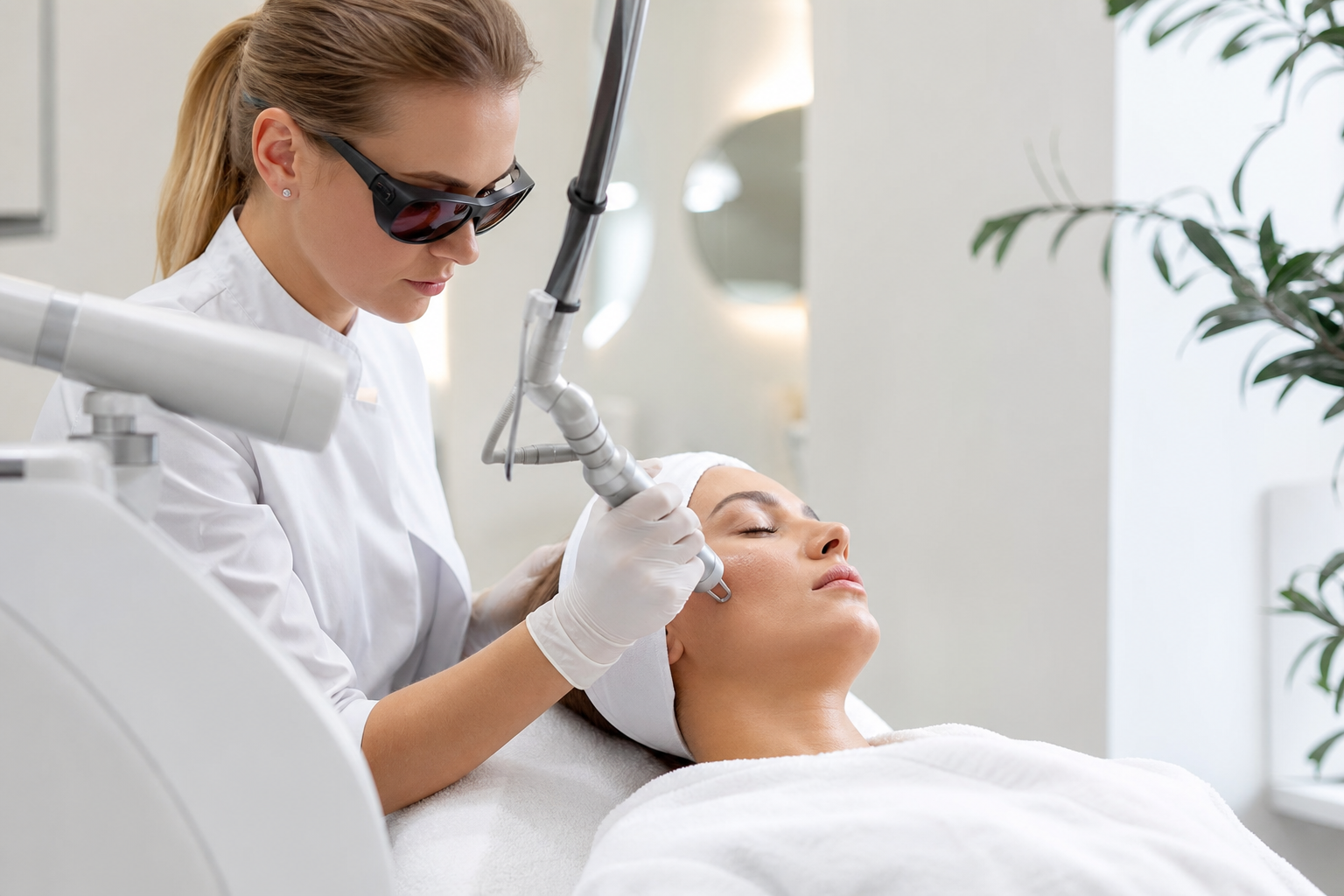
Fractional laser technology has emerged as one of the most sophisticated tools in dermatological and aesthetic medicine. Its primary use involves treating various skin conditions, with pigmentation disorders among the most common concerns it addresses. Pigmentation changes—ranging from sunspots (solar lentigines) and melasma to post-inflammatory hyperpigmentation—can profoundly affect a person’s confidence and appearance. Determining when fractional laser treatment makes sense for pigmentation is crucial for anyone seeking an effective, evidence-informed approach to restoring an even skin tone.
This article aims to serve both patients exploring treatment options for pigmentation irregularities and medical professionals specializing in dermatology and aesthetic therapies who want to deepen their understanding of fractional laser mechanisms, indications, and limitations concerning pigmentation. Emphasizing the necessity for careful patient evaluation and individualized treatment planning, the discussion clarifies when fractional laser use is appropriate and when alternative or adjunctive methods may be better suited.
Understanding how fractional lasers work, their effects on various pigmentation types, appropriate patient selection, and their potential risks forms the foundation for informed decision-making. This knowledge can guide individuals in choosing the most suitable treatment path, ultimately improving outcomes and minimizing unwanted side effects.
What Is Fractional Laser Technology and How Does It Work on Pigmentation?
Fractional lasers operate by delivering laser energy in microscopic beams, creating thousands of tiny columns of thermal injury called microthermal treatment zones. These targeted spots penetrate the skin layers while leaving intervening tissue intact. This fractional pattern allows rapid healing, as the untreated areas serve as reservoirs for faster regeneration.
There are two primary types of fractional lasers: ablative and non-ablative. Ablative fractional lasers remove thin layers of the skin, yielding profound skin remodeling and regeneration but often involving longer recovery times. Non-ablative fractional lasers heat the underlying dermis without removing the skin surface, stimulating collagen production and skin repair with minimal downtime.
In treating pigmentation, fractional lasers primarily target melanin—the pigment responsible for skin coloration. The laser light is selectively absorbed by melanocytes and pigment granules, causing controlled thermal damage that breaks down pigment clusters. Subsequently, the body’s immune cells gradually clear these pigment fragments, leading to a more uniform skin tone. Additionally, fractional laser-induced skin renewal can improve overall skin texture and tightness.
Which Types of Pigmentation Are Suitable for Fractional Laser Treatment?
Fractional lasers have proven beneficial for several types of pigmentation disorders, particularly superficial pigmentary changes such as sunspots, lentigines, and certain forms of post-inflammatory hyperpigmentation. These lesions arise from localized melanin accumulation or melanocyte hyperactivity and tend to respond well to the laser’s targeted action.
Melasma—a notoriously challenging, hormonally influenced pigmentation condition—may also benefit from fractional laser therapy as part of a multimodal approach. The dual advantage of pigment reduction and skin rejuvenation can improve melasma appearance, though care must be taken given the risk of exacerbation if the skin barrier is compromised.
Patients seeking treatment who also desire improvement in skin quality, including reduced fine lines, enlarged pores, and uneven texture, may find fractional lasers particularly advantageous. This technology offers the simultaneous benefits of pigmentation correction and skin revitalization without excessive downtime.
What Are the Limitations and Contraindications of Fractional Laser for Pigmentation?
Despite its benefits, fractional laser treatment is not universally effective or suitable for all pigmentation concerns. Deep dermal or mixed-type pigmentation may not respond optimally to fractional laser alone, requiring complementary therapies. Hormonal and systemic factors influencing pigmentation also necessitate a comprehensive treatment plan beyond laser intervention.
Skin phototype is a critical consideration. Individuals with darker skin tones (phototypes IV and above) have an elevated risk of post-inflammatory hyperpigmentation or hypopigmentation following laser treatment. Thus, treatment parameters must be carefully adjusted, and sometimes fractional laser may be contraindicated without prior skin priming or combination therapy.
Patients with active skin infections, open wounds, or certain systemic conditions should avoid fractional laser until fully resolved. Furthermore, those unable or unwilling to comply with post-treatment sun protection may face increased risks of adverse pigmentation changes.
How Does Skin Type Influence the Selection and Parameters of Fractional Laser Treatment?
The Fitzpatrick skin phototype scale, ranging from I (very fair) to VI (very dark), guides laser clinicians in assessing risk and customizing treatment protocols. Lighter skin types generally tolerate fractional laser interventions with a lower incidence of complications, allowing for more aggressive treatment if needed.
In contrast, darker skin types require more conservative energy settings and pulse durations to reduce the risk of triggering adverse pigmentation responses. Detailed patient history, including prior pigmentation reactions or treatments, guides parameter selection. Pre-treatment regimens such as topical lightening agents may be prescribed to mitigate risks in higher phototypes.
Patient selection and laser settings are therefore crucial elements managed by experienced professionals familiar with pigmentation pathophysiology and laser physics, ensuring both safety and efficacy.
What Are the Potential Risks Associated with Fractional Laser Treatments for Pigmentation?
While fractional lasers are generally safe when administered correctly, risks remain and must be discussed upfront with patients. Temporary redness, swelling, and crusting are common post-treatment effects that typically resolve within days to weeks depending on treatment intensity.
More concerning complications include post-inflammatory hyperpigmentation, hypopigmentation, scarring, and infection, particularly if post-care instructions are not meticulously followed or if treatment is inappropriately applied. These risks underscore the importance of treatment by qualified specialists with rigorous patient evaluation and follow-up.
Proper post-treatment skincare involving moisturization, barrier repair, and diligent sun protection is essential to minimizing adverse events and optimizing outcomes. Patient education and realistic expectation setting play pivotal roles in treatment satisfaction and safety.
How Does Fractional Laser Compare to Other Laser Modalities for Pigmentation?
Various laser technologies exist to address pigmentation, each with unique mechanisms and target chromophores. Notable modalities include Q-Switched Nd:YAG lasers, picosecond lasers, Alexandrite lasers, and Ruby lasers. These primarily target melanin with high-energy, short pulses, rapidly fragmenting pigment particles for clearance.
Fractional lasers differ because they create microscopic zones of controlled injury, inducing skin remodeling and pigment reduction together. This fractional approach allows for combined benefits such as skin rejuvenation along with pigment correction, distinguishing it from conventional pigment-targeting lasers.
For instance, Which Lasers Are Used to Treat Pigmentation? and Laser Treatments for Pigmentation: A Complete Guide to Types of Dark Spots, Lasers, Results and Risks provide comprehensive insights into these different technologies. Moreover, the nuanced differences between ablative and non-ablative lasers are essential to grasp (Ablative vs Non-Ablative Lasers: Key Differences).
Choosing between fractional and other pigment-specific lasers depends on pigmentation depth, lesion type, skin type, patient expectations, and desired downtime. Often, multimodal combination treatments can achieve the best results.
What Should Patients Expect Before, During, and After Fractional Laser Treatment?
The treatment journey begins with a thorough consultation including medical history review, skin examination, and determination of pigmentation type and phototype. Informed consent involves discussing expected outcomes, risks, and the treatment course.
During the procedure, patients may feel a mild warming or tingling sensation, often well tolerated with topical anesthesia if necessary. Treatment duration varies from a few minutes to about half an hour, depending on the area size and device used.
Following treatment, transient redness, swelling, and dryness are typical. Crusting and peeling can occur but should resolve with proper care. Post-procedure instructions emphasize gentle skincare, sun avoidance, and using broad-spectrum sunscreen to prevent pigment recurrence or complications.
Results generally develop gradually over weeks as pigment is cleared and skin renews. Multiple treatment sessions spaced weeks apart may be needed for optimal improvement.
When Is the Optimal Time to Choose Fractional Laser for Pigmentation Management?
Timing influences treatment safety and efficacy. Avoiding high UV exposure seasons—such as summer—is advisable to reduce risks of pigmentary side effects. Patients should be prepared to maintain strict sun protection afterward.
Stable or controlled pigmentation, especially in hormonally influenced conditions like melasma, provides a better response. Pre-treatment skin preparation and adjunctive therapies can enhance outcomes and durability.
Consulting a knowledgeable clinician who can tailor the treatment plan, including scheduling and supportive regimens, ensures fractional laser therapy is employed at the most opportune time.


