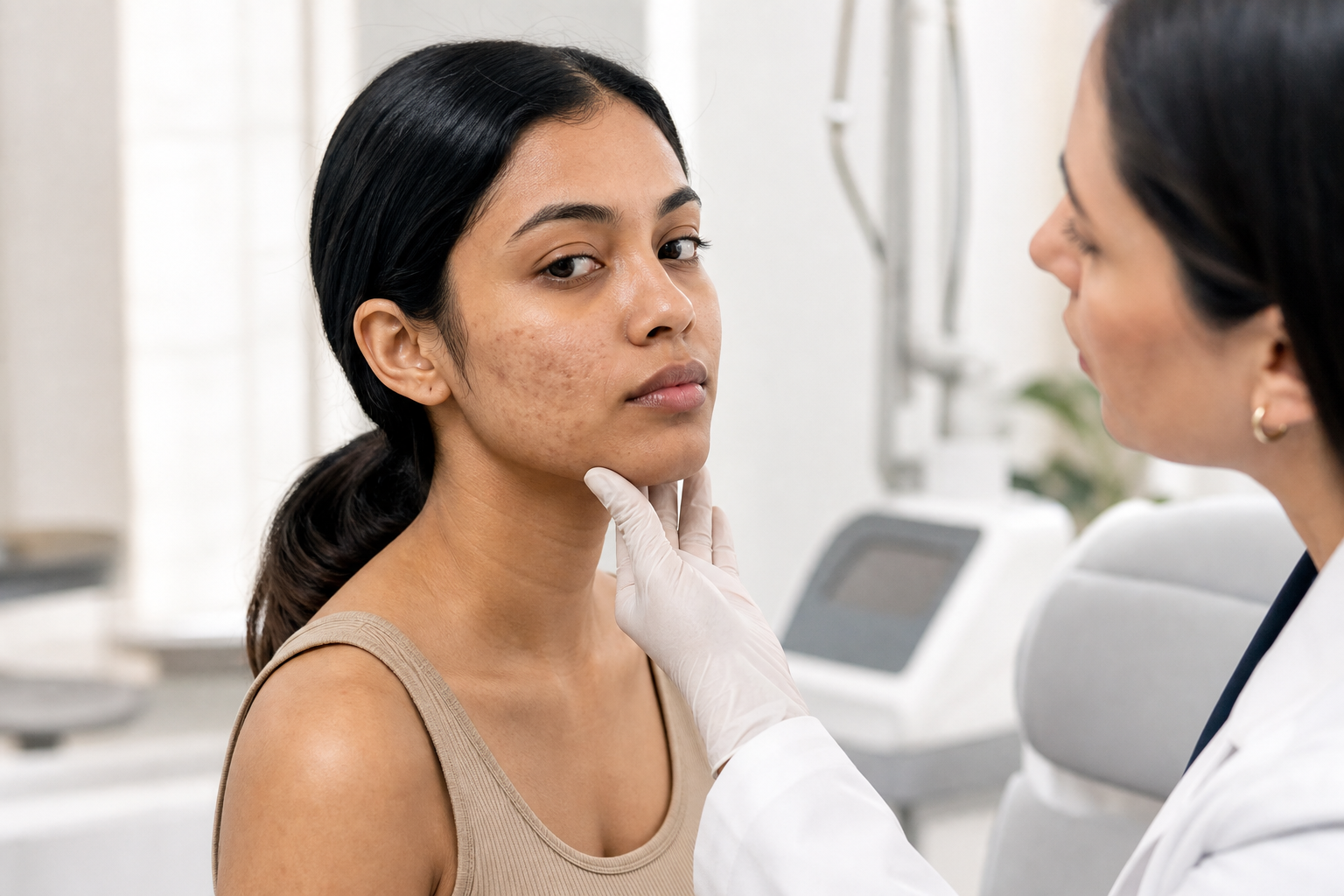
The quest for clear, even-toned skin free from the visible reminders of acne and pigmentation irregularities is a common concern among millions worldwide. Acne scars and post-inflammatory pigmentation often coexist, compounding the challenge of achieving a uniform complexion. Fractional laser therapy has emerged as a leading advanced treatment within dermatology and aesthetic medicine to address these complex skin issues. While promising, its application requires nuanced understanding and careful planning, especially when treating both acne scars and pigmentation concurrently.
This article is intended for dermatologists, aesthetic practitioners, and informed patients seeking in-depth knowledge about fractional laser treatments tailored specifically for cases where acne scars and pigmentation abnormalities overlap. We aim to clarify critical distinctions—such as brown post-inflammatory hyperpigmentation (PIH) versus red post-inflammatory erythema (PIE)—highlight the importance of managing active inflammation, and discuss special considerations pertinent to darker phototypes, where treatment risks and outcomes can be markedly different.
Understanding fractional laser therapy’s capabilities, limitations, and individualized protocols is essential for maximizing safety and efficacy. This comprehensive guide explores the science behind fractional lasers, the indications for their use in combined scarring and pigmentation issues, procedural intricacies, risks of adverse effects such as treatment-induced darkening, and realistic expectations for outcomes.
What is Fractional Laser Therapy and How Does It Address Both Acne Scars and Pigmentation?
Fractional laser therapy is a sophisticated method that delivers laser energy in a pixelated pattern creating microscopic zones of controlled thermal injury known as microthermal zones. Unlike traditional ablative lasers that remove large continuous areas of skin, fractional lasers treat only portions of the skin surface, leaving intervening tissue intact to facilitate faster healing and reduced downtime.
When it comes to acne scars, especially the common atrophic variety, fractional lasers remodel the skin by disrupting fibrotic scar tissue and stimulating collagen synthesis. This process promotes regeneration of healthier dermal matrix, effectively softening the appearance of depressions or uneven texture caused by scarring. For pigmentation issues, fractional lasers can target excess melanin within both the epidermis and dermis, breaking down pigment deposits responsible for brown PIH, thus leading to a more homogeneous skin tone.
The dual-action capacity of fractional laser treatment to improve textural defects and pigmentary irregularities makes it a compelling option for patients burdened by both conditions. However, since these dermatologic challenges are complex and multifactorial, treatment must be customized. Factors such as the depth of scars, the type of pigmentation, skin phototype, and current inflammation status influence procedural parameters and outcomes.
Why Distinguishing Brown Post-Inflammatory Hyperpigmentation from Red Post-Inflammatory Erythema Matters in Laser Treatment
After acne or other inflammatory skin insults, residual marks may present as either brown or red discolorations. Brown PIH results from increased melanin synthesis and deposition in response to skin injury and inflammation. It manifests as flat, well-defined brown spots that can linger for months or even years. Conversely, red post-inflammatory erythema arises due to dilated blood vessels and heightened vascularity in the affected skin, producing a pink to red hue.
Recognizing this distinction is pivotal because the pathophysiology guides treatment choice. Fractional lasers, especially those targeting pigmentation, are effective for brown PIH by facilitating melanin breakdown and clearance. However, they are generally not the first-line treatment for red erythema. Managing vascular changes often involves specific vascular lasers or pulsed dye lasers that selectively target the hemoglobin in superficial vessels.
Moreover, applying fractional laser on skin still demonstrating active inflammation or erythema runs the risk of exacerbating redness, triggering unwanted irritation, or even worsening pigmentation. Therefore, an accurate diagnosis should be coupled with appropriate timing and modality selection to avoid adverse effects, emphasizing that a one-size-fits-all laser protocol is unrealistic in these nuanced cases.
How Do Skin Phototypes Influence Fractional Laser Therapy Outcomes and Risks, Particularly in Darker Skin?
Individuals with darker skin tones (phototypes IV to VI) inherently possess higher melanin concentrations, which not only afford natural photoprotection but also present unique challenges to laser therapy. The melanin can indiscriminately absorb laser energy, increasing the risk of unintended side effects such as post-inflammatory hyperpigmentation or hypopigmentation, which may be more noticeable and distressing in these populations.
For this reason, fractional laser settings must be meticulously adjusted with reduced fluence and longer treatment intervals to minimize thermal injury. Pre-treatment regimens aimed at stabilizing and lightening existing pigment via topical agents are essential. Additionally, strict photoprotection and gentle skin care routines help mitigate inflammatory triggers that could amplify pigmentation post-procedure.
In some cases, alternative modalities or combined approaches may be more suitable to balance efficacy with safety. The importance of patient counseling and realistic expectation setting cannot be overstated when treating darker phototypes due to their increased susceptibility to adverse pigmentary outcomes.
In Which Clinical Situations is Fractional Laser Most Appropriate for Treating Combined Acne Scars and Pigmentation?
Fractional laser treatment is best reserved for patients whose acne scars have reached a stable, non-inflammatory phase and whose pigmentation is predominantly brown PIH rather than active erythema. Attempting laser therapy on inflamed or pustular lesions risks exacerbating the condition through collateral thermal damage.
A thorough clinical assessment should precede any laser intervention, including consideration of skin type, scar morphology (atrophic vs hypertrophic), and pigment characteristics. When active acne persists, controlling inflammation through medical therapies before laser treatment is advisable for optimal outcomes.
Moreover, fractional laser can be integrated with adjunctive therapies such as chemical peels, microneedling, or topical retinoids, which may enhance results while spreading treatment intensity over time. This multimodal approach should be individualized, guided by patient tolerance and response.
What Are the Different Types of Fractional Lasers, and Which Are Best Suited for Acne Scars and Pigmentation?
Fractional lasers broadly fall into two categories: ablative and non-ablative. Ablative fractional lasers, such as CO2 and erbium-doped yttrium aluminum garnet (Er:YAG), vaporize microscopic columns of tissue, promoting robust collagen remodeling. They are particularly effective for deep and severe scarring but require longer downtime and carry a higher risk profile.
Non-ablative fractional lasers, like fractional erbium glass lasers (1540 nm), induce dermal heating without removing epidermal tissue, resulting in less downtime and fewer side effects. These are suitable for mild to moderate acne scars and pigmentary issues but may necessitate multiple sessions to achieve comparable effects.
Choice of laser also depends on the depth and type of pigmentation; epidermal pigmentation responds better to shorter wavelength lasers, while dermal pigment may require longer wavelengths or combined treatment modalities. Balancing efficacy and safety is essential, particularly in skin of color, where aggressive ablative approaches may increase adverse event rates.
What Does the Fractional Laser Treatment Procedure Involve, and How Should Patients Prepare and Care for Their Skin Afterwards?
Prior to treatment, patients undergo detailed evaluation including skin assessment and photographic documentation. Preparatory steps typically include 4-6 weeks of topical regimens aimed at reducing inflammation and pigmentation, and strict sun avoidance protocols to ensure stable skin conditions.
The procedure itself is performed under sterile conditions, with topical anesthetics or cooling devices used to enhance comfort. Treatment parameters such as energy level, density, and pulse duration are customized based on individual skin characteristics and treatment goals.
Post-procedure, patients often experience redness, mild swelling, and peeling for several days. Intensive hydration, barrier repair creams, and sunscreen use are critical during healing. Avoidance of irritants and sun exposure reduce risks of complications such as PIH. Follow-up visits assess healing and guide any necessary adjustments.
Can Fractional Laser Treatments Worsen Pigmentation and What Precautions Minimize This Risk?
Despite its benefits, fractional laser therapy carries a risk of inducing or exacerbating pigmentation issues, particularly post-inflammatory hyperpigmentation, especially if performed inappropriately. Factors increasing this risk include treating active inflammation, using excessive laser energy, inadequate pre-treatment preparation, and poor post-treatment care.
To minimize these risks, practitioners emphasize the importance of individualizing treatment plans, conservative laser settings in sensitive skin types, and comprehensive patient education. Incorporating pre- and post-laser topical agents designed to modulate melanogenesis, combined with sun avoidance, has been shown to decrease PIH incidence significantly.
Recognizing early signs of adverse pigmentation during follow-up enables prompt intervention, potentially reversing these changes before they become permanent.
What Are Realistic Expectations for Results When Using Fractional Laser for Both Acne Scars and Pigmentation?
Patients should understand that fractional laser treatment can substantially improve skin texture and reduce pigmentary irregularities, but often does not completely erase all scarring or pigmentation. Improvement is generally graded rather than absolute, with many experiencing softening of scars and fading of brown PIH over multiple sessions.
Final results evolve as collagen remodeling continues for several months post-treatment, underscoring the importance of patience and adherence to recommended care regimens. Maintenance with ongoing skin care and sun protection extends and stabilizes improvements.
Consultation about realistic outcomes, potential side effects, and the necessity for multiple treatments helps align patient expectations with clinical possibilities, facilitating higher satisfaction.


