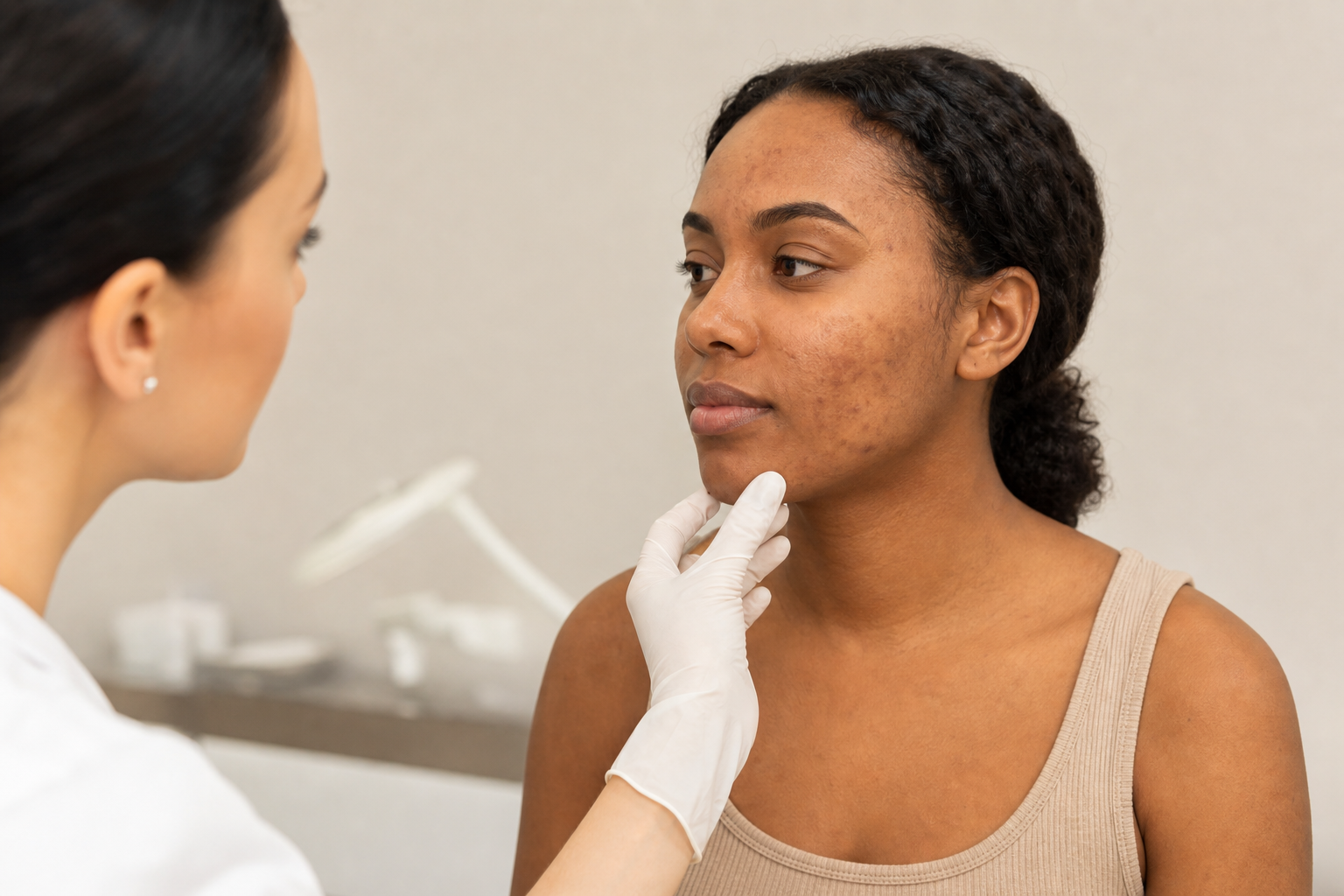
Post-Inflammatory Hyperpigmentation (PIH) is a common skin condition characterized by darkened patches or spots that appear following an inflammatory insult, such as acne, eczema, injury, or dermatological procedures. The pigmentation arises due to increased melanin production by melanocytes in response to skin inflammation. PIH can pose a significant cosmetic concern, especially for individuals seeking a more uniform complexion, and is particularly prevalent and persistent in those with darker skin phototypes.
Laser treatments have become a favored option in modern dermatology and aesthetic medicine for addressing various skin pigmentation disorders, including PIH. These treatments use focused light energy to target pigment and stimulate skin remodeling. However, a critical question arises: can laser treatment paradoxically worsen PIH by making it darker? This concern is especially pertinent for patients with darker skin, where laser-induced pigmentation changes and post-treatment complications may present greater challenges.
This article is intended for individuals affected by PIH considering laser therapies, as well as skin care professionals and dermatology specialists aiming to understand how laser interventions interact with PIH. We will explore mechanisms of PIH formation, differentiate it from similar vascular conditions, examine how laser treatments work, assess the risks and benefits, and identify crucial considerations for safely utilizing laser therapy in managing PIH without exacerbating pigmentation.
Understanding the Nature and Origin of Post-Inflammatory Hyperpigmentation
PIH manifests as local hypermelanosis arising secondary to skin inflammation or injury. When skin undergoes damage—whether through acne lesions, eczema, physical trauma, or chemical burns—melanocytes respond to inflammatory mediators by increasing melanin synthesis. This melanin is then unevenly deposited in the epidermis or dermis, leading to the characteristic brown to black discoloration that defines PIH.
The significance of PIH lies in its tendency to persist for months or even years despite being a non-scarring, reversible pigmentary change. Its prevalence is notably higher in individuals with Fitzpatrick skin types III through VI, who possess more reactive melanocytes and a greater baseline melanin concentration. The psychosocial impact of PIH can be profound, motivating the pursuit of effective, safe treatment options to restore even skin tone.
Distinguishing Brown PIH from Red Post-Inflammatory Erythema: Why It Matters
Accurate clinical differentiation between brown PIH and red post-inflammatory erythema is crucial before initiating any pigment-targeted treatment. Brown PIH results from excess melanin accumulation, giving a brown or black coloration. Conversely, red post-inflammatory erythema derives from vascular dilation and persistent inflammation, manifesting as red or pink discoloration without pigment deposition.
This distinction influences therapeutic approaches because lasers work differently on pigment and vascular targets. A pigment-focused laser used on vascular erythema may not only be ineffective but can exacerbate inflammation or cause paradoxical pigmentation. Therefore, a thorough dermatologic assessment using tools such as dermoscopy or Wood's lamp examination can aid in correctly identifying the lesion type and guiding appropriate laser selection.
How Laser Treatments Interact with Pigmented Lesions and Their Potential to Darken PIH
Laser technology involves delivering controlled light energy that is selectively absorbed by target chromophores – in the case of PIH, melanin. The goal is to fragment excess pigment or stimulate skin turnover to lighten hyperpigmented areas. However, laser energy inherently produces thermal stress, which can incite an inflammatory response if not carefully managed.
In the context of PIH, the paradoxical darkening effect may occur if laser treatment is applied while inflammation remains active or if laser parameters are improperly set, leading to excessive heat and irritation. This heightened inflammatory state can provoke melanocytes to increase melanin production even further, worsening the hyperpigmentation instead of alleviating it. Such risk is magnified in individuals with darker skin, whose melanocytes are more reactive to inflammatory stimuli.
Clinicians must understand these dynamics and incorporate strategies to attenuate inflammation throughout the laser treatment course to minimize the chance of inducing procedure-related PIH exacerbation.
Reviewing Common Laser Modalities for PIH: Mechanisms, Advantages, and Risks
A variety of laser types are employed in PIH treatment, each with unique properties that influence outcomes and safety profiles:
Q-switched lasers utilize nanosecond pulses designed to shatter melanin particles with minimal thermal diffusion. They are effective but carry a risk of rebound hyperpigmentation if parameters or indications are inappropriate.
Picosecond lasers
Fractional lasers
Other options like vascular lasers may target the red erythema in post-inflammatory lesions but do not address melanin pigment directly.
For every laser type, especially in individuals with darker skin, judicious selection of wavelength, pulse duration, energy level, and treatment density is paramount to avoid thermal overexposure that could trigger adverse pigmentary responses.
When to Opt for Laser Treatment of PIH and When to Exercise Caution
Laser intervention is best considered once the active inflammatory insult has fully resolved and skin inflammation is under control. Treating PIH during periods of active acne, eczema flare-ups, or ongoing skin irritation dramatically increases the risk of treatment-induced hyperpigmentation and suboptimal results.
Additionally, patients with darker phototypes require special protocols, including lower fluence (energy output), longer intervals between sessions, and combination therapy with topical depigmenting agents and strict sun protection to ensure safety and efficacy.
In some scenarios, alternative modalities such as chemical peels, topical agents, or cautious use of combination therapies may be more appropriate to avoid triggering unwanted pigmentary changes.
The Crucial Role of Controlling Active Inflammation Before and After Laser Sessions
Mitigating inflammation before laser treatment is foundational to minimizing PIH risks. Dermatologists commonly prescribe regimens containing anti-inflammatory agents (e.g., corticosteroids), calcineurin inhibitors, and emollients to stabilize the skin barrier and reduce active inflammation.
Post-treatment care includes using gentle skincare, applying broad-spectrum sunscreen, and sometimes continued anti-inflammatory ointments to support healing without provoking further melanocyte stimulation. Patient education on avoiding sun exposure and mechanical irritation is equally vital throughout the treatment course.
Consistent pre- and post-laser management reduces the likelihood of adverse pigmentary consequences, enhancing treatment durability and patient satisfaction.
What to Expect After Laser Treatment for PIH: Managing Side Effects and Monitoring Progress
Immediately following laser therapy, patients can experience transient side effects such as redness, mild swelling, dryness, or superficial peeling. These manifestations reflect the skin's reparative processes and typically resolve within several days to weeks.
Close follow-up allows early detection of any aberrant healing patterns, including worsening pigmentation. Prompt interventions—such as topical lighteners, anti-inflammatory agents, or adjustment of treatment intensity—can be initiated to prevent progression of adverse reactions.
Visible lightening of PIH lesions usually develops gradually over multiple sessions, underscoring the importance of patience and adherence to recommended maintenance regimens.
Addressing Common Concerns: Can Laser Permanently Remove PIH and Is There a Risk of New Pigmentation?
Laser therapy can substantially reduce the appearance of PIH, improving skin tone uniformity and patient confidence. However, because PIH is a dynamic response to inflammation, permanent eradication cannot be assured without controlling the underlying causes and avoiding further skin insults.
Yes, new pigmentations can appear post-laser if care is not taken to avoid sun exposure, irritation, or premature retreatment. Hence, realistic expectations and ongoing skin maintenance are critical components of long-term management.