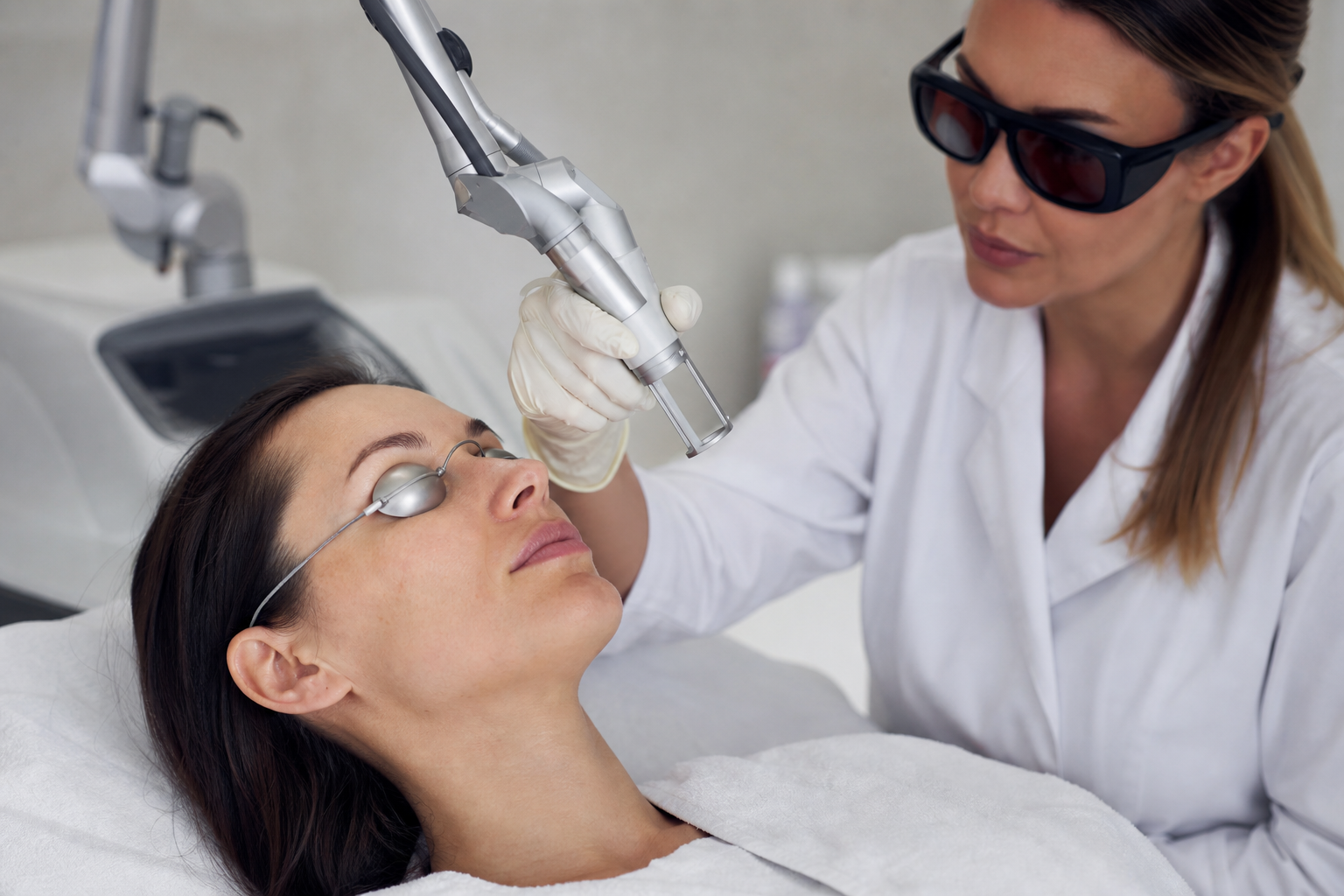
Dark spots and photoaging represent common and visually impactful concerns affecting the skin's overall appearance, largely driven by cumulative sun exposure and the natural aging process. Among modern dermatological interventions, the Er:YAG laser stands out as a precise, controlled method to address these issues through targeted resurfacing and stimulation of skin regeneration. This article delves deeply into the fundamental principles behind the Er:YAG laser's function, the clinical indications that make it an appropriate choice, its advantages and limitations compared to other laser technologies, patient selection criteria based on skin type, and key safety considerations. Intended primarily for patients exploring treatment options and professionals seeking a nuanced understanding of this technology, the article also clarifies expectations and common questions related to its application for pigmentation and photoaged skin.
Understanding how the Er:YAG laser integrates into the broader landscape of laser therapies for pigmentation correction is essential. Unlike non-ablative lasers or Q-switched devices, the Er:YAG laser operates in a distinct manner, offering a balance between efficacy and safety that appeals to individuals with specific clinical presentations. Its ability to precisely ablate superficial and mid-dermal skin layers while minimizing thermal damage distinguishes it from other ablative lasers such as CO2 devices. Consequently, this specificity renders it particularly useful for treating subtle to moderate pigmentary alterations and fine textural changes associated with photodamage without imposing excessively long recovery periods.
Given the complexity surrounding pigmentation disorders and the multifactorial nature of photoaging, choosing an appropriate treatment modality requires understanding not only the mechanism of action but also the clinical nuances that influence outcomes. This editorial aims to furnish a comprehensive, evidence-based perspective on the Er:YAG laser’s role in managing dark spots and signs of photodamage, highlighting the importance of individualized patient assessment and specialized practitioner expertise in optimizing results.
What Is the Er:YAG Laser and How Does It Function in Skin Treatment?
The Er:YAG laser (erbium: yttrium-aluminum garnet) emits light at a wavelength of approximately 2940 nanometers, which corresponds closely with the peak absorption spectrum of water molecules in biological tissues. Since water constitutes the majority of skin tissue, this property affords Er:YAG lasers the remarkable ability to ablate skin layers with high precision and minimal collateral thermal injury.
During treatment, the laser energy is selectively absorbed by the water content in skin cells, causing rapid vaporization of the targeted epidermal and upper dermal layers. This controlled ablation removes pigmented and damaged superficial cells, while residual thermal energy induces collagen remodeling and neocollagenesis, contributing to improved skin texture and elasticity over time.
Comparatively, ablative lasers like CO2 lasers emit at a longer wavelength penetrating deeper but causing more extensive heat diffusion, which increases risks of prolonged edema, scarring, and pigmentary changes. Er:YAG's wavelength and pulse duration parameters enable skin resurfacing with less downtime and fewer side effects. Such a refined balance between efficacy and safety underpins its suitability for treating various pigmentation abnormalities and mild to moderate photodamage.
Which Pigmentary Conditions and Photoaging Signs Indicate Er:YAG Laser Intervention?
The Er:YAG laser is predominantly used to address superficial and mildly deep pigmentary lesions, including solar lentigines (also known as sunspots), lentigo simplex, epidermal melasma, and post-inflammatory hyperpigmentation. These conditions are typically characterized by focal or diffuse areas of increased melanin deposition within the epidermis and superficial dermis.
Photoaging, resulting from chronic ultraviolet radiation exposure, manifests as wrinkling, fine lines, rough texture, uneven pigmentation, and reduced skin elasticity. Er:YAG laser therapy targets such changes by promoting exfoliation of aged keratinocytes and stimulating reparative dermal processes.
By precisely ablating dyschromic and photo-damaged skin layers, treatment fosters regeneration of healthier tissue with normalized pigmentation and enhanced texture. The improved microcirculation and collagen restructuring post-procedure also support long-term skin rejuvenation. However, Er:YAG laser is best suited for mild to moderate photodamage rather than advanced rhytides or deep volumetric deficits, where adjunctive treatments may be indicated.
What Are the Advantages and Limitations of Using Er:YAG Laser for Dark Spots and Photoaging?
The key advantages of the Er:YAG laser include its precise control over ablation depth and minimal thermal diffusion, which collectively reduce risks of scarring and post-inflammatory pigmentary disturbance—critical concerns in laser skin resurfacing. This characteristic also enables shorter recovery times, typically allowing patients to resume normal activities within one to two weeks.
Furthermore, the Er:YAG laser’s capacity to simultaneously remove damaged epidermal layers and induce dermal remodeling yields comprehensive improvements in pigmentation, tone, and texture in a single treatment session or a series of closely spaced treatments.
Nevertheless, the method exhibits limitations. Unlike fractional lasers that create microscopic thermal zones interspersed with untreated tissue to promote rapid healing, conventional Er:YAG laser ablation can be more aggressive if parameters are not meticulously controlled, potentially leading to unwanted side effects. The shallower penetration compared to CO2 lasers may reduce its efficacy in deeply pigmented or thick lesions, thus necessitating multiple sessions or combination therapies.
Moreover, the procedure demands careful patient selection and parameter customization; improper use increases risks of hypo- or hyperpigmentation, particularly in individuals with darker skin phototypes or underlying inflammatory disorders. Hence, patient counseling regarding realistic outcomes and potential adverse effects remains paramount.
Why Does Skin Phototype Matter in Selecting Er:YAG Laser Treatment?
Skin phototype, commonly assessed via the Fitzpatrick scale, significantly influences the safety and effectiveness of laser therapies. Phototypes I through IV, generally characterized by lighter pigmentation, tend to tolerate ablative laser treatments like Er:YAG better, exhibiting lower incidences of post-inflammatory pigment changes and scarring. In contrast, phototypes V and VI require heightened caution due to increased melanin content and susceptibility to paradoxical pigmentation disturbances after skin injury.
Determining an appropriate laser intensity and treatment depth commensurate with a patient’s phototype and skin condition is vital. This assessment includes evaluating any history of pigmentary disorders, keloid formation, or previous laser exposure, which may impact wound healing dynamics and post-procedure outcomes.
Er:YAG laser's rapid ablation with minimal heat transfer reduces thermal injury compared to CO2 lasers, making it relatively safer for darker skin, but the margin for error is narrow. Consequently, practitioners often opt for conservative protocols in higher phototypes or consider alternative modalities better suited to melanin-rich skin.
What Are the Common Risks Associated with Er:YAG Laser and How Can They Be Mitigated?
Like all ablative procedures, Er:YAG laser treatments carry inherent risks. The most frequent immediate effects include erythema, edema, discomfort, and transient skin peeling in the treated area. These typically subside within one to two weeks but require patient compliance with skincare protocols.
More serious complications can arise from excessive energy delivery or inaccurate depth settings, including post-inflammatory hyperpigmentation, hypopigmentation, infection, prolonged erythema, and in rare cases, scarring. Patients with darker skin tones, a history of keloid formation, or photosensitive conditions are at particular risk.
To reduce these risks, a comprehensive pre-treatment evaluation is essential. This should involve identification of contraindications such as active infections, recent isotretinoin use, or pregnancy, as well as clear patient education on sun avoidance and topical care after the procedure. Using properly calibrated devices and tailoring parameters to individual skin characteristics remains the cornerstone of safe practice.
When Is Er:YAG Laser the Best Choice Compared to Other Laser Treatments?
Er:YAG laser therapy represents an optimal choice when a patient presents with superficial to moderate pigmentary changes and early photodamage, seeking notable improvement with relatively brief downtime. Patients who desire a balance between aggressive ablative treatments and gentler non-ablative procedures may find Er:YAG laser an appropriate middle ground.
Alternative lasers such as the Q-Switched Nd:YAG or Alexandrite lasers have targeted applications for deeper or more resistant pigmentation issues, while fractional lasers may offer benefits in managing deeper wrinkles and extensive photodamage through microthermal zones promoting faster healing. For comprehensive treatment of complex pigmentation, understanding which lasers are used to treat pigmentation and their comparative advantages can guide therapeutic planning.
In cases involving extensive melasma or post-inflammatory pigmentary disorders, combination approaches or adjunctive therapies may be required to sustain long-term results and reduce recurrence risk, underscoring the importance of individualized treatment strategies.
What Should Patients Expect During and After an Er:YAG Laser Procedure?
A typical Er:YAG laser session lasts approximately 20 to 40 minutes, depending on the treatment area and intensity. Patients may experience sensations of warmth, tingling, or mild discomfort during the procedure, which can be managed with topical anesthetics or cooling methods as determined by the treating specialist.
Post-treatment, the skin commonly exhibits redness, swelling, and a feeling of tightness, accompanied by superficial peeling over several days. Meticulous adherence to post-care instructions—including gentle skin cleansing, moisturizing, and strict sun protection—is critical to optimize healing and minimize adverse effects.
The most noticeable improvements in pigmentation and skin texture generally emerge several weeks after treatment as collagen production increases and melanin distribution normalizes. Multiple sessions spaced appropriately may be necessary to achieve desired outcomes, particularly in challenging cases.
Why Is Expert Diagnosis and Personalized Treatment Planning Essential with Er:YAG Lasers?
Due to the intricacies underlying pigmentary disorders and the diverse variables influencing laser response—including skin type, lesion depth, and patient history—a thorough diagnostic workup is indispensable before undertaking Er:YAG laser therapy. Such evaluation ensures accurate differentiation of lesions, optimal parameter selection (energy density, pulse duration, ablation depth), and appropriate treatment frequency.
Only qualified dermatologists or trained laser specialists possess the expertise to interpret patient-specific risk factors and tailor protocols to maximize efficacy while minimizing complications. They also provide comprehensive counseling pre- and post-intervention, adjust treatments dynamically based on response, and coordinate adjunctive care when necessary.
Failing to engage a knowledgeable practitioner increases the potential for suboptimal outcomes, heightening the risk of side effects and dissatisfaction. Hence, professional guidance remains the pillar that supports safe and successful use of Er:YAG lasers in pigmentation management.


