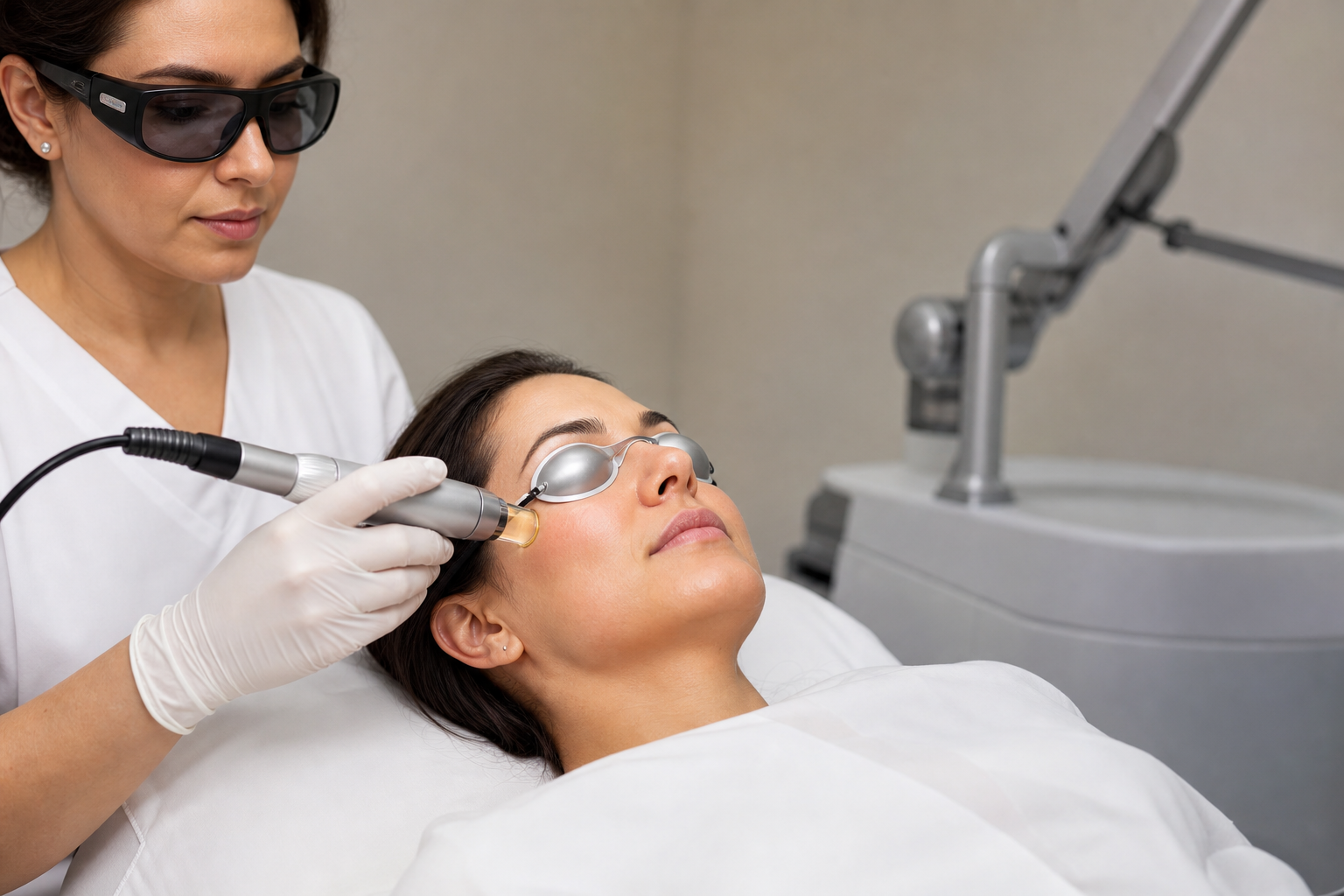
In the realm of modern dermatological and aesthetic medicine, laser technology has become a cornerstone for addressing a myriad of skin concerns. Among the diverse types of lasers utilized, ablative and non-ablative lasers represent two fundamentally different approaches to skin treatment. Their distinct mechanisms, indications, limitations, and safety profiles make understanding their differences essential for both patients considering laser therapy and professionals tasked with recommending the optimal treatment protocol.
This comprehensive exploration is intended for individuals contemplating laser treatments but unsure which category of laser suits their skin issues best. Furthermore, it serves as an informative guide for cosmetologists, dermatologists, and aesthetic surgeons seeking to deepen their expertise on current laser technologies, treatment parameters, and selection criteria. Given the prominence of lasers in treating pigmentation disorders, scar revisions, skin rejuvenation, and other dermatologic indications, a nuanced understanding of ablative versus non-ablative lasers is critical for informed decisions, optimal outcomes, and risk mitigation.
Herein, we will clarify what defines ablative and non-ablative lasers, elucidate their operational principles, describe their clinical applications and constraints, discuss skin type considerations, and outline common risks associated with their use. The pivotal role of a trained specialist in selecting the appropriate device and customizing treatment parameters after thorough skin assessment will also be emphasized.
What Are Ablative Lasers and How Do They Function?
Ablative lasers operate by precisely removing layers of skin to stimulate regeneration. Their laser energy specifically targets and vaporizes water-containing cells in the epidermis and parts of the dermis. This ablation of superficial and sometimes deeper skin layers removes damaged or aged tissue, creating a controlled wound that triggers the body's natural healing processes.
Two key examples of ablative lasers are the carbon dioxide (CO2) laser and the erbium-doped yttrium aluminum garnet (Er:YAG) laser. The CO2 laser emits light with a longer wavelength, allowing deeper penetration and more substantial tissue removal, making it effective for remodeling deeper scars and conducting intensive skin resurfacing. Conversely, the Er:YAG laser is more superficial and precise, causing less surrounding heat damage, which can translate to a quicker recovery period.
Ablative laser treatments are typically recommended for patients with pronounced pigmentary changes, deep acne scars, marked photoaging characterized by loss of elasticity and deep wrinkles, and other significant skin imperfections. While these treatments can produce dramatic and long-lasting improvements, they also necessitate a more extended healing period compared with non-ablative methods.
How Do Non-Ablative Lasers Work and What Are Their Benefits?
Non-ablative lasers differ fundamentally by targeting the dermis without disturbing the epidermis's surface. They deliver controlled heat into deeper skin layers, stimulating collagen production and promoting remodeling while leaving the skin's outer layer intact. This thermal stimulation helps improve skin texture, tone, and mild pigmentation issues without causing the direct tissue removal seen in ablative procedures.
Non-ablative laser systems commonly include devices such as the neodymium-doped yttrium aluminum garnet (Nd:YAG) laser, diode lasers, and pulsed dye lasers. Their ability to act both superficially and within deeper skin layers, without epidermal ablation, reduces recovery time and minimizes risks such as infection or significant inflammation.
This approach suits patients with mild to moderate skin damage who seek rejuvenation with minimal downtime. Common indications include fine wrinkles, mild hyperpigmentation, erythema, spider veins, and general skin revitalization. However, such treatments often require multiple sessions to achieve the desired effect, and the results may be subtler than those achieved with ablative lasers.
When Are Ablative or Non-Ablative Lasers Indicated?
The clinical decision between ablative and non-ablative lasers hinges on the severity and type of skin condition, the patient's skin type, desired outcome, and tolerance for downtime. Ablative lasers are preferred for more challenging cases such as deep wrinkles, extensive scarring, and significant pigmentation abnormalities that demand robust skin remodeling.
For patients presenting with milder skin imperfections or those prioritizing shorter recovery and less invasive treatment, non-ablative lasers provide an effective alternative. These lasers can offer improvement in fine lines, minor discolorations, capillary damage (such as couperose), and overall skin tone enhancement.
Skin phototype is a crucial factor influencing treatment choice. Patients with darker skin types (higher Fitzpatrick phototypes) are at greater risk of post-inflammatory pigmentation changes and scarring, particularly with ablative lasers. Therefore, non-ablative lasers or cautious parameter adjustments might be favored in such cases to enhance safety without sacrificing efficacy.
How Does Skin Phototype Influence the Selection and Parameters of Laser Treatments?
The Fitzpatrick scale, which classifies skin into types based on pigmentation and sun exposure response, guides laser treatment planning. It is vital to tailor laser parameters—such as wavelength, fluence (energy level), pulse width, and spot size—to the patient's phototype to minimize adverse effects while optimizing results.
For darker phototypes (IV–VI), ablative lasers pose a higher risk for persistent hyperpigmentation and hypertrophic scarring due to increased melanin absorption and delayed wound healing dynamics. In these cases, lighter or fractional ablative settings or alternative non-ablative lasers with longer wavelengths less absorbed by melanin are often employed.
Conversely, lighter phototypes (I–III) typically tolerate a broader range of laser parameters with reduced risk. Nonetheless, individualized assessment remains paramount, considering factors such as previous sun damage, skin sensitivity, and existing dermatological conditions.
Ultimately, the selection of device and treatment protocol must be a calculated process conducted by a specialist experienced in laser physics and skin biology to achieve the safest and most effective outcomes.
What Are the Limitations of Ablative and Non-Ablative Laser Technologies?
While ablative lasers can deliver striking improvements, they require significant post-treatment care and entail a recovery phase that can extend from a week to several weeks. Patients may experience redness, swelling, peeling, and heightened photosensitivity. These treatments are contraindicated in individuals with compromised healing, active infections, or a predisposition to keloid scars. Moreover, the intensity and invasiveness of ablative lasers make them unsuitable for patients not prepared for downtime or those with certain lifestyle demands.
Non-ablative lasers, although safer and accompanied by shorter recovery periods, yield more gradual and moderate improvements. Achieving desired results might require a series of sessions spaced over months, and some skin concerns may remain partially unaddressed due to the limited depth of tissue remodeling.
Neither laser type provides a universal solution for all dermatological issues; the heterogeneity of skin concerns demands a personalized approach that considers treatment feasibility, patient expectations, and the natural regenerative capacity of the skin.
What Are the Key Risks and Potential Complications of Laser Treatments?
Despite advancements in laser safety, both ablative and non-ablative procedures carry inherent risks. Common side effects include transient erythema (redness), edema (swelling), and discomfort. More significant complications may arise, such as post-inflammatory hyperpigmentation, hypopigmentation, infection, scarring, and in rare instances, prolonged erythema or tissue necrosis.
The likelihood of these adverse outcomes escalates when lasers are applied indiscriminately or by inadequately trained personnel. Meticulous pre-treatment evaluation, adherence to clinical protocols, appropriate patient selection, and post-procedure care substantially reduce these risks.
Patients should be thoroughly counseled regarding the potential complications and realistic expectations prior to commencing laser therapy. Equally important is monitoring during follow-up visits to manage any early signs of adverse effects promptly.
How to Choose the Right Laser Treatment for Your Skin?
Determining the optimal laser treatment involves a multifactorial assessment encompassing skin condition severity, phototype, medical history, lifestyle factors, and patient goals. An initial comprehensive consultation with a board-certified dermatologist or skilled aesthetic practitioner is essential to identify the most appropriate approach.
In clinical practice, combination protocols that integrate ablative and non-ablative lasers are sometimes employed to harness the benefits of both modalities. For example, an initial ablative resurfacing can address deep wrinkles and scarring, followed by maintenance sessions with non-ablative lasers to enhance collagen and preserve results.
Moreover, treatment of pigmentary disorders often entails selecting specific laser systems that target chromophores with minimal collateral damage. Lasers like Q-switched Nd:YAG, Alexandrite, or picosecond devices have particular applications, which are further detailed in specialized references such as Which Lasers Are Used to Treat Pigmentation? and Picosecond Laser for Pigmentation: How Does It Differ From Nanosecond Lasers?
What Is the Importance of Expert Selection of Devices and Treatment Parameters?
The choice of laser device and the fine-tuning of its parameters are pivotal determinants of treatment success and safety. Experienced clinicians select from a spectrum of technologies—ranging from CO2, Er:YAG, Nd:YAG, Alexandrite, and Ruby lasers to advanced fractional and picosecond systems—based on the patient’s unique presentation.
Parameters such as energy density, pulse duration, repetition rate, and beam diameter influence penetration depth, thermal damage, and collateral effects. Mastery in adjusting these variables, aligned with a thorough patient evaluation, guards against suboptimal outcomes and unintended complications.
Practitioners must also consider the interplay between device characteristics and the biology of pigmentation and vascular lesions to avoid exacerbating pigmentary abnormalities or provoking unwanted side effects, as discussed in resources like Laser Treatments for Pigmentation: A Complete Guide to Types of Dark Spots, Lasers, Results and Risks.


