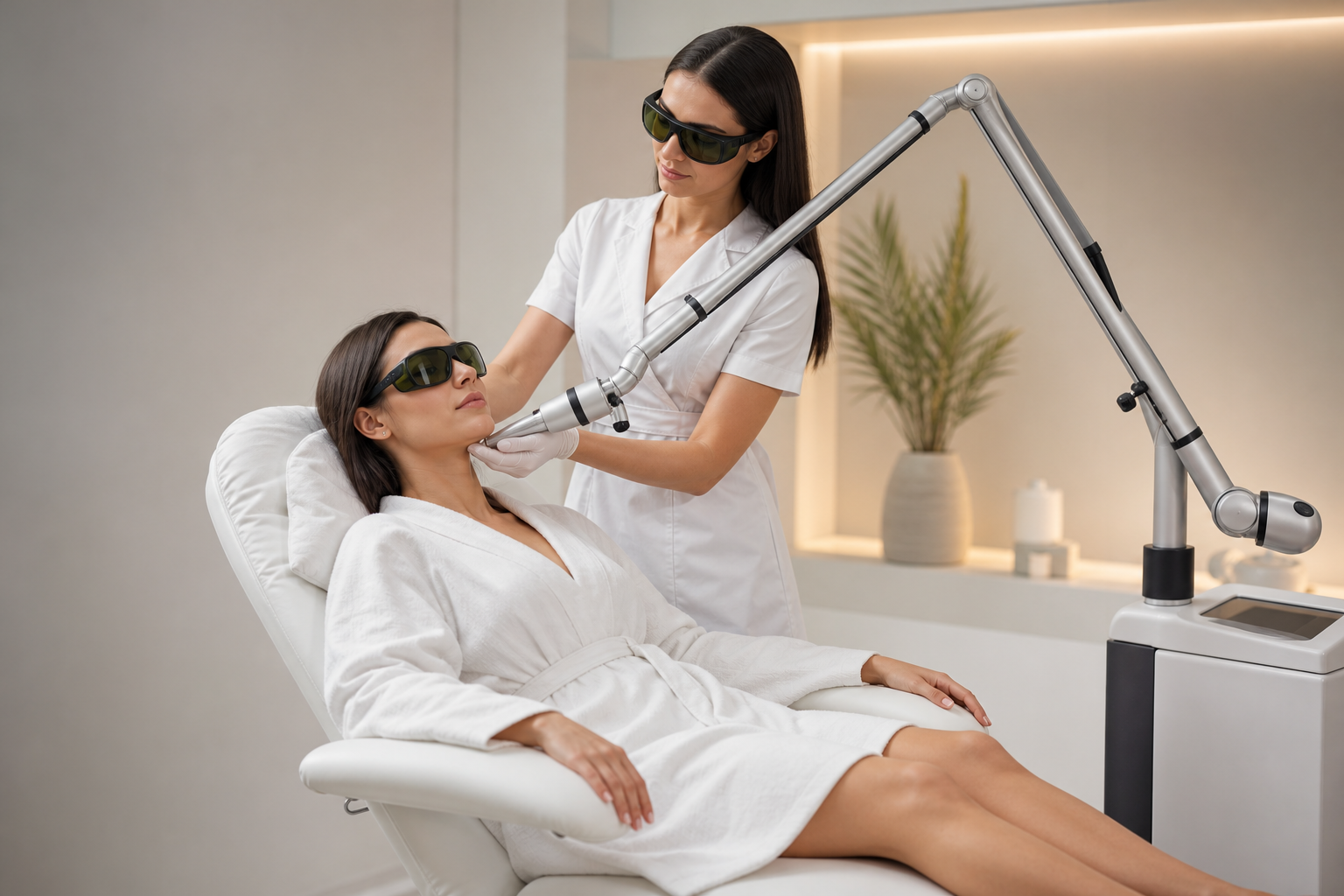
The Nd:YAG laser represents a pinnacle of versatility and efficacy in the realm of laser treatments, particularly within the spheres of dermatology and aesthetic medicine. Standing for neodymium-doped yttrium aluminum garnet, this laser technology emits light at a wavelength of 1064 nanometers, enabling it to penetrate deeply into the skin with precision. Its broad utility extends across various applications, including hair removal, vascular lesion treatment, skin rejuvenation, and pigmentation correction, making it a cornerstone tool for clinicians seeking durable and safe outcomes.
This comprehensive guide is designed for healthcare professionals, aesthetic practitioners, and patients who wish to deepen their understanding of Nd:YAG laser technology. Whether you are a practitioner aiming to expand your treatment repertoire or an individual considering laser procedures, grasping how this laser works, its benefits, and expected results is critical. Moreover, with an increasing demand for minimally invasive yet effective treatments, understanding the Nd:YAG laser’s role can help inform choices towards optimal skin health and cosmetic enhancement.
The significance of the Nd:YAG laser lies not only in its technological sophistication but also in its ability to treat a diverse range of conditions with precision and lasting results. It leverages selective photothermolysis—a process where laser energy is absorbed selectively by targeted chromophores such as melanin or hemoglobin without damaging surrounding tissue. This capability enables practitioners to tailor treatments finely suited to individual skin types, conditions, and aesthetic goals, making it a preferred option in modern laser procedures.
What Exactly Is an Nd:YAG Laser and How Does It Function in Dermatological Treatments?
The Nd:YAG laser operates by producing high-intensity laser light at a near-infrared wavelength of 1064 nm, which allows for deeper penetration into the dermis compared to shorter-wavelength lasers. This penetration depth is beneficial for targeting structures beneath the skin surface, such as hair follicles, blood vessels, and pigmented lesions. It also reduces the risk of damaging the epidermal layer, which is especially valuable for patients with darker skin tones, where pigment disturbance is a common concern.
Functionally, the laser energy is emitted in pulses, allowing precise control over the duration and intensity of exposure. When directed at pigmented or vascular targets, the light energy is absorbed and converted to heat, destroying the target while sparing surrounding tissues. This effectiveness arises from the principle of selective photothermolysis, where laser parameters are calibrated to match the absorption characteristics of the target chromophore.
Its versatility is enhanced further by adjustable pulse durations and spot sizes, enabling treatments to be tailored for various skin conditions and patient tolerance. The Nd:YAG laser is able to treat from superficial conditions like pigmented lesions to deeper vascular issues, including spider veins and port-wine stains, underscoring its comprehensive utility in dermatology and cosmetic procedures.
Who Benefits Most from Nd:YAG Laser Treatments?
Nd:YAG laser treatments are suitable for a broad spectrum of patients seeking solutions for hair removal, vascular lesions, pigmentation irregularities, or skin rejuvenation. Due to its wavelength and affinity for deeper penetration with less melanin absorption in the epidermis, it is particularly advantageous for individuals with darker skin types (Fitzpatrick skin types IV to VI) who might otherwise face higher risks of pigmentation changes with other laser types.
Patients dealing with unwanted hair growth, especially in sensitive areas or on darker skin tones, often find the Nd:YAG laser an effective and safer alternative. Similarly, those who suffer from vascular conditions such as rosacea, spider veins, and leg veins experience significant improvement with Nd:YAG treatments due to the laser's capacity to target hemoglobin within blood vessels efficiently.
Moreover, individuals seeking to address pigmentation irregularities such as freckles, sun spots, or acquired pigmented lesions may benefit from the Nd:YAG laser's ability to break down melanin deposits. Additionally, for rejuvenation purposes, the laser promotes collagen remodeling and skin tightening through controlled dermal heating, making it a multifunctional option for a variety of aesthetic concerns.
What Are the Main Advantages of Using the Nd:YAG Laser Over Other Laser Types?
One of the paramount advantages of the Nd:YAG laser lies in its unique wavelength, which allows for deeper tissue penetration with reduced melanin absorption in the epidermis. This characteristic translates into safer treatments for darker skin tones, reducing the risk of hypo- or hyperpigmentation common with lasers that use shorter wavelengths like the alexandrite or diode lasers.
In addition, the Nd:YAG laser’s versatility stands out. It is not limited to a single indication but rather extends across multiple treatments, from hair removal to vascular lesion therapy and skin rejuvenation. Its ability to be adjusted in pulse duration and energy density further enhances its safety and efficacy, allowing customization according to patient needs and skin characteristics.
The laser also boasts a favorable safety profile. Its longer wavelength is less absorbed by melanin, thereby minimizing epidermal damage, reducing discomfort, and lowering downtime. Furthermore, the precision afforded by pulse control reduces collateral tissue damage, promoting more comfortable treatment sessions and improved healing times compared to some conventional laser options.
How Does Nd:YAG Laser Hair Removal Work and What Can Patients Expect?
Nd:YAG laser hair removal targets hair follicles by delivering pulses of laser energy absorbed by the melanin in the hair shaft and follicle. The resulting thermal damage disrupts hair growth cycles, leading to hair reduction over multiple sessions. The typical wavelength of 1064 nm allows the laser to bypass the epidermis with reduced melanin absorption, hence lowering the risk of epidermal injury, especially in darker skin tones.
Patients undergoing Nd:YAG laser hair removal can expect a tailored treatment plan depending on skin type, hair color, and area of treatment. Sessions usually last between 15 and 60 minutes depending on the size of the area. Multiple sessions—often six to eight spaced about four to six weeks apart—are necessary to target hair in different growth phases for optimal results.
Post-treatment, the area might feel warm or slightly tender, and mild redness or swelling can occur but generally resolves within hours to a day. Compared to other laser hair removal options, Nd:YAG is preferred for individuals with darker skin or those prone to pigmentation issues, though it might be less effective on fine or light-colored hair due to reduced melanin absorption.
What Are the Dermatological Applications of Nd:YAG Lasers Beyond Hair Removal?
The Nd:YAG laser is widely recognized for its efficacy in treating various vascular conditions. Its wavelength is selectively absorbed by hemoglobin, enabling effective coagulation and closure of blood vessels implicated in spider veins, telangiectasia, and certain deeper varicosities. This application allows patients to see reduction in the appearance of vascular blemishes and improvement in symptoms such as flushing or redness.
Additionally, the laser plays a significant role in pigmentation correction. It breaks down melanin aggregates in pigmented lesions and age spots, facilitating their gradual clearance by the body’s immune system. This makes it a valuable tool for managing hyperpigmentation disorders and sun-related skin damage.
Skin rejuvenation is another pivotal application. By inducing controlled dermal heating, Nd:YAG lasers stimulate collagen synthesis and remodeling, improving skin elasticity, texture, and reducing fine lines. This non-ablative approach offers an appealing balance between efficacy and minimal downtime, catering to patients seeking youthful skin appearance with subtle, natural results.
When Should One Opt for Nd:YAG Laser Treatment Over Other Laser Modalities?
The decision to choose an Nd:YAG laser treatment depends on multiple factors including skin type, treatment indication, tolerance for downtime, and desired outcomes. For patients with darker skin tones who need hair removal or vascular lesion treatment, Nd:YAG is usually the safest and most effective choice due to lower epidermal melanin absorption and deep penetration.
Moreover, when targeting deeper vascular structures or thick-walled veins, the Nd:YAG laser’s longer wavelength is preferable since it can penetrate further, achieving more thorough vessel coagulation. Similarly, for patients seeking non-ablative skin rejuvenation with minimal discomfort and recovery time, Nd:YAG laser treatments are often recommended.
In contrast, shorter wavelength lasers like the alexandrite or diode lasers may be better suited for lighter skin types with finer hair or superficial pigmentation issues, given their higher melanin absorption and shallower penetration. Hence, patient-specific consultation and assessment remain critical for optimal laser modality selection.
What Are the Typical Results and Expected Outcomes of Nd:YAG Laser Procedures?
Outcomes of Nd:YAG laser treatments are generally favorable, characterized by progressive improvement after multiple sessions. In hair removal, patients typically experience significant reduction in hair density and thickness, often achieving up to 70-90% long-term hair reduction with maintenance treatments as needed.
For vascular lesions, notable fading or complete resolution of visible blood vessels can occur, with symptomatic relief from redness and flushing. Pigmentation correction often leads to lightening and eventual clearing of dark spots, though multiple sessions and sun protection are essential to sustain results.
Skin rejuvenation tends to yield subtle but cumulative improvement in skin texture, firmness, and fine lines over a few months following treatment. Due to its controlled and selective action, downtime is minimal, and side effects like redness or swelling typically resolve quickly, enhancing patient satisfaction and compliance.
How Does Safety and Patient Comfort Factor Into Nd:YAG Laser Procedures?
Safety is a cornerstone advantage of Nd:YAG laser treatments, especially in patients with diverse skin phototypes. Its reduced melanin absorption minimizes epidermal injury risk and pigmentary side effects that can compromise outcomes. Practitioners often employ cooling devices or gels to protect the skin surface and enhance patient comfort during sessions.
Patient preparation also includes thorough skin assessment, test spots to gauge response, and post-treatment care instructions emphasizing sun avoidance and skin hydration. While some discomfort may arise during laser pulses described as a mild snapping sensation, local anesthetics or cooling can mitigate this sensation effectively.
Adverse effects, although uncommon, may include transient redness, swelling, or bruising. Moreover, rare complications like burns or scarring can be avoided through correct parameter selection and trained operator technique, underscoring the importance of treatment by qualified professionals.
What Are Common Questions Regarding Nd:YAG Laser Treatments?
Many patients and practitioners inquire about the number of sessions required, pain levels, suitability for all skin types, and maintenance of results. Typically, multiple sessions spaced several weeks apart are necessary to address the full hair cycle or lesion response. Pain is generally tolerable with appropriate cooling and settings.
Another common question pertains to the longevity of results. Hair removal results are often long-lasting but may require periodic maintenance. Vascular and pigmentation treatments also benefit from follow-up sessions to sustain improvements. Patients should adhere to sun protection aggressively to prevent recurrence or new lesion formation.
Lastly, inquiries about the comparison with other laser systems often arise, with Nd:YAG favored for darker skin and deeper targets. Each modality has distinct advantages which should be considered during consultation to match treatment with patient goals and skin characteristics meticulously.


