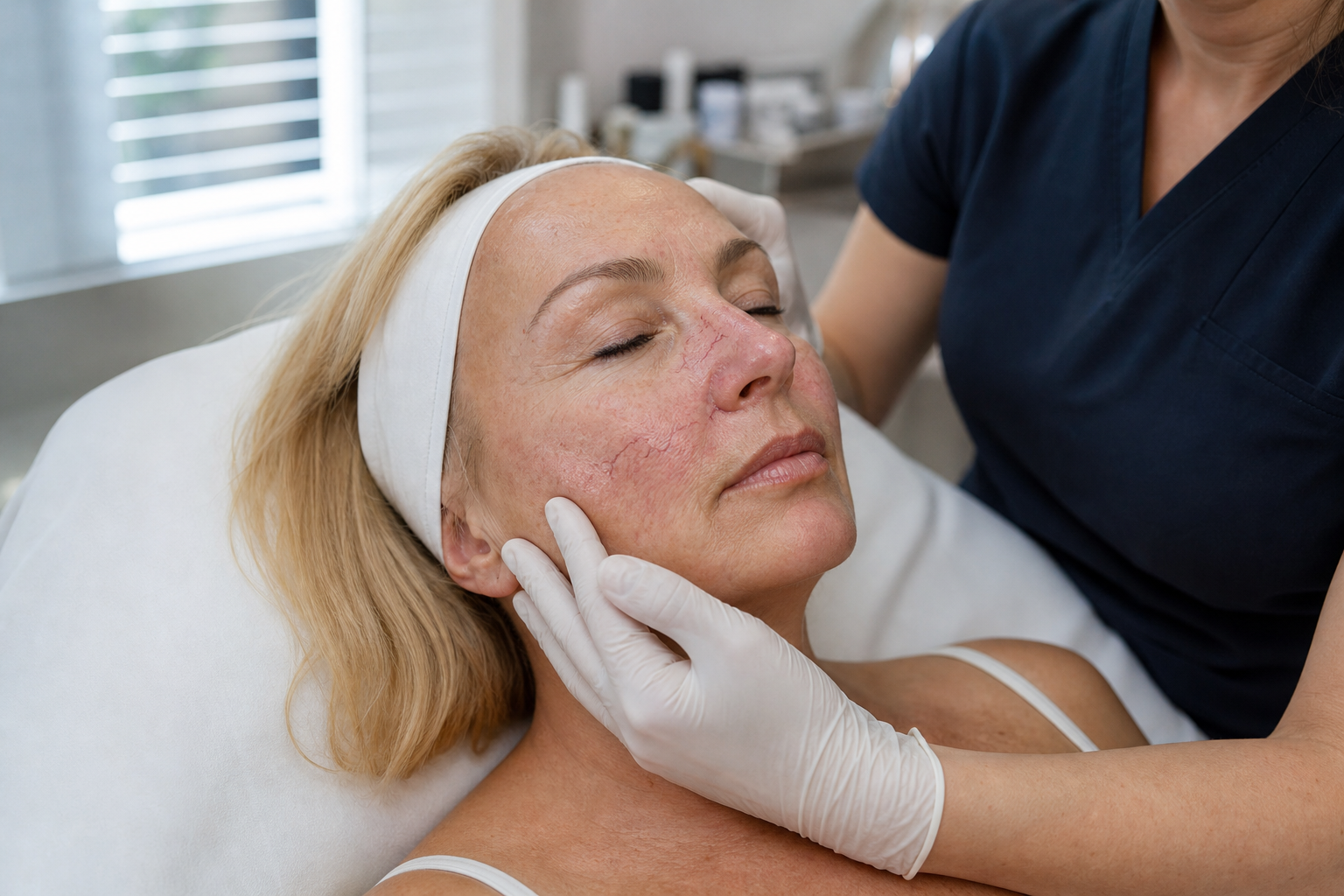
Swelling after laser capillary treatment is a common and expected physiological response from the skin following the focused application of laser energy aimed at reducing or eliminating visible small blood vessels, also known as teleangiectasias or spider veins. These tiny vessels often appear as red or bluish lines on the skin, posing cosmetic concerns for many individuals seeking clearer, more even-toned skin. Laser treatment has emerged as a leading non-invasive option for addressing these vascular imperfections, particularly on the face and legs.
This article is designed for individuals considering laser treatment for capillaries, those who have recently undergone the procedure, and healthcare professionals interested in understanding the inflammatory responses associated with this intervention. Swelling, which occurs as part of the natural healing process, can cause concern if unexpected, so a detailed explanation of its causes, duration, management, and implications is essential. Knowing what to expect helps patients maintain realistic expectations and promotes adherence to proper aftercare routines for optimal outcomes.
Understanding the intricacies of swelling is also valuable for clinicians specializing in dermatology and vascular medicine, ensuring they provide informed guidance and reduce potential complications. This comprehensive editorial will explore the nature of swelling following laser treatment of capillaries, elucidate the underlying physiological mechanisms, discuss the variation in swelling across different anatomical regions, and provide evidence-based recommendations for care and risk reduction.
What Is Swelling After Laser Capillary Treatment and Why Does It Occur?
Swelling, medically referred to as edema, is the accumulation of fluid within tissues, leading to localized enlargement and puffiness. In the context of laser treatment for capillaries, swelling is a direct consequence of the body's inflammatory response to targeted laser energy absorption by hemoglobin in superficial blood vessels.
During the procedure, laser energy is selectively absorbed by the blood within the targeted capillaries, generating heat that causes the vessel walls to coagulate and collapse, effectively sealing off the abnormal vessels. This thermal effect, while localized, invariably leads to a controlled injury of the affected vessels and surrounding microenvironment. Consequently, the body's immune system initiates reparative mechanisms that manifest as inflammation — redness, heat, pain, and swelling.
Swelling in this context is an indicator that the skin is actively healing. It reflects increased vascular permeability, fluid influx into the interstitial spaces, and immune cell activity. It's important to highlight that such swelling is typically mild to moderate and transitory, resolving as the tissue recovers and the coagulated vessels are reabsorbed or remodeled.
Which Factors Influence the Severity and Duration of Swelling?
The extent and longevity of swelling after laser capillary treatment vary broadly among patients and procedures, influenced by several interrelated factors.
Characteristics of Treated Capillaries: Larger or deeply situated capillaries may require more intense laser parameters to effectively damage the vessels, potentially producing more pronounced inflammatory reactions. Conversely, superficial and smaller vessels may elicit milder swelling.
Anatomical Site of Treatment: Skin thickness, vascular density, and lymphatic drainage differ across body regions. Areas such as the face, particularly around the nose and cheeks, are more prone to noticeable swelling due to thin skin and rich microcirculation. Legs may experience prolonged edema influenced by gravity and venous return dynamics.
Individual Patient Factors: Patients' skin type, age, baseline vascular health, and presence of underlying conditions such as rosacea or venous insufficiency can affect inflammatory responses. Additionally, a patient’s immune function and personal sensitivity to laser treatment impact recovery.
Laser Parameters and Technology Used: Not all lasers operate identically. Various wavelengths target hemoglobin with differing degrees of penetration and heat delivery. Higher fluences and longer pulse durations may increase collateral inflammation. Choice of laser type (e.g., pulsed dye laser, Nd:YAG) and precise calibration by an experienced clinician are critical in minimizing adverse effects like excessive swelling.
How Does Swelling Manifest Clinically After Treatment?
Following laser capillary treatment, swelling typically presents within minutes to hours and peaks around the first or second day. It is usually accompanied by related signs such as redness, mild tenderness, a sensation of warmth, and occasional bruising. Some patients may describe a feeling of tightness or heaviness in the treated areas.
The size of the swollen area correlates with the extent of capillaries treated and the intensity of the inflammatory reaction. For example, targeted treatment of a few localized vessels on the cheek may produce a small puffiness, whereas extensive leg treatments can result in larger, more diffuse swelling zones.
Despite discomfort, swelling is generally non-painful or only mildly so. If intense pain or progressive swelling occurs, it warrants prompt clinical assessment to rule out complications such as infection or vessel thrombosis.
How Long Does Swelling Last After Laser Capillary Treatment?
The duration of swelling post-laser therapy is variable but generally aligns with the phases of cutaneous wound healing.
In most cases, swelling gradually decreases over 3 to 7 days. The inflammatory phase involves vasodilation and increased capillary permeability, which subsides as damaged tissue is cleared. By the second week, residual swelling should substantially resolve, with ongoing remodeling continuing beneath the surface.
Prolonged swelling beyond two weeks is uncommon and suggests either an atypical healing response or secondary causes requiring medical evaluation. Long-standing edema signals the need for intervention in rare cases.
What Are the Best Practices for Managing Swelling Post-Treatment?
Effective management of post-laser swelling is centered around supportive care that aids natural healing and prevents complications.
Cold Compresses: Application of cold packs immediately after the procedure helps constrict blood vessels, reducing blood flow and limiting edema. It is advisable to apply cold compresses intermittently (e.g., 10–15 minutes every hour) for the first 24 to 48 hours.
Elevation and Rest: For treatments on the legs or extremities, elevating the limb can facilitate venous return and lymphatic drainage, minimizing fluid accumulation. Avoiding strenuous activity and prolonged standing post-treatment reduces swelling risk.
Sun Protection: Sunscreen with a high sun protection factor (SPF) is crucial after laser therapy. UV exposure can exacerbate inflammation, delay healing, and cause hyperpigmentation in the treated skin. This reinforces the critical nature of photoprotection during recovery.
Gentle Skin Care: Using mild, fragrance-free cleansers and moisturizing agents helps maintain skin barrier integrity. Avoid rubbing, scratching, or applying aggressive skincare products that may irritate the healing tissue.
Following Medical Advice: Some patients may be prescribed topical corticosteroids or anti-inflammatory creams by their treating physician to modulate swelling. Adhering to these recommendations enhances comfort and healing.
How Is Swelling Different from Other Post-Laser Side Effects?
Swelling might coexist with other transient reactions but is distinct from certain complications.
Redness and Erythema: Often accompany swelling but may persist longer as vascular reactivity continues post-treatment.
Bruising: Also known as purpura, can appear if capillary rupture occurs during laser pulses, typically resolving within 1 to 2 weeks.
Pain or Burning: Genuine pain beyond mild discomfort is uncommon and may indicate nerve irritation or infection.
Hyper- or Hypopigmentation: Changes in skin color may arise subsequent to swelling but are primarily linked to UV exposure or individual pigmentary responses.
How Does Laser Capillary Treatment Compare with IPL in Terms of Swelling?
It's important to differentiate laser treatment from intense pulsed light (IPL) therapy, as they have different mechanisms and outcomes.
Laser treatment utilizes a specific wavelength of coherent light that targets chromophores with precision, leading to targeted vessel closure with controlled localized tissue effects. Swelling with laser therapy is generally predictable and confined.
In contrast, IPL emits a broad spectrum of light that filters to treat various skin concerns non-specifically. While IPL can reduce redness and visible vessels, it usually causes less swelling and a lower risk of tissue trauma compared to laser. However, IPL tends to require more sessions and may be less effective for pronounced capillaries.
When Should Patients Seek Medical Advice Regarding Swelling?
While mild swelling is expected, certain signs indicate the need for professional review to exclude complications:
- Swelling that markedly worsens after initial improvement
- Intense pain, throbbing, or heat suggestive of infection
- Presence of pus, open wounds, or skin ulceration
- Swelling accompanied by systemic symptoms such as fever or malaise
Timely communication with the treating physician enables prompt intervention, minimizing risk and promoting safe recovery.
How to Choose the Right Specialist for Laser Treatment to Minimize Side Effects Like Swelling?
One of the most decisive factors in curbing swelling and other adverse outcomes is selecting a qualified and experienced clinician. Dermatologists or vascular specialists trained in laser applications possess the competence to assess individual patient skin characteristics, select appropriate laser devices, and fine-tune treatment parameters.
A meticulous consultation should include detailed discussion of patient history, treatment expectations, and potential risks. A reputable practitioner will also provide comprehensive pre- and post-treatment instructions and remain accessible for follow-up.
What Are the Long-Term Expectations After Laser Treatment for Capillaries?
With appropriate care and adherence to guidelines, swelling subsides, and patients often observe progressive improvement in skin appearance over weeks. Treated capillaries typically fade or disappear, restoring a smoother and more uniform complexion.
Maintenance treatments or adjunctive therapies may be recommended depending on individual vascular predisposition. Moreover, consistent use of sun protection and skin health optimization supports lasting results.


