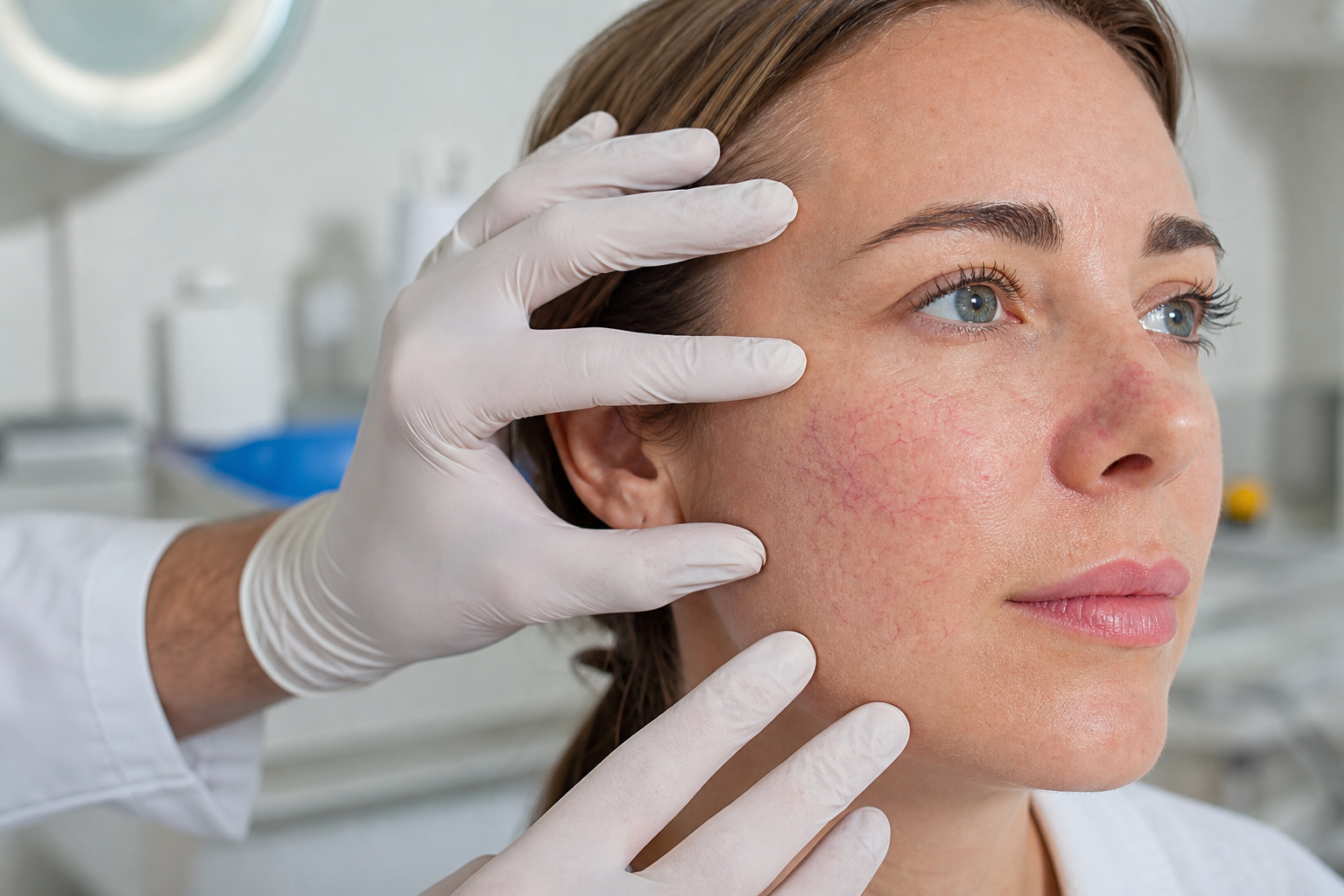
Visible vascular changes on the skin, particularly spider veins and visible capillaries, are common cosmetic concerns that perplex many individuals. Often, people use the terms interchangeably, but understanding their differences is essential for accurate diagnosis and effective management. Whether you notice delicate red lines branching across your cheeks or bluish webs appearing on your legs, discerning between spider veins and visible capillaries is crucial. This knowledge helps you choose appropriate care options, expect realistic outcomes, and improve your skin's aesthetic and health.
This article addresses anyone noticing unsightly blood vessels on their skin or those interested in dermatological vascular conditions. By exploring what spider veins and visible capillaries are, their causes, distinctions, and treatment options, we aim to empower readers with clarity and informed perspectives. Since these vascular features impact not only appearance but often emotional well-being, understanding them is an important step in achieving both cosmetic satisfaction and maintaining skin health.
We will also delve into how modern procedures, particularly laser treatments, can effectively reduce these vascular anomalies, clarifying common misconceptions. Although some confusion arises because of overlapping terminology and similar appearances, spider veins and visible capillaries are distinct entities with different implications and treatment pathways. Let us begin by defining each and charting their unique features.
What Are Spider Veins and How Do They Develop?
Spider veins, medically recognized as telangiectasias or reticular veins, are dilated small veins visible near the skin's surface, often manifesting as a web-like or branching pattern. They are characteristically bluish, purple, or red and mostly located on the legs but can occasionally appear on the face. Their occurrence is linked to the veins’ inability to properly circulate blood due to weakened or damaged vein walls and valves, resulting in blood pooling within these small veins.
The formation of spider veins is frequently attributed to a combination of genetic predisposition and lifestyle factors. Hormonal shifts during pregnancy or menopause, prolonged standing or sitting, obesity, and aging contribute to their development. The lower extremities bear higher venous pressure, prompting these veins to become more prominent there. Although chiefly a cosmetic issue in early stages, spider veins may sometimes associate with discomfort such as heaviness, aching, or swelling in the affected limbs, signifying venous insufficiency.
Spider veins serve as an early warning signal regarding venous health and highlight the need for preventive measures focusing on improved circulation and vascular care. Their presence should not be dismissed simply as a surface concern but viewed as part of an underlying vascular condition that may progress if untreated or left unmonitored.
What Are Visible Capillaries and Why Are They Especially Noticeable on the Face?
Visible capillaries indicate minute blood vessels beneath or just on the skin surface becoming dilated and apparent, foremost on facial skin. Capillaries form the smallest network within the vascular system and are integral for delivering oxygen and nutrients to tissues. When these vessels expand or rupture, they produce fine red or purplish lines, sometimes arranged in irregular patterns. Their faint but widespread display is often termed “facial spider veins” or simply visible facial capillaries.
The reasons for visible capillaries on the face are multifaceted. Genetic factors influence both skin thinness and whether these vessels are prone to dilation. Environmental exposures such as ultraviolet radiation intensify vascular fragility. Frequent temperature fluctuations—like moving between hot and cold environments—can cause vessel dilation and breakage. Additionally, skin sensitivity or conditions like rosacea frequently exacerbate visible capillaries, leading to persistent redness and compromised skin tone uniformity.
This delicate vascularity combined with facial skin’s thinness makes visible capillaries particularly distressing cosmetically. Their appearance can mar an otherwise smooth complexion, affecting confidence. Unlike spider veins which may be more localized to legs and sometimes the face, visible capillaries predominantly affect facial regions and pose unique management challenges given the delicate nature of facial tissue.
How Do Spider Veins, Visible Capillaries, and Telangiectasias Differ?
The vocabulary around vascular skin irregularities can be confusing. Terms like spider veins, visible capillaries, and telangiectasias often overlap but represent different clinical nuances. Telangiectasias is a broad medical term referring to permanently dilated small blood vessels visible under or on the skin surface, including both spider veins and visible capillaries within its spectrum.
Spider veins are effectively a type of telangiectasia; they typically denote dilated veins visible on legs characterized by a spiderweb or tree branch-like configuration. Visible capillaries indicate primarily capillary-sized dilation, most apparent on the face, yielding fine red lines or patches disrupting an even skin hue. Thus, all spider veins and visible capillaries qualify as telangiectasias but differ in location, size, and appearance.
It is also important to distinguish these from varicose veins, which are enlarged, twisted veins deeper in the legs causing bulging lumps and related symptoms. Varicose veins represent a more advanced disease stage often requiring different management. Clarifying these distinctions aids in appropriate treatment direction and proactive skin and vein care practices.
Can Visible Capillaries and Spider Veins Disappear Without Treatment?
One common question among those noticing vascular skin markings is whether these signs can resolve on their own without intervention. Unfortunately, both spider veins and visible capillaries are generally persistent once clearly established. These vascular lesions do not tend to spontaneously regress, as the dilation and structural changes in the vein walls remain or worsen over time.
Temporary redness due to transient capillary dilation—such as flushing from heat or irritation—may fade naturally but persistent visible capillaries or spider veins, once developed, require clinical treatment for meaningful reduction. However, prevention through lifestyle modifications, avoidance of triggers, and vascular health maintenance can help slow progression and reduce new formations.
In some rare instances, transient vascular changes related to inflammation or trauma may improve spontaneously but these cases differ fundamentally from stable telangiectatic lesions. Realistic expectations are essential; one should not rely on self-resolution but rather consider medical options for lasting improvement.
What Are the Most Effective Treatments for Spider Veins and Visible Capillaries?
Dermatological and vascular specialists employ several advanced treatment modalities tailored to the type, size, and location of vascular lesions. Among these, laser therapy has established itself as a highly effective and safe approach. Laser treatment works by emitting targeted light absorbed mainly by hemoglobin in the blood vessels, which heats and coagulates the abnormal vessels without damaging surrounding skin.
This process leads to gradual fading and disappearance of visible spider veins and capillaries, restoring the natural, even tone of the skin. Importantly, lasers are precise, enabling treatment of delicate facial capillaries where surrounding skin is sensitive. Unlike intense pulsed light (IPL), which is not a laser but another light-based option, laser treatments offer specific wavelengths that penetrate deeper effectively reaching the targeted vasculature.
Additional options include sclerotherapy, typically utilized for larger leg veins, where a special solution is injected causing veins to collapse and fade. Although less common for facial capillaries, some combination therapies integrating lasers and topical agents can yield enhanced results.
Selection of treatment depends on individual factors – vessel characteristics, underlying conditions, skin type – underscoring the importance of consultation with qualified professionals to devise the optimal plan.
When Should You Seek Professional Evaluation for Vascular Skin Changes?
Timely consultation with a dermatologist or vascular specialist is recommended as soon as you notice persistent spider veins or visible capillaries disrupting your appearance or causing symptoms. Early assessment enables detection of any underlying venous issues and guides effective intervention to prevent progression or complications.
Urgency increases if vascular markings intensify rapidly, cause discomfort such as pain or swelling, or if associated skin changes occur. Individuals with a family history of vascular diseases, long-standing occupations requiring prolonged standing, or those experiencing hormonal fluctuations should maintain regular preventive check-ups as part of holistic skin and vein health care.
Professional evaluation ensures confident differentiation from more serious conditions and appropriate selection of treatment modalities, helping achieve sustainable cosmetic and functional benefits.
What Results Can You Expect After Treatment of Spider Veins and Visible Capillaries?
Modern vascular procedures, particularly laser treatments, provide significant improvement in the appearance of spider veins and visible capillaries. Most patients experience noticeable reduction in redness and vessel visibility, contributing to a clearer, more uniform skin complexion and enhanced confidence. Post-treatment skin generally recovers quickly, with transient sensitivity or mild redness being common and resolving within days.
Nonetheless, it is important to maintain realistic expectations. No current treatment guarantees permanent eradication of all vascular lesions. New capillaries and veins may develop over time due to genetic predisposition, aging, hormonal changes, or ongoing environmental exposure. Maintenance sessions may be recommended to prolong benefits.
Overall, regular care combined with professional treatments produces the best outcomes, minimizing future flare-ups and preserving skin’s aesthetic appeal.
How Do Skin Type and Genetics Influence the Development of Vascular Changes?
Individual genetic background and skin characteristics significantly impact susceptibility to spider veins and visible capillaries. People with fair, thin, or sensitive skin are more prone to displaying vascular patterns because their capillaries lie closer to the surface. Genetic factors determine vascular wall strength, elasticity, and valve function, influencing vein integrity over time.
Environmental protection measures such as diligent use of sunscreen to prevent UV damage, avoiding extreme temperatures, and staying hydrated help maintain capillary health. Additionally, adopting a healthy lifestyle—incorporating physical activity to promote circulation, balanced nutrition, and avoiding smoking—can further reduce incidence and severity of vascular lesions.
Understanding personal risk enables proactive strategies, allowing individuals to better preserve their vascular skin appearance throughout life.
Why Is Differentiating Spider Veins From Larger Veins Important?
Often, spider veins are confused with varicose veins—enlarged, twisted veins usually seen on the legs. Differentiating between these is critical, as they represent different vascular conditions and require distinct approaches. Whereas spider veins are cosmetic and superficial, varicose veins may precipitate pain, swelling, and serious complications like thrombosis.
Misdiagnosis may lead to inappropriate or insufficient treatment. A thorough evaluation ensures that larger, deeper veins receive specialized care possibly involving conservative management, procedural interventions, or surgery, whereas superficial spider veins can be managed with less invasive techniques.
Accurate identification optimizes care efficiency, safeguards vein health, and enhances patient quality of life.


